
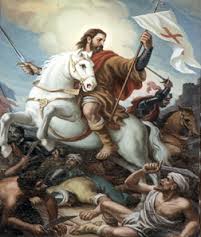
Saint James and the Reconquista
Before we leave Saint James the Greater and polygamy behind for now, two further factoids that came across my attention: It seems the Mormons claim in their own tradition that the same very James, along with Peter and John, who are often linked together in the Gospels, appeared on a certain day in 1829 to Joseph Smith, the founder of their religion, bestowing the ‘priesthood’ upon them and their successors.
I would put the veracity of this claim up there with the giant golden tablets which descended from heaven, kept behind a veil, upon which the ‘Book of Mormon’ was engraved, and which only the Reverend Smith could read with special ‘glasses’.
Ah, well, it is easy to discount the claims of other religions, especially those which enter the realm of what Kant would call the noumena, that body of knowledge which transcends reason and empirical verification, or what he would call the phenomena. Hence, the necessity of faith in approaching such truths.
Of course, we as Catholics would hold that James the Greater, along with the rest of the Apostles, including the first Pope, would discount many of the claims of the Mormons, the ‘Latter Day Saints’, not least their original, and continuing, belief that polygamy is a noble enterprise fully supported by God Himself. If they do continue in this claim, I would ask politely that they find their own saints.
The other historical claim, perhaps with more of a ring of truth, is that Saint James led the Spanish soldiers into battle against their Islamic oppressors in reclaiming their country, after the ‘Moors’, as Muslims were termed in the Iberian peninsula, streamed across the Strait of Gibraltar from North Africa in 711, eventually taking over most of what we now know as Spain. Christians were eventually reduced to subservience and dhimmitude, as is usually the case under Islamic domination, repeated in our day.
It was a long, hard struggle for the Christian Spaniards to win back their country, one that lasted nearly eight centuries, but a victorious one eventually, after the fall of the last Islamic stronghold in 1492, under the vigorous and clear leadership of Ferdinand and Isabella.
Whatever the historical claims of Saint James as the Matamoros in the many pitched and desperate battles between the Christian and Muslim armies in those centuries (and we may hope that in our struggle with Islam things may reach a more peaceful conclusion), we at the least can claim him as an intercessor in the conversion of all hearts to the truth, so that the true faith may reign once again in as many souls as have eyes to see, and ears to hear.

Carney’s Amoral Majority
After five defections – euphemistically described as ‘crossing the floor’ – and three by-elections, Mark Carney and his Liberals how have their coveted majority. One wonders what bowls of pottage were offered in back-room deals. In the archaic monarchical system that is the Dominion of Canada, this majority allows the newly-minted Prime Minister to rule[…]Continue reading→

Saint Kateri , Canada’s Protectress
This was the title given to Saint Kateri Tekakwitha, by Pope Benedict XVI, when he canonized her on October 28th, 2012, along with six others, in Saint Peter’ Square (she had been beatified by Pope John Paul II back in 1980). With Saint Joseph as our protector, along with the Canadian martyrs, we seem to[…]Continue reading→

A Tale of Two Benedicts
A grace-filled Holy Week to all our readers! As we await and prepare for the Resurrection about to dawn upon us, we might keep in mind two Benedicts: Pope Emeritus Benedict XVI, requiescat in pace, elected on this day in 2005; and today’s commemoration of the mystic pilgrim, Benedict Joseph Labre, who died on this[…]Continue reading→

My Name is Bernadette
April 16th is a propitious day, for besides the anniversary of Father de Valk’s death, who founded Catholic Insight in its print form decades ago, and the commemoration of the ‘two Benedicts’, mentioned in accompanying posts, today we also recall Saint Bernadette Soubirous, the young visionary to whom the Virgin Mary appeared numerous times at[…]Continue reading→

Saint Lydwina of Schiedam and Suffering Joyfully
Saint Lydwina of Schiedam (1380 – 1433) was one of the countless and glorious ‘victim souls’ in the history of the Church, those whose lives are filled with suffering, often of an unimaginable intensity, but who suffer joyfully. She was a fifteen-year old Dutch girl, out skating one day, when she fell and broke one[…]Continue reading→

The Glorious Martyrdoms of Martin and Maximus
As we enter into Eastertide, we recall on this 13th of April Pope Saint Martin I (+655), one of the noblest, if most tragic, of the successors of Saint Peter. Born in Umbria, Italy, he was of noble lineage, with great intelligence combined with charity and love of the poor and the Church. While still[…]Continue reading→
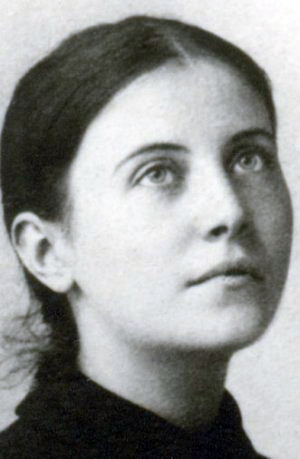
Saint Gemma Galgani
On this April 11th, in 1903 – the same year that the Italian Guiseppe Sarto was elected Pope later that summer as Pius X – a lovely, young Italian woman died, by the name of Gemma Galgani. She lived a brief life of 24 years, as did a number of other young saints, including Pier[…]Continue reading→
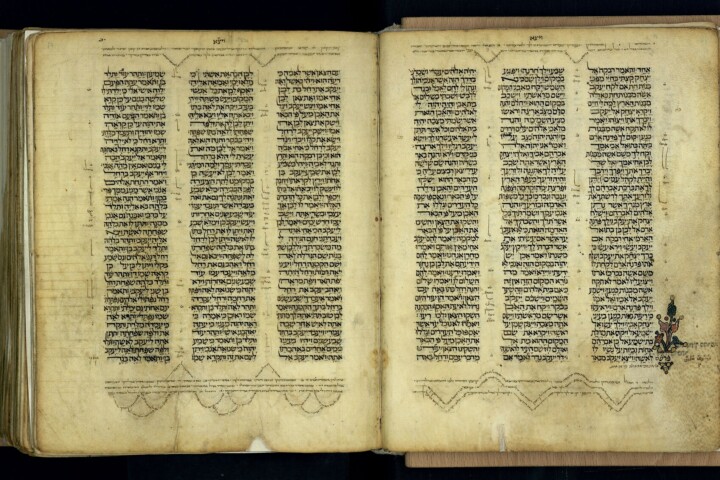
An Ideological and Improper Translation
I noticed something odd with the psalm reading at Mass the other day. Our bishops’ conference here in Canada has decreed that the Mass in English – Novus Ordo – use the ‘NRSV’, the ‘New Revised Standard Version’, an ‘updated’ translation of the original RSV, first published in 1952. This ‘new translation’ has the tendency[…]Continue reading→
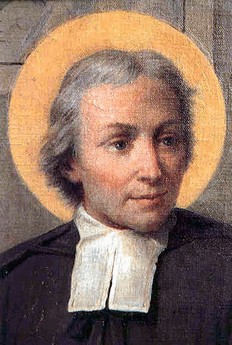
Saint Jean-Baptiste de la Salle: A Teacher for Teachers
Jean-Baptiste de la Salle (1651 – 1719), a French nobleman, ordained a priest, founded the first order in the Church’s history entirely without priests, and this came about almost by accident. I say ‘almost’, for, of course, there are no accidents with God. Destined for ordination from an early age, Jean-Baptiste never looked back, even[…]Continue reading→
Saint Isidore of Seville, the Internet and Industriousness
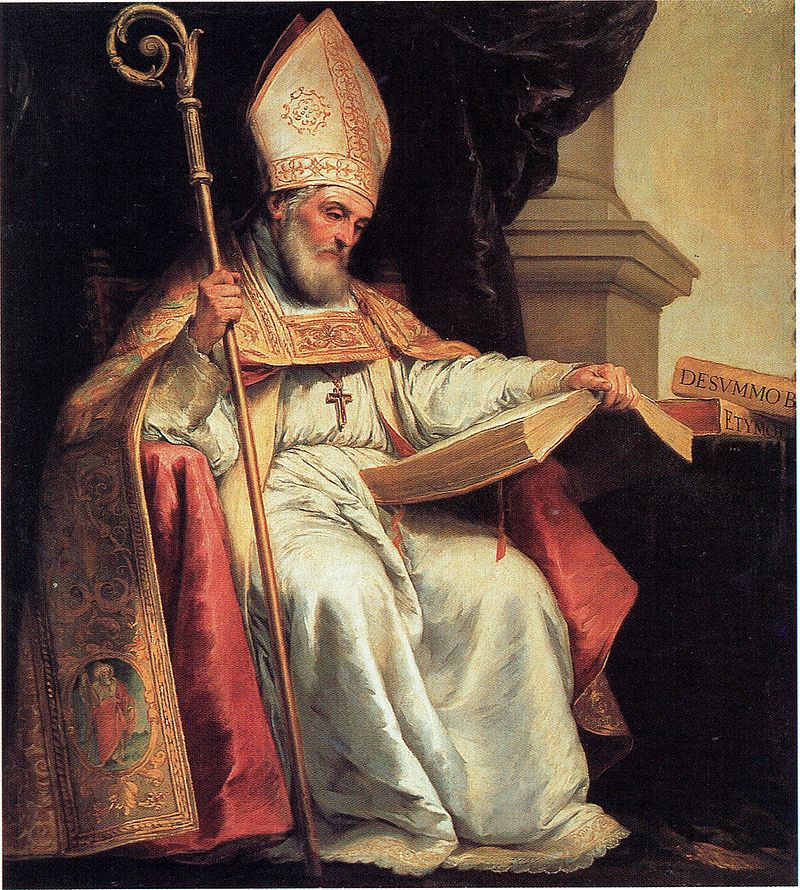
Today, April 4th, muted this year by Holy Saturday, is the commemoration of Saint Isidore of Seville (560-636) a bishop and doctor of the Church during a tumultuous age, when civilization was crumbling, coming apart at its very seams, which may sound sort of au courant. Then again, the form of this world has always[…]Continue reading→
2 thoughts on “Saint James and the Reconquista”
Comments are closed.
Matamoros, NOT mataduros.
Santiago Matamoros, patron of Spain, oro pro nobis!