

Saint Kateri , Canada’s Protectress
This was the title given to Saint Kateri Tekakwitha, by Pope Benedict XVI, when he canonized her on October 28th, 2012, along with six others, in Saint Peter’ Square (she had been beatified by Pope John Paul II back in 1980). With Saint Joseph as our protector, along with the Canadian martyrs, we seem to be well covered here in Canada, whatever our current distress. Fear not, says Christ walking on the sea towards His apostles, I am, invoking the divine name first revealed to Moses.
(In one of those many quirks of providence (from our perspective), this is also the day back in 1982 that Pierre Trudeau signed, with Queen Elizabeth II, our current ‘constitution’, the Charter of Rights of Freedoms, one of the most milquetoast of founding documents in the modern world. It’s filled with ambiguous slogans from which all sorts of mythical ‘rights’ have flown. We will have more to say on that, hopefully, in a subsequent post, with what few protections it was meant to offer – if any – have been ignored since the day of its promulgation).
‘Protectress of Canada’ is quite the title for such a young woman, hidden from the world, dying on this day in 1680, in the backwoods of what was then New France, in the youngest days of this nation when it was a French-English colony, a vast, endless land of forest, field, tundra, lakes and rivers, with a few villages dotted here and there. But what seems insignificant in earthly eyes, is great in the sight of God.
Tekakwitha (not her last name, but her pre-Christian given name) was born in 1656 in what is now the United States, near Auriesville, New York (where a shrine to three of the Jesuit martyrs now stands). She was the daughter of a Mohawk chief and a captured Algonquin woman (who had converted to Christianity). In 1661, a smallpox epidemic swept through the village, carrying off Tekakwitha’s parents, and leaving the young girl horribly scarred, and painfully sensitive to light. She would wear a blanket around her head, and avoided crowds, although she was also kind, patient and diligent, learning all the skills of her indigenous culture. As Tekakwitha entered her later teen years, she refused offers of marriage, knowing somehow that she was supposed to remain a virgin and consecrated, even though she was not yet Christian. Learning more of the faith from the Jesuit missionaries, she was drawn to the beautiful and hopeful truths of Catholicism, and Tekakwitha was duly baptized into the Church on Easter Sunday, April 19, 1676, taking the name ‘Kateri’ in honour of her patroness, Saint Catherine of Siena.
In the four years that remained of her short life, Kateri’s routine was one of work, prayer and penance, the latter sometimes excessive, sleeping on thorns, burning herself in solidarity with the victims of torture, eating little. These were moderated by her spiritual director, the Jesuit Father Chauchetière, and Kateri submitted to his obedience, which in the main is always better than sacrifice.
Her reputation as a saint grew during her own brief lifetime, and when she died peacefully on the 17th day of April, which was also Wednesday of Holy Week in 1680, miracles started at once and in abundance, beginning with herself: Witnesses relate that her scarred, swollen face within minutes of her death became smooth and beautiful; people saw visions of her on her way to paradise, and she continues her work from heaven, a Canadian version of Saint Therése (who died at the same age, 24, along with Pier Giorgio Frassati, now that I think of it, all of whom went their true homeland ‘straight as an arrow’, as was the explicit desire of the Carmelite of Lisieux; after all, why dally?).
Saint Kateri body’s lies encased in a sarcophagus in St. Francis Xavier Jesuit mission church on Kahnawake, the reservation on the outskirts of Montreal, near the spot where she went to eternity, and where Kateri’s Jesuit spiritual director had built a small chapel soon after her death.
Saint Kateri is now one of Canada’s spiritual bodyguards (God does not much consider, nor need, physical strength – He Who is mighty has done great things), and we need all the protecting we can get, as the Evil One prowls around looking for souls to devour: Not least, Kateri’s example of purity is an antidote to our immersion in sexual deviance of various varieties, now foisted upon most of our children through pornographic and scandalous ‘sex-ed’ programs and ‘drag time’ story hours, scarring their souls at the very dawn of reason and innocence. Saint Thomas was well aware that there’s nothing like lust to numb and blind the mind to the truth, and rob the soul of grace.
Of course, there but for that same grace of God go each one of us; to be aware of the evil is the first, and most fundamental, part of the battle. Pius XII warned that the greatest sin of our century is the loss of the sense of sin. Yet, even the mention of sins of lust, to say nothing of a young person’s intent to remain ‘pure, chaste and virgin’, would be to invite a mocking snicker, if not an outright rebuke, as Kateri herself experienced in her own pagan and libidinous culture. One must think long beforehand before sending one’s children into the moral quagmire that public education has become.
As Pope John Paul declared, the trivialization of sexuality is at the root of the hecatomb of abortion. Even in her early ‘pagan’ days, Kateri saw impurity as a great evil, the gateway to other greater evils, and perhaps her penance was in prophetic reparation what Canada would become. The body is not a tool to be used for our hedonistic pleasure or to use-and-mutilate-at-will, then discarded when the party’s over and things begin to sag, but rather the very temple of the Holy Spirit, the visible and tangible expression of our souls which, as body-soul ‘persons’, display the very image of the Trinitarian God.
Kateri’s offers us a vivid example, that all God asks of us is that we strive to live lives of virtue, and avoid the wages of sin, and we will gain eternal life.
In this joyful season of Easter, we can look forward to the day when, like Saint Kateri, we receive this body back at the end of time, free of any spot, wrinkle or smallpox scar, youthful and glorious, and hopefully, like her, may we bring many with us on the way.
Saint Kateri Tekakwitha, ora pro nobis!
Carney’s Amoral Majority
After five defections – euphemistically described as ‘crossing the floor’ – and three by-elections, Mark Carney and his Liberals how have their coveted majority. One wonders what bowls of pottage were offered in back-room deals. In the archaic monarchical system that is the Dominion of Canada, this majority allows the newly-minted Prime Minister to rule[…]Continue reading→

Remembering Father Alphonse de Valk
(Today marks the sixth anniversary of the death of Father Alphonse de Valk, C.S.B., a faithful, courageous and indefatigable Basilian priest, pro-life-and-family apostle, and the founder of Catholic Insight magazine. Here is what we wrote those on his entering into eternity five years ago, as we continue to remember him in our prayers and thoughts)[…]Continue reading→
A Tale of Two Benedicts
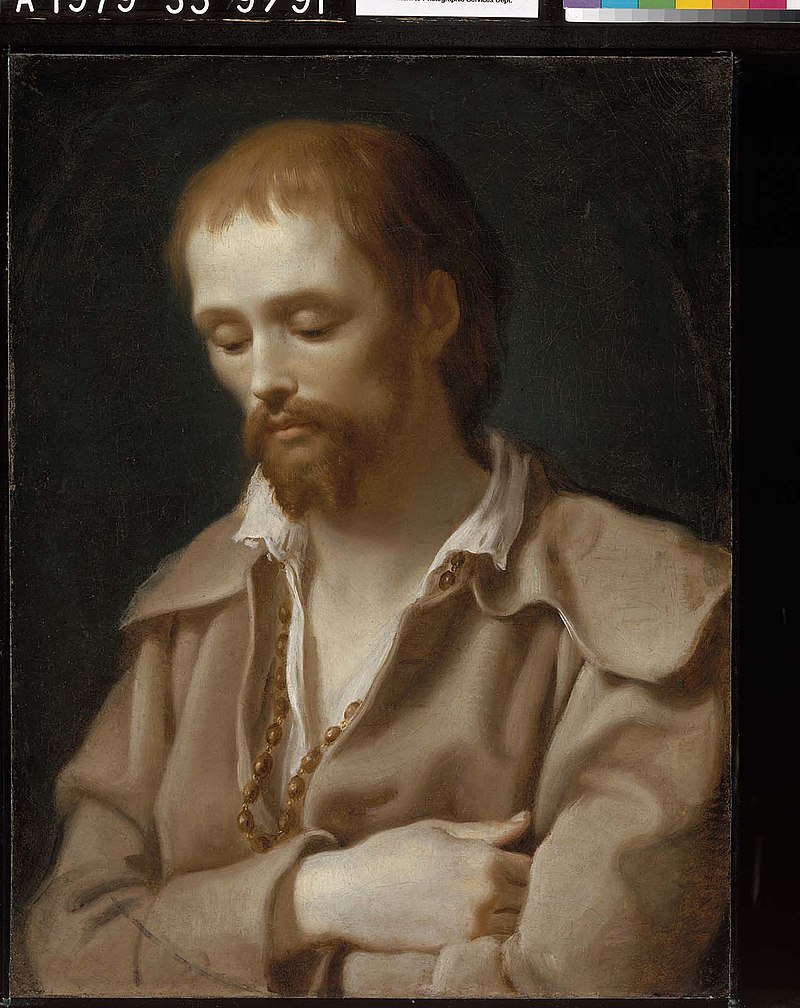
A grace-filled Holy Week to all our readers! As we await and prepare for the Resurrection about to dawn upon us, we might keep in mind two Benedicts: Pope Emeritus Benedict XVI, requiescat in pace, elected on this day in 2005; and today’s commemoration of the mystic pilgrim, Benedict Joseph Labre, who died on this[…]Continue reading→

My Name is Bernadette
April 16th is a propitious day, for besides the anniversary of Father de Valk’s death, who founded Catholic Insight in its print form decades ago, and the commemoration of the ‘two Benedicts’, mentioned in accompanying posts, today we also recall Saint Bernadette Soubirous, the young visionary to whom the Virgin Mary appeared numerous times at[…]Continue reading→
Saint Lydwina of Schiedam and Suffering Joyfully
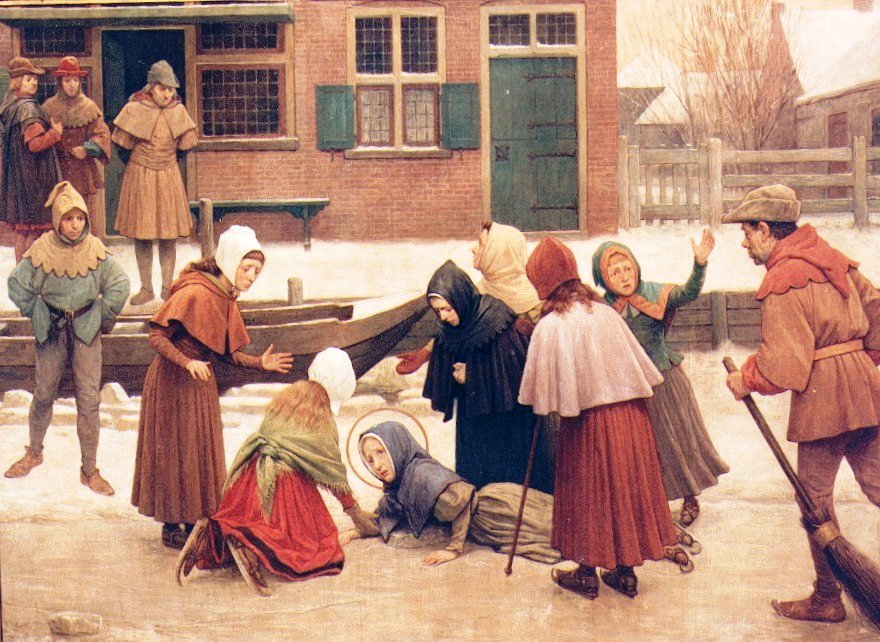
Saint Lydwina of Schiedam (1380 – 1433) was one of the countless and glorious ‘victim souls’ in the history of the Church, those whose lives are filled with suffering, often of an unimaginable intensity, but who suffer joyfully. She was a fifteen-year old Dutch girl, out skating one day, when she fell and broke one[…]Continue reading→
The Glorious Martyrdoms of Martin and Maximus
As we enter into Eastertide, we recall on this 13th of April Pope Saint Martin I (+655), one of the noblest, if most tragic, of the successors of Saint Peter. Born in Umbria, Italy, he was of noble lineage, with great intelligence combined with charity and love of the poor and the Church. While still[…]Continue reading→

Canonizing Sister Faustina and Divine Mercy
HOMILY OF THE HOLY FATHER MASS IN ST PETER’S SQUARE FOR THE CANONIZATION OF SR MARY FAUSTINA KOWALSKA Sunday, 30 April 2000 1. “Confitemini Domino quoniam bonus, quoniam in saeculum misericordia eius”; “Give thanks to the Lord for he is good; his steadfast love endures for ever” (Ps 118: 1). So the Church sings on the Octave of[…]Continue reading→

Divine Mercy Sunday – An Echo of Every Mass
Reach out your hand and put it in my side. Do not doubt but believe’… ‘My Lord and my God!’ (Jn. 20:18)). Today is Divine Mercy Sunday, and as we celebrate the end of the Easter Octave, we contemplate the wounded side of our Saviour, the Church’s source of life. On Good Friday in the[…]Continue reading→
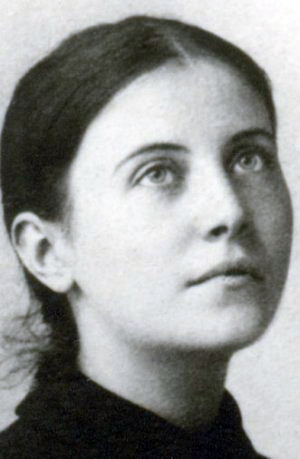
Saint Gemma Galgani
On this April 11th, in 1903 – the same year that the Italian Guiseppe Sarto was elected Pope later that summer as Pius X – a lovely, young Italian woman died, by the name of Gemma Galgani. She lived a brief life of 24 years, as did a number of other young saints, including Pier[…]Continue reading→
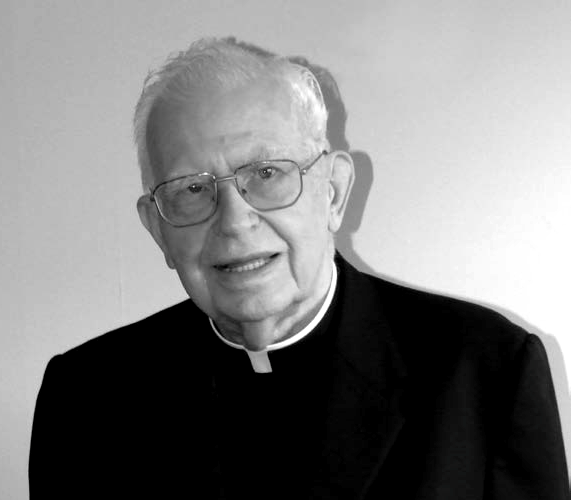
First Holy Communion: Sermon from May 16, 1943
Here is a sermon from the good old days by +Rev. Msgr. Vincent Nicholas Foy (August 14, 1915 – March 13, 2017), from 1943. Readers may recall that Pope Saint Pius X, by the decree Quam Singulari in 1910, lowered the customary age of reception of Holy Communion – after the rigours of the plague[…]Continue reading→