
Is Beauty in the Eye of the Beholder?
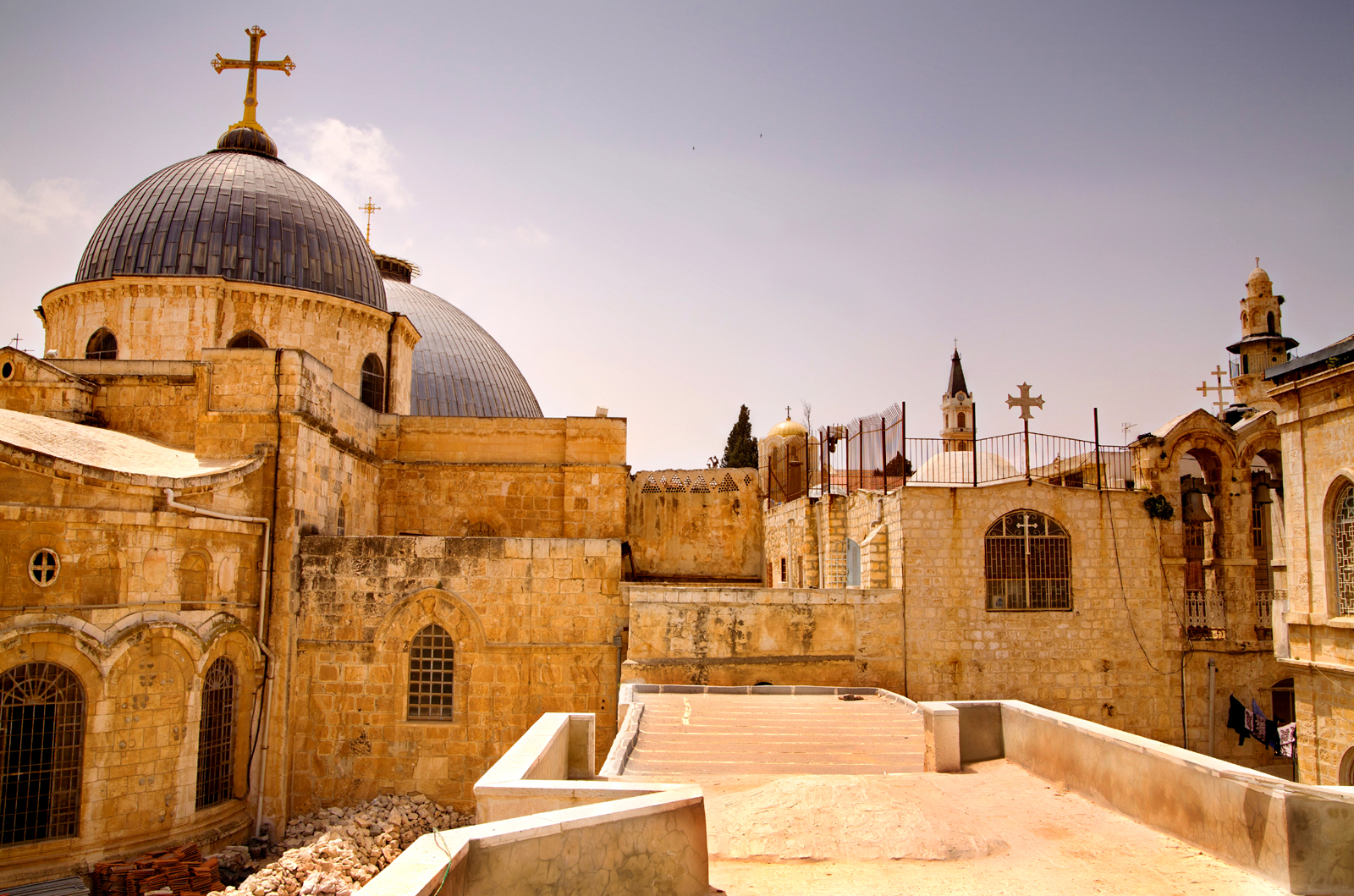
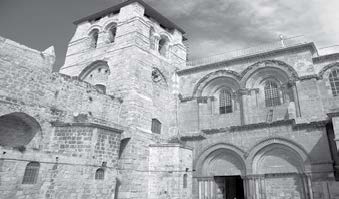
College professors sometimes have too much time on their hands. While digging around in the crypt of an old medieval library in Oxford, I discovered an ancient forgotten manuscript. Here is what I can piece together. The document is a response drafted by Thomas Aquinas at the request of a Roman cardinal. The Vatican seems to have been embroiled in a conflict with powerful members of the Knights Templars over a building project to take place in Jerusalem, at the sight of the rock cave where Christ was buried. The Vatican lobbied for a Romanesque structure. The Grand Knight wanted a church in the style of the long suppressed “devotion moderna”—surprisingly like our own international modernism. Apparently, the Grand Knight defended his desire for a rupture from tradition because, as he claimed, “beauty is merely in the eye of the beholder.” From what the documents reveal, the cardinal used Thomas’ draft as the basis for his reply. The building under discussion is none other than the Church of the Holy Sepulchre, pictured below. As history attests, Thomas and the cardinal prevailed. Also depicted is an artist’s reconstruction of the Grand Knight’s counter proposal. Here is my translation of Thomas’ text. Read at your own risk. (Eat your heart out, Dan Brown.)
Objection 1. It would seem that beauty is subjective. For some men wear ties to Mass while others wear shorts. But both cannot be regarded as beautiful attire; therefore, beauty must be in the eye of the beholder.
Objection 2. Again, not only do judgments differ from man to man, they differ from age to age. For instance, Romanesque and Gothic builders magnify God through the use of proportion, symmetry, and explicit iconography that links a building to a tradition of worship: “Devotio moderna” builders, by contrast, wish to avoid all references to the past, use industrial materials, and aim for a building that is comfortable and inclusive. Therefore, as trends change, so must standards of beauty.
Objection 3. Further, sound judgment depends upon the use of right method (as in the empirical sciences). But, since men’s judgments of beauty differ, there must be no method. Therefore, judgments of beauty remain a matter of opinion only, and the strongest personality on the building committee ought to decide.
On the contrary: Beauty is an objective quality manifest within things made well. As Scripture says, Wisdom “arranged all things by measure and number and weight” (Wis 11:20). And work done well is praiseworthy: “Blessed be the Lord … who put such a thing as this into the heart of the king, to beautify the house of the Lord which is in Jerusalem” (Ezra 7:27).
I answer that, Beauty is that which gives pleasure when seen. For beauty to be present, three elements must be present: wholeness (integritas), proportion (proportio), and radiance (claritas). By wholeness is meant the integrity or completeness of an object. Hence, a cat without a tail, like a church without transept, archways, icons, and other such elements, displeases. Proportion refers to the fitting arrangement among the parts. For this reason men find it painful to look at a hairless poodle or a church with a shinny bare facade. Finally, radiance refers to the distinctness of lines and intelligibility of form. Distinct images in stained-glass windows, for instance, please more than abstract images as they give the mind more to consider.
Reply to objection 1. Beauty is chiefly a quality of the object, though secondarily judged in relation to the object’s surroundings. Hence, while shorts may be beautiful near sand, they become hideous beside the tabernacle. Wings are flattering on birds, not buildings.
Reply to objection 2. Certainly, some men today prefer buildings of the new style. But the fact of diversity proves nothing, except diversity. In fact, differences of opinion about beauty are sometimes caused by corrupted sense or ignorance. By analogy, just because some men are colour blind or fail at sums, we do not conclude that all flowers are grey or that the sum of 2 and 2 is unknown. Manifestly, for most men, it is more pleasing to see a Romanesque or Gothic Cathedral than one built in the “devotio moderna” style. Men who build in the “devotio moderna” style—heeding neither reason nor tradition—need healing or education, or both.
Reply to objection 3. Every science or art has its own methods. Beauty is rooted in nature, but perfected by culture. Hence, though most principles of sacred architecture arise from nature and can be expressed through mathematical ratios, others derive from revelation or the Church’s own tradition. Hence, any new architectural forms ought to grow organically from past forms. Besides, the strongest are not always the wisest.
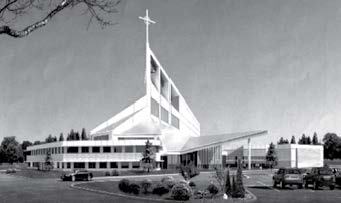
Photo credit: Matthew Siebert

Remembering Father Alphonse de Valk
(Today marks the sixth anniversary of the death of Father Alphonse de Valk, C.S.B., a faithful, courageous and indefatigable Basilian priest, pro-life-and-family apostle, and the founder of Catholic Insight magazine. Here is what we wrote those on his entering into eternity five years ago, as we continue to remember him in our prayers and thoughts)[…]Continue reading→

Divine Mercy Sunday – An Echo of Every Mass
Reach out your hand and put it in my side. Do not doubt but believe’… ‘My Lord and my God!’ (Jn. 20:18)). Today is Divine Mercy Sunday, and as we celebrate the end of the Easter Octave, we contemplate the wounded side of our Saviour, the Church’s source of life. On Good Friday in the[…]Continue reading→

Saint Stanislaus of Szczepanów
We celebrate Saint Stanislaus today (+ April 11, 1079), in light of this Easter Octave, a bishop and martyr who accepted the episcopacy only at the direct order of Pope Alexander II. He proved a wise and courageous leader of his flock, put to death by his own king, Boleslaus, for rebuking the monarch’s ‘immoral[…]Continue reading→
First Holy Communion: Sermon from May 16, 1943
Here is a sermon from the good old days by +Rev. Msgr. Vincent Nicholas Foy (August 14, 1915 – March 13, 2017), from 1943. Readers may recall that Pope Saint Pius X, by the decree Quam Singulari in 1910, lowered the customary age of reception of Holy Communion – after the rigours of the plague[…]Continue reading→
In the Glorious Light of Easter, Alleluia!
Set your minds on things that are above, not on things that are on earth, for you have died, and your life is hidden with Christ in God. When Christ who is your life is revealed, then you also will be revealed with him in glory (Col. 3:3-4). The Resurrection of Our Lord and Saviour[…]Continue reading→
An Ancient Homily for Holy Saturday
The time between Good Friday and Easter Sunday is one of waiting, in silence, as the world wonders – anticipates – what will happen, after the death of Christ. We re-live this time each year in the anamnesis of our liturgy, and in turn look forward to the glorious re-creation of all things at the[…]Continue reading→
Europe’s Long Descent
(As we meditate on this day on Christ’s burial, and His descent into hell, it is fitting to ponder here with contributor Peter Marcus how the world seems to be heading there as well. The difference is that, although God cannot ‘redeem’ hell, nor those therein, He can and did redeem the world. There is[…]Continue reading→
Pope Saint John Paul II’s First Good Friday Homily
ADDRESS OF HIS HOLINESS JOHN PAUL II AT THE CONCLUSION OF THE STATIONS OF THE CROSS AT THE COLOSSEUM Good Friday, 13 April 1979 When we make the Way of the Cross from one station to the next, in spirit we are always at the spot wherethis journey had its “historical” place: where it[…]Continue reading→
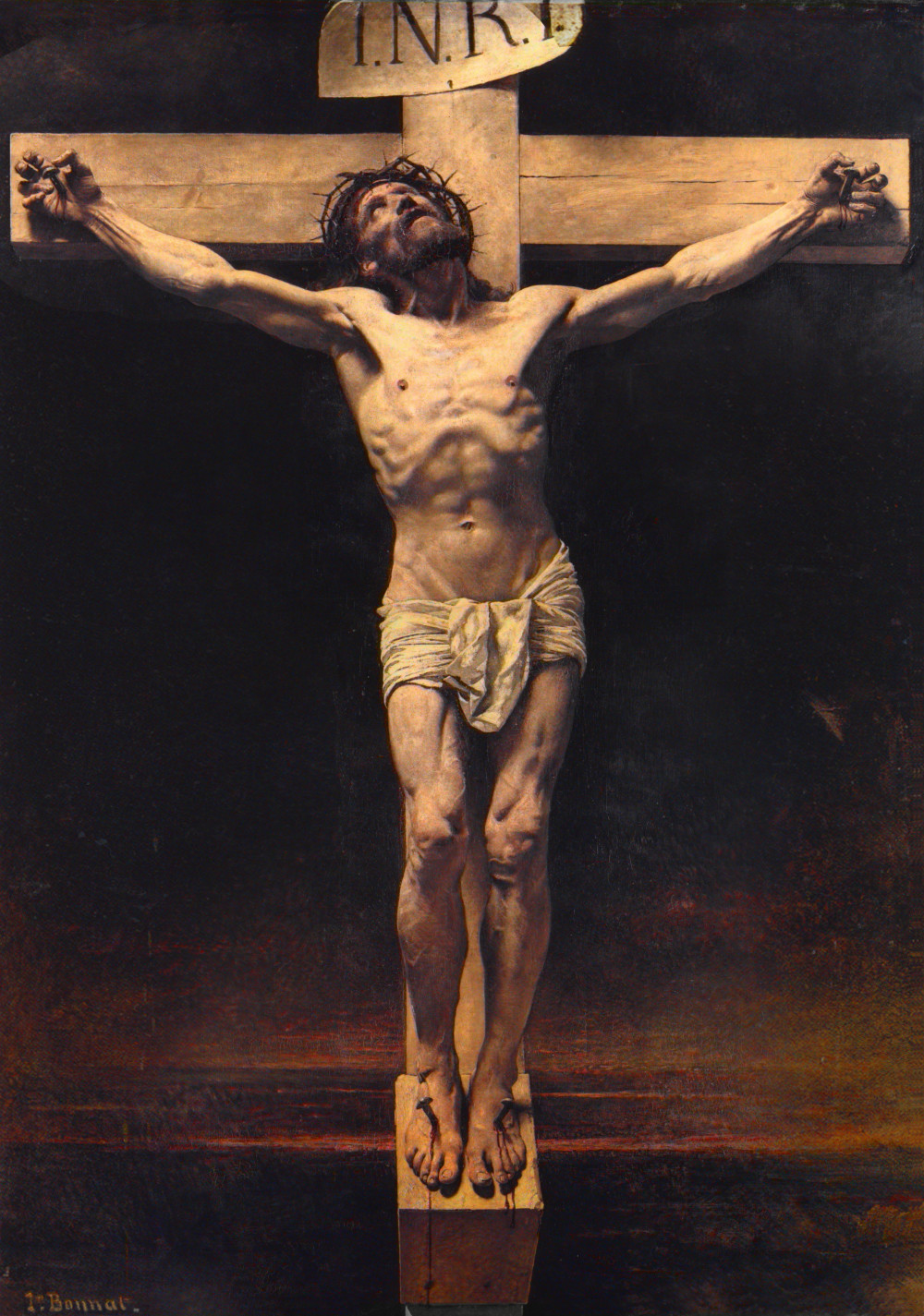
A Meditation for Good Friday: How To Undo the Effects of Sin?
Cardinal Newman, now Saint John Henry Newman, was a towering figure of nineteenth-century Catholicism who is almost universally admired. I say “almost” because not everyone likes him. I knew a priest once, Arthur Caulkins, who has become disenchanted with Newman. As an undergraduate Arthur had been enamoured of Newman, and this interest continued when he[…]Continue reading→
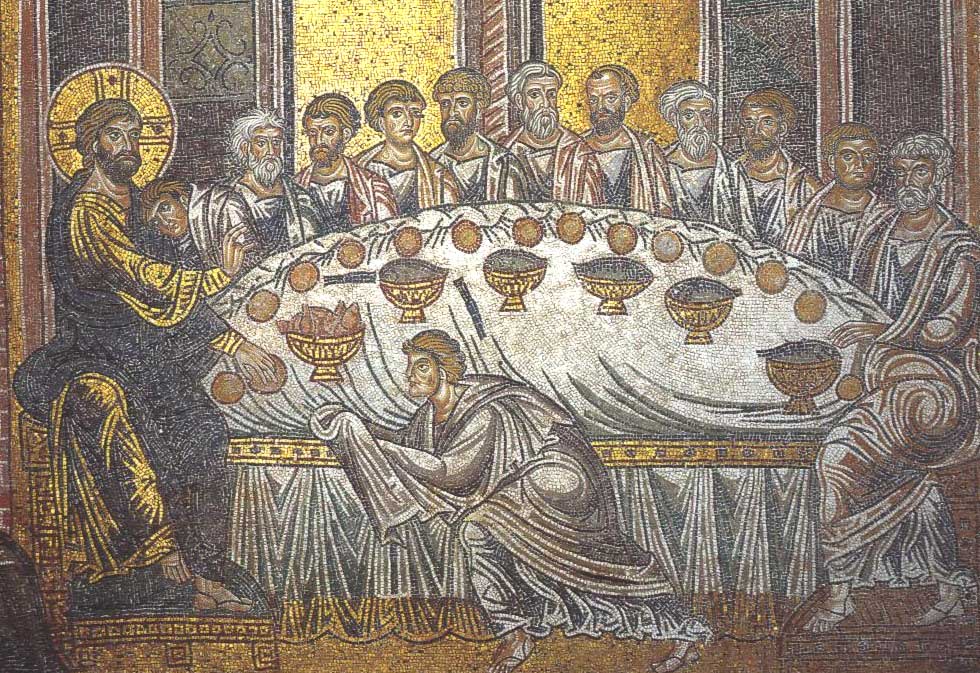
Pope Benedict’s Last Holy Thursday Homily
MASS OF THE LORD’S SUPPER HOMILY OF HIS HOLINESS BENEDICT XVI Basilica of St John Lateran Holy Thursday, 5 April 2012 Photo Gallery (Video) Dear Brothers and Sisters! Holy Thursday is not only the day of the institution of the Most Holy Eucharist, whose splendour bathes all else and in some ways draws it to[…]Continue reading→