
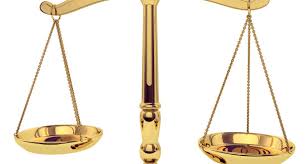
Trudeau, Trump and the Rule of Law
President Trump’s recent firing of James Comey, now-former head of the FBI, has raised hackles, mainly amongst liberals, who at one point had no great love of Comey, but resent him being fired by Trump, without apparent warning, like the top cop in the nation was on some reality television show. Readers may peruse Mark Steyn’s own take, justifying the act, while Andrew Coyne and a number of others are on the other side of the spectrum, as a further troubling sign of the President’s erraticism.
I know not the full ins and outs of the whys and wherefores, but I cannot help but see this connected with Trump’s other executive decisions on other matters, upon which I commented a few days ago. The headlines this morning now declare that the ‘9th circuit’ is reviewing the President’s recent orders on immigration. We conservatives may be tempted to cry ‘foul’, and how dare such uppity judges block the very Commander-in-Chief himself?
Whatever we may think of such actions of the President, and I am in sympathy with much of what he is trying to do, we should keep in mind the principle behind such checks and balances, known as the ‘rule of law’. As paragraph 1904 of the Catechism summarizes:
It is preferable that each power be balanced by other powers and by other spheres of responsibility which keep it within proper bounds. This is the principle of the ‘rule of law,’ in which the law is sovereign and not the arbitrary will of men
This goes back in Western civilization to the Senates and judiciaries of ancient Rome and Greece, which provided a limit to the power of the military, the emperor, the triumvirate or whoever else was in charge. Things always went awry when any one source of authority held too much power, especially when this was one all-too-fallible man. Demagoguery and autocracy rarely end well.
In more recent European history, we may reflect upon the struggle of the barons of England in the early Middle Ages against the ‘divine right’ of the King, resulting the Magna Carta of 1215, which ensured (in theory, at least) that the sovereign’s power would have to take into account the rights and privileges at least of the landowners of his realm, as well as the written and inviolable constitution which not even the King (or President, or Court) could alter or remand.
The social doctrine of the Church enumerates three loci of authority, the legislative, which makes the laws, the executive, which enforces them, and the judicial, which judges whether and how a law has been broken.
Of course, this balance of power does not always work that well, as any one locus of authority may absorb and exercise too much authority, or authority that does not belong to it, as we see, for the clearest and most troubling example, in the Supreme Courts of America and Canada usurping to themselves legislative power, contrary even to the clear will of the majority. ‘Uppity’ does not begin to describe the arrogance they have taken on themselves.
Ultimately, even if the rule of law were balanced well, for any society to survive and flourish, each ‘rule of law’ needs a clear foundation of truth, which can only be found in the Catholic Church, which is why Pope Leo XIII taught that a society must be ‘Catholic’, founded on Christian revelation in forming it laws and policies.
What this means in practice is complex and controversial, but we at the very least may conclude that the further a society drifts from Catholic principles, the worse off it will be. Even with the best of laws, what is most important is that the people of the society must be virtuous, raised and educated in a way that makes them good citizens, able to sacrifice their own immediate good for that of their fellows and for the future.
This, I would argue, is what is primarily missing. What education and formation most of us receive is deficient, from kindergarten to university, with too many warped and weird principles, especially now in our ever-more intolerant and ever-less free centres of ‘higher’ learning. Ponder Jordan Peterson.
Yet we should be cautious that as our own societies, both here and south of the border, drift ever further into moral chaos, we do not seek to ‘fix’ this by means that are themselves unjust, leading to the breakdown of law, anarchy, rebellion, which will lead only to further evils.
As Thomas More put it to his son-in-law Roper in his own chaotic days of early 16th century England under the Tudors, when the tempestuous Roper and others wanted to gut the laws to get at the unjust, immoral and autocratic King Henry:
Roper: So now you’d give the Devil benefit of law!
More: Yes. What would you do? Cut a great road through the law to get after the Devil?
Roper: I’d cut down every law in England to do that!
More: Oh? And when the last law was down, and the Devil turned round on you — where would you hide, Roper, the laws all being flat? This country’s planted thick with laws from coast to coast — man’s laws, not God’s — and if you cut them down — and you’re just the man to do it — d’you really think you could stand upright in the winds that would blow then? Yes, I’d give the Devil benefit of law, for my own safety’s sake.
I wish the President all the best in trying to get more sane and just policies put into effect, but even he must work through and by the ‘rule of law’. (We may say the same, in a different way, for the Pope, who, although given ‘supreme, full, and universal’ power, is himself bound and limited by revelation and tradition in exercising this power). For if we give the President and Prime Minister too much authority (already the case to a troubling degree), even for the best of motives, what happens when a more unjust one comes to power? Witness Canada. A Prime Minister with a majority government here in this Dominion can do whatever he more or less pleases, and what ‘pleases’ Mr. Trudeau is, to put in mildly, not good for the country, nor its future.
At a deeper level, there is whole lot of house cleaning that needs done in areas where the law cannot reach, mostly at the ground level of the family. Good laws may help here, but it is up to us to do the heavy lifting, a long and laborious process, but a worthy and noble one.
Carney’s Amoral Majority
After five defections – euphemistically described as ‘crossing the floor’ – and three by-elections, Mark Carney and his Liberals how have their coveted majority. One wonders what bowls of pottage were offered in back-room deals. In the archaic monarchical system that is the Dominion of Canada, this majority allows the newly-minted Prime Minister to rule[…]Continue reading→

Saint Kateri , Canada’s Protectress
This was the title given to Saint Kateri Tekakwitha, by Pope Benedict XVI, when he canonized her on October 28th, 2012, along with six others, in Saint Peter’ Square (she had been beatified by Pope John Paul II back in 1980). With Saint Joseph as our protector, along with the Canadian martyrs, we seem to[…]Continue reading→

A Tale of Two Benedicts
A grace-filled Holy Week to all our readers! As we await and prepare for the Resurrection about to dawn upon us, we might keep in mind two Benedicts: Pope Emeritus Benedict XVI, requiescat in pace, elected on this day in 2005; and today’s commemoration of the mystic pilgrim, Benedict Joseph Labre, who died on this[…]Continue reading→

My Name is Bernadette
April 16th is a propitious day, for besides the anniversary of Father de Valk’s death, who founded Catholic Insight in its print form decades ago, and the commemoration of the ‘two Benedicts’, mentioned in accompanying posts, today we also recall Saint Bernadette Soubirous, the young visionary to whom the Virgin Mary appeared numerous times at[…]Continue reading→

Saint Lydwina of Schiedam and Suffering Joyfully
Saint Lydwina of Schiedam (1380 – 1433) was one of the countless and glorious ‘victim souls’ in the history of the Church, those whose lives are filled with suffering, often of an unimaginable intensity, but who suffer joyfully. She was a fifteen-year old Dutch girl, out skating one day, when she fell and broke one[…]Continue reading→

The Glorious Martyrdoms of Martin and Maximus
As we enter into Eastertide, we recall on this 13th of April Pope Saint Martin I (+655), one of the noblest, if most tragic, of the successors of Saint Peter. Born in Umbria, Italy, he was of noble lineage, with great intelligence combined with charity and love of the poor and the Church. While still[…]Continue reading→

Saint Stanislaus of Szczepanów
We celebrate Saint Stanislaus today (+ April 11, 1079), in light of this Easter Octave, a bishop and martyr who accepted the episcopacy only at the direct order of Pope Alexander II. He proved a wise and courageous leader of his flock, put to death by his own king, Boleslaus, for rebuking the monarch’s ‘immoral[…]Continue reading→
Saint Gemma Galgani
On this April 11th, in 1903 – the same year that the Italian Guiseppe Sarto was elected Pope later that summer as Pius X – a lovely, young Italian woman died, by the name of Gemma Galgani. She lived a brief life of 24 years, as did a number of other young saints, including Pier[…]Continue reading→
An Ideological and Improper Translation
I noticed something odd with the psalm reading at Mass the other day. Our bishops’ conference here in Canada has decreed that the Mass in English – Novus Ordo – use the ‘NRSV’, the ‘New Revised Standard Version’, an ‘updated’ translation of the original RSV, first published in 1952. This ‘new translation’ has the tendency[…]Continue reading→
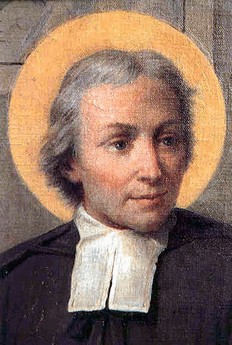
Saint Jean-Baptiste de la Salle: A Teacher for Teachers
Jean-Baptiste de la Salle (1651 – 1719), a French nobleman, ordained a priest, founded the first order in the Church’s history entirely without priests, and this came about almost by accident. I say ‘almost’, for, of course, there are no accidents with God. Destined for ordination from an early age, Jean-Baptiste never looked back, even[…]Continue reading→