
The Pope, Fatima and Medjugorje
In his recent pilgrimage to Fatima, the Holy Father, in canonizing two of the young seers, Jacinta and Francesco, delivered a fine homily on the mysterious woman the children saw, whom they, in their innocence, knew to be the Mother of God:
We have a Mother!” Pope Francis exclaimed, continuing, ‘So beautiful a Lady,’ as the seers of Fatima said to one another as they returned home on that blessed day of May 13, 100 years ago. That evening, Jacinta could not restrain herself and told the secret to her mother: ‘Today I saw Our Lady.’”
They had seen the Mother of Heaven, the Pope stressed.
On the other, in a subsequent ‘flying presser’, as the Pope answered questions on his journey back to Rome, he also had some very cautionary, even disapproving, words on the purported ongoing revelations at Medjugorje:
Medjugorje, all the apparitions, or the presumed apparitions, belong to the private sphere, they aren’t part of the public, ordinary magisterium of the Church.
Well, that we have always known, and, as I wrote the other day, also applies to Fatima and every other private revelation. But the Holy Father continues:
The apparitions, the presumed current apparitions: the report has its doubts. I personally am more nasty, I prefer the Madonna as Mother, our Mother, and not a woman who’s the head of a telegraphic office, who everyday sends a message at such hour. This is not the Mother of Jesus. And these presumed apparitions don’t have a lot of value. This I say as a personal opinion. But, it’s clear. Who thinks that the Madonna says, ‘come tomorrow at this time, and at such time I will say a message to that seer?’ No. The two apparitions are distinguished.
We may have our reservations about how Pope Francis puts things (Pope Benedict, who did not comment much on Medjugorje, would have phrased this same truth a bit differently, but every Pope brings his own humanity to the office). The Holy Father does hit on a truth here, that the two revelations are very different, in ways that do not reflect well upon the ongoing controversial ‘visions’ in the mountain village of Medjugorje, continuous now for three decades and counting.
That said, I still wonder about all the confessions and conversions, along with all the prayers and sacrifices, offered through the influence Medjugorje, whether or not the apparitions are real. Whoever is behind them, whether divine or natural or a mix of both, God must have a plan in all of this, somehow, someway, and I hope it is revealed sooner than later.
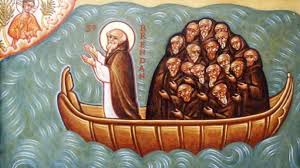
Today is the feast of Saint Brendan the Navigator, a travelling monk who supposedly sailed the Atlantic and discovered Canada in the sixth century, well before the ‘historical’ first discoverers of this land, a fitting Irish-Canadian connection. Brendan’s voyage was long held an impossible mediaeval legend, until the intrepid Tim Severin re-traced the saint’s journey in a hand-made leather boat in 1976, as Brendan would have had a thousand years earlier. So have faith!
Saint Brendan, ora pro nobis!

Carney’s Amoral Majority
After five defections – euphemistically described as ‘crossing the floor’ – and three by-elections, Mark Carney and his Liberals how have their coveted majority. One wonders what bowls of pottage were offered in back-room deals. In the archaic monarchical system that is the Dominion of Canada, this majority allows the newly-minted Prime Minister to rule[…]Continue reading→

Saint Kateri , Canada’s Protectress
This was the title given to Saint Kateri Tekakwitha, by Pope Benedict XVI, when he canonized her on October 28th, 2012, along with six others, in Saint Peter’ Square (she had been beatified by Pope John Paul II back in 1980). With Saint Joseph as our protector, along with the Canadian martyrs, we seem to[…]Continue reading→

A Tale of Two Benedicts
A grace-filled Holy Week to all our readers! As we await and prepare for the Resurrection about to dawn upon us, we might keep in mind two Benedicts: Pope Emeritus Benedict XVI, requiescat in pace, elected on this day in 2005; and today’s commemoration of the mystic pilgrim, Benedict Joseph Labre, who died on this[…]Continue reading→

My Name is Bernadette
April 16th is a propitious day, for besides the anniversary of Father de Valk’s death, who founded Catholic Insight in its print form decades ago, and the commemoration of the ‘two Benedicts’, mentioned in accompanying posts, today we also recall Saint Bernadette Soubirous, the young visionary to whom the Virgin Mary appeared numerous times at[…]Continue reading→

Saint Lydwina of Schiedam and Suffering Joyfully
Saint Lydwina of Schiedam (1380 – 1433) was one of the countless and glorious ‘victim souls’ in the history of the Church, those whose lives are filled with suffering, often of an unimaginable intensity, but who suffer joyfully. She was a fifteen-year old Dutch girl, out skating one day, when she fell and broke one[…]Continue reading→

The Glorious Martyrdoms of Martin and Maximus
As we enter into Eastertide, we recall on this 13th of April Pope Saint Martin I (+655), one of the noblest, if most tragic, of the successors of Saint Peter. Born in Umbria, Italy, he was of noble lineage, with great intelligence combined with charity and love of the poor and the Church. While still[…]Continue reading→

Saint Stanislaus of Szczepanów
We celebrate Saint Stanislaus today (+ April 11, 1079), in light of this Easter Octave, a bishop and martyr who accepted the episcopacy only at the direct order of Pope Alexander II. He proved a wise and courageous leader of his flock, put to death by his own king, Boleslaus, for rebuking the monarch’s ‘immoral[…]Continue reading→

Saint Gemma Galgani
On this April 11th, in 1903 – the same year that the Italian Guiseppe Sarto was elected Pope later that summer as Pius X – a lovely, young Italian woman died, by the name of Gemma Galgani. She lived a brief life of 24 years, as did a number of other young saints, including Pier[…]Continue reading→

An Ideological and Improper Translation
I noticed something odd with the psalm reading at Mass the other day. Our bishops’ conference here in Canada has decreed that the Mass in English – Novus Ordo – use the ‘NRSV’, the ‘New Revised Standard Version’, an ‘updated’ translation of the original RSV, first published in 1952. This ‘new translation’ has the tendency[…]Continue reading→
Saint Jean-Baptiste de la Salle: A Teacher for Teachers
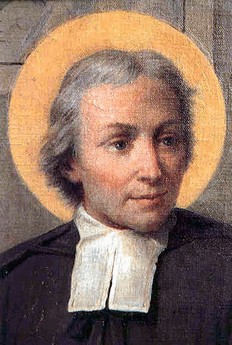
Jean-Baptiste de la Salle (1651 – 1719), a French nobleman, ordained a priest, founded the first order in the Church’s history entirely without priests, and this came about almost by accident. I say ‘almost’, for, of course, there are no accidents with God. Destined for ordination from an early age, Jean-Baptiste never looked back, even[…]Continue reading→