
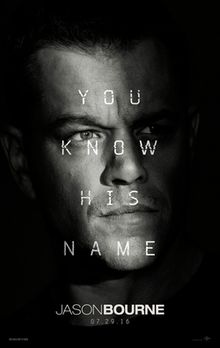
Bourne Redundancy: The Mediocrity of Movies
Matt Damon has played his eponymous hero, Jason Bourne, since 2002’s ‘Bourne Identity’, finishing the third of the films, the ‘Bourne Ultimatum’, in 2007. Mr. Damon apparently intended never again to reprise the role, which he thought he had exhausted, claiming that any future film could only be title the ‘Bourne Redundancy’.
Well, I guess money talks, with the mortgage on a mansion or two to fund, for Mr. Damon nearly a decade on has indeed taken on the Bourne mantle once again in the recent outing, simply called ‘Jason Bourne’, a slick but stale venture which sums up much of what is wrong with modern Hollywood.
The visuals of this film display full big-budget, exotic locales, money shots, stunt scenes, but the narrative limps, with little imagination, not much point, various plot devices spun out of thin air, and our ageing hero, albeit still of fine fettle as one commentator put it, bloodied, battered and bourne again, going through the motions.
But we have seen it all before, more than once, and what is ‘new’ seems there just to make things seem, well, ‘new’. For some reason, we first find Jason making his living bare-knuckle boxing in distant, vaguely eastern desert locations. Why and how is never disclosed. He mumbles something at one point about ‘just surviving’, but one would think with his advanced skill set, he could do far more lucrative undercover work.
Then there is the scene, stolen right out of the first of the recent Sherlock Holmes films (and that’s another story) where Bourne is getting battered in one fight, when the Attractive Woman from the Past shows up in the crowd (former CIA operative Nikki Parsons, played by Julia Styles), and our hero, seeing her face, suddenly and easily dispatches his opponent (with less finesse and intelligence than Holmes).
Parsons plays almost no role in this plot, except to download secret files for yet-another black-ops CIA scheme, with the plan to ‘expose’ them, Wiki-leaks style, even after she dies early on in an implausible quasi-suicide for the cause (I guess she wanted out of this franchise, Baywatch-Pamela Anderson-style). As one CIA guy later laughably declares later on, ‘It’s worse than Snowden’. Then, inexplicably, this whole McGuffin seems quietly forgotten part way through the film, dropped into its own sort of black-hole-ops.
Perhaps I quibble, for there are deeper problems with this mashed up mess. Tommy Lee Jones, looking like the walking dead stumbling and mumbling towards another big supporting actor payout, laconically lurches his way through the ‘really evil CIA director’ shtick, with almost no nuance. Jones may be a patriot at heart, but it’s all black inside. There he is, having his own highly-trained, and expensive, innocent and loyal men killed without a qualm, like some tin-pot dictator, all to pin it on Bourne.
The antagonist assassin, mysteriously named ‘the Asset’, of course some guy with a mysterious past and a British accent, is also a caricature. In the chaotic, climactic final chase scene, he steals a SWAT truck, chased by Bourne, and plows through dozens of vehicles and sidewalks at full speed, killing, maiming who knows how many innocents. And we’re supposed to cheer? After the attacks in Germany and Paris, that seems a little too true to life. Oh, and by the way, said British assassin also killed Bourne’s father, just as dear Dad was trying to convince Bourne not to become a killer in the CIA, like he was, or might have been. Well, wouldn’t you know? Irony of ironies…
Which brings me to Bourne, and what they do with him. The whole point of this franchise was that Bourne was the ‘assassin with a conscience’, or, rather, one whose conscience is reawakened in the first film by seeing his intended target’s children, just as he is about to exterminate with extreme prejudice, as the lingo has it. Yet here is Bourne not only blatantly killing people, but formally participating in the deaths of who knows how many others, all to get revenge. The final scene of the last of the (supposed) trilogy had a chastened and repentant Bourne seeking forgiveness from the daughter of a man he had killed, and for all of the deaths he had caused. Now what?
In a final sop, there is a nod to the new millennial generation, with Alicia Vikander playing the ‘new’ kindlier kind of CIA operative, gentler, more open to speaking and dialoguing (but lying without compunction), facilely convinced of Bourne’s innocence and good intentions by flipping through a few of his files.
Thrown into this soup is also a sort of fictional FaceBook corporation, ‘Deep Dream’, run not by Zuckerberg, but by some individual of vaguely Middle Eastern origin, ‘Aaron Kaloor’, that Tommy Lee and the CIA want to co-opt, so they can spy on ‘everyone, everywhere’. Mr. Kaloor resists, of course, for freedom and privacy are key. Who would not dispute with that? But there is this undertone of anti-authoritarianism, of ‘can’t we all just get along’, that open borders, geographic and otherwise, will lead to an era of peace, good-will and understanding. What matters what your creed, religion, culture is? Kum-by-ah and log on, my friend. The ‘old America’ is gone, as time-lined and worn as Tommy Lee’s face. The future belongs to the soft and youthful, with no hang-ups, not much in the way of principles, besides an inchoate ‘tolerance’, tolerating everything except intolerance. Hmm. But if you don’t have anything to die for, then you have not much to live for either.
Perhaps I doth read too much into this, for I don’t think the creators of this film themselves thought all that much, which is the fundamental problem. Such films, the bulk of what Hollywood produces, are all show, no substance, no moral, no intent, no overarching narrative. Just put together a series of scenes, strung together by a thin and contradictory plot that seems made up as they went along, and hope for the best. And by ‘best’ means not intrinsic quality, art worthy of the name, but a profit margin that justifies the very making of such films. So long as mediocrity sells, mediocrity will be made.
Redundancy indeed.
At times, I wish I had Bourne’s amnesia.

Carney’s Amoral Majority
After five defections – euphemistically described as ‘crossing the floor’ – and three by-elections, Mark Carney and his Liberals how have their coveted majority. One wonders what bowls of pottage were offered in back-room deals. In the archaic monarchical system that is the Dominion of Canada, this majority allows the newly-minted Prime Minister to rule[…]Continue reading→

Saint Kateri , Canada’s Protectress
This was the title given to Saint Kateri Tekakwitha, by Pope Benedict XVI, when he canonized her on October 28th, 2012, along with six others, in Saint Peter’ Square (she had been beatified by Pope John Paul II back in 1980). With Saint Joseph as our protector, along with the Canadian martyrs, we seem to[…]Continue reading→
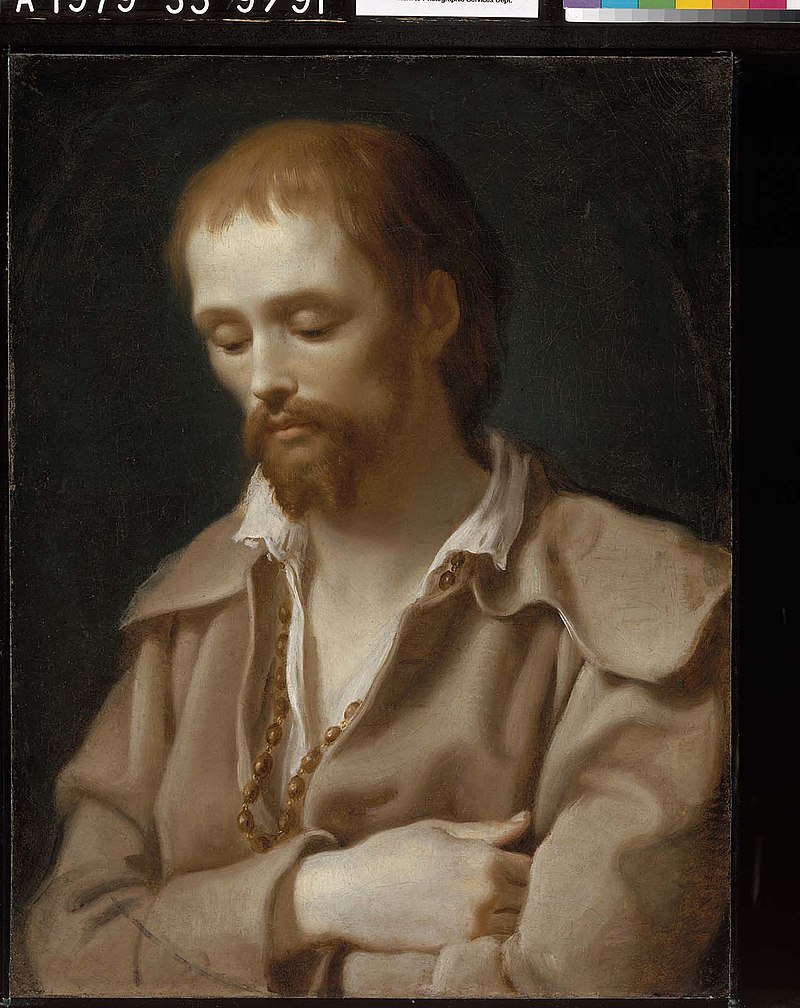
A Tale of Two Benedicts
A grace-filled Holy Week to all our readers! As we await and prepare for the Resurrection about to dawn upon us, we might keep in mind two Benedicts: Pope Emeritus Benedict XVI, requiescat in pace, elected on this day in 2005; and today’s commemoration of the mystic pilgrim, Benedict Joseph Labre, who died on this[…]Continue reading→

My Name is Bernadette
April 16th is a propitious day, for besides the anniversary of Father de Valk’s death, who founded Catholic Insight in its print form decades ago, and the commemoration of the ‘two Benedicts’, mentioned in accompanying posts, today we also recall Saint Bernadette Soubirous, the young visionary to whom the Virgin Mary appeared numerous times at[…]Continue reading→
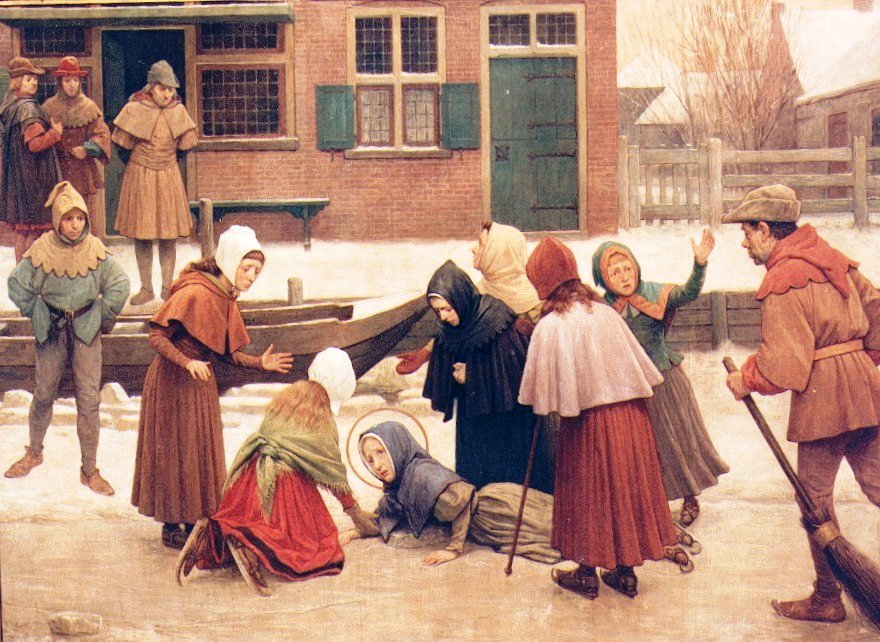
Saint Lydwina of Schiedam and Suffering Joyfully
Saint Lydwina of Schiedam (1380 – 1433) was one of the countless and glorious ‘victim souls’ in the history of the Church, those whose lives are filled with suffering, often of an unimaginable intensity, but who suffer joyfully. She was a fifteen-year old Dutch girl, out skating one day, when she fell and broke one[…]Continue reading→
The Glorious Martyrdoms of Martin and Maximus
As we enter into Eastertide, we recall on this 13th of April Pope Saint Martin I (+655), one of the noblest, if most tragic, of the successors of Saint Peter. Born in Umbria, Italy, he was of noble lineage, with great intelligence combined with charity and love of the poor and the Church. While still[…]Continue reading→

Saint Stanislaus of Szczepanów
We celebrate Saint Stanislaus today (+ April 11, 1079), in light of this Easter Octave, a bishop and martyr who accepted the episcopacy only at the direct order of Pope Alexander II. He proved a wise and courageous leader of his flock, put to death by his own king, Boleslaus, for rebuking the monarch’s ‘immoral[…]Continue reading→
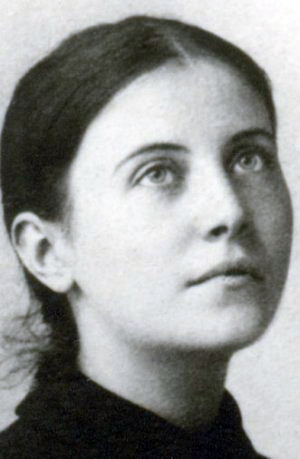
Saint Gemma Galgani
On this April 11th, in 1903 – the same year that the Italian Guiseppe Sarto was elected Pope later that summer as Pius X – a lovely, young Italian woman died, by the name of Gemma Galgani. She lived a brief life of 24 years, as did a number of other young saints, including Pier[…]Continue reading→

An Ideological and Improper Translation
I noticed something odd with the psalm reading at Mass the other day. Our bishops’ conference here in Canada has decreed that the Mass in English – Novus Ordo – use the ‘NRSV’, the ‘New Revised Standard Version’, an ‘updated’ translation of the original RSV, first published in 1952. This ‘new translation’ has the tendency[…]Continue reading→
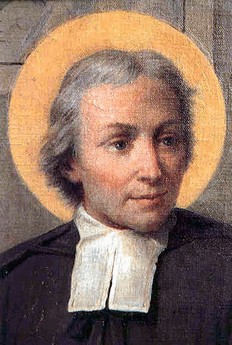
Saint Jean-Baptiste de la Salle: A Teacher for Teachers
Jean-Baptiste de la Salle (1651 – 1719), a French nobleman, ordained a priest, founded the first order in the Church’s history entirely without priests, and this came about almost by accident. I say ‘almost’, for, of course, there are no accidents with God. Destined for ordination from an early age, Jean-Baptiste never looked back, even[…]Continue reading→