
Saint Thomas and Trump’s Executive Order
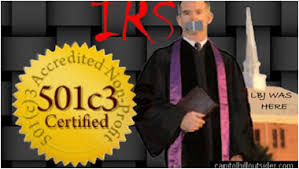
Pursuant to President Trump’s executive order on the notorious Johnson Amendment, my Dad put me onto an article in the National Review, recounting the limitations of this well-intentioned action of the Commander-in-Chief. The author makes a good case that personal executive orders cannot stand against the full force of entrenched law, which is where the real battle should be.
The answer to the Johnson Amendment, however, is to either repeal the statute or overturn it in court.
After all, any executive order can be easily remanded not only by a contrary-minded judge, as we seen happen twice now with Trump’s other executive order on immigration, but also by a future president. As the author reasonably argues, those charities, particularly churches and schools, who now violate the Johnson amendment, and oppose specific candidates for public office, are leaving themselves hanging in the wind, vulnerable to future prosecution by the IRS under a future presidential administration.
a later administration can tear up Trump’s order and begin vigorous enforcement based on actions undertaken during the Trump administration.
There are a few things to ponder here:
First, freedom should be one of the fundamental principles governing Church-State relations. The government should in the main leave its citizens well enough alone, so they can work out their own opinions and ideas, whether in or out of churches and schools, according to their own mind and conscience. Using ‘tax breaks’ as a cudgel with which to coerce people is a bad and oppressive idea.
Second, if we were taxed within reasonable limits (which would mean far less than we now are, especially here in Canada), no one would give much of a tinker’s dam about tax breaks.
Third, laws should be few and far between, reserved only for the most grave of matters, especially the far-reaching federal and state/provincial law. Saint Thomas states that laws should only forbid those things that are to the ‘harm of others’, without which society could not function (cf., I-II, q.96, a.2). These laws, furthermore, should be framed by wise men, who ponder over a long period of time, and they should be revised the same way. To govern a country by judicial or even presidential fiat, as necessary as this may be in emergencies, is haphazard, chaotic, even anarchic, and leads to bad laws and policies. Judges are not supposed to make law, but only determine whether and how an already existing law has been violated. Neither should the executive branch, of which the President is the head, make or break laws; they are tasked with enforcing the law, not writing it.
I wish Trump all the best in his desire to destroy the Johnson amendment, and wish also that we had some version of Trump here with the same desire. However, even if he were successful, which would mean overturning the law itself, there are far more fundamental problems in America than the Johnson amendment, and the mere fact that this legislative over-reach was permitted back in 1959, so that Lyndon Johnson could muzzle his opposing candidate, itself speaks volumes. America is drifting further afield from its constitutional foundation, and it may be a long and painful journey back to sanity and just rule.
But I agree with Anthony Esolen and others, that the deeper problem in both America and Canada, indeed throughout the world, is cultural and religious, involving the notions of family, hearth and home, civic and moral duty, honour, and our very view of life, the universe and eternity.
Unless there is some common consensus on these fundamental principles through a shared culture, and to some extent a shared religion, seeking a political remedy through laws and orders is a quixotic venture, which may at best offer us a temporary reprieve from sliding further into anarchy.
Carney’s Amoral Majority
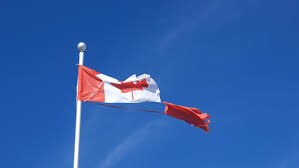
After five defections – euphemistically described as ‘crossing the floor’ – and three by-elections, Mark Carney and his Liberals how have their coveted majority. One wonders what bowls of pottage were offered in back-room deals. In the archaic monarchical system that is the Dominion of Canada, this majority allows the newly-minted Prime Minister to rule[…]Continue reading→

Saint Kateri , Canada’s Protectress
This was the title given to Saint Kateri Tekakwitha, by Pope Benedict XVI, when he canonized her on October 28th, 2012, along with six others, in Saint Peter’ Square (she had been beatified by Pope John Paul II back in 1980). With Saint Joseph as our protector, along with the Canadian martyrs, we seem to[…]Continue reading→
A Tale of Two Benedicts
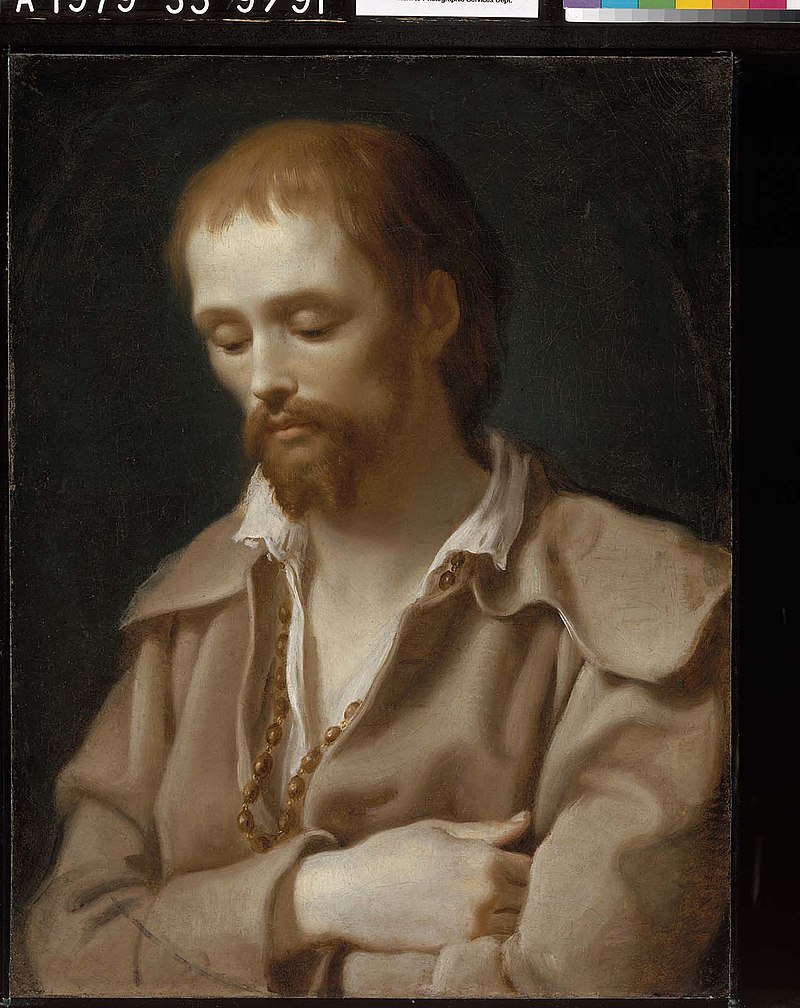
A grace-filled Holy Week to all our readers! As we await and prepare for the Resurrection about to dawn upon us, we might keep in mind two Benedicts: Pope Emeritus Benedict XVI, requiescat in pace, elected on this day in 2005; and today’s commemoration of the mystic pilgrim, Benedict Joseph Labre, who died on this[…]Continue reading→

My Name is Bernadette
April 16th is a propitious day, for besides the anniversary of Father de Valk’s death, who founded Catholic Insight in its print form decades ago, and the commemoration of the ‘two Benedicts’, mentioned in accompanying posts, today we also recall Saint Bernadette Soubirous, the young visionary to whom the Virgin Mary appeared numerous times at[…]Continue reading→
Saint Lydwina of Schiedam and Suffering Joyfully
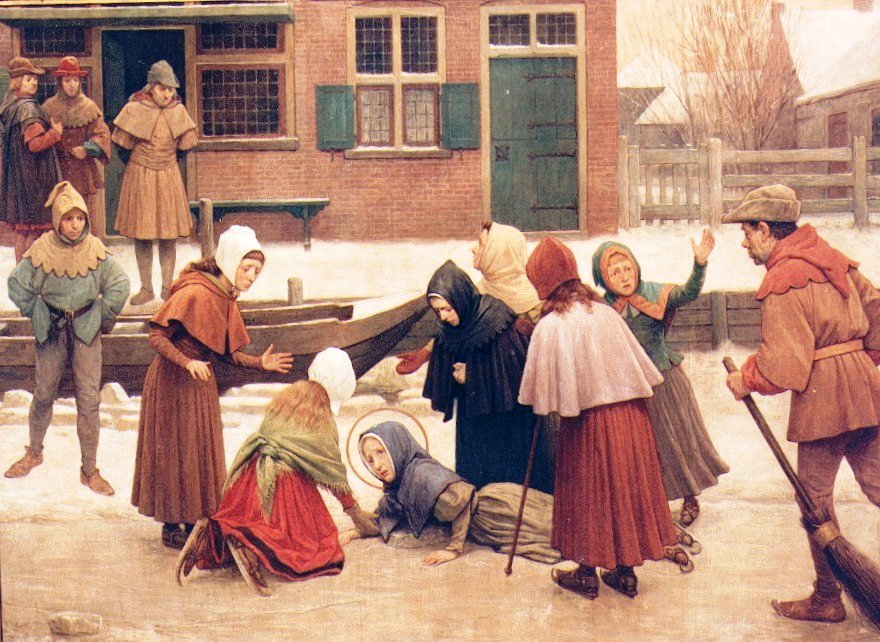
Saint Lydwina of Schiedam (1380 – 1433) was one of the countless and glorious ‘victim souls’ in the history of the Church, those whose lives are filled with suffering, often of an unimaginable intensity, but who suffer joyfully. She was a fifteen-year old Dutch girl, out skating one day, when she fell and broke one[…]Continue reading→
The Glorious Martyrdoms of Martin and Maximus
As we enter into Eastertide, we recall on this 13th of April Pope Saint Martin I (+655), one of the noblest, if most tragic, of the successors of Saint Peter. Born in Umbria, Italy, he was of noble lineage, with great intelligence combined with charity and love of the poor and the Church. While still[…]Continue reading→

Saint Stanislaus of Szczepanów
We celebrate Saint Stanislaus today (+ April 11, 1079), in light of this Easter Octave, a bishop and martyr who accepted the episcopacy only at the direct order of Pope Alexander II. He proved a wise and courageous leader of his flock, put to death by his own king, Boleslaus, for rebuking the monarch’s ‘immoral[…]Continue reading→
Saint Gemma Galgani
On this April 11th, in 1903 – the same year that the Italian Guiseppe Sarto was elected Pope later that summer as Pius X – a lovely, young Italian woman died, by the name of Gemma Galgani. She lived a brief life of 24 years, as did a number of other young saints, including Pier[…]Continue reading→
An Ideological and Improper Translation
I noticed something odd with the psalm reading at Mass the other day. Our bishops’ conference here in Canada has decreed that the Mass in English – Novus Ordo – use the ‘NRSV’, the ‘New Revised Standard Version’, an ‘updated’ translation of the original RSV, first published in 1952. This ‘new translation’ has the tendency[…]Continue reading→
Saint Jean-Baptiste de la Salle: A Teacher for Teachers
Jean-Baptiste de la Salle (1651 – 1719), a French nobleman, ordained a priest, founded the first order in the Church’s history entirely without priests, and this came about almost by accident. I say ‘almost’, for, of course, there are no accidents with God. Destined for ordination from an early age, Jean-Baptiste never looked back, even[…]Continue reading→