

March for Life, Twenty Years On
You will likely hear that numbers were down at the March for Life, although enthusiasm and devotion were, as always, high. This was the twentieth anniversary of the annual event, held on the Thursday before May 14th, when abortion was legalized under Pierre Trudeau. I (along with many others) have been to nearly every one, missing two due to travel, if memory serves. It is always a beautiful and enriching experience, even though motivated by the tragedy of the innumerable attacks against life, as pro-lifers gather together, meet each other, catch up, and realize that they are not alone.
I pondered why the numbers were not what they perhaps should be as I arrived on Parliament Hill, and noticed there were not as many school buses, with far fewer students from elementary or especially high school. Of course, if students do not get the day off, and are not transported to event, almost none of these young potential pro-lifers will go. I heard that a number even of the amenable school boards are now refusing to send students, fearing insurance claims and the danger the ‘protesters’ present. Given the presence of dozens of police officers, and the even smaller number of rather pathetic protesters, they need not worry. There were the usual pro-abortion suspects, tragic-looking women with bare midriffs, holding hastily-written placards with such slogans as “If you don’t like abortion, don’t have one!”. Well, that’s not really the point, is it? If you don’t like murder, then don’t kill? Hmm. One pro-abortion protester of the male persuasion held up a sign that said “If you take away their reproductive rights, we’ll take away yours”, replete with a scribbled pair of bloodied, detached testicles. Again, hmm. I don’t think they understand the nature of ‘analogy’, and could use a basic course in Aristotelian logic. That may move the debate forward. But, then again, from the looks of things, it does not seem they are all that interested in debate or dialogue.
But back to the pro-lifers and the attenuated numbers: Without the plethora of semi-voluntary student attendance, on a Thursday, many people who are not in school have to work. There is also the vast area of Canada, with its dispersed population, making travel difficult and onerous. In the American March for Life, which they hold at the end of January in Washington, there are many millions of people living within easy driving range of the capital, but I have also heard of stalwart Americans driving vast distances to attend their March, as do a number of Canadians. One way or another, the numbers south of the border are in the six digits. It is, as they say, an ‘event’, which one would not want to miss, something I and others had hoped would be the case for Canada’s March also.
Besides the drop in student numbers, I cannot help feel that a sense of complacency is settling into not only the broader society, but even our hopefully stalwart pro-life souls, of ‘what’s the point’, and ‘what good does all this do’? Marching, protesting, writing letters, prayers and sacrifices, yet here we have had nearly a half-century of legal abortion in Canada, with more than half of that with no restrictions whatsoever, in effect, no law. It is, as the saying goes, a decision between a ‘woman and her doctor’. Now, not even that, for any woman can get an abortion for any reason from any physician, whether her own or not, all paid for by the government, which means, by you and me.
Saint Thomas states that law works in two ways: Pedagogically, teaching us what we should do, and coercively, forcing us to do it by ‘force and fear’, should we be inclined to disobey.
One cannot help but think that abortion has been legal for so long, that most people in Canada now consider it perfectly legal, moral, even normal, and that to be ‘against abortion’ is a sign of anarchy, fascism, even mental illness. The same is now happening with euthanasia, even more rapidly, as we have been accustomed to state-sponsored death for some time now.
Pope John Paul teaches in Evangelium Vitae that the primary way that one builds the ‘culture of life’ is to live a moral life, doing one’s duty of the moment, fulfilling one’s vocation, raising children, spending time with family, taking care of the elderly and sick, all those little things that make up the life of sanctity and the way to heaven.
He also declares that the two primary underlying causes of abortion are the contraceptive mentality and the trivialization of sexuality, both of which breed a selfish, self-absorbed and hedonistic mentality, whereby one perceives any child conceived as an ‘enemy’ and an ‘intruder’, who has no right to be there, in fact, has no rights at all, unless such ‘rights’ are bestowed upon him by the whim and ‘choice’ of his mother, which may fluctuate and change at any point (definitely not his father, who also has no rights in this regard). Infanticide cannot be all that far away.
Abortion is a symptom and an effect of a far deeper and more complex moral decrepitude in our society, all that is entailed in what the Holy Father memorably termed the ‘culture of death’, but that does not mean that we stop protesting. For abortion is the culmination of this evil, the wholesale and widespread murder of innocents in the first phase of their existence. We cannot just let it stand. Rather we must stand up and be counted, for these children cannot, even if we see such gestures as ‘futile’ in a worldly sense. For we do not it for the world, but for God, for the babies, for each other.
Carney’s Amoral Majority
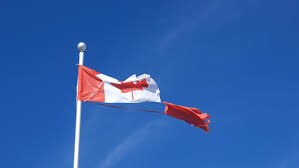
After five defections – euphemistically described as ‘crossing the floor’ – and three by-elections, Mark Carney and his Liberals how have their coveted majority. One wonders what bowls of pottage were offered in back-room deals. In the archaic monarchical system that is the Dominion of Canada, this majority allows the newly-minted Prime Minister to rule[…]Continue reading→

Saint Kateri , Canada’s Protectress
This was the title given to Saint Kateri Tekakwitha, by Pope Benedict XVI, when he canonized her on October 28th, 2012, along with six others, in Saint Peter’ Square (she had been beatified by Pope John Paul II back in 1980). With Saint Joseph as our protector, along with the Canadian martyrs, we seem to[…]Continue reading→

Remembering Father Alphonse de Valk
(Today marks the sixth anniversary of the death of Father Alphonse de Valk, C.S.B., a faithful, courageous and indefatigable Basilian priest, pro-life-and-family apostle, and the founder of Catholic Insight magazine. Here is what we wrote those on his entering into eternity five years ago, as we continue to remember him in our prayers and thoughts)[…]Continue reading→

A Tale of Two Benedicts
A grace-filled Holy Week to all our readers! As we await and prepare for the Resurrection about to dawn upon us, we might keep in mind two Benedicts: Pope Emeritus Benedict XVI, requiescat in pace, elected on this day in 2005; and today’s commemoration of the mystic pilgrim, Benedict Joseph Labre, who died on this[…]Continue reading→

My Name is Bernadette
April 16th is a propitious day, for besides the anniversary of Father de Valk’s death, who founded Catholic Insight in its print form decades ago, and the commemoration of the ‘two Benedicts’, mentioned in accompanying posts, today we also recall Saint Bernadette Soubirous, the young visionary to whom the Virgin Mary appeared numerous times at[…]Continue reading→

Saint Lydwina of Schiedam and Suffering Joyfully
Saint Lydwina of Schiedam (1380 – 1433) was one of the countless and glorious ‘victim souls’ in the history of the Church, those whose lives are filled with suffering, often of an unimaginable intensity, but who suffer joyfully. She was a fifteen-year old Dutch girl, out skating one day, when she fell and broke one[…]Continue reading→

The Glorious Martyrdoms of Martin and Maximus
As we enter into Eastertide, we recall on this 13th of April Pope Saint Martin I (+655), one of the noblest, if most tragic, of the successors of Saint Peter. Born in Umbria, Italy, he was of noble lineage, with great intelligence combined with charity and love of the poor and the Church. While still[…]Continue reading→

Canonizing Sister Faustina and Divine Mercy
HOMILY OF THE HOLY FATHER MASS IN ST PETER’S SQUARE FOR THE CANONIZATION OF SR MARY FAUSTINA KOWALSKA Sunday, 30 April 2000 1. “Confitemini Domino quoniam bonus, quoniam in saeculum misericordia eius”; “Give thanks to the Lord for he is good; his steadfast love endures for ever” (Ps 118: 1). So the Church sings on the Octave of[…]Continue reading→

Divine Mercy Sunday – An Echo of Every Mass
Reach out your hand and put it in my side. Do not doubt but believe’… ‘My Lord and my God!’ (Jn. 20:18)). Today is Divine Mercy Sunday, and as we celebrate the end of the Easter Octave, we contemplate the wounded side of our Saviour, the Church’s source of life. On Good Friday in the[…]Continue reading→

Saint Stanislaus of Szczepanów
We celebrate Saint Stanislaus today (+ April 11, 1079), in light of this Easter Octave, a bishop and martyr who accepted the episcopacy only at the direct order of Pope Alexander II. He proved a wise and courageous leader of his flock, put to death by his own king, Boleslaus, for rebuking the monarch’s ‘immoral[…]Continue reading→