
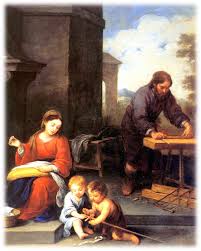
Saint Joseph, A Working Man
Saint Joseph has two ‘feast’ days in the universal Church, neither of which is technically a ‘feast’. The first, on March 19th, is his principal day, celebrated as a full solemnity, usually in Lent (unless bumped into Easter by its falling during Holy Week).
Then there is today’s ‘optional memorial’ of Saint Joseph the Worker. I personally think this day could do with a bumping up at least into memorial territory, or even a feast, due to the importance of the issue of work in our world, and what it means for Man. Pope Pius XII instituted this feast in 1955 (when it was a feast, and still is, as far as I know, in the usus antiquior), as a Catholic alternative to the Communist-inspired ‘International Workers’ Day’.
Workers of the world unite? Yes, indeed, but around the proper principle of work: Not as a materialistic endeavour, whose sole purpose is to produce ‘goods’ for the State or the marketplace, but rather, as a free and ennobling activity whose primary purpose is to perfect the worker himself.
This is what Pope John Paul II in Laborem Exercens, his masterful meditation on human labour, calls the ‘subjective’ dimension of work, making the worker himself better, and more apt for heaven, by exercising his talents, which exceeds in importance the ‘objective’ dimension, the production of goods themselves. As he puts it:
the primary basis of the value of work is man himself, who is its subject. This leads immediately to a very important conclusion of an ethical nature: however true it may be that man is destined for work and called to it, in the first place work is “for man” and not man “for work”
And he continues:
Through this conclusion one rightly comes to recognize the pre-eminence of the subjective meaning of work over the objective one. Given this way of understanding things, and presupposing that different sorts of work that people do can have greater or lesser objective value, let us try nevertheless to show that each sort is judged above all by the measure of the dignity of the subject of work, that is to say the person, the individual who carries it out.
Before concluding:
in the final analysis it is always man who is the purpose of the work, whatever work it is that is done by man-even if the common scale of values rates it as the merest “service”, as the most monotonous even the most alienating work. (#6)
All labour is therefore dignified by the very fact that it is a human person, made in the imago Dei, who is working. Yes, some should be remunerated more than others based on the objective value of their work (we value neurosurgeons more than baristas, or most do, at least those suffering traumatic brain trauma). But every worker deserves a just wage, dignified work conditions, and for their work to be valued. Everyone has a right to work, in some way, shape or form, which is why the Magisterium can truly call the plague of widespread unemployment a ‘scourge’, recalling of course that this right also implies a duty on the worker’s part to work well, with excellence, diligence and greatness of soul.
We can safely surmise that this is how the foster father of the Christ worked, teaching his divine Son the ways and means of human labour. And this is what Saint Joseph teaches all of us in today’s feast/memorial.
(I will add a note here in response to a reader: In the original Latin, ‘foster father’ is ‘nutricie’, which imples something different than our modern notion of ‘foster father’. Saint Joseph was indeed the real, although not biological, father of the Christ).
As Saint Paul wrote to the Colossians:
And whatsoever ye do in word or deed, do all in the name of the Lord Jesus, giving thanks to God and the Father by him.
Sancte Joseph, ora pro nobis!

Carney’s Amoral Majority
After five defections – euphemistically described as ‘crossing the floor’ – and three by-elections, Mark Carney and his Liberals how have their coveted majority. One wonders what bowls of pottage were offered in back-room deals. In the archaic monarchical system that is the Dominion of Canada, this majority allows the newly-minted Prime Minister to rule[…]Continue reading→

Saint Kateri , Canada’s Protectress
This was the title given to Saint Kateri Tekakwitha, by Pope Benedict XVI, when he canonized her on October 28th, 2012, along with six others, in Saint Peter’ Square (she had been beatified by Pope John Paul II back in 1980). With Saint Joseph as our protector, along with the Canadian martyrs, we seem to[…]Continue reading→

Remembering Father Alphonse de Valk
(Today marks the sixth anniversary of the death of Father Alphonse de Valk, C.S.B., a faithful, courageous and indefatigable Basilian priest, pro-life-and-family apostle, and the founder of Catholic Insight magazine. Here is what we wrote those on his entering into eternity five years ago, as we continue to remember him in our prayers and thoughts)[…]Continue reading→
A Tale of Two Benedicts
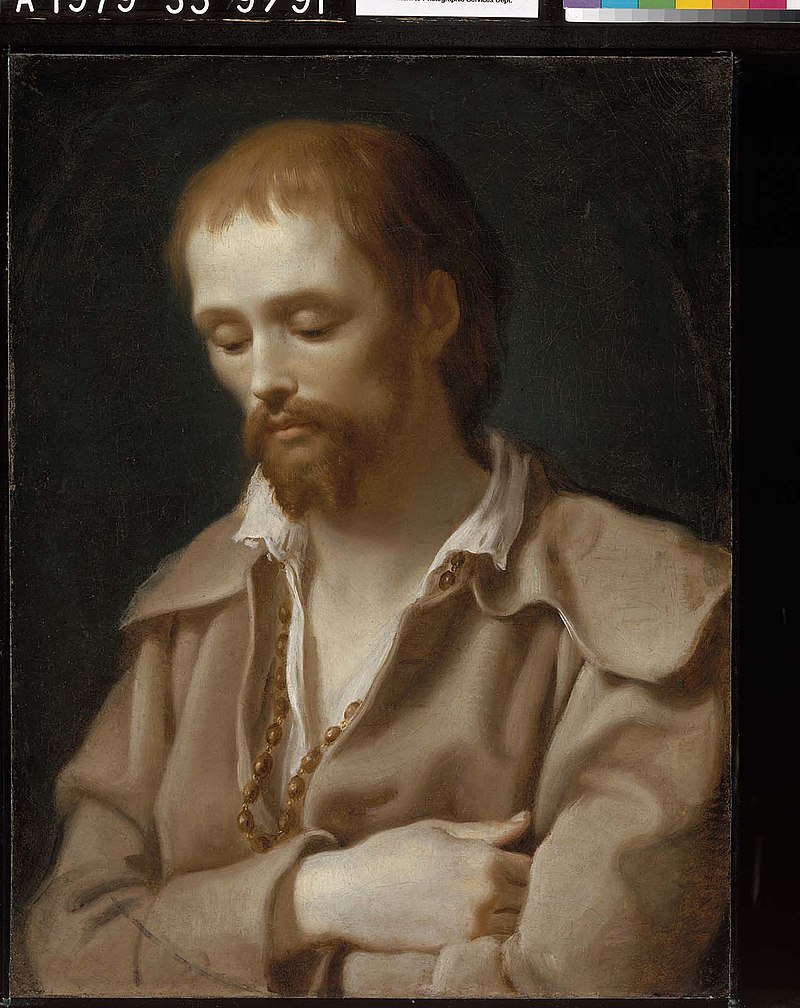
A grace-filled Holy Week to all our readers! As we await and prepare for the Resurrection about to dawn upon us, we might keep in mind two Benedicts: Pope Emeritus Benedict XVI, requiescat in pace, elected on this day in 2005; and today’s commemoration of the mystic pilgrim, Benedict Joseph Labre, who died on this[…]Continue reading→

My Name is Bernadette
April 16th is a propitious day, for besides the anniversary of Father de Valk’s death, who founded Catholic Insight in its print form decades ago, and the commemoration of the ‘two Benedicts’, mentioned in accompanying posts, today we also recall Saint Bernadette Soubirous, the young visionary to whom the Virgin Mary appeared numerous times at[…]Continue reading→
Saint Lydwina of Schiedam and Suffering Joyfully
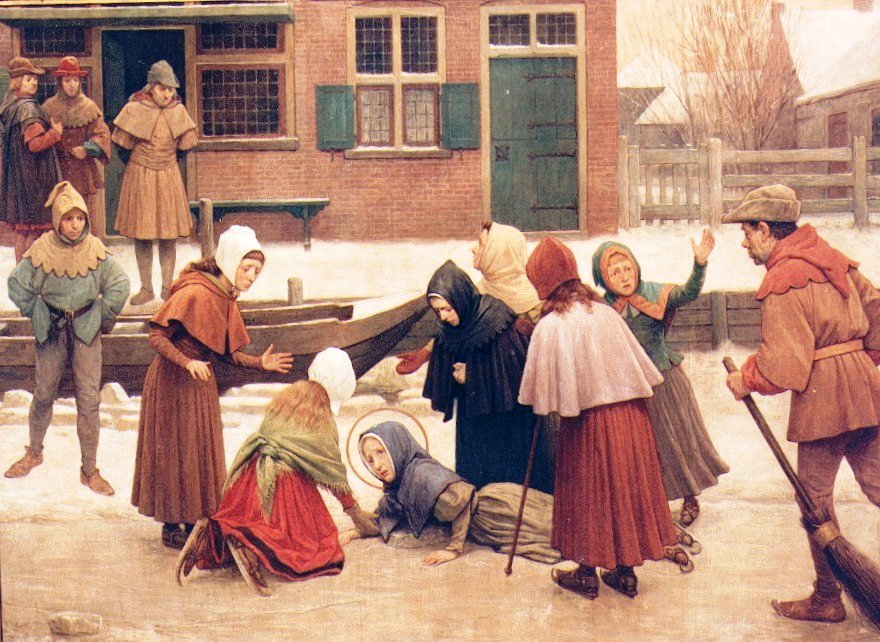
Saint Lydwina of Schiedam (1380 – 1433) was one of the countless and glorious ‘victim souls’ in the history of the Church, those whose lives are filled with suffering, often of an unimaginable intensity, but who suffer joyfully. She was a fifteen-year old Dutch girl, out skating one day, when she fell and broke one[…]Continue reading→
The Glorious Martyrdoms of Martin and Maximus
As we enter into Eastertide, we recall on this 13th of April Pope Saint Martin I (+655), one of the noblest, if most tragic, of the successors of Saint Peter. Born in Umbria, Italy, he was of noble lineage, with great intelligence combined with charity and love of the poor and the Church. While still[…]Continue reading→

Canonizing Sister Faustina and Divine Mercy
HOMILY OF THE HOLY FATHER MASS IN ST PETER’S SQUARE FOR THE CANONIZATION OF SR MARY FAUSTINA KOWALSKA Sunday, 30 April 2000 1. “Confitemini Domino quoniam bonus, quoniam in saeculum misericordia eius”; “Give thanks to the Lord for he is good; his steadfast love endures for ever” (Ps 118: 1). So the Church sings on the Octave of[…]Continue reading→

Divine Mercy Sunday – An Echo of Every Mass
Reach out your hand and put it in my side. Do not doubt but believe’… ‘My Lord and my God!’ (Jn. 20:18)). Today is Divine Mercy Sunday, and as we celebrate the end of the Easter Octave, we contemplate the wounded side of our Saviour, the Church’s source of life. On Good Friday in the[…]Continue reading→

Saint Stanislaus of Szczepanów
We celebrate Saint Stanislaus today (+ April 11, 1079), in light of this Easter Octave, a bishop and martyr who accepted the episcopacy only at the direct order of Pope Alexander II. He proved a wise and courageous leader of his flock, put to death by his own king, Boleslaus, for rebuking the monarch’s ‘immoral[…]Continue reading→