
Assumption of the Blessed Virgin Mary
Dear Brothers and Sisters!
At the end of its Constitution on the Church, the Second Vatican Council left us a very beautiful meditation on Mary Most Holy. Let me just recall the words referring to the mystery we celebrate today: “the immaculate Virgin preserved free from all stain of original sin, was taken up body and soul into heavenly glory, when her earthly life was over, and exalted by the Lord as Queen over all things” (no. 59). Then towards the end, there is: “the Mother of Jesus in the glory which she possesses in body and soul in heaven is the image and the beginning of the church as it is to be perfected in the world to come. Likewise, she shines forth on earth, until the day of the Lord shall come” (no. 68). In the light of this most beautiful image of our Mother, we are able to see the message of the biblical readings that we have just heard. We can focus on three key words: struggle, resurrection, hope.
The passage from Revelation presents the vision of the struggle between the woman and the dragon. The figure of the woman, representing the Church, is, on the one hand, glorious and triumphant and yet, on the other, still in travail. And the Church is like that: if in heaven she is already associated in some way with the glory of her Lord, in history she continually lives through the trials and challenges which the conflict between God and the evil one, the perennial enemy, brings. And in the struggle which the disciples must confront—all of us, all the disciples of Jesus, we must face this struggle—Mary does not leave them alone: the Mother of Christ and of the Church is always with us. She walks with us always, she is with us. And in a way, Mary shares this dual condition. She has of course already entered, once and for all, into heavenly glory. But this does not mean that she is distant or detached from us; rather Mary accompanies us, struggles with us, sustains Christians in their fight against the forces of evil. Prayer with Mary, especially the Rosary—but listen carefully: the Rosary. Do you pray the Rosary every day? But I’m not sure you do [the people shout “Yes!”] … Really? Well, prayer with Mary, especially the Rosary, has this “suffering” dimension, that is of struggle, a sustaining prayer in the battle against the evil one and his accom- plices. The Rosary also sustains us in the battle.
The second reading speaks to us of resurrection. The Apostle Paul, writing to the Corinthians, insists that being Christian means believing that Christ is truly risen from the dead. Our whole Faith is based upon this fundamental truth which is not an idea but an event. Even the mystery of Mary’s Assumption body and soul is fully inscribed in the resurrection of Christ. The Mother’s humanity is “attracted” by the Son in his own passage from death to life. Once and for all, Jesus entered into eternal life with all the humanity he had drawn from Mary; and she, the Mother, who followed him faithfully throughout her life, followed him with her heart, and entered with him into eternal life which we also call heaven, paradise, the Father’s house.
Mary also experienced the martyrdom of the Cross: the martyrdom of her heart, the martyrdom of her soul. She lived her Son’s Passion to the depths of her soul. She was fully united to him in his death, and so she was given the gift of resurrection. Christ is the first fruits from the dead and Mary is the first of the redeemed, the first of “those who are in Christ.” She is our Mother, but we can also say that she is our representative, our sister, our eldest sister, she is the first of the redeemed, who has arrived in heaven.
The Gospel suggests to us the third word: hope. Hope is the virtue of those who, experiencing conflict—the struggle between life and death, good and evil—believe in the resurrection of Christ, in the victory of love. We heard the Song of Mary, the Magnificat: it is the song of hope, it is the song of the People of God walking through history. It is the song many saints, men and women, some famous, and very many others unknown to us but known to God: mums, dads, catechists, missionaries, priests, sisters, young people, even children and grandparents: these have faced the struggle of life while carrying in their heart the hope of the little and the humble. Mary says: “My souls glorifies the Lord”—today, the Church too sings this in every part of the world. This song is particularly strong in places where the Body of Christ is suffering the Passion. For us Christians, wherever the Cross is, there is hope, always. If there is no hope, we are not Christian. That is why I like to say: do not allow yourselves to be robbed of hope. May we not be robbed of hope, because this strength is a grace, a gift from God which carries us forward with our eyes fixed on heaven. And Mary is always there, near those communities, our brothers and sisters, she accompanies them, suffers with them, and sings the Magnificat of hope with them.
Dear Brothers and Sisters, with all our heart let us too unite ourselves to this song of patience and victory, of struggle and joy, that unites the triumphant Church with the pilgrim one, earth with heaven, and that joins our lives to the eternity towards which we journey. Amen.
Homily of His Holiness Pope Francis
on the Solemnity of the Assumption of the Blessed Virgin
Mary Castel Gandolfo, 15 August 2013
© Libreria Editrice Vaticana
© Life Ethics Information Centre 2013

Saint Kateri , Canada’s Protectress
This was the title given to Saint Kateri Tekakwitha, by Pope Benedict XVI, when he canonized her on October 28th, 2012, along with six others, in Saint Peter’ Square (she had been beatified by Pope John Paul II back in 1980). With Saint Joseph as our protector, along with the Canadian martyrs, we seem to[…]Continue reading→
A Tale of Two Benedicts
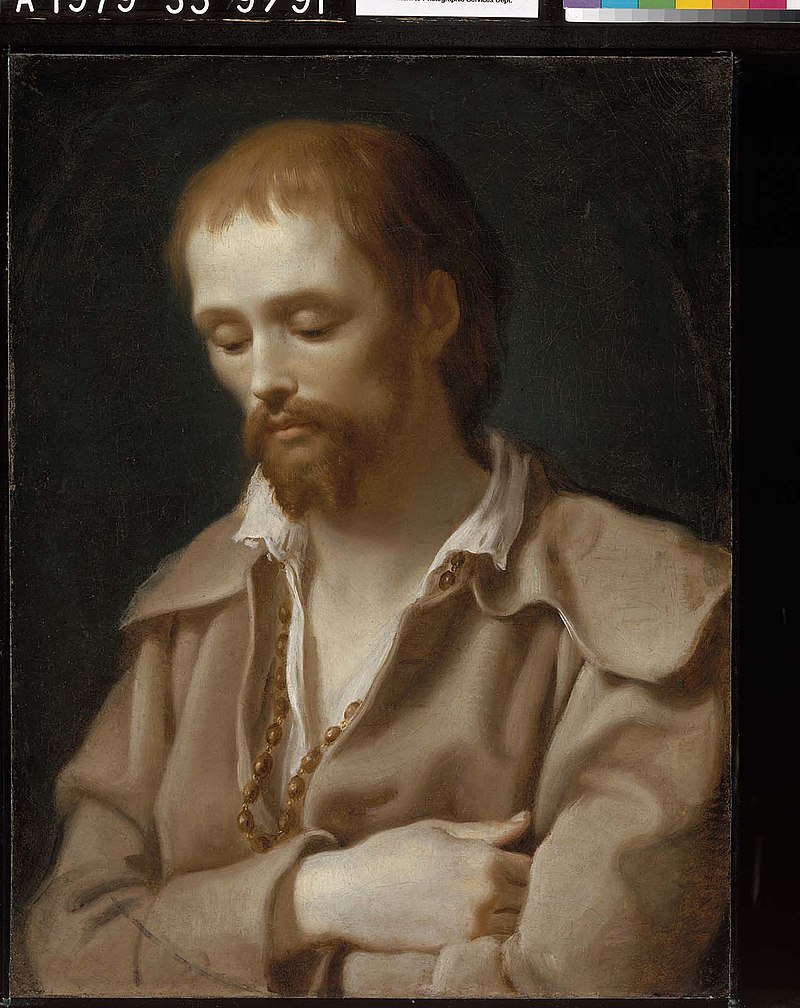
A grace-filled Holy Week to all our readers! As we await and prepare for the Resurrection about to dawn upon us, we might keep in mind two Benedicts: Pope Emeritus Benedict XVI, requiescat in pace, elected on this day in 2005; and today’s commemoration of the mystic pilgrim, Benedict Joseph Labre, who died on this[…]Continue reading→

My Name is Bernadette
April 16th is a propitious day, for besides the anniversary of Father de Valk’s death, who founded Catholic Insight in its print form decades ago, and the commemoration of the ‘two Benedicts’, mentioned in accompanying posts, today we also recall Saint Bernadette Soubirous, the young visionary to whom the Virgin Mary appeared numerous times at[…]Continue reading→
Saint Lydwina of Schiedam and Suffering Joyfully
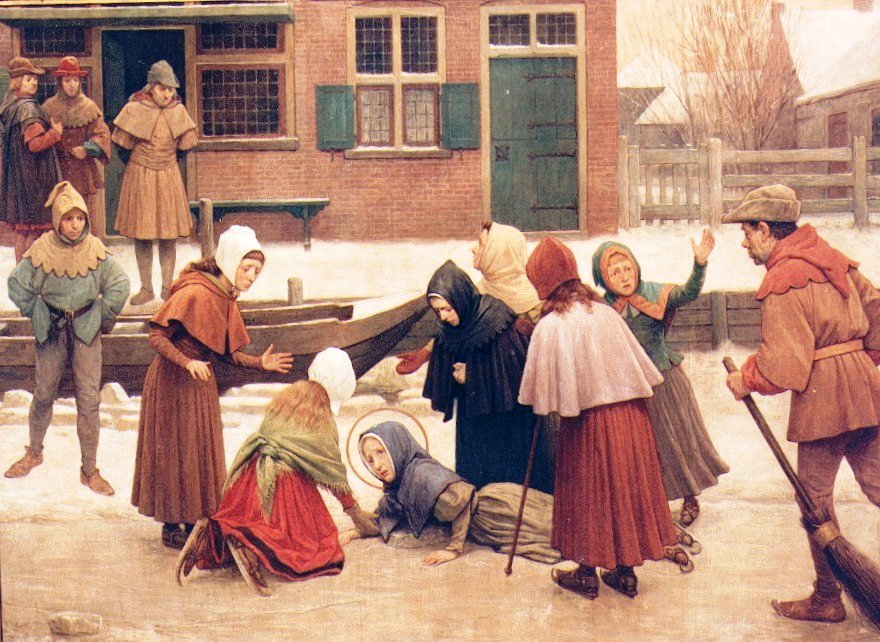
Saint Lydwina of Schiedam (1380 – 1433) was one of the countless and glorious ‘victim souls’ in the history of the Church, those whose lives are filled with suffering, often of an unimaginable intensity, but who suffer joyfully. She was a fifteen-year old Dutch girl, out skating one day, when she fell and broke one[…]Continue reading→
The Glorious Martyrdoms of Martin and Maximus
As we enter into Eastertide, we recall on this 13th of April Pope Saint Martin I (+655), one of the noblest, if most tragic, of the successors of Saint Peter. Born in Umbria, Italy, he was of noble lineage, with great intelligence combined with charity and love of the poor and the Church. While still[…]Continue reading→
Canonizing Sister Faustina and Divine Mercy
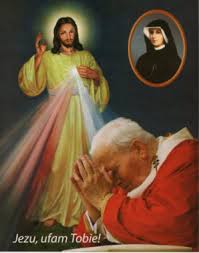
HOMILY OF THE HOLY FATHER MASS IN ST PETER’S SQUARE FOR THE CANONIZATION OF SR MARY FAUSTINA KOWALSKA Sunday, 30 April 2000 1. “Confitemini Domino quoniam bonus, quoniam in saeculum misericordia eius”; “Give thanks to the Lord for he is good; his steadfast love endures for ever” (Ps 118: 1). So the Church sings on the Octave of[…]Continue reading→
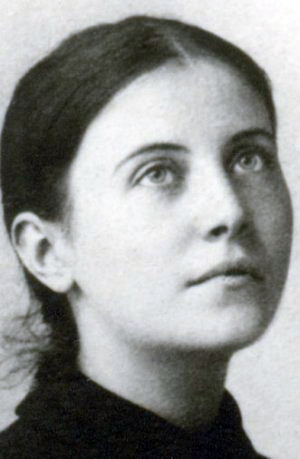
Saint Gemma Galgani
On this April 11th, in 1903 – the same year that the Italian Guiseppe Sarto was elected Pope later that summer as Pius X – a lovely, young Italian woman died, by the name of Gemma Galgani. She lived a brief life of 24 years, as did a number of other young saints, including Pier[…]Continue reading→
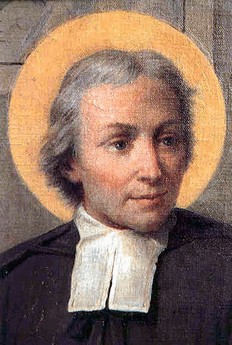
Saint Jean-Baptiste de la Salle: A Teacher for Teachers
Jean-Baptiste de la Salle (1651 – 1719), a French nobleman, ordained a priest, founded the first order in the Church’s history entirely without priests, and this came about almost by accident. I say ‘almost’, for, of course, there are no accidents with God. Destined for ordination from an early age, Jean-Baptiste never looked back, even[…]Continue reading→
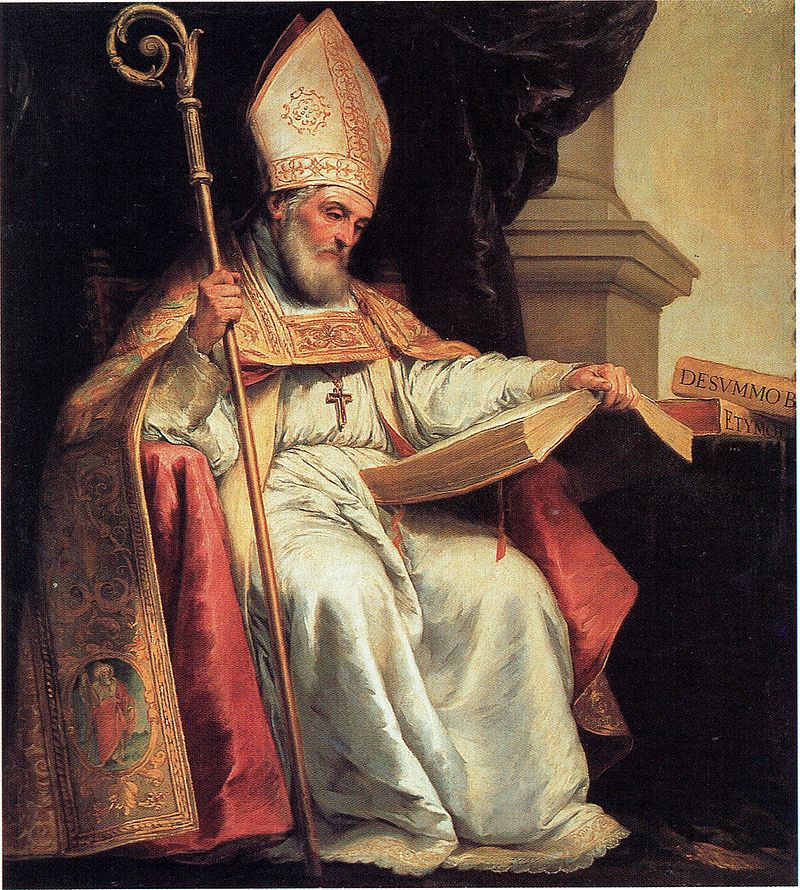
Saint Isidore of Seville, the Internet and Industriousness
Today, April 4th, muted this year by Holy Saturday, is the commemoration of Saint Isidore of Seville (560-636) a bishop and doctor of the Church during a tumultuous age, when civilization was crumbling, coming apart at its very seams, which may sound sort of au courant. Then again, the form of this world has always[…]Continue reading→
A Minimal Friar and the Death of a Great Pope
This April the second- overshadowed by Holy Thursday this year – marks the memorial of Saint Francis of Paola (1417-1507), founder of the ‘Minim’ friars, so called for their humility and poverty, who interpreted the rule of Saint Francis of Assisi in quite a literal sense: extreme poverty, trust in God, foregoing all animal and[…]Continue reading→