
Proclaim the truth
“Children are a grace that is given to a couple. … We need signs among us that when we put God first, others second, and ourselves third, that it works.”
In the early part of the sixth century, St. Benedict, appalled by the immorality of Rome, left to pursue the Christian life in the desert. People flocked to Benedict to learn how to live as Christians. This began a movement that produced monasteries all over the west, saved Christendom by preserving its cultural and intellectual heritage, and spread the Gospel back into what had once been a civilized Europe. In the twelfth century, another saint, Francis of Assisi, followed almost the same path as St. Benedict—only his friary was the open road.
In each generation the Church is renewed following this process which is really a re-living of the life of Christ by the Church, and our age is no exception. Such renewals are characteristic of the Church in her missionary activity: a time of cultural crisis causes good people to embrace the Christian life then, most important of all, bring the Gospel to the people in the world who are in desperate need of this grace. Religious orders follow this pattern, as do dioceses, parishes, families, and individuals in their personal spiritual life.
As one of our letter writers stated in this issue, for forty years now parts of Canadian popular culture have sullied every normal human decency, sometimes out of ignorance, sometimes out of malice. Catholic Insight has been an important voice warning Canadians about the dangers of legislative policies that threatened the Church, the unborn, and education. We believe that this is still necessary. But now there is a difference: society has changed and the current generation has grown up in a post-Christian world. For example, when Catholic Insight began we could assume that everyone at least knew that the purpose of marriage was to bring children into the world. We cannot take this for granted now.
A year ago we presented the plan for the direction of Catholic Insight based on this analysis of our missionary vocation. It is a good time to revisit this. We are first and foremost pro-life and pro-marriage. This is the front in the culture war. We are dedicated to present to our readers the truth of the Faith—a truth that is life-giving, that sets us free, and that is fundamentally joyous. This is often misunderstood, but it is a fact that the martyrs on Tyburn and the Carmelite sisters killed during the French revolution sang, not in false bravado, but in genuine joy that their suffering would aid in the salvation of the very people who were putting them to death.
In modern Canada ours is a different kind of suffering, and we are more in danger of discouragement than the scaffold. We can be tempted to give up, a condition spiritual writers call acedia, and which is also known as the noon-day devil. The truth is that life is a gift, marriage is a blessing, and children are a grace. In Canada, our most pressing need is that “we need signs among us that when we put God first, others second, and ourselves third, that it works.”
If you have been wondering why a particular article has appeared in Catholic Insight, this is the reason—to remind ourselves that living a faith-filled life works. A family full of children is a joy, which can be seen when children help their parents make a rink, hunt with their fathers, or make a crèche with their mothers. The Catholic life is a joyful one. It works.
Presenting this truth is part of our missionary work. We cannot expect people to live the Gospel if they do not know what it is. Nor will people be attracted to the Gospel if we misrepresent it. Savonarola, that tirless critic of the Medici family in Florence, was a good man and was right about many things—but it is Philip Neri who is the saint.
St. Thérèse the Little Flower, patroness of missionaries, pray for us.
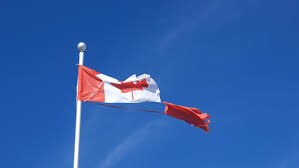
Carney’s Amoral Majority
After five defections – euphemistically described as ‘crossing the floor’ – and three by-elections, Mark Carney and his Liberals how have their coveted majority. One wonders what bowls of pottage were offered in back-room deals. In the archaic monarchical system that is the Dominion of Canada, this majority allows the newly-minted Prime Minister to rule[…]Continue reading→

A Tale of Two Benedicts
A grace-filled Holy Week to all our readers! As we await and prepare for the Resurrection about to dawn upon us, we might keep in mind two Benedicts: Pope Emeritus Benedict XVI, requiescat in pace, elected on this day in 2005; and today’s commemoration of the mystic pilgrim, Benedict Joseph Labre, who died on this[…]Continue reading→

Saint Lydwina of Schiedam and Suffering Joyfully
Saint Lydwina of Schiedam (1380 – 1433) was one of the countless and glorious ‘victim souls’ in the history of the Church, those whose lives are filled with suffering, often of an unimaginable intensity, but who suffer joyfully. She was a fifteen-year old Dutch girl, out skating one day, when she fell and broke one[…]Continue reading→

The Glorious Martyrdoms of Martin and Maximus
As we enter into Eastertide, we recall on this 13th of April Pope Saint Martin I (+655), one of the noblest, if most tragic, of the successors of Saint Peter. Born in Umbria, Italy, he was of noble lineage, with great intelligence combined with charity and love of the poor and the Church. While still[…]Continue reading→

Saint Stanislaus of Szczepanów
We celebrate Saint Stanislaus today (+ April 11, 1079), in light of this Easter Octave, a bishop and martyr who accepted the episcopacy only at the direct order of Pope Alexander II. He proved a wise and courageous leader of his flock, put to death by his own king, Boleslaus, for rebuking the monarch’s ‘immoral[…]Continue reading→
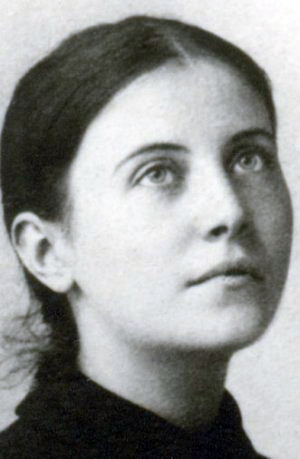
Saint Gemma Galgani
On this April 11th, in 1903 – the same year that the Italian Guiseppe Sarto was elected Pope later that summer as Pius X – a lovely, young Italian woman died, by the name of Gemma Galgani. She lived a brief life of 24 years, as did a number of other young saints, including Pier[…]Continue reading→
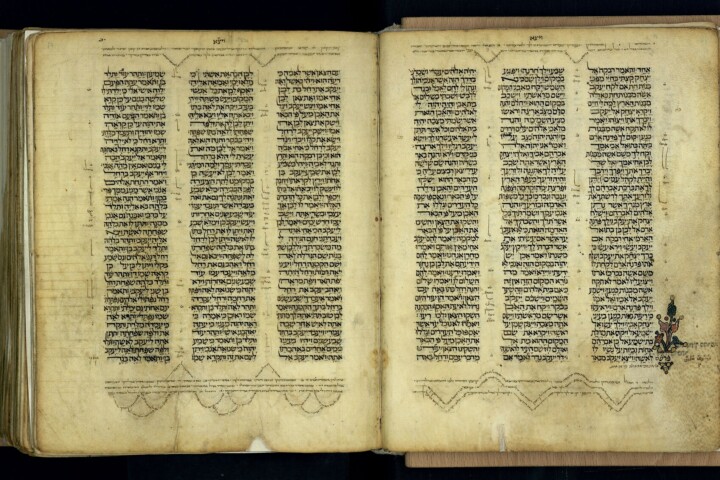
An Ideological and Improper Translation
I noticed something odd with the psalm reading at Mass the other day. Our bishops’ conference here in Canada has decreed that the Mass in English – Novus Ordo – use the ‘NRSV’, the ‘New Revised Standard Version’, an ‘updated’ translation of the original RSV, first published in 1952. This ‘new translation’ has the tendency[…]Continue reading→
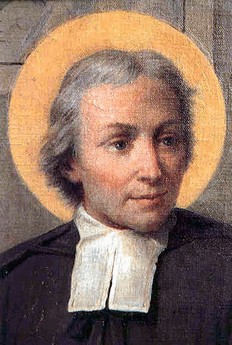
Saint Jean-Baptiste de la Salle: A Teacher for Teachers
Jean-Baptiste de la Salle (1651 – 1719), a French nobleman, ordained a priest, founded the first order in the Church’s history entirely without priests, and this came about almost by accident. I say ‘almost’, for, of course, there are no accidents with God. Destined for ordination from an early age, Jean-Baptiste never looked back, even[…]Continue reading→
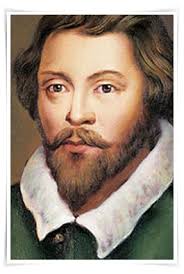
Three Easter Musical Gems: Bach, Palestrina and Byrd
A very blessed and glorious Easter! Christus surrexit vere, alleluia! As we begin this Easter Octave with the great Solemnity of Easter, music to lift the soul would be one of Bach’s Easter cantatas, composed during his time at Leipzig in the early 1700’s, for the six Sundays of this festive season, leading up to[…]Continue reading→
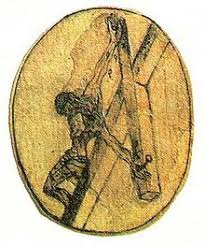
Good Friday and Suffering
Evil and pain is always a mystery, that whole mysterium iniquitatis, of which Saint Paul writes (2 Thess 2:7). In 1984, Pope Saint John Paul II penned an Apostolic Letter on the nature and purpose of human suffering, Salvifici Doloris (curiously, now looking back, the same year he made his first apostolic journey to Canada).[…]Continue reading→