
The Church embraces all humanity
I would like to reflect in particular on the meaning of the word “catholic,” a word which indicates an essential feature of the Church and her mission.
The characteristic marks of the Church are in accordance with God’s plan, as the Catechism of the Catholic Church tells us: “it is Christ who, through the Holy Spirit, makes his Church one, holy, catholic and apostolic, and it is he who calls her to realize each of these qualities” (no. 811). Specifi- cally, what makes the Church catholic is the fact that Christ in his saving mission embraces all humanity. While during his earthly life Jesus’ mission was limited to the Jewish people, “to the lost sheep of the house of Israel” (Mt 15:24), from the beginning it was meant to bring the light of the Gospel to all peoples and lead all nations into the kingdom of God. When he saw the faith of the centurion at Capernaum, Jesus cried out: “I tell you, many will come from east and west and sit at table with Abraham, Isaac, and Jacob in the kingdom of heaven” (Mt 8:11). This universalist perspective can be seen, among other things, from the way Jesus applied to himself not only the title “Son of David,” but also “Son of Man” (Mk 10:33), as in the Gospel passage that we have just heard. The expression “Son of Man,” in the language of Jewish apocalyptic literature inspired by the vision of history found in the book of the prophet Daniel (cf. 7:13- 14), calls to mind the figure who appears “with the clouds of heaven” (v. 13). This is an image that prophesies a completely new kingdom, sustained not by human powers, but by the true power that comes from God. Jesus takes up this rich and complex expression and refers it to himself in order to manifest the true character of his Messianism: a mission directed to the whole man and to every man, transcending all ethnic, national and religious particularities. And it is actually by following Jesus, by allowing oneself to be drawn into his humanity and hence into communion with God, that one enters this new kingdom proclaimed and anticipated by the Church, a kingdom that conquers fragmentation and dispersal.
Hence the universality of the Church flows from the universality of God’s unique plan of salvation for the world. This universal character emerges clearly on the day of Pentecost, when the Spirit fills the first Christian community with his presence, so that the Gospel may spread to all nations, causing the one People of God to grow in all peoples. From its origins, then, the Church is oriented kat’holon, it embraces the whole universe. … The Church’s universal mission does not arise from below, but descends from above, from the Holy Spirit: from the beginning it seeks to express itself in every culture so as to form the one People of God. Rather than beginning as a local community that slowly grows and spreads outwards, it is like yeast oriented towards a universal horizon, towards the whole: universality is inscribed within it.
At the beginning of the Church’s journey, the Apostles and disciples set off without any human security, purely in the strength of the Holy Spirit, the Gospel and the faith. This is the yeast that spreads round the world, enters into different events and into a wide range of cultural and social contexts, while remaining a single Church. Around the Apostles, Christian communities spring up, but these are “the” Church which is always the same, one and universal, whether in Jerusalem, Antioch, or Rome. And when the Apostles speak of the Church, they are not referring to a community of their own, but to the Church of Christ, and they insist on the unique, universal and all-inclusive identity of the Catholica that is realized in every local church. The Church is one, holy, catholic and apostolic, she reflects in herself the source of her life and her journey: the unity and communion of the Trinity.
Situated within the context and the perspective of the Church’s unity and universality is the College of Cardinals: it presents a variety of faces, because it expresses the face of the universal Church. In this Consistory, I want to highlight in particular the fact that the Church is the Church of all peoples, and so she speaks in the various cultures of the different continents. She is the Church of Pentecost: amid the polyphony of the various voices, she raises a single harmonious song to the living God.
A selection of the Address of His Holiness Benedict XVI at the Ordinary Public Consistory for the Creation of New Cardinals, Vatican Basilica, Saturday, 24 November 2012.
Reprinted with permission from ZENIT.org.

Saint Kateri , Canada’s Protectress
This was the title given to Saint Kateri Tekakwitha, by Pope Benedict XVI, when he canonized her on October 28th, 2012, along with six others, in Saint Peter’ Square (she had been beatified by Pope John Paul II back in 1980). With Saint Joseph as our protector, along with the Canadian martyrs, we seem to[…]Continue reading→

A Tale of Two Benedicts
A grace-filled Holy Week to all our readers! As we await and prepare for the Resurrection about to dawn upon us, we might keep in mind two Benedicts: Pope Emeritus Benedict XVI, requiescat in pace, elected on this day in 2005; and today’s commemoration of the mystic pilgrim, Benedict Joseph Labre, who died on this[…]Continue reading→

My Name is Bernadette
April 16th is a propitious day, for besides the anniversary of Father de Valk’s death, who founded Catholic Insight in its print form decades ago, and the commemoration of the ‘two Benedicts’, mentioned in accompanying posts, today we also recall Saint Bernadette Soubirous, the young visionary to whom the Virgin Mary appeared numerous times at[…]Continue reading→

Saint Lydwina of Schiedam and Suffering Joyfully
Saint Lydwina of Schiedam (1380 – 1433) was one of the countless and glorious ‘victim souls’ in the history of the Church, those whose lives are filled with suffering, often of an unimaginable intensity, but who suffer joyfully. She was a fifteen-year old Dutch girl, out skating one day, when she fell and broke one[…]Continue reading→

The Glorious Martyrdoms of Martin and Maximus
As we enter into Eastertide, we recall on this 13th of April Pope Saint Martin I (+655), one of the noblest, if most tragic, of the successors of Saint Peter. Born in Umbria, Italy, he was of noble lineage, with great intelligence combined with charity and love of the poor and the Church. While still[…]Continue reading→

Canonizing Sister Faustina and Divine Mercy
HOMILY OF THE HOLY FATHER MASS IN ST PETER’S SQUARE FOR THE CANONIZATION OF SR MARY FAUSTINA KOWALSKA Sunday, 30 April 2000 1. “Confitemini Domino quoniam bonus, quoniam in saeculum misericordia eius”; “Give thanks to the Lord for he is good; his steadfast love endures for ever” (Ps 118: 1). So the Church sings on the Octave of[…]Continue reading→
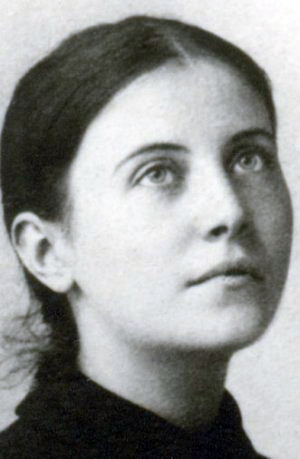
Saint Gemma Galgani
On this April 11th, in 1903 – the same year that the Italian Guiseppe Sarto was elected Pope later that summer as Pius X – a lovely, young Italian woman died, by the name of Gemma Galgani. She lived a brief life of 24 years, as did a number of other young saints, including Pier[…]Continue reading→
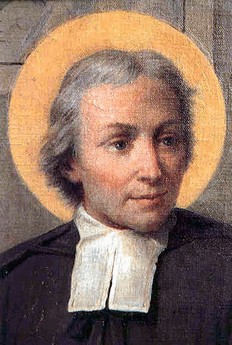
Saint Jean-Baptiste de la Salle: A Teacher for Teachers
Jean-Baptiste de la Salle (1651 – 1719), a French nobleman, ordained a priest, founded the first order in the Church’s history entirely without priests, and this came about almost by accident. I say ‘almost’, for, of course, there are no accidents with God. Destined for ordination from an early age, Jean-Baptiste never looked back, even[…]Continue reading→
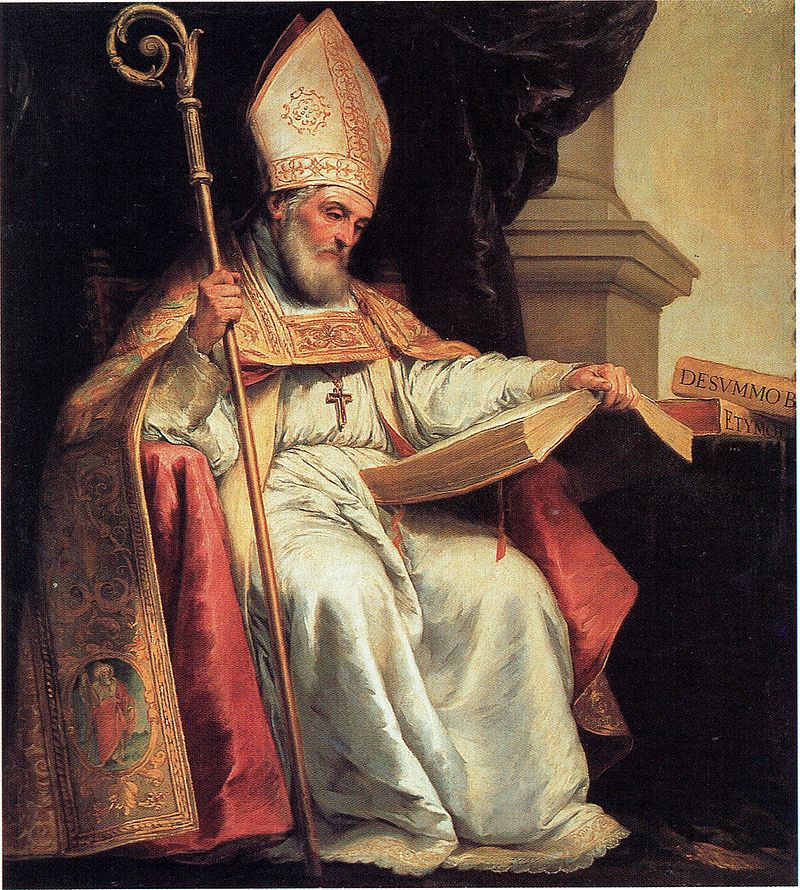
Saint Isidore of Seville, the Internet and Industriousness
Today, April 4th, muted this year by Holy Saturday, is the commemoration of Saint Isidore of Seville (560-636) a bishop and doctor of the Church during a tumultuous age, when civilization was crumbling, coming apart at its very seams, which may sound sort of au courant. Then again, the form of this world has always[…]Continue reading→
A Minimal Friar and the Death of a Great Pope
This April the second- overshadowed by Holy Thursday this year – marks the memorial of Saint Francis of Paola (1417-1507), founder of the ‘Minim’ friars, so called for their humility and poverty, who interpreted the rule of Saint Francis of Assisi in quite a literal sense: extreme poverty, trust in God, foregoing all animal and[…]Continue reading→