
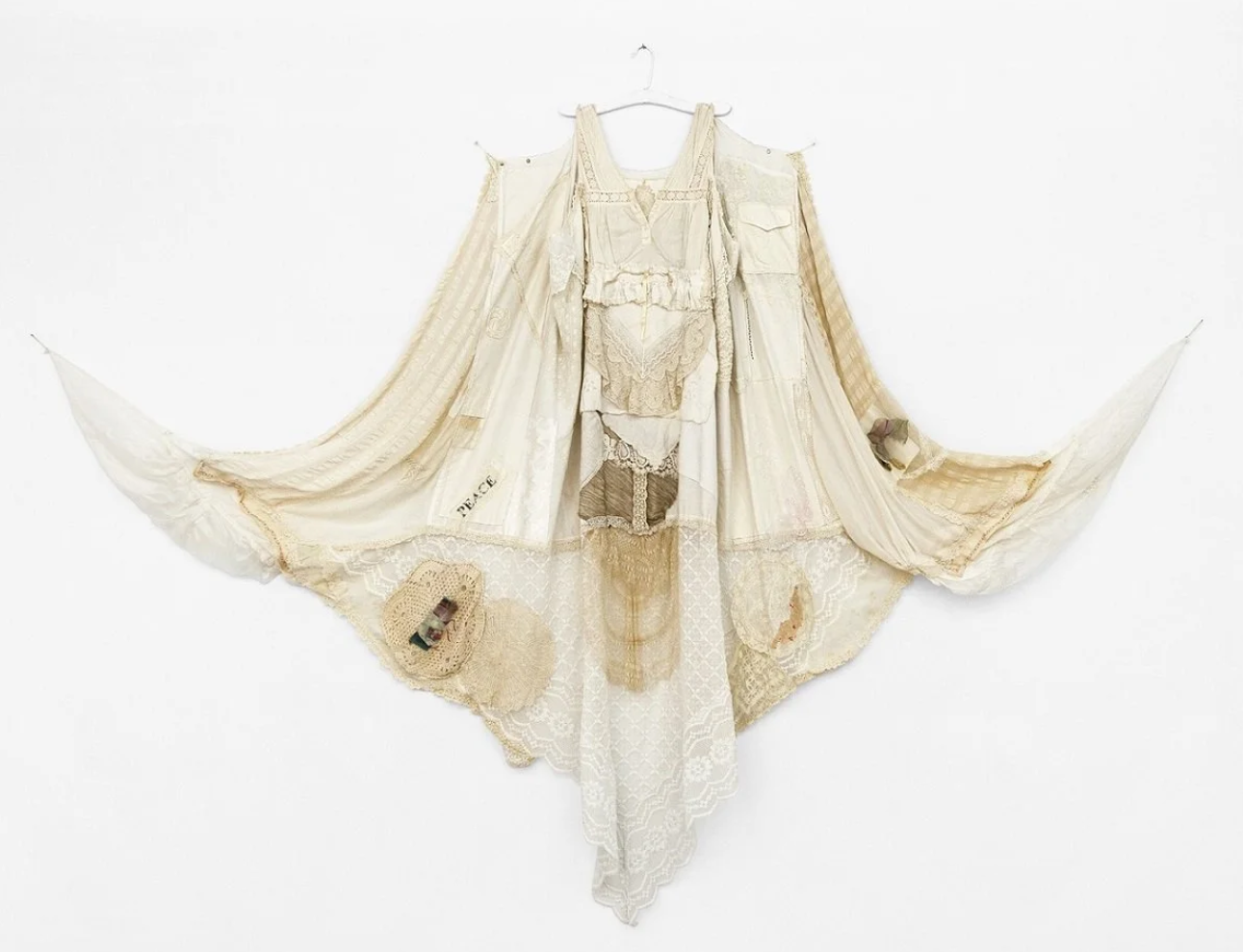
Fabric of Resurrection and Redemption: The Gown of Stillness
Editor’s note: this reflection was originally posted by the Catholic Artist Connection. The mission of the Catholic Artist Connection is to connect and support Catholic artists of all disciplines both professionally and spiritually, to ease the loneliness of being a Catholic artist and encourage the creation of art for Christ.
People look at the same sky, the same images in newspapers, but it’s how we respond that makes the difference. Creativity can be individual, but it can also be universal.
In 1994, I contacted poets, writers, artists, environmentalists, politicians, and groups through newsletters and made a simple request. I invited them to send pieces of fabric, which I planned to use in an installation I was creating, called Gown of Stillness. I enclosed a note: “If this world were a small child in need of healing, I would buy it a hospital gown, extra large, and give it intensive care. I would ask people, all over the world to add beauty, grace and love. The Gown Of Stillness is a visual letter, a work in progress.” The fabric, and the Gown, would represent a symbolic hope for global calmness, for peace.
There was a metaphoric response that was completely and utterly unplanned. Across borders and cultures, across races and faiths, the majority of people worldwide, strangers to one another, responded with lace.
A global language seemed to exist in reference to hope and peace that stepped outside the parameters of language, as we know it. Lace equaled language, equaled hope, equaled peace.
The touch of lace, the sound of the word, the sight of its delicate thread structures represented an organic, un-orchestrated global response to a hope for world calm. Lace became a language defying borders.
I received lace and embroidery from Canadian poets, writers, musicians and composers; embroidery created by a woman who had been raped in The Former Yugoslavia and was now living in a safe house; delicate fabric from a gay Canadian politician; thin material from an actor dying from AIDS; lace from Europe; pieces from wedding gowns and children’s clothing, everyone sharing a universal sensory perspective. Lace equaled symbol; equaled language; equaled voice; fabric overlapped like notes in a global symphony.
I have been working on a room-sized installation titled Stations of the Cross, and it follows the order of the traditional order, but from a modern perspective. The Gown of Stillness represents The Resurrection.
Currently, the Gown contains fabric from 91 people in 15 countries. Each year, its dimensions increase. It currently measures twelve feet by sixteen feet.
I create images of what I see: flowers, mountains, oceans, nature, and buildings. But I am also a writer and create images of language. There’s a place in the middle where we all meet. This is what I see as I work of the Gown of Stillness, a quiet place in the middle where we all meet.
The hope, portrayed through fabric from people around the world, has become a sound unto itself, the sound of lace.

Saint Kateri , Canada’s Protectress
This was the title given to Saint Kateri Tekakwitha, by Pope Benedict XVI, when he canonized her on October 28th, 2012, along with six others, in Saint Peter’ Square (she had been beatified by Pope John Paul II back in 1980). With Saint Joseph as our protector, along with the Canadian martyrs, we seem to[…]Continue reading→

A Tale of Two Benedicts
A grace-filled Holy Week to all our readers! As we await and prepare for the Resurrection about to dawn upon us, we might keep in mind two Benedicts: Pope Emeritus Benedict XVI, requiescat in pace, elected on this day in 2005; and today’s commemoration of the mystic pilgrim, Benedict Joseph Labre, who died on this[…]Continue reading→

My Name is Bernadette
April 16th is a propitious day, for besides the anniversary of Father de Valk’s death, who founded Catholic Insight in its print form decades ago, and the commemoration of the ‘two Benedicts’, mentioned in accompanying posts, today we also recall Saint Bernadette Soubirous, the young visionary to whom the Virgin Mary appeared numerous times at[…]Continue reading→

Saint Lydwina of Schiedam and Suffering Joyfully
Saint Lydwina of Schiedam (1380 – 1433) was one of the countless and glorious ‘victim souls’ in the history of the Church, those whose lives are filled with suffering, often of an unimaginable intensity, but who suffer joyfully. She was a fifteen-year old Dutch girl, out skating one day, when she fell and broke one[…]Continue reading→

The Glorious Martyrdoms of Martin and Maximus
As we enter into Eastertide, we recall on this 13th of April Pope Saint Martin I (+655), one of the noblest, if most tragic, of the successors of Saint Peter. Born in Umbria, Italy, he was of noble lineage, with great intelligence combined with charity and love of the poor and the Church. While still[…]Continue reading→
Canonizing Sister Faustina and Divine Mercy
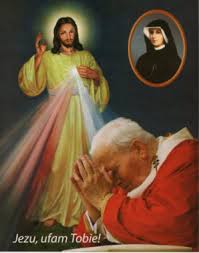
HOMILY OF THE HOLY FATHER MASS IN ST PETER’S SQUARE FOR THE CANONIZATION OF SR MARY FAUSTINA KOWALSKA Sunday, 30 April 2000 1. “Confitemini Domino quoniam bonus, quoniam in saeculum misericordia eius”; “Give thanks to the Lord for he is good; his steadfast love endures for ever” (Ps 118: 1). So the Church sings on the Octave of[…]Continue reading→
Saint Gemma Galgani
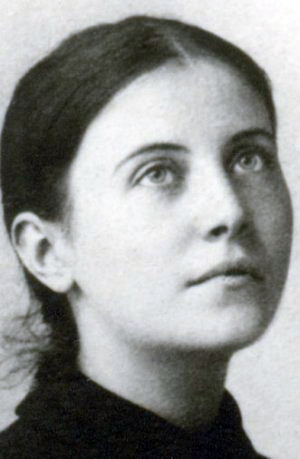
On this April 11th, in 1903 – the same year that the Italian Guiseppe Sarto was elected Pope later that summer as Pius X – a lovely, young Italian woman died, by the name of Gemma Galgani. She lived a brief life of 24 years, as did a number of other young saints, including Pier[…]Continue reading→
Saint Jean-Baptiste de la Salle: A Teacher for Teachers
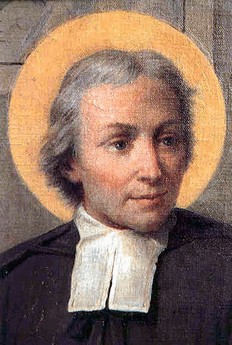
Jean-Baptiste de la Salle (1651 – 1719), a French nobleman, ordained a priest, founded the first order in the Church’s history entirely without priests, and this came about almost by accident. I say ‘almost’, for, of course, there are no accidents with God. Destined for ordination from an early age, Jean-Baptiste never looked back, even[…]Continue reading→
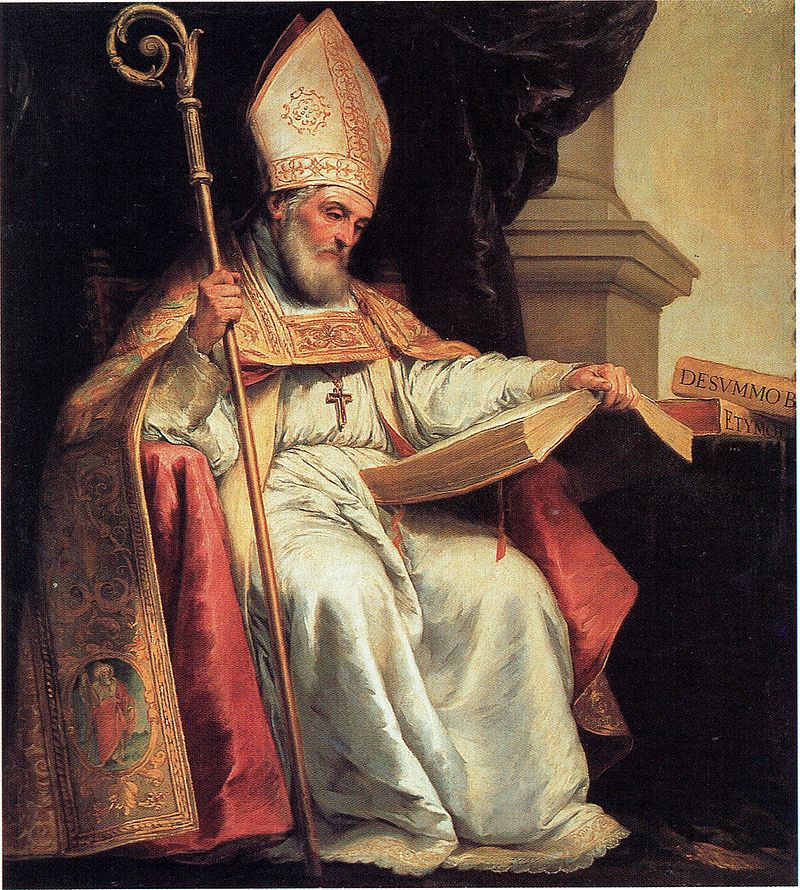
Saint Isidore of Seville, the Internet and Industriousness
Today, April 4th, muted this year by Holy Saturday, is the commemoration of Saint Isidore of Seville (560-636) a bishop and doctor of the Church during a tumultuous age, when civilization was crumbling, coming apart at its very seams, which may sound sort of au courant. Then again, the form of this world has always[…]Continue reading→
A Minimal Friar and the Death of a Great Pope
This April the second- overshadowed by Holy Thursday this year – marks the memorial of Saint Francis of Paola (1417-1507), founder of the ‘Minim’ friars, so called for their humility and poverty, who interpreted the rule of Saint Francis of Assisi in quite a literal sense: extreme poverty, trust in God, foregoing all animal and[…]Continue reading→