

Slow Reading
It’s a common trope that reading has diminished of late, especially since the advent of ubiquitous screen technology, but the demise likely predated the i-pad and e-reader. Television is a culprit, but so are comic books and glossy magazines. Then there’s the effect of the mass-education system and all of its ideological propaganda. At least they used to do this via actual books, but perhaps now it’s mostly electronic, what books there be, so even more mind-numbing.
Books are in fact a quasi-miracle. The ancient world had far fewer of them, prohibitively expensive as they were. Theirs was largely an oral society, whose wisdom was handed on by stories and tradition, through families and clans and villages.
What books there were, were precious indeed. To save vellum, I suppose, the letters were all crammed together, with no spaces. Hence, the reading of books was also done orally – that is, they were read out loud, so one could make sense of the words. They were meditated upon, chewed over, digested, as Guigo the Carthusian so aptly describes in his 12th century Ladder of Monks.
I always wondered why Saint Augustine was surprised when he noticed Saint Ambrose reading without speaking and moving his lips. As the author of this article on ‘slow reading’ recounts:
As a scholar of the history of Christianity, I see again and again how cultural practices, including reading, depend on their material conditions. Until about the year 1000 C.E., most books were written in a style known as scriptio continua, which presented text as an unbroken stream of letters with no cues for where one word ended and the next began. These texts could not be skimmed. They had to be read aloud to “allow the ear to disentangle what to the eye seemed a continuous string of signs,” as the essayist and novelist Alberto Manguel put it.
In early medieval Europe, monasteries were the principal sites of both reading and book production. Monks and nuns read out loud for hours each day—slowly, contemplatively, and prayerfully, in a mode known as lectio divina. The absence of spacing between words compelled readers to linger and reread with care, rolling each syllable in the mouth like a sip of wine, attentive to every nuance. Reading the Bible and other spiritual classics in this way, explained the 12th-century Carthusian monk Guigo, offered “a ladder for monks by which they are lifted up from earth to heaven.”
I used to want to learn to speed read, and developed some techniques. I suppose it has its place – some, if not most, books should only be skimmed – but it never felt natural. Ideally, reading should be for leisure, done for its own sake. We should learn to savour books, as the above author later says, like deep red wine. For Aristotle, the wise man is a man of few books – but those few are well read and pondered.
In these last days of Lent as we proceed into Holy Week, pick up a good book, and keep up the habit of reading, or develop it if you have it not. Even better, dust off the Good Book. Read sections, slowly, meditatively, along with the Liturgy in these holiest of days. Allow the Word to speak to you, and lead you where He would have you go.

Carney’s Amoral Majority
After five defections – euphemistically described as ‘crossing the floor’ – and three by-elections, Mark Carney and his Liberals how have their coveted majority. One wonders what bowls of pottage were offered in back-room deals. In the archaic monarchical system that is the Dominion of Canada, this majority allows the newly-minted Prime Minister to rule[…]Continue reading→

Saint Kateri , Canada’s Protectress
This was the title given to Saint Kateri Tekakwitha, by Pope Benedict XVI, when he canonized her on October 28th, 2012, along with six others, in Saint Peter’ Square (she had been beatified by Pope John Paul II back in 1980). With Saint Joseph as our protector, along with the Canadian martyrs, we seem to[…]Continue reading→

A Tale of Two Benedicts
A grace-filled Holy Week to all our readers! As we await and prepare for the Resurrection about to dawn upon us, we might keep in mind two Benedicts: Pope Emeritus Benedict XVI, requiescat in pace, elected on this day in 2005; and today’s commemoration of the mystic pilgrim, Benedict Joseph Labre, who died on this[…]Continue reading→

My Name is Bernadette
April 16th is a propitious day, for besides the anniversary of Father de Valk’s death, who founded Catholic Insight in its print form decades ago, and the commemoration of the ‘two Benedicts’, mentioned in accompanying posts, today we also recall Saint Bernadette Soubirous, the young visionary to whom the Virgin Mary appeared numerous times at[…]Continue reading→

Saint Lydwina of Schiedam and Suffering Joyfully
Saint Lydwina of Schiedam (1380 – 1433) was one of the countless and glorious ‘victim souls’ in the history of the Church, those whose lives are filled with suffering, often of an unimaginable intensity, but who suffer joyfully. She was a fifteen-year old Dutch girl, out skating one day, when she fell and broke one[…]Continue reading→

The Glorious Martyrdoms of Martin and Maximus
As we enter into Eastertide, we recall on this 13th of April Pope Saint Martin I (+655), one of the noblest, if most tragic, of the successors of Saint Peter. Born in Umbria, Italy, he was of noble lineage, with great intelligence combined with charity and love of the poor and the Church. While still[…]Continue reading→

Saint Stanislaus of Szczepanów
We celebrate Saint Stanislaus today (+ April 11, 1079), in light of this Easter Octave, a bishop and martyr who accepted the episcopacy only at the direct order of Pope Alexander II. He proved a wise and courageous leader of his flock, put to death by his own king, Boleslaus, for rebuking the monarch’s ‘immoral[…]Continue reading→

Saint Gemma Galgani
On this April 11th, in 1903 – the same year that the Italian Guiseppe Sarto was elected Pope later that summer as Pius X – a lovely, young Italian woman died, by the name of Gemma Galgani. She lived a brief life of 24 years, as did a number of other young saints, including Pier[…]Continue reading→
An Ideological and Improper Translation
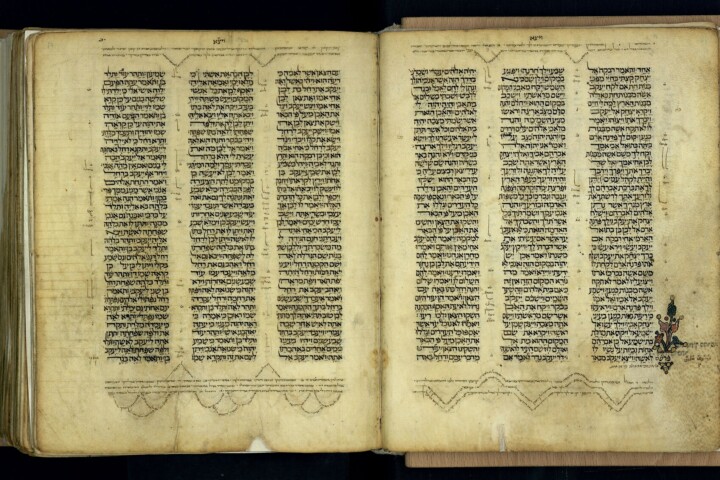
I noticed something odd with the psalm reading at Mass the other day. Our bishops’ conference here in Canada has decreed that the Mass in English – Novus Ordo – use the ‘NRSV’, the ‘New Revised Standard Version’, an ‘updated’ translation of the original RSV, first published in 1952. This ‘new translation’ has the tendency[…]Continue reading→
Saint Jean-Baptiste de la Salle: A Teacher for Teachers
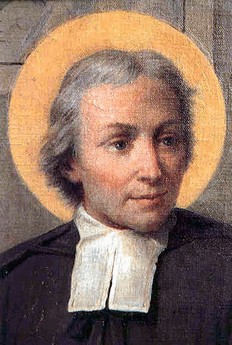
Jean-Baptiste de la Salle (1651 – 1719), a French nobleman, ordained a priest, founded the first order in the Church’s history entirely without priests, and this came about almost by accident. I say ‘almost’, for, of course, there are no accidents with God. Destined for ordination from an early age, Jean-Baptiste never looked back, even[…]Continue reading→