
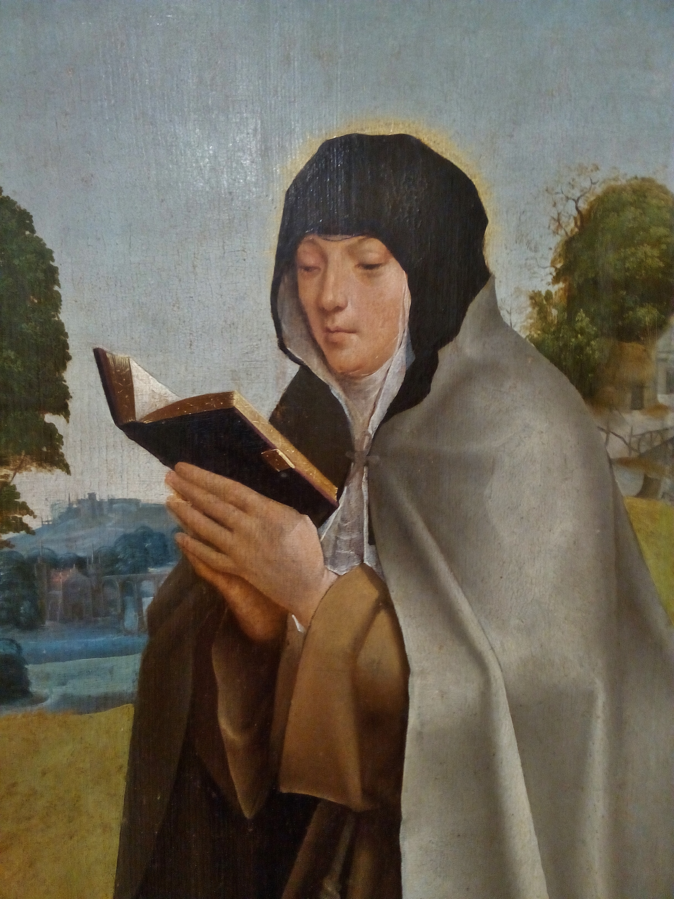
Living in Wonder
Years ago I decided to take a course on Wagner’s Der Ring des Nibelungen, I know, very mainstream. As I sat in a small class room with people who were a minimum twenty years older than me a whole new world opened up to me. Yes my classmates were older and wiser than me, yet, we were bonded by our love of music, myth, and opera. I was immersed in the brilliance and history of Wagner’s arguably greatest work. At the same time I was reading two different books The Eternal Woman by Gertrud von Le Fort and The Search for God by C.S. Lewis, which both referenced this opera by Wagner. A coincidence one might say, but I couldn’t see it that way. In fact it made me think, the more we expand our minds, hearts and experiences the more connected we are to one another. The more we can relate and see one another. We can only begin this great task when we know objective truth, if everything is relative nothing means anything.
So we see in our society a loss of wonder, because we have lost the light of objective truth to see our surroundings. More and more you see careers becoming extremely specialized and with that, the loss of common sense, original thought, and problem solving abilities. Communities are becoming more and more narrowed by lifestyle, jobs, or vocation. Instead of as they used to be, by a variety of personalities, ages, circumstances, and backgrounds. As a result isolation is felt even among the people in those communities. Because no differing thoughts, wisdom, or experiences are being offered. Like the wicked witch in Snow White we almost become obsessed with asking the mirror of our own realities to confirm we are the fairest of them all, and can’t stand the idea that our own narrow perception of that reality could be challenged. So quickly our hearts grow cold to outsiders and soon even within our own groups, because we are not challenging ourselves. We pamper our pride and neglect our wonder. We fail to see the potential of one another because we are not developing it within ourselves.
The most interesting and compassionate people in my experience, are those who have a variety of tastes, in literature, athletics, history, biology, music, art, etc. The person who is able to best embrace and see another person’s heart and point of view is the person whose own heart and point of view is passionately open to wonder. In fact, the closer we are to objective truth, the greater our wonder and desire to see the grandeur of God in every aspect of His creation. In the light of Christ, the world becomes a glorious place of wonder and in the variety we begin to see we are all connected by our Creator. As G. K. Chesterton says “The world will never starve for want of wonders; but only want of wonder.” If we see the individuality of each other, not as a threat, but an opportunity. We will no longer fear new challenges, knowledge or experiences, because Christ has come; objective truth is our compass, and the world is a land of adventure. The more diverse our tastes are, the more we are open to connect and open our hearts to a variety of people, and thus become more Christlike.

Saint Kateri , Canada’s Protectress
This was the title given to Saint Kateri Tekakwitha, by Pope Benedict XVI, when he canonized her on October 28th, 2012, along with six others, in Saint Peter’ Square (she had been beatified by Pope John Paul II back in 1980). With Saint Joseph as our protector, along with the Canadian martyrs, we seem to[…]Continue reading→

Remembering Father Alphonse de Valk
(Today marks the sixth anniversary of the death of Father Alphonse de Valk, C.S.B., a faithful, courageous and indefatigable Basilian priest, pro-life-and-family apostle, and the founder of Catholic Insight magazine. Here is what we wrote those on his entering into eternity five years ago, as we continue to remember him in our prayers and thoughts)[…]Continue reading→

My Name is Bernadette
April 16th is a propitious day, for besides the anniversary of Father de Valk’s death, who founded Catholic Insight in its print form decades ago, and the commemoration of the ‘two Benedicts’, mentioned in accompanying posts, today we also recall Saint Bernadette Soubirous, the young visionary to whom the Virgin Mary appeared numerous times at[…]Continue reading→
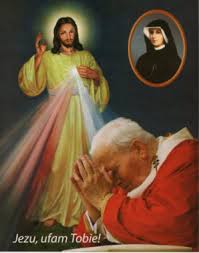
Canonizing Sister Faustina and Divine Mercy
HOMILY OF THE HOLY FATHER MASS IN ST PETER’S SQUARE FOR THE CANONIZATION OF SR MARY FAUSTINA KOWALSKA Sunday, 30 April 2000 1. “Confitemini Domino quoniam bonus, quoniam in saeculum misericordia eius”; “Give thanks to the Lord for he is good; his steadfast love endures for ever” (Ps 118: 1). So the Church sings on the Octave of[…]Continue reading→

Divine Mercy Sunday – An Echo of Every Mass
Reach out your hand and put it in my side. Do not doubt but believe’… ‘My Lord and my God!’ (Jn. 20:18)). Today is Divine Mercy Sunday, and as we celebrate the end of the Easter Octave, we contemplate the wounded side of our Saviour, the Church’s source of life. On Good Friday in the[…]Continue reading→

First Holy Communion: Sermon from May 16, 1943
Here is a sermon from the good old days by +Rev. Msgr. Vincent Nicholas Foy (August 14, 1915 – March 13, 2017), from 1943. Readers may recall that Pope Saint Pius X, by the decree Quam Singulari in 1910, lowered the customary age of reception of Holy Communion – after the rigours of the plague[…]Continue reading→
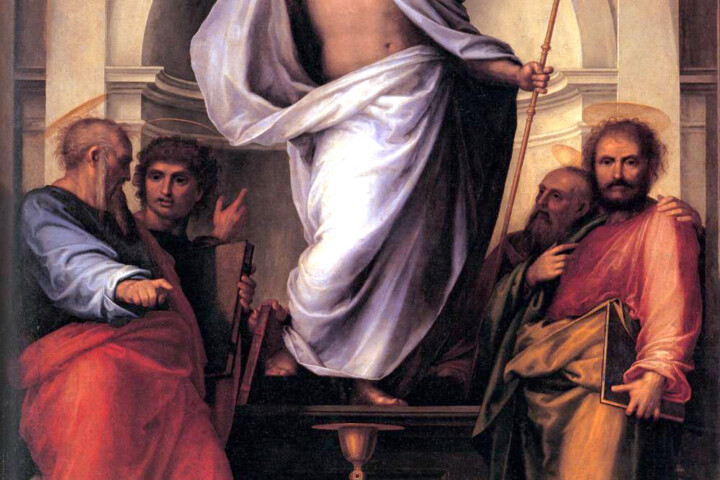
In the Glorious Light of Easter, Alleluia!
Set your minds on things that are above, not on things that are on earth, for you have died, and your life is hidden with Christ in God. When Christ who is your life is revealed, then you also will be revealed with him in glory (Col. 3:3-4). The Resurrection of Our Lord and Saviour[…]Continue reading→
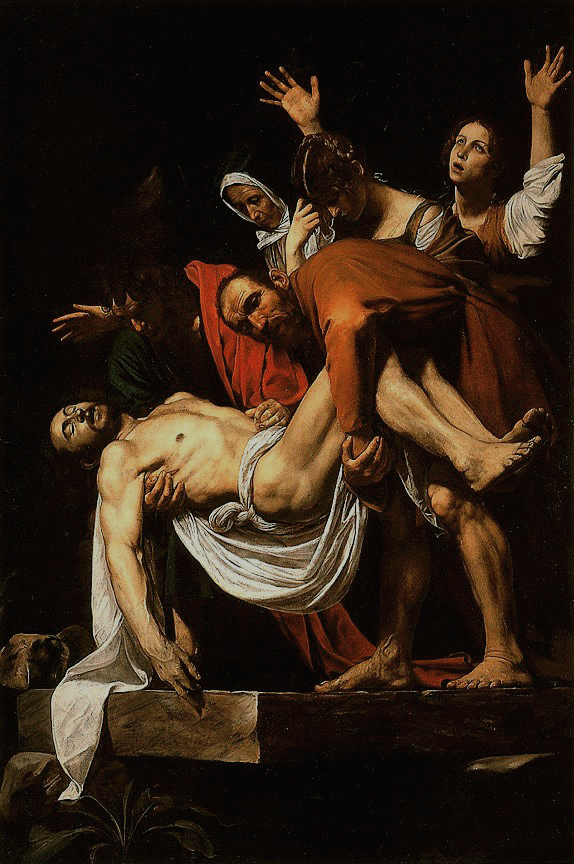
An Ancient Homily for Holy Saturday
The time between Good Friday and Easter Sunday is one of waiting, in silence, as the world wonders – anticipates – what will happen, after the death of Christ. We re-live this time each year in the anamnesis of our liturgy, and in turn look forward to the glorious re-creation of all things at the[…]Continue reading→
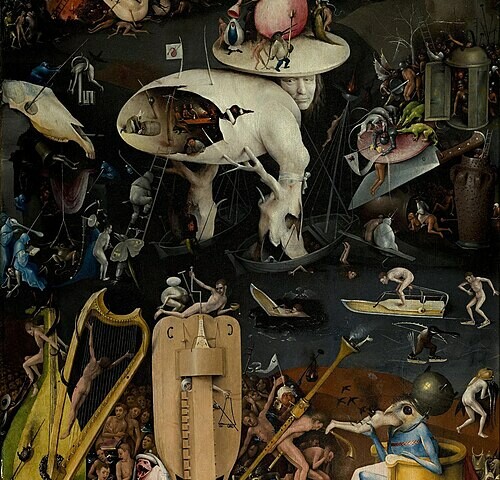
Europe’s Long Descent
(As we meditate on this day on Christ’s burial, and His descent into hell, it is fitting to ponder here with contributor Peter Marcus how the world seems to be heading there as well. The difference is that, although God cannot ‘redeem’ hell, nor those therein, He can and did redeem the world. There is[…]Continue reading→
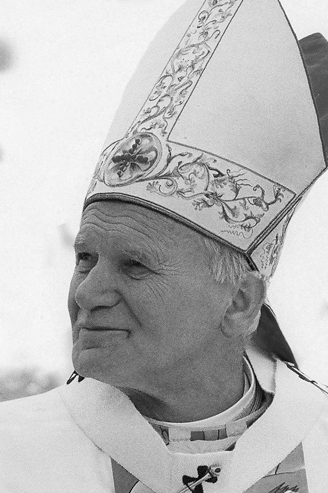
Pope Saint John Paul II’s First Good Friday Homily
ADDRESS OF HIS HOLINESS JOHN PAUL II AT THE CONCLUSION OF THE STATIONS OF THE CROSS AT THE COLOSSEUM Good Friday, 13 April 1979 When we make the Way of the Cross from one station to the next, in spirit we are always at the spot wherethis journey had its “historical” place: where it[…]Continue reading→