
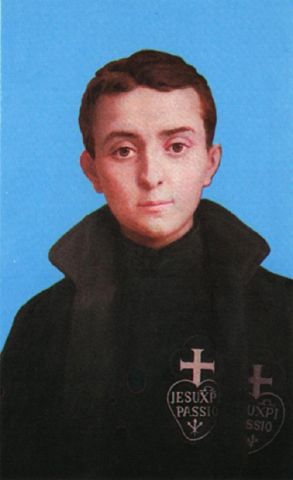
Saint Gabriel Possenti – God, Prayer…and Guns?
Gabriel of the Seven Sorrows, who died on this day in 1862, may be seen as a kind of male Saint Thérèse, but, as in all things male and female, they were also quite different; Both were difficult, willful children, but managed, by the grace of God, to bend those wills to God’s will. Like the French Carmelite, he joined a religious order at a young age – here the Passionists. Both died also at a young age, he at 23, she at 24 – both of complications arising from tuberculosis. Both kept the rule of their Order with great devotion, and offered up their sufferings, maintaining a pleasant, even joyful, disposition, right up to the end. Both were canonized in the 1920’s, when many of the moral evils we are now witnessing had their roots, and to which the lives of these saints give remedy.
Francesco Possenti – such was his birth name – had a tad more circuitous route than the Little Flower. A good-looking lad, he developed into a ladies’ man; not in any gravely sinful sense, but he enjoyed the admiration and flattery of the fairer sex, and would primp and preen himself before going out. He loved to trip the light fantastic, and in the region was known as ‘the Dancer’. Francesco had a girlfriend, or perhaps a particular girl who was a friend, Maria Panachetti, who had hoped he would marry her. Instead, years later, in her old age, she ended up being present at his beatification.
For in this midst of the world’s frivolity, there were the stirrings of a religious vocation in the young man – Francesco was also pious and generous, and maintained his religious duties. Was he, like the rich young man, called higher?
There were signs, and God intervened. Francesco fell gravely ill, and he promised to enter religious life if he lived. He did live, but quickly forgot his promise. So ill he fell again, and, after surviving this second brush with death, during a procession honouring Our Lady, Francecso heard an unmistakable voice asking what he was still doing in the ‘world’.
This time he was resolute, and against all the contrary counsel and advice of his relatives, committed himself to the novitiate of the Passionists in their monastery at the foot of Gran Sasso mountain (a truly lovely spot), taking the name Gabriel of Our Lady of Sorrows. His fellow brothers did not recall anything remarkable in his short life, except, as mentioned, that he strove to keep the rule perfectly, and was always cheerful. His brethren enjoyed spending time at his bedside during his protracted illness, and just before he died in the early morning hours of February 27th, 1862, Gabriel sat up in bed, and opened his arms as though he were being welcomed by someone, with a look of indescribable joy. It was the general opinion that the Virgin Mary herself had brought his soul straight to heaven. He was just shy of the ‘24’ club of young saints – including Saint Thérèse! – but we may include him as an honorary member, for he was in his 24th year).
Gabriel was beatified on May 31st, 1908 – the feast of the Visitation – by fellow future saint, Pope Pius X, and canonized on May 13th, 1920 by Pope Benedict XV, three years to the day after the first vision at Fatima. His shrine at Gran Sasso is one of the most visited in the world, with millions of pilgrims per year making their way to his tomb. Italian schoolchildren have a custom of going there a hundred days before their final exams to pray for success (Gabriel was an excellent student, after all). There are innumerable miracles attributed to his intercession. Saint Gemma Galgani – also a 24 club member – claimed that he had healed her, which led to her own vocation to the Passionists. May the wonders of these young saints continue unto the Parousia. What joy it is to give one’s early years to God!
A final note: Saint Gabriel Possenti, besides being one of the patron saints of youth, students, seminarians and clerics, is also the patron saint of gun owners, due to a legend that he once scared off with a handgun a band of Garibaldi Red Shirts, that, Italian revolutionaries who were threatening the monastery and village. He demonstrated his proficiency to them by picking off a lizard with deadly accuracy, and they scattered before he might had to demonstrate that same accuracy on them.
Saint Gabriel Possenti, ora pro nobis! +
Carney’s Amoral Majority
After five defections – euphemistically described as ‘crossing the floor’ – and three by-elections, Mark Carney and his Liberals how have their coveted majority. One wonders what bowls of pottage were offered in back-room deals. In the archaic monarchical system that is the Dominion of Canada, this majority allows the newly-minted Prime Minister to rule[…]Continue reading→

Saint Kateri , Canada’s Protectress
This was the title given to Saint Kateri Tekakwitha, by Pope Benedict XVI, when he canonized her on October 28th, 2012, along with six others, in Saint Peter’ Square (she had been beatified by Pope John Paul II back in 1980). With Saint Joseph as our protector, along with the Canadian martyrs, we seem to[…]Continue reading→
A Tale of Two Benedicts
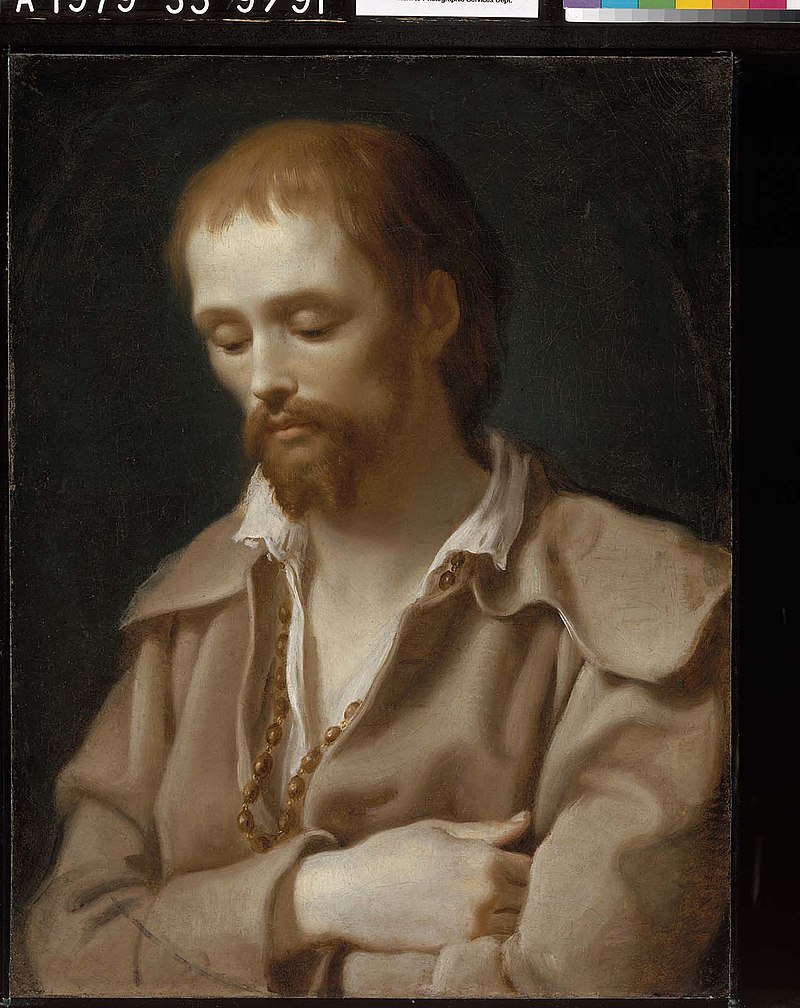
A grace-filled Holy Week to all our readers! As we await and prepare for the Resurrection about to dawn upon us, we might keep in mind two Benedicts: Pope Emeritus Benedict XVI, requiescat in pace, elected on this day in 2005; and today’s commemoration of the mystic pilgrim, Benedict Joseph Labre, who died on this[…]Continue reading→

My Name is Bernadette
April 16th is a propitious day, for besides the anniversary of Father de Valk’s death, who founded Catholic Insight in its print form decades ago, and the commemoration of the ‘two Benedicts’, mentioned in accompanying posts, today we also recall Saint Bernadette Soubirous, the young visionary to whom the Virgin Mary appeared numerous times at[…]Continue reading→
Saint Lydwina of Schiedam and Suffering Joyfully
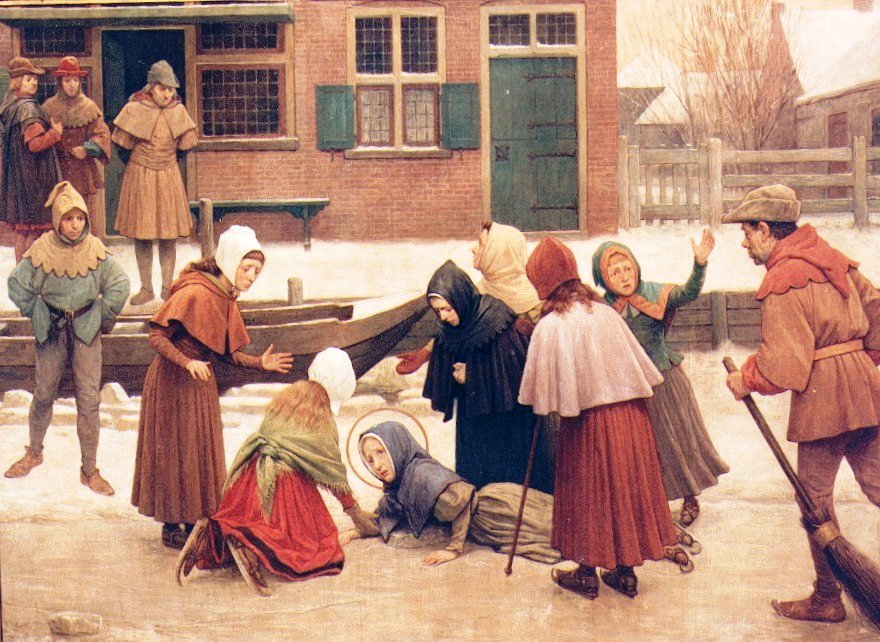
Saint Lydwina of Schiedam (1380 – 1433) was one of the countless and glorious ‘victim souls’ in the history of the Church, those whose lives are filled with suffering, often of an unimaginable intensity, but who suffer joyfully. She was a fifteen-year old Dutch girl, out skating one day, when she fell and broke one[…]Continue reading→
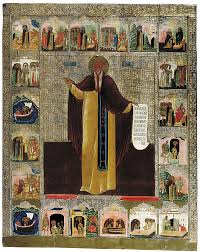
The Glorious Martyrdoms of Martin and Maximus
As we enter into Eastertide, we recall on this 13th of April Pope Saint Martin I (+655), one of the noblest, if most tragic, of the successors of Saint Peter. Born in Umbria, Italy, he was of noble lineage, with great intelligence combined with charity and love of the poor and the Church. While still[…]Continue reading→
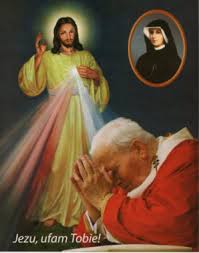
Canonizing Sister Faustina and Divine Mercy
HOMILY OF THE HOLY FATHER MASS IN ST PETER’S SQUARE FOR THE CANONIZATION OF SR MARY FAUSTINA KOWALSKA Sunday, 30 April 2000 1. “Confitemini Domino quoniam bonus, quoniam in saeculum misericordia eius”; “Give thanks to the Lord for he is good; his steadfast love endures for ever” (Ps 118: 1). So the Church sings on the Octave of[…]Continue reading→

Saint Stanislaus of Szczepanów
We celebrate Saint Stanislaus today (+ April 11, 1079), in light of this Easter Octave, a bishop and martyr who accepted the episcopacy only at the direct order of Pope Alexander II. He proved a wise and courageous leader of his flock, put to death by his own king, Boleslaus, for rebuking the monarch’s ‘immoral[…]Continue reading→
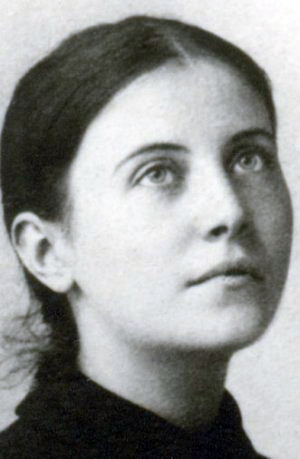
Saint Gemma Galgani
On this April 11th, in 1903 – the same year that the Italian Guiseppe Sarto was elected Pope later that summer as Pius X – a lovely, young Italian woman died, by the name of Gemma Galgani. She lived a brief life of 24 years, as did a number of other young saints, including Pier[…]Continue reading→
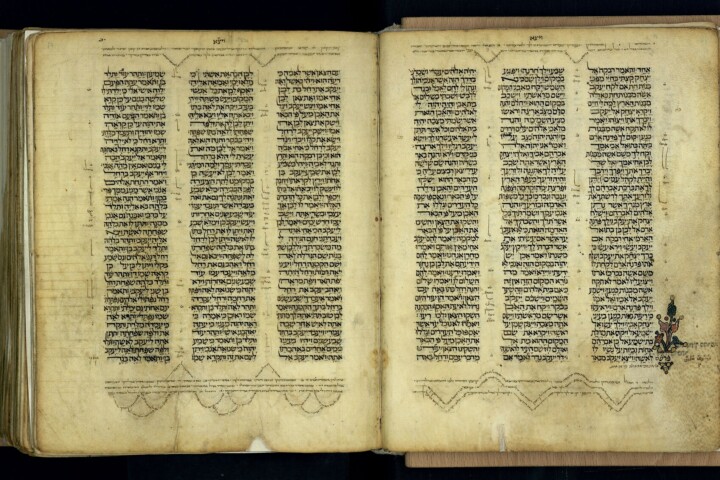
An Ideological and Improper Translation
I noticed something odd with the psalm reading at Mass the other day. Our bishops’ conference here in Canada has decreed that the Mass in English – Novus Ordo – use the ‘NRSV’, the ‘New Revised Standard Version’, an ‘updated’ translation of the original RSV, first published in 1952. This ‘new translation’ has the tendency[…]Continue reading→