
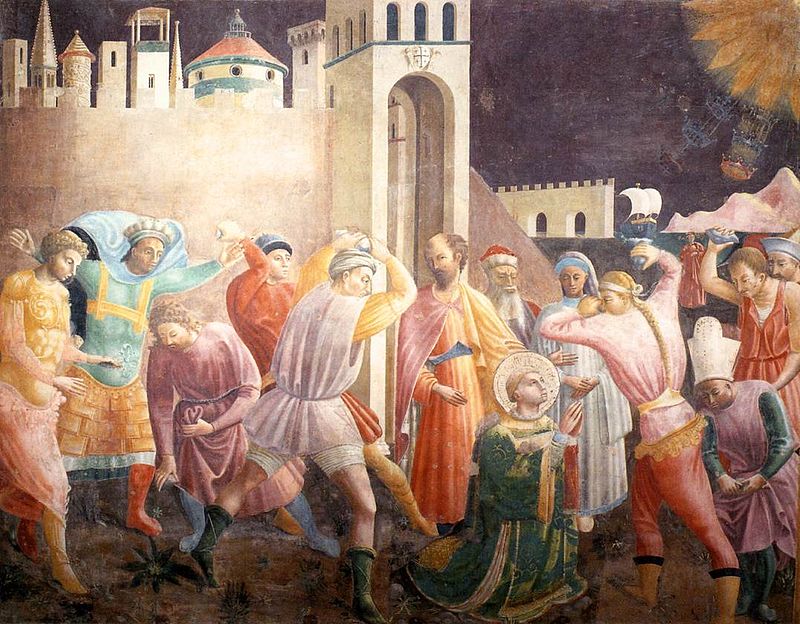
Pope Benedict and Saint Stephen
BENEDICT XVI
GENERAL AUDIENCE
Saint Peter’s Square
Wednesday, 2 May 2012
[Video]
Dear Brothers and Sisters,
In our recent Catecheses we have seen how through personal and community prayer the interpretation of and meditation on Sacred Scripture open us to listening to God who speaks to us and instils light in us so that we may understand the present.
Today, I would like to talk about the testimony and prayer of the Church’s first martyr, St Stephen, one of the seven men chosen to carry out the service of charity for the needy. At the moment of his martyrdom, recounted in the Acts of the Apostles, the fruitful relationship between the Word of God and prayer is once again demonstrated.
Stephen is brought before the council, before the Sanhedrin, where he is accused of declaring that “this Jesus of Nazareth will destroy this place, [the Temple] and will change the customs which Moses delivered to us” (Acts 6:14). During his public life Jesus had effectively foretold the destruction of the Temple of Jerusalem: you will “destroy this temple, and in three days I will raise it up” (Jn 2:19). But, as the Evangelist John remarked, “he spoke of the temple of his body. When therefore he was raised from the dead, his disciples remembered that he had said this; and they believed the Scripture and the word which Jesus had spoken” (Jn 2:21-22).
Stephen’s speech to the council, the longest in the Acts of the Apostles, develops on this very prophecy of Jesus who is the new Temple, inaugurates the new worship and, with his immolation on the Cross, replaces the ancient sacrifices. Stephen wishes to demonstrate how unfounded is the accusation leveled against him of subverting the Mosaic law and describes his view of salvation history and of the covenant between God and man. In this way he reinterprets the whole of the biblical narrative, the itinerary contained in Sacred Scripture, in order to show that it leads to the “place”, of the definitive presence of God that is Jesus Christ, and in particular his Passion, death and Resurrection. In this perspective Stephen also interprets his being a disciple of Jesus, following him even to martyrdom. Meditation on Sacred Scripture thus enables him to understand his mission, his life, his present. Stephen is guided in this by the light of the Holy Spirit and by his close relationship with the Lord, so that the members of the Sanhedrin saw that his face was “like the face of an angel” (Acts 6:15). This sign of divine assistance is reminiscent of Moses’ face which shone after his encounter with God when he came down from Mount Sinai (cf. Ex 34:29-35; 2 Cor 3:7-8).
In his discourse Stephen starts with the call of Abraham, a pilgrim bound for the land pointed out to him by God which he possessed only at the level of a promise. He then speaks of Joseph, sold by his brothers but helped and liberated by God, and continues with Moses, who becomes an instrument of God in order to set his people free but also and several times comes up against his own people’s rejection. In these events narrated in Sacred Scripture to which Stephen demonstrates he listens religiously, God always emerges, who never tires of reaching out to man in spite of frequently meeting with obstinate opposition. And this happens in the past, in the present and in the future. So it is that throughout the Old Testament he sees the prefiguration of the life of Jesus himself, the Son of God made flesh who — like the ancient Fathers — encounters obstacles, rejection and death. Stephen then refers to Joshua, David and Solomon, whom he mentions in relation to the building of the Temple of Jerusalem, and ends with the word of the Prophet Isaiah (66:1-2): “Heaven is my throne, and earth my footstool. What house will you build for me, says the Lord, or what is the place of my rest? Did not my hand make all these things?” (Acts 7:49-50). In his meditation on God’s action in salvation history, by highlighting the perennial temptation to reject God and his action, he affirms that Jesus is the Righteous One foretold by the prophets; God himself has made himself uniquely and definitively present in him: Jesus is the “place” of true worship. Stephen does not deny the importance of the Temple for a certain period, but stresses that “the Most High does not dwell in houses made with hands” (Acts 7:48).
(To continue reading, please see here)

Saint Kateri , Canada’s Protectress
This was the title given to Saint Kateri Tekakwitha, by Pope Benedict XVI, when he canonized her on October 28th, 2012, along with six others, in Saint Peter’ Square (she had been beatified by Pope John Paul II back in 1980). With Saint Joseph as our protector, along with the Canadian martyrs, we seem to[…]Continue reading→

Remembering Father Alphonse de Valk
(Today marks the sixth anniversary of the death of Father Alphonse de Valk, C.S.B., a faithful, courageous and indefatigable Basilian priest, pro-life-and-family apostle, and the founder of Catholic Insight magazine. Here is what we wrote those on his entering into eternity five years ago, as we continue to remember him in our prayers and thoughts)[…]Continue reading→

A Tale of Two Benedicts
A grace-filled Holy Week to all our readers! As we await and prepare for the Resurrection about to dawn upon us, we might keep in mind two Benedicts: Pope Emeritus Benedict XVI, requiescat in pace, elected on this day in 2005; and today’s commemoration of the mystic pilgrim, Benedict Joseph Labre, who died on this[…]Continue reading→

My Name is Bernadette
April 16th is a propitious day, for besides the anniversary of Father de Valk’s death, who founded Catholic Insight in its print form decades ago, and the commemoration of the ‘two Benedicts’, mentioned in accompanying posts, today we also recall Saint Bernadette Soubirous, the young visionary to whom the Virgin Mary appeared numerous times at[…]Continue reading→

Saint Lydwina of Schiedam and Suffering Joyfully
Saint Lydwina of Schiedam (1380 – 1433) was one of the countless and glorious ‘victim souls’ in the history of the Church, those whose lives are filled with suffering, often of an unimaginable intensity, but who suffer joyfully. She was a fifteen-year old Dutch girl, out skating one day, when she fell and broke one[…]Continue reading→

The Glorious Martyrdoms of Martin and Maximus
As we enter into Eastertide, we recall on this 13th of April Pope Saint Martin I (+655), one of the noblest, if most tragic, of the successors of Saint Peter. Born in Umbria, Italy, he was of noble lineage, with great intelligence combined with charity and love of the poor and the Church. While still[…]Continue reading→
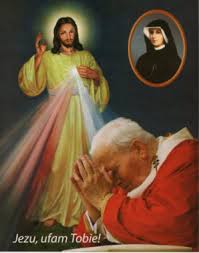
Canonizing Sister Faustina and Divine Mercy
HOMILY OF THE HOLY FATHER MASS IN ST PETER’S SQUARE FOR THE CANONIZATION OF SR MARY FAUSTINA KOWALSKA Sunday, 30 April 2000 1. “Confitemini Domino quoniam bonus, quoniam in saeculum misericordia eius”; “Give thanks to the Lord for he is good; his steadfast love endures for ever” (Ps 118: 1). So the Church sings on the Octave of[…]Continue reading→

Divine Mercy Sunday – An Echo of Every Mass
Reach out your hand and put it in my side. Do not doubt but believe’… ‘My Lord and my God!’ (Jn. 20:18)). Today is Divine Mercy Sunday, and as we celebrate the end of the Easter Octave, we contemplate the wounded side of our Saviour, the Church’s source of life. On Good Friday in the[…]Continue reading→
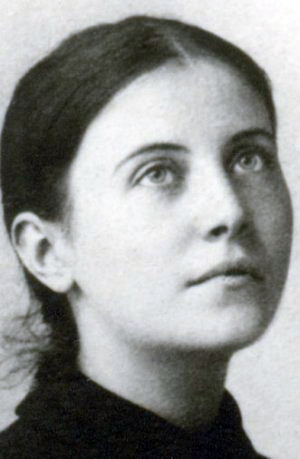
Saint Gemma Galgani
On this April 11th, in 1903 – the same year that the Italian Guiseppe Sarto was elected Pope later that summer as Pius X – a lovely, young Italian woman died, by the name of Gemma Galgani. She lived a brief life of 24 years, as did a number of other young saints, including Pier[…]Continue reading→
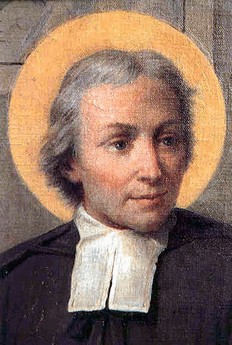
Saint Jean-Baptiste de la Salle: A Teacher for Teachers
Jean-Baptiste de la Salle (1651 – 1719), a French nobleman, ordained a priest, founded the first order in the Church’s history entirely without priests, and this came about almost by accident. I say ‘almost’, for, of course, there are no accidents with God. Destined for ordination from an early age, Jean-Baptiste never looked back, even[…]Continue reading→