
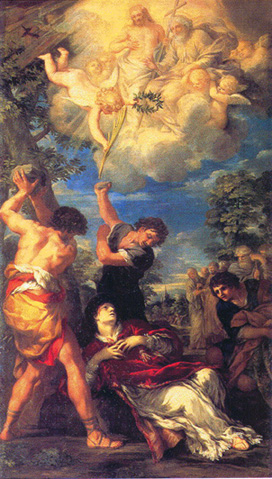
On the Feast of Stephen…not Boxing Day!
As the mid-19th century hymn has it, Good King Wenceslaus first went out, on the feast of Stephen, when the snow lay ’round about, deep and crisp and even…a hymn, published in 1853, which has the English lyrics of Thomas Helmore set to the 13th century melody Tempus adest floridum, which had in turn later been published in a 1582 Finnish collection called Piae Cantiones (Pious Songs). All very Catholic and ecumenical, back when borrowing words and songs was seen as a compliment – litigious copyright would have to wait until our own fractious era – so long as the end product was aesthetically and spiritually pleasing.
Note that the hymn emphasized this as the feast of the great Stephen, and did not say ‘Boxing Day’, a name whose etymology is obscure, dating back apparently to 17th century Britain when work-boys would expect a ‘Christmas box’, a gift package, on the day after the great feast. Now, one may think, most people seem to attribute this day to all the boxes in which the made-in-China goods nestled in Amazonian boxes, which find their way under so many Christmas trees are packaged and shipped and sold, you guessed it, in big-box stores.
Rather, we should re-appropriate the custom, today is the feast of the first Christian martyr (leaving aside the unique deaths of John the Baptist, the last of the Old Testament prophets and first of the New, and of Christ Himself, Who are indeed ‘witnesses’ to the truth, if the Truth can witness to Himself).
Stephen, whose Greek name means ‘crown’, was blessed with that noble title of giving his life in witness to the truth that Christ came to reveal, to fulfill, perfect and purify the Old Covenant, which in so many hearts, including those of his murderers, had become hardened, sklerotes, quite literally, dried up, calcified, withered.
As Isaiah prophesied, Behold, I will do a new thing; now shall it spring forth; shall ye not know it? I will even make a way in the wilderness, and rivers in the desert. (43:9)
This watering is a spiritual fruitfulness, streams of living water flowing from the heart of Christ which would give them ‘hearts of flesh’, and from those who believe in Him (cf., John 7:38)
As he was being stoned to death, Stephen, also one of the first Deacons in the Church, prayed for his persecutors, that this sin be not held against them. And his prayers were efficacious, for one of the instigators was none other than a ‘young man named Saul’, whose hardened heart would soon be burst upon in that flash of light, and who would become ‘Paul’, the ‘little one’, but one of the greatest of Apostles, who had no qualms speaking boldly about his Faith; in fact, woe to him, he thought, if he did not…
Nine centuries later, good king Wenceslaus stepped on out this feast on a cold winter’s day in Bohemia to feed the poor, to ensure that the least of his subjects had something for Christmas. Just as his page followed his king’s footsteps, to save himself from freezing, Wenceslaus himself would follow the well-trod path of his own king, martyred for the faith by his own brother in 935.
The age of martyrs continues, as it will until the end of time, when Christ returns not as a child in swaddling clothes, but in all of His divine glory, to reward those who have been faithful to His truth and persevered unto the end.
So rejoice in these twelve days of Christmas, looking past the boxes, the wrapping, the presents, to what they really represent, or re-present: The fruitful and life-giving charity of God, and the good news that He sent his Son to bring. We as Christians should rejoice in music, laughter and good red wine, but also if these fine things are taken from us, and, in the world’s eyes, we have nothing at all, even our very lives. For eternity is everything, which is likely why we celebrate a young martyr on this first day of Christmas.
On that note, may you all have a very merry one, on this feast of Stephen, as we begin the journey through the twelve days to Epiphany.
Christus natus est pro nobis, gaudeamus, alleluia!
Carney’s Amoral Majority
After five defections – euphemistically described as ‘crossing the floor’ – and three by-elections, Mark Carney and his Liberals how have their coveted majority. One wonders what bowls of pottage were offered in back-room deals. In the archaic monarchical system that is the Dominion of Canada, this majority allows the newly-minted Prime Minister to rule[…]Continue reading→

Saint Kateri , Canada’s Protectress
This was the title given to Saint Kateri Tekakwitha, by Pope Benedict XVI, when he canonized her on October 28th, 2012, along with six others, in Saint Peter’ Square (she had been beatified by Pope John Paul II back in 1980). With Saint Joseph as our protector, along with the Canadian martyrs, we seem to[…]Continue reading→
A Tale of Two Benedicts
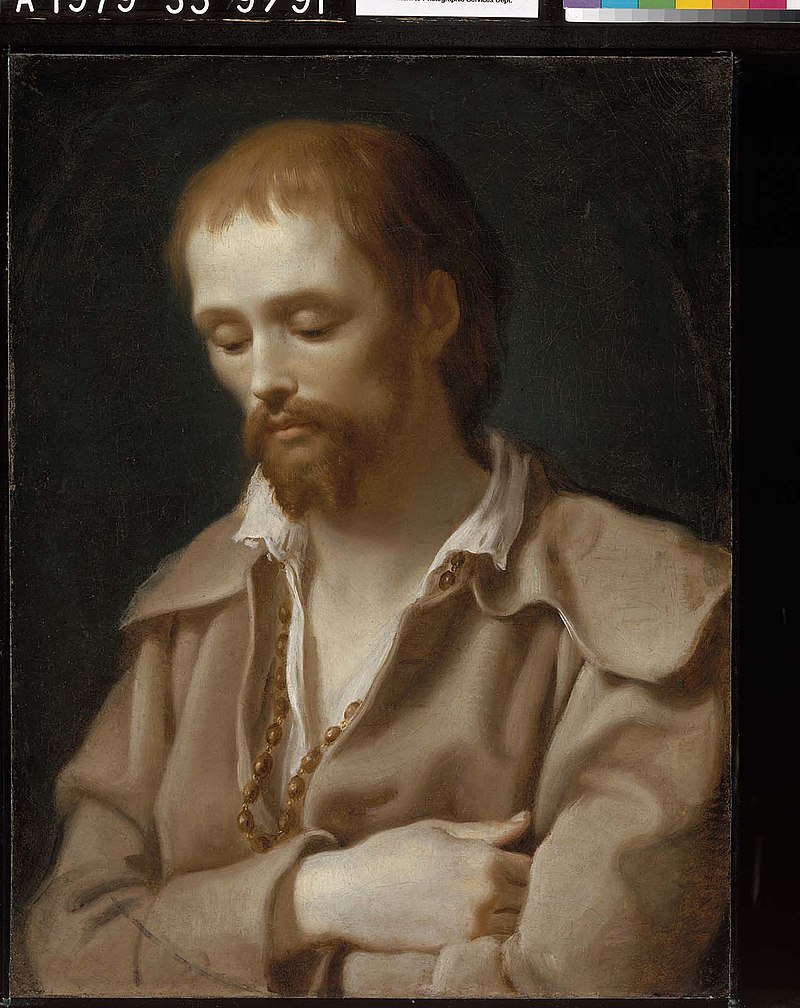
A grace-filled Holy Week to all our readers! As we await and prepare for the Resurrection about to dawn upon us, we might keep in mind two Benedicts: Pope Emeritus Benedict XVI, requiescat in pace, elected on this day in 2005; and today’s commemoration of the mystic pilgrim, Benedict Joseph Labre, who died on this[…]Continue reading→

My Name is Bernadette
April 16th is a propitious day, for besides the anniversary of Father de Valk’s death, who founded Catholic Insight in its print form decades ago, and the commemoration of the ‘two Benedicts’, mentioned in accompanying posts, today we also recall Saint Bernadette Soubirous, the young visionary to whom the Virgin Mary appeared numerous times at[…]Continue reading→
Saint Lydwina of Schiedam and Suffering Joyfully
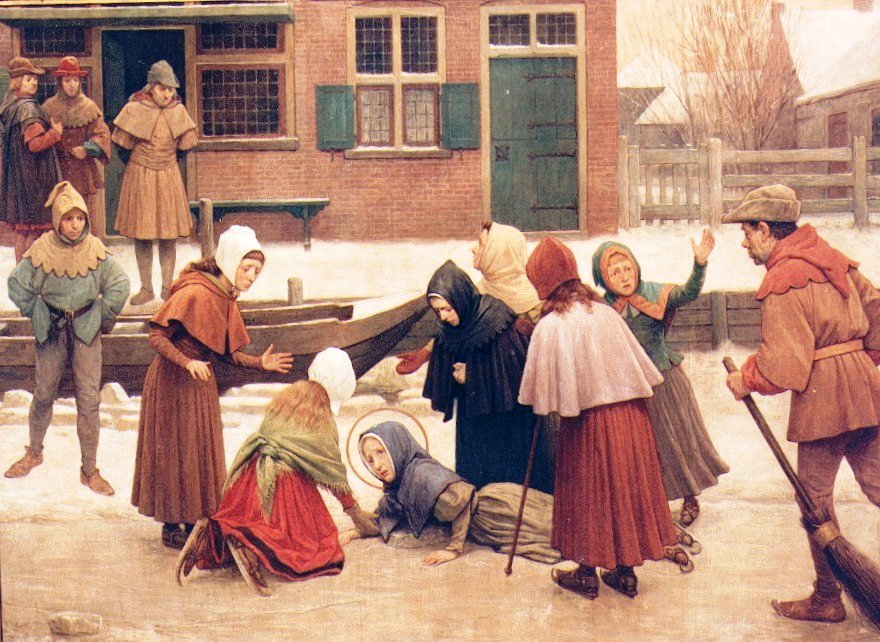
Saint Lydwina of Schiedam (1380 – 1433) was one of the countless and glorious ‘victim souls’ in the history of the Church, those whose lives are filled with suffering, often of an unimaginable intensity, but who suffer joyfully. She was a fifteen-year old Dutch girl, out skating one day, when she fell and broke one[…]Continue reading→
The Glorious Martyrdoms of Martin and Maximus
As we enter into Eastertide, we recall on this 13th of April Pope Saint Martin I (+655), one of the noblest, if most tragic, of the successors of Saint Peter. Born in Umbria, Italy, he was of noble lineage, with great intelligence combined with charity and love of the poor and the Church. While still[…]Continue reading→
Canonizing Sister Faustina and Divine Mercy
HOMILY OF THE HOLY FATHER MASS IN ST PETER’S SQUARE FOR THE CANONIZATION OF SR MARY FAUSTINA KOWALSKA Sunday, 30 April 2000 1. “Confitemini Domino quoniam bonus, quoniam in saeculum misericordia eius”; “Give thanks to the Lord for he is good; his steadfast love endures for ever” (Ps 118: 1). So the Church sings on the Octave of[…]Continue reading→

Saint Stanislaus of Szczepanów
We celebrate Saint Stanislaus today (+ April 11, 1079), in light of this Easter Octave, a bishop and martyr who accepted the episcopacy only at the direct order of Pope Alexander II. He proved a wise and courageous leader of his flock, put to death by his own king, Boleslaus, for rebuking the monarch’s ‘immoral[…]Continue reading→
Saint Gemma Galgani
On this April 11th, in 1903 – the same year that the Italian Guiseppe Sarto was elected Pope later that summer as Pius X – a lovely, young Italian woman died, by the name of Gemma Galgani. She lived a brief life of 24 years, as did a number of other young saints, including Pier[…]Continue reading→
An Ideological and Improper Translation
I noticed something odd with the psalm reading at Mass the other day. Our bishops’ conference here in Canada has decreed that the Mass in English – Novus Ordo – use the ‘NRSV’, the ‘New Revised Standard Version’, an ‘updated’ translation of the original RSV, first published in 1952. This ‘new translation’ has the tendency[…]Continue reading→