
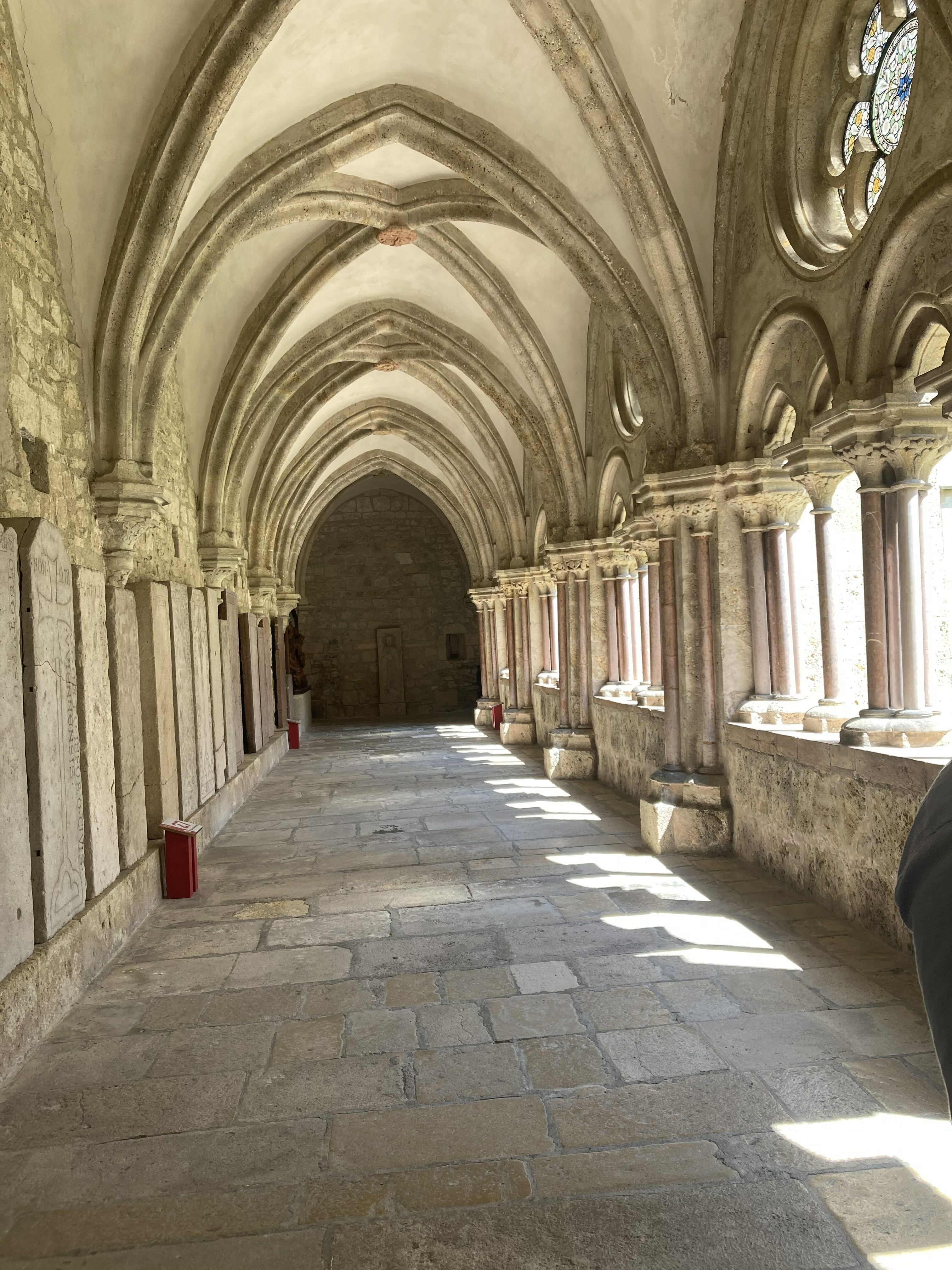
All the Myriads Upon Myriads of Saints
A blessed solemnity of All Saints to all our readers, a feast that goes back to its official institution by Pope Gregory III (731 – 741) as a commemoration of all the countless martyrs who could not have their own particular day. This was during what we know ironically as the ‘dark ages’, when there was in fact much light. The first celebration of this glorious feast was in an oratory in Saint Peter’s (not the glorious structure that now stands on that spot, which was constructed during the renaissance). Eventually, it was extended to include all those who had lived holy lives, even the most obscure and hidden, now enjoying eternal beatitude with God. Since then we have celebrated with great joy all the saints, known and especially those unknown, our own ancestors, grandparents, parents, relatives and friends, now in heavenly bliss.
How many? The Jehovah’s witnesses get this wrong, thinking there will only be ‘144,000’ saved, a figure they derive from Revelation 7:4. Yet if they had read a few verses later, the author, Saint John, then sees ‘a great multitude which no man could number’, who had come through the tribulations of this life faithful to God.
We know not how many will be saved, for in the end, salvation is an individual and personal affair, between the soul and God, one that is not open to psychological nor statistical analysis. One must respond to the prevenient grace of God – and if one refuses that grace, well…As Pope Benedict put it in his 2008 encyclical Spe Salvi:
There can be people who have totally destroyed their desire for truth and readiness to love, people for whom everything has become a lie, people who have lived for hatred and have suppressed all love within themselves. This is a terrifying thought, but alarming profiles of this type can be seen in certain figures of our own history. In such people all would be beyond remedy and the destruction of good would be irrevocable: this is what we mean by the word Hell. On the other hand there can be people who are utterly pure, completely permeated by God, and thus fully open to their neighbours—people for whom communion with God even now gives direction to their entire being and whose journey towards God only brings to fulfilment what they already are.
In other words, some will go straight to heaven or to hell. But what of the muddling middle, who are neither saints, nor degenerate sinners who have closed themselves to love and goodness? For the true and complete saints amongst us seem to be few indeed. As Benedict continues:
For the great majority of people—we may suppose—there remains in the depths of their being an ultimate interior openness to truth, to love, to God. In the concrete choices of life, however, it is covered over by ever new compromises with evil —much filth covers purity, but the thirst for purity remains and it still constantly re-emerges from all that is base and remains present in the soul.
God’s mercy is infinite, and His love and desire for the salvation of souls relentless. From what the last Apostle saw, we may indeed hope that many ‘myriads’ will in the end open themselves to the grace of God, and, whether by the purification of Purgatory (which we commemorate tomorrow), or at the instant of death, will be with that same God forever, perfectly fulfilled, seeing God ‘as He is’, and therefore becoming ‘like Him’.
We cannot imagine such an eternity, for any image fails us, always mired in the passing and temporal joys of this life, taken to the extreme in Islam with its sensual paradise and the 72 hapless virgins. On the contrary: Beatitude is a fulfilment of the soul and mind, in which infinite joy, as Thomas says, redounds upon our resurrected and spiritual body in ways that far, far transcend any earthly pleasures, be they of the nuptial bed or the dining table.
Pope Benedict’s attempt to describe beatitude
To imagine ourselves outside the temporality that imprisons us and in some way to sense that eternity is not an unending succession of days in the calendar, but something more like the supreme moment of satisfaction, in which totality embraces us and we embrace totality—this we can only attempt. It would be like plunging into the ocean of infinite love, a moment in which time—the before and after—no longer exists. We can only attempt to grasp the idea that such a moment is life in the full sense, a plunging ever anew into the vastness of being, in which we are simply overwhelmed with joy. This is how Jesus expresses it in Saint John’s Gospel: “I will see you again and your hearts will rejoice, and no one will take your joy from you” (16:22).
A infinite joy and peace that no one will take it from you, a prelude and occasional glimpses of which we may gain in this life, if we but trust in God, His Christ, His Church, and persevere to the end.
All holy men and women, orate pro nobis. +
Carney’s Amoral Majority
After five defections – euphemistically described as ‘crossing the floor’ – and three by-elections, Mark Carney and his Liberals how have their coveted majority. One wonders what bowls of pottage were offered in back-room deals. In the archaic monarchical system that is the Dominion of Canada, this majority allows the newly-minted Prime Minister to rule[…]Continue reading→

Saint Kateri , Canada’s Protectress
This was the title given to Saint Kateri Tekakwitha, by Pope Benedict XVI, when he canonized her on October 28th, 2012, along with six others, in Saint Peter’ Square (she had been beatified by Pope John Paul II back in 1980). With Saint Joseph as our protector, along with the Canadian martyrs, we seem to[…]Continue reading→
A Tale of Two Benedicts
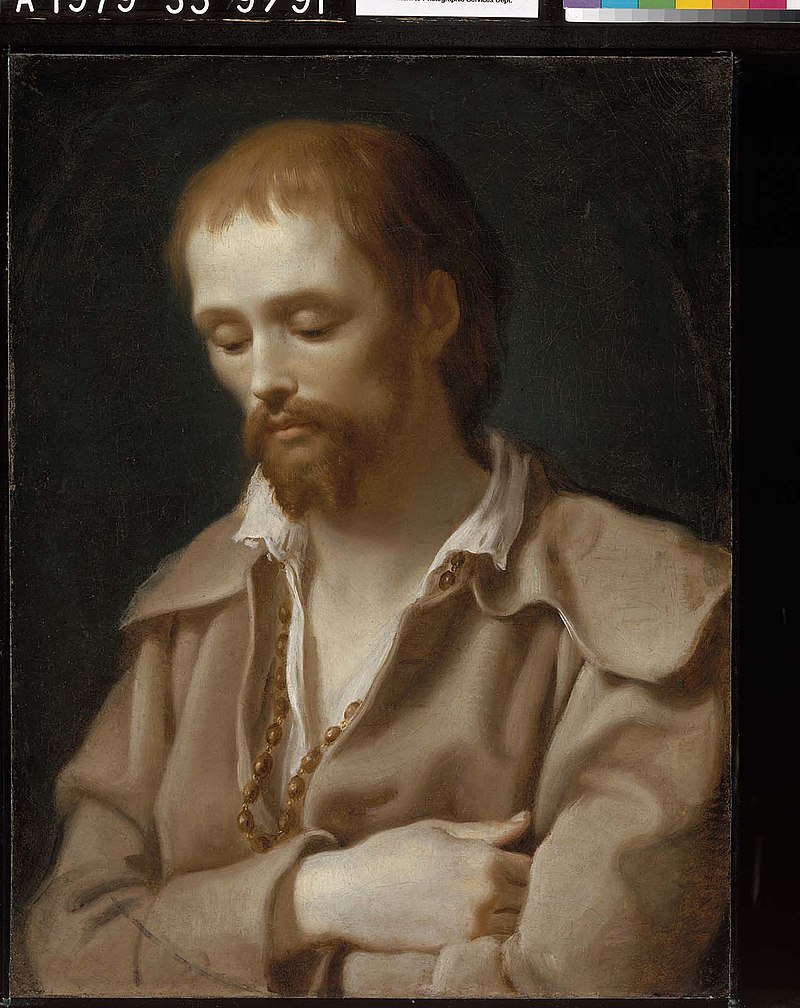
A grace-filled Holy Week to all our readers! As we await and prepare for the Resurrection about to dawn upon us, we might keep in mind two Benedicts: Pope Emeritus Benedict XVI, requiescat in pace, elected on this day in 2005; and today’s commemoration of the mystic pilgrim, Benedict Joseph Labre, who died on this[…]Continue reading→

My Name is Bernadette
April 16th is a propitious day, for besides the anniversary of Father de Valk’s death, who founded Catholic Insight in its print form decades ago, and the commemoration of the ‘two Benedicts’, mentioned in accompanying posts, today we also recall Saint Bernadette Soubirous, the young visionary to whom the Virgin Mary appeared numerous times at[…]Continue reading→
Saint Lydwina of Schiedam and Suffering Joyfully
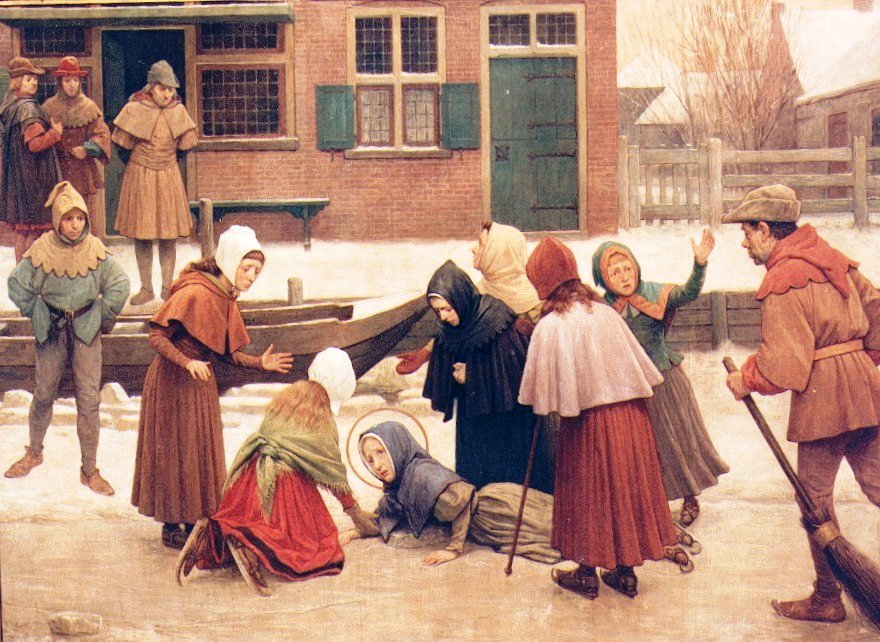
Saint Lydwina of Schiedam (1380 – 1433) was one of the countless and glorious ‘victim souls’ in the history of the Church, those whose lives are filled with suffering, often of an unimaginable intensity, but who suffer joyfully. She was a fifteen-year old Dutch girl, out skating one day, when she fell and broke one[…]Continue reading→
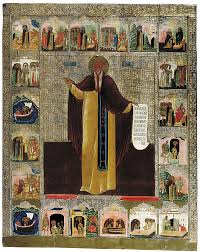
The Glorious Martyrdoms of Martin and Maximus
As we enter into Eastertide, we recall on this 13th of April Pope Saint Martin I (+655), one of the noblest, if most tragic, of the successors of Saint Peter. Born in Umbria, Italy, he was of noble lineage, with great intelligence combined with charity and love of the poor and the Church. While still[…]Continue reading→
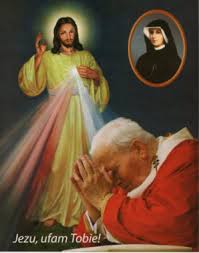
Canonizing Sister Faustina and Divine Mercy
HOMILY OF THE HOLY FATHER MASS IN ST PETER’S SQUARE FOR THE CANONIZATION OF SR MARY FAUSTINA KOWALSKA Sunday, 30 April 2000 1. “Confitemini Domino quoniam bonus, quoniam in saeculum misericordia eius”; “Give thanks to the Lord for he is good; his steadfast love endures for ever” (Ps 118: 1). So the Church sings on the Octave of[…]Continue reading→

Saint Stanislaus of Szczepanów
We celebrate Saint Stanislaus today (+ April 11, 1079), in light of this Easter Octave, a bishop and martyr who accepted the episcopacy only at the direct order of Pope Alexander II. He proved a wise and courageous leader of his flock, put to death by his own king, Boleslaus, for rebuking the monarch’s ‘immoral[…]Continue reading→
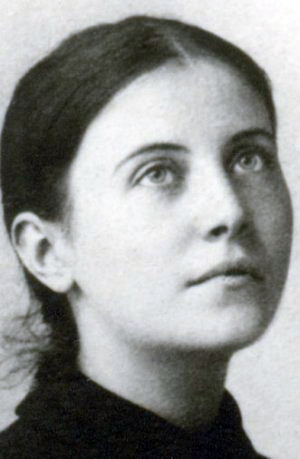
Saint Gemma Galgani
On this April 11th, in 1903 – the same year that the Italian Guiseppe Sarto was elected Pope later that summer as Pius X – a lovely, young Italian woman died, by the name of Gemma Galgani. She lived a brief life of 24 years, as did a number of other young saints, including Pier[…]Continue reading→
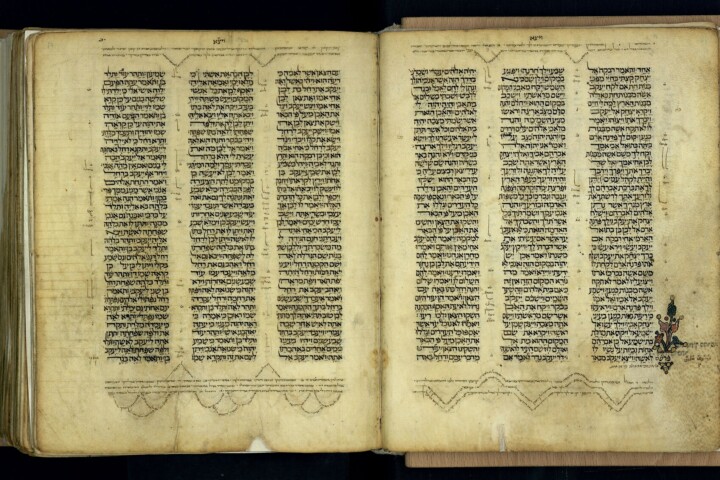
An Ideological and Improper Translation
I noticed something odd with the psalm reading at Mass the other day. Our bishops’ conference here in Canada has decreed that the Mass in English – Novus Ordo – use the ‘NRSV’, the ‘New Revised Standard Version’, an ‘updated’ translation of the original RSV, first published in 1952. This ‘new translation’ has the tendency[…]Continue reading→