
Whose Land Is It, After All?
The difficulty with apologies is that at some point someone’s going to take you at your word. If we claim that we’re living on unceded – which is to say stolen – land, it seems inevitable that the land will be demanded back.
This is no longer in the esoteric realm of academic discourse, or emotionalist sentimentality. Archaic treaties are very difficult, if not practically impossible to apply in a nation radically changed from when they were first written. This has come to the fore in a recent Supreme Court decision in British Columbia, which implies that large swathes of the city of Richmond no longer belong to those who reside or who have businesses therein, but to the Cowachin people, a formerly nomadic tribe that has laid claim to ancient ownership. A town meeting is to be held today, Tuesday, October 28th, the feast of the Apostles Simon and Jude, patron saints of desperate causes. We will leave the reader to discern the providence of that.
At least they haven’t gone as far as Ben and Jerry’s, the ice-cream conglomerate, which a few years ago declared:
The United States was founded on stolen Indigenous land. This Fourth of July, let’s commit to returning it.
What, the entire continental land mass?
Then again, Fraser Institute warns that all of British Columbia may now be subject to ‘aboriginal land claims’. Is this hyperbolic?
We should take a step back, and consider what it means to ‘own’ land (or anything else). Ownership is fundamentally a philosophical and theological concept, before it is a legal one.
There is first the ‘universal destination’ of all creation. God ultimately owns everything, insofar as we can say that God owns anything. He created it, the earth, even the entire universe, is His, and He gave it to all of us. This gives the principle that all unclaimed land is public (or common), and can be used, so long as we don’t claim it for our own.
Land that is owned is termed ‘private’, as in private property, which is the contrary of public. Pope Leo XIII discusses this in his landmark encyclical Rerum Novarum (May 15th, 1891), which he wrote in response to the socialists, Marx and Engels, who denied the right to private property. Not so, said Leo. Private property is of divine and natural right, allowing us to fulfil our nature, as made in God’s image. We need land to call our own, to produce the fruit thereof, as protection from the encroachments of the state (and others), and a place simply to call ‘home’.
What makes any given section of land our own – which is to say, our private property – is primarily, in Leo’s words, ‘industry and laws’. First and foremost, land becomes ours by the work we do upon the land. We shape it, cultivate it, build a home, live therein, raise a family and all the rest of it. We ‘impress our personality’ upon it, in Leo’s words. Ideally, the land provides enough for our needs and flourishing. As Chesterton and Belloc put it, three acres and a cow would suffice. Whatever that means in our current era, the gist is there.
When land is left unused and unproductive, wild and uncultivated, its ownership is unclear and undefined. Land ownership cannot be reduced (simply) to ‘who was there first’. For what does it mean to ‘be there’? And even that question is an open one, for the various ‘nations’ were nearly constantly at war, taking land from one another.
More to the point, how is one to apportion private property in a milieu in which land was not developed nor cultivated, fenced in or delineated? Some see this ‘return to nature’ as a good thing. I do enjoy preserves and public parks, but a good portion of the land needs to be developed. We cannot live and thrive without houses and private property; feed people without farms and ranches; nor teach and develop knowledge without schools and research centres; and how are we to produce energy without large projects such as dams and plants?
There is no reverting back to a rosy-hued (and false) Rousseauian Edenic ‘paradise’. A brief perusal of what history we have before the arrival of Europeans – see the contemporaneous Jesuit Relations – shows a North America (to use an anachronous term) featuring ‘nature red in tooth and claw’, prey to disease, infection, fleas, lice, freezing, famine and starvation. The most common prospect was an early and often painful death. Modern medicine, sanitation, farming and food production, have done wonders, to say nothing of the intellectual, literary and, most of all, spiritual benefits bestowed by Christian civilization.
Injustices were certainly done, but, prescinding from the difficulty of determining to whom and by whom, all the victims and perpetrators of any previous wrongs are all long dead. Hence, even if treaties (see above) be used to claim ownership over some swathes of land – which seems to have been the case thus far – who owns it now? Does a vague genetic linkage bestow a perpetual claim, one that trumps those who have been on disputed land perhaps for generations, who have worked the land, built homes and businesses, paid mortgages?
How is one to seek even the approximation of justice after centuries, and would not far graver injustice be done in usurping property from those who have worked upon it, and giving it to those who have not? Guilt is not genetic and neither is grievance. Many, if not most, people in Canada aren’t even descended from the those deemed ‘colonists’.
Ownership is only genetic in restricted cases (especially parents to children). Someone born in 1800 could have 600 or more descendants, few of whom would now even realize such descent. And that number only grows – into the thousands – the further back one goes.
Pope Benedict taught in his 2007 encyclical Spe Salvi that there never was, and never can be, perfect justice realized in this world. As we strive to right what wrongs we might, we must also beware that in seeking an impossible utopia we commit far graver injustices, with unforeseeable societal consequences.
We ask again, who owes what to whom?
Which brings us to the ‘race’ question, which is really at the root of all this. After all, to achieve indigenous status one must demonstrate, as well as maintain, a certain ‘blood line’, careful whom one marries and brings into the clan. The government has established a Byzantine set of criteria by which one may apply for such status. It’s unclear how and in what way this is done, and there is an ominous phrase on the web portal declaring that many of the documents listed in this guide are restricted. Please review our page on access restrictions codes for more information.
Hmm.
Ideas have consequences, and so do ideologies. Those who make the ‘land claim’ apologies should realize, especially in light of these court decisions, that they’re in effect giving up their own properties, along with those of others, who may not understand a need for their apology. Is anyone’s house or mortgage or business, as well as the millions of acres of crown land, along with all our provincial and federal parks, now up for grabs in this land of ours?
And by ‘ours’ we mean all Canadians.
Or do we now have two nations, one belonging to the Indigenous, and the other – for want of a better term – to ‘settlers’, even if they’ve been here for generations? If so, how is one to access one or the other, or even immigrate and integrate? From the signs posted on various indigenous lands, non-indigenous are not permitted entry, while Indigenous may pass freely from one to the other.
Added to all of this confusion is the obstacle such land claims make upon the economic development of this country, in oil, minerals, hydro and all the rest of it. We are all rightly perplexed and hesitant until this is made clear. And this can only be made clear in light of God’s natural law, along with the just laws flowing therefrom that have governed, and should govern, this Dominion, for one, and for all.
Carney’s Amoral Majority
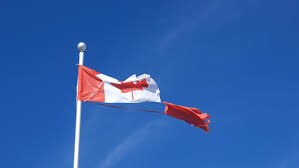
After five defections – euphemistically described as ‘crossing the floor’ – and three by-elections, Mark Carney and his Liberals how have their coveted majority. One wonders what bowls of pottage were offered in back-room deals. In the archaic monarchical system that is the Dominion of Canada, this majority allows the newly-minted Prime Minister to rule[…]Continue reading→

Saint Kateri , Canada’s Protectress
This was the title given to Saint Kateri Tekakwitha, by Pope Benedict XVI, when he canonized her on October 28th, 2012, along with six others, in Saint Peter’ Square (she had been beatified by Pope John Paul II back in 1980). With Saint Joseph as our protector, along with the Canadian martyrs, we seem to[…]Continue reading→
A Tale of Two Benedicts
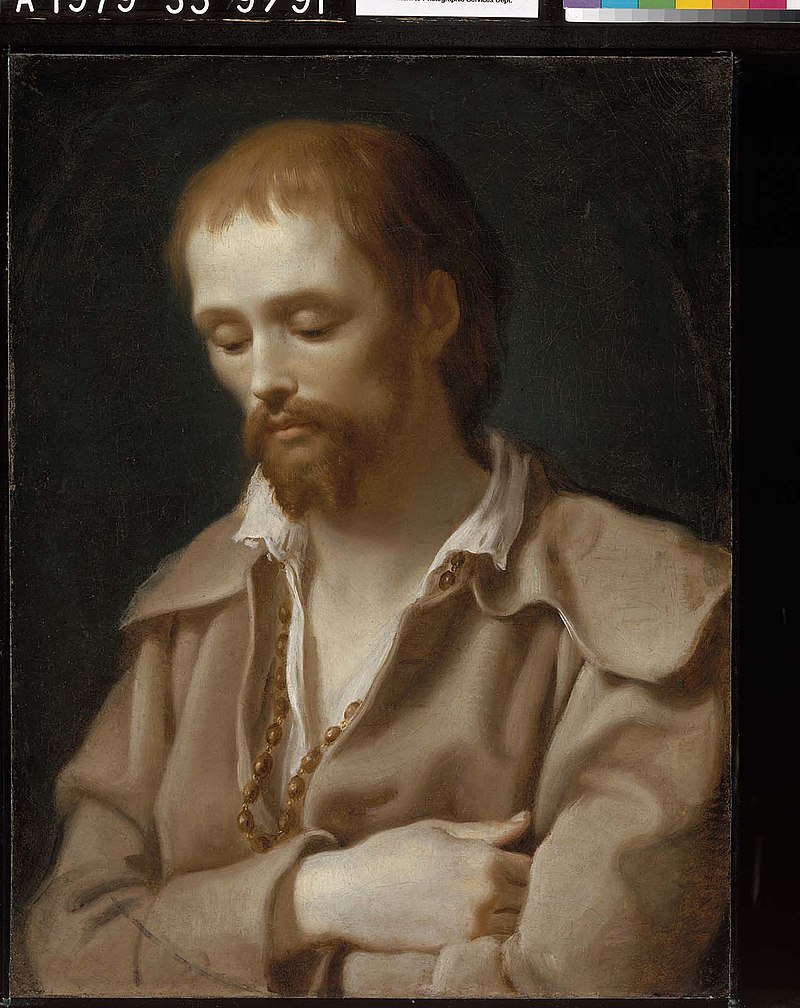
A grace-filled Holy Week to all our readers! As we await and prepare for the Resurrection about to dawn upon us, we might keep in mind two Benedicts: Pope Emeritus Benedict XVI, requiescat in pace, elected on this day in 2005; and today’s commemoration of the mystic pilgrim, Benedict Joseph Labre, who died on this[…]Continue reading→

My Name is Bernadette
April 16th is a propitious day, for besides the anniversary of Father de Valk’s death, who founded Catholic Insight in its print form decades ago, and the commemoration of the ‘two Benedicts’, mentioned in accompanying posts, today we also recall Saint Bernadette Soubirous, the young visionary to whom the Virgin Mary appeared numerous times at[…]Continue reading→
Saint Lydwina of Schiedam and Suffering Joyfully
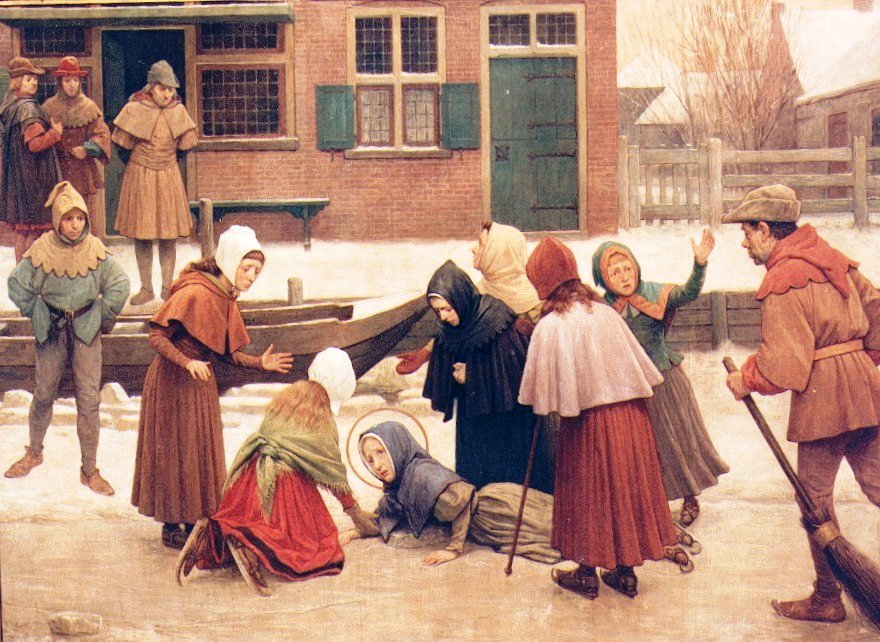
Saint Lydwina of Schiedam (1380 – 1433) was one of the countless and glorious ‘victim souls’ in the history of the Church, those whose lives are filled with suffering, often of an unimaginable intensity, but who suffer joyfully. She was a fifteen-year old Dutch girl, out skating one day, when she fell and broke one[…]Continue reading→
The Glorious Martyrdoms of Martin and Maximus
As we enter into Eastertide, we recall on this 13th of April Pope Saint Martin I (+655), one of the noblest, if most tragic, of the successors of Saint Peter. Born in Umbria, Italy, he was of noble lineage, with great intelligence combined with charity and love of the poor and the Church. While still[…]Continue reading→

Saint Stanislaus of Szczepanów
We celebrate Saint Stanislaus today (+ April 11, 1079), in light of this Easter Octave, a bishop and martyr who accepted the episcopacy only at the direct order of Pope Alexander II. He proved a wise and courageous leader of his flock, put to death by his own king, Boleslaus, for rebuking the monarch’s ‘immoral[…]Continue reading→
Saint Gemma Galgani
On this April 11th, in 1903 – the same year that the Italian Guiseppe Sarto was elected Pope later that summer as Pius X – a lovely, young Italian woman died, by the name of Gemma Galgani. She lived a brief life of 24 years, as did a number of other young saints, including Pier[…]Continue reading→
An Ideological and Improper Translation
I noticed something odd with the psalm reading at Mass the other day. Our bishops’ conference here in Canada has decreed that the Mass in English – Novus Ordo – use the ‘NRSV’, the ‘New Revised Standard Version’, an ‘updated’ translation of the original RSV, first published in 1952. This ‘new translation’ has the tendency[…]Continue reading→
Saint Jean-Baptiste de la Salle: A Teacher for Teachers
Jean-Baptiste de la Salle (1651 – 1719), a French nobleman, ordained a priest, founded the first order in the Church’s history entirely without priests, and this came about almost by accident. I say ‘almost’, for, of course, there are no accidents with God. Destined for ordination from an early age, Jean-Baptiste never looked back, even[…]Continue reading→