
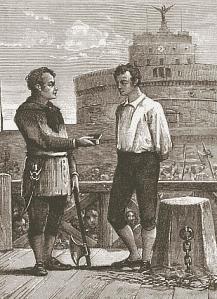
Leo, Francis and Tradition on the Death Penalty
Late this past month, the pontiff, upon leaving Castel Gandolfo, the papal retreat on Lake Albano near Rome, took time to take a few questions from the media. An American journalist asked for his views on Cardinal Cupich’s recent decision to give the Rerum Novarum Award for lifetime achievement to U.S. Senator Dick Durbin (Democrat-Illinois) — a self-identifying Catholic known for his decades-long support for pro-choice policies.
Cardinal Cupich claims to follow the 2021 Congregation for the Doctrine of the Faith instructions which do not conflict with those in 2004 of then-Cardinal Joseph Ratzinger; the latter instructed US bishops that in the case of a Catholic politician who supports legal abortion, “his pastor should meet with him, instructing him about the Church’s teaching, informing him that he is not to present himself for Holy Communion until he brings to an end the objective situation of sin, and warning him that he will otherwise be denied the Eucharist.”
The senator’s views have (since 2004) precluded his receiving Holy Communion in the Diocese of Springfield, Illinois.
The metropolitan archbishop of Chicago justified his action by noting Durbin’s overall political contributions to the church, arguing that Catholic doctrine “cannot be reduced to a single issue — not even abortion.” But even if Durbin’s policies in those “other areas” align with Catholic social teaching, is that a sufficient predicate to reward him, given his error regarding the Catholic teaching on human dignity – the right to life?
Cupich is prominent in the progressive wing of the U.S. episcopate. Does his appointment disclose the inception of a well-developed strategy by the previous pope: to weaken the conservative element and redirect the more conservative US bishops toward a more pastoral and socially-engaged vision?
Pope Francis’s “theology of the people” led him to view with suspicion ecclesial structures that were overly hierarchical and less reliant on forms of funding from the state — traits which characterize American Catholicism. Has Cupich become the symbol of a new paradigm: less doctrine, more inclusive, increased state-dependency, and greater attention to the “peripheries” that emerge from below?
Taken back by the question, the pontiff responded after a moment of discernible discomfort:
“I’m not terribly familiar with this particular case. I think that it’s very important to look at the overall work that a senator has done during his 40 years of service in the United States Senate. I understand the difficulty and the tensions, but I think—as I myself have spoken in the past—it’s important to look at many issues that are related to what is the teaching of the Church. Someone who says: I’m against abortion but I’m in favor of the death penalty, is not really pro-life. So, someone who says: I’m against abortion but in agreement with the inhuman treatment of immigrants, I don’t know if that’s pro-life. So, they’re very complex issues. I don’t know if anyone has all the truth on them.”
Durbin subsequently declined the award, and Leo appointed Cupich to an office in the Vatican.
But Leo’s response left some Catholics dismayed within the Catholic world. The pope had issued a “sophism” – and it contradicts two millennia of Catholic doctrine.
Abortion and capital punishment are not to be conflated into comparability. Abortion denies human dignity by extinguishing innocent life, without reference to moral culpability. Capital punishment, by contrast, as a measure of public justice, acts upon the life of someone adjudicated culpable of intentionally taking the life of another. To conflate the two is to ignore the distinction not only between the innocent and the culpable with intent to do harm, but also between private life and public responsibility.
Pope Leo speaks for a current which seeks to abolish the death penalty entirely (that is, abolitionist), certainly in Europe, holds the majority among the clergy hierarchy. But, why would a pontiff overtly contradict two-thousand years of Catholic doctrine?
At the root of this relatively recent shift in Catholic authority toward such ‘abolitionism’ — and the new idea, anomalous within theological tradition, that human dignity is ‘infinite’ — lies both progressive drift and geopolitical considerations.
The shift is also evident in the Vatican’s move towards ecumenism: an interreligious dialogue which, within the Vatican, has become an obsessive focus — the notion that all religions are equally valid paths to God. It is the idea that only imposed religious pluralism can guarantee harmony – social peace. This logic contradicts centuries of Christian teaching which holds that true social peace can arise only from the establishment of Christ’s social kingship.
Yet, these shifts are not exclusively theological.
The Vatican is situated in the heart of Europe, and its relations with the European Union are not marginal. It maintains a permanent diplomatic mission to the EU, with continuous discourse on migration, bioethics, the environment, and human rights.
Brussels has made the abolition of the death penalty a core-identity premise. It is enshrined in the European Convention on Human Rights (1983) and in the Charter of Fundamental Rights of the European Union (2009).
The Holy See is subject to constant cultural and diplomatic entreaty. To continue affirming the traditional teaching — namely, that capital punishment, in limited cases, accords with natural law, as stated in the Catechism of the Council of Trent — would mean being in conflict with the EU’s prevailing legal paradigm.
The abolitionist pivot taken by Popes Francis and Leo reflects not only theological motivation, but the Vatican’s strategic posturing within a European framework that regards capital punishment as anathema.
And this is the salient point: contemporary Vatican abolitionist declarations arise not from the New Testament or Catholic Tradition, but from an amalgam of progressive theology and European political pressure. The result is a Church that, instead of teaching doctrine, echoes the political agendas of major supranational political institutions.
Perhaps, Pope Leo XIV is perceived as “enigmatic” because progressives as well as conservatives project opposing expectations onto him, following twelve years of ecclesial governance characterized by authoritarianism and divisive strategies. Yet, Leo XIV seems to be neither a revolutionary nor a restorationist — he is a preservationist — elected to preserve the work of Francis and hold the church together amid tensions and schisms in that context.
In view of this broader picture of Robert Francis Prevost, theologically and politically, it is reasonable to assume that this pope will maintain the impetus of the Church initiated by Francis although through less strident means; if he continues to express little interest in opposing an abolitionist and politically compliant stance of the contemporary Church – a less traditional interpretation of Church doctrine will likely remain its trajectory.

Remembering Father Alphonse de Valk
(Today marks the sixth anniversary of the death of Father Alphonse de Valk, C.S.B., a faithful, courageous and indefatigable Basilian priest, pro-life-and-family apostle, and the founder of Catholic Insight magazine. Here is what we wrote those on his entering into eternity five years ago, as we continue to remember him in our prayers and thoughts)[…]Continue reading→

Divine Mercy Sunday – An Echo of Every Mass
Reach out your hand and put it in my side. Do not doubt but believe’… ‘My Lord and my God!’ (Jn. 20:18)). Today is Divine Mercy Sunday, and as we celebrate the end of the Easter Octave, we contemplate the wounded side of our Saviour, the Church’s source of life. On Good Friday in the[…]Continue reading→

Saint Stanislaus of Szczepanów
We celebrate Saint Stanislaus today (+ April 11, 1079), in light of this Easter Octave, a bishop and martyr who accepted the episcopacy only at the direct order of Pope Alexander II. He proved a wise and courageous leader of his flock, put to death by his own king, Boleslaus, for rebuking the monarch’s ‘immoral[…]Continue reading→
First Holy Communion: Sermon from May 16, 1943
Here is a sermon from the good old days by +Rev. Msgr. Vincent Nicholas Foy (August 14, 1915 – March 13, 2017), from 1943. Readers may recall that Pope Saint Pius X, by the decree Quam Singulari in 1910, lowered the customary age of reception of Holy Communion – after the rigours of the plague[…]Continue reading→
In the Glorious Light of Easter, Alleluia!
Set your minds on things that are above, not on things that are on earth, for you have died, and your life is hidden with Christ in God. When Christ who is your life is revealed, then you also will be revealed with him in glory (Col. 3:3-4). The Resurrection of Our Lord and Saviour[…]Continue reading→
An Ancient Homily for Holy Saturday
The time between Good Friday and Easter Sunday is one of waiting, in silence, as the world wonders – anticipates – what will happen, after the death of Christ. We re-live this time each year in the anamnesis of our liturgy, and in turn look forward to the glorious re-creation of all things at the[…]Continue reading→
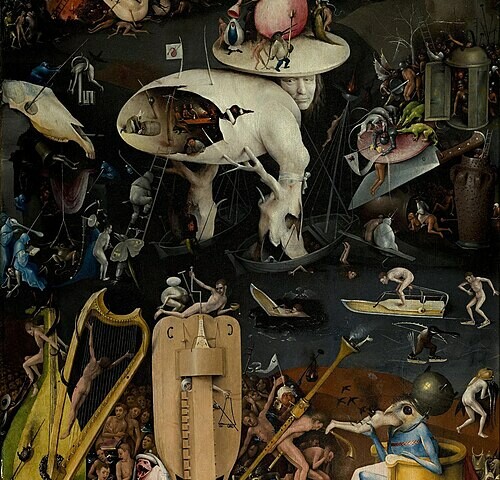
Europe’s Long Descent
(As we meditate on this day on Christ’s burial, and His descent into hell, it is fitting to ponder here with contributor Peter Marcus how the world seems to be heading there as well. The difference is that, although God cannot ‘redeem’ hell, nor those therein, He can and did redeem the world. There is[…]Continue reading→
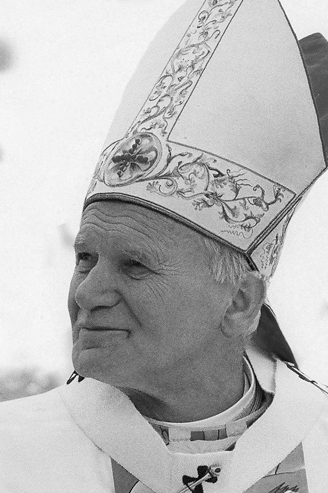
Pope Saint John Paul II’s First Good Friday Homily
ADDRESS OF HIS HOLINESS JOHN PAUL II AT THE CONCLUSION OF THE STATIONS OF THE CROSS AT THE COLOSSEUM Good Friday, 13 April 1979 When we make the Way of the Cross from one station to the next, in spirit we are always at the spot wherethis journey had its “historical” place: where it[…]Continue reading→
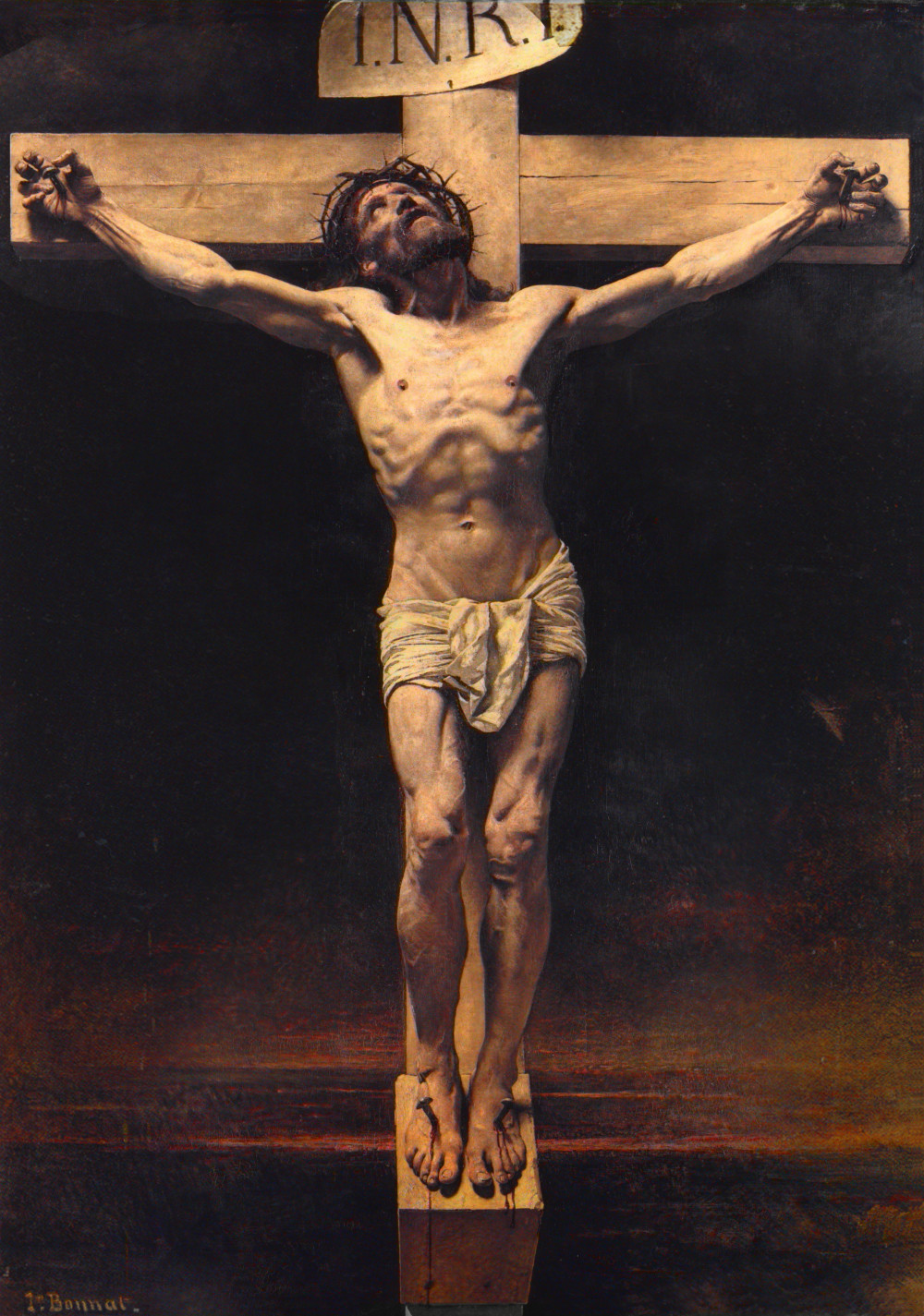
A Meditation for Good Friday: How To Undo the Effects of Sin?
Cardinal Newman, now Saint John Henry Newman, was a towering figure of nineteenth-century Catholicism who is almost universally admired. I say “almost” because not everyone likes him. I knew a priest once, Arthur Caulkins, who has become disenchanted with Newman. As an undergraduate Arthur had been enamoured of Newman, and this interest continued when he[…]Continue reading→
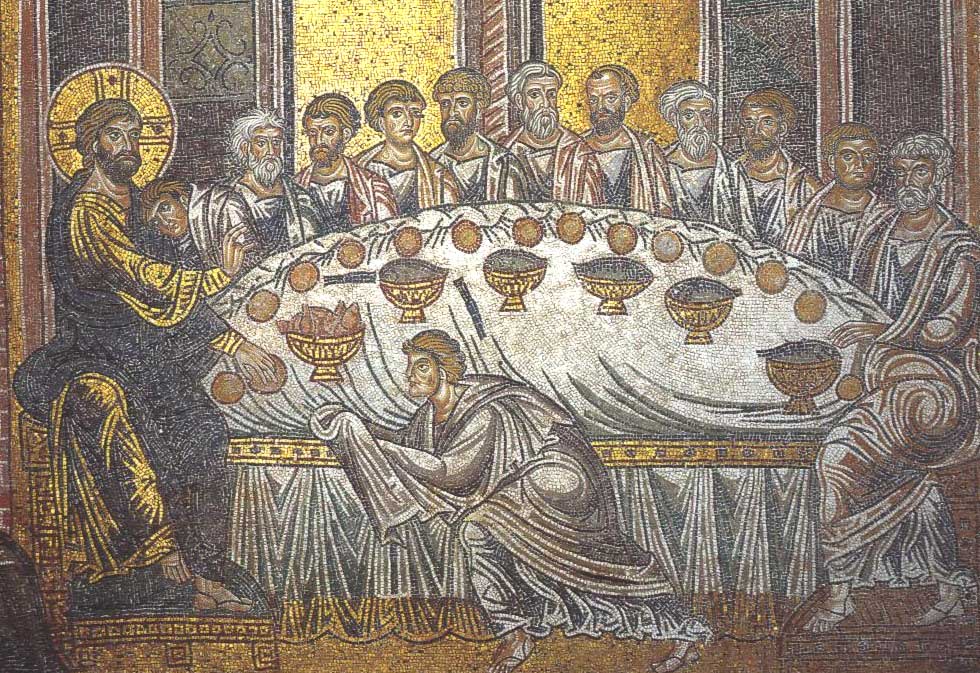
Pope Benedict’s Last Holy Thursday Homily
MASS OF THE LORD’S SUPPER HOMILY OF HIS HOLINESS BENEDICT XVI Basilica of St John Lateran Holy Thursday, 5 April 2012 Photo Gallery (Video) Dear Brothers and Sisters! Holy Thursday is not only the day of the institution of the Most Holy Eucharist, whose splendour bathes all else and in some ways draws it to[…]Continue reading→