
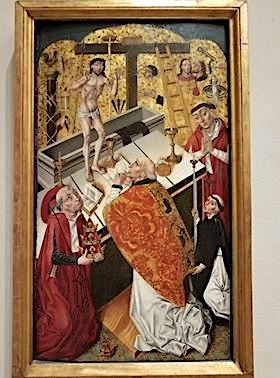
Gregory the Great, a Pope for All Seasons
One of the great joys of history is reminiscing about the past, giving hope for the present; for history is ‘eschatological’, moving towards a final purpose. Hence, we Catholics should never lose hope, and this virtue is easier to cultivate and foster in our souls if, as Christ said, we could but read the signs.
Saint Gregory the Great, pope from 590 to 604 A.D. was one of such hopeful figures in our panoply of saints, who indeed changed history. Raised in an aristocratic and wealthy family, the son of a Roman senator (even if that office had declined somewhat from Rome’s glory days), who himself rose to the heights of administrative office, being appointed prefect of the city at the age of 30, soon after which he decided to dedicate his significant talents, along with his resources, to the service of God. Founding a Benedictine monastery on his family’s property on the Coelian hill, he lived in prayer and silence until, in that fateful year of 590, he was elected supreme pontiff of the Catholic Church on this September the third.
Gregory, like all saints, was industrious, using the time he had well: He shored up not only the Church, but Rome as well, governing the city far more efficiently than his secular predecessors had done (and thus involving future Popes in temporal governance, which would create many issues in the centuries to come, especially for those of lesser character and virtue than Gregory). He won the undying admiration and devotion of the people by his wise governance, saving them from famine, like Joseph of old, ensuring especially the most indigent were fed. It is said that he would not sit down to eat until all the poor had had their fill, and even then he would gather twelve of them around his own table – which table still exists as a relic of his charity. He was known for his unbending conscience – a fidelity which inspired others. One of his many sayings – a propos for our day – is that the universe is not rich enough to buy the vote of an honest man, which should put paid to the silly maxim that ‘it’s the economy, stupid’. No, it’s the moral law, without which we have no economy to speak of, as Gregory saw, and proved right by his work.
He also organized the mission to the Anglo-Saxons, sending Augustine (yes, the ‘other’ Augustine, who was prior in Gregory’s own monastery) to Canterbury, which foundation became the locus in the conversion of Britain to Catholicism, along with the barbarians in and beyond the Italian peninsula, the Franks, the Lombards, the Visigoths, who had until that point been immersed in the pernicious heresy of Arianism. Thus, he saved most of Europe, making the continent Catholic, from France to Germany – at least up until the machinations of Luther, Calvin and the Protestant revolt.
Gregory is also known for his liturgical work, revising and ordering the Mass and the other sacraments according to norms binding upon the whole Church; he also organized the ancient liturgical chants, which preceded him, but which now go by his name, and now far too neglected (and we should not underestimate what good would come from singing chant again at Mass, as the Church has taught in any number of her documents, including Vatican II)
The great Pope also wrote many profound works, not least his Dialogues (including an invaluable near-contemporaneous life of Saint Benedict), his Pastoral Rule, his Commentary on Job, and numerous homilies and letters, for which he has been given the title of Doctor. More on his life can be read in the accompanying post from his successor, Pope Benedict.
How might one rate such a man, sent by God at those rare moments of history, when otherwise we might have slid into the abyss? A model for Popes through the ages, and we should be grateful indeed for the numerous saintly men who have graced the office of Peter, a burden so great that one needs sanctity, and a whole lot of grace, to carry it.
Hence, pray for the current Holy Father: May that same light of truth shine through the present darkness in the Church, for, regardless of travails, God will never abandon His bride.
Saint Gregory the Great, ora pro ea et pro nobis!

Carney’s Amoral Majority
After five defections – euphemistically described as ‘crossing the floor’ – and three by-elections, Mark Carney and his Liberals how have their coveted majority. One wonders what bowls of pottage were offered in back-room deals. In the archaic monarchical system that is the Dominion of Canada, this majority allows the newly-minted Prime Minister to rule[…]Continue reading→

Saint Kateri , Canada’s Protectress
This was the title given to Saint Kateri Tekakwitha, by Pope Benedict XVI, when he canonized her on October 28th, 2012, along with six others, in Saint Peter’ Square (she had been beatified by Pope John Paul II back in 1980). With Saint Joseph as our protector, along with the Canadian martyrs, we seem to[…]Continue reading→

A Tale of Two Benedicts
A grace-filled Holy Week to all our readers! As we await and prepare for the Resurrection about to dawn upon us, we might keep in mind two Benedicts: Pope Emeritus Benedict XVI, requiescat in pace, elected on this day in 2005; and today’s commemoration of the mystic pilgrim, Benedict Joseph Labre, who died on this[…]Continue reading→

My Name is Bernadette
April 16th is a propitious day, for besides the anniversary of Father de Valk’s death, who founded Catholic Insight in its print form decades ago, and the commemoration of the ‘two Benedicts’, mentioned in accompanying posts, today we also recall Saint Bernadette Soubirous, the young visionary to whom the Virgin Mary appeared numerous times at[…]Continue reading→

Saint Lydwina of Schiedam and Suffering Joyfully
Saint Lydwina of Schiedam (1380 – 1433) was one of the countless and glorious ‘victim souls’ in the history of the Church, those whose lives are filled with suffering, often of an unimaginable intensity, but who suffer joyfully. She was a fifteen-year old Dutch girl, out skating one day, when she fell and broke one[…]Continue reading→

The Glorious Martyrdoms of Martin and Maximus
As we enter into Eastertide, we recall on this 13th of April Pope Saint Martin I (+655), one of the noblest, if most tragic, of the successors of Saint Peter. Born in Umbria, Italy, he was of noble lineage, with great intelligence combined with charity and love of the poor and the Church. While still[…]Continue reading→

Canonizing Sister Faustina and Divine Mercy
HOMILY OF THE HOLY FATHER MASS IN ST PETER’S SQUARE FOR THE CANONIZATION OF SR MARY FAUSTINA KOWALSKA Sunday, 30 April 2000 1. “Confitemini Domino quoniam bonus, quoniam in saeculum misericordia eius”; “Give thanks to the Lord for he is good; his steadfast love endures for ever” (Ps 118: 1). So the Church sings on the Octave of[…]Continue reading→

Saint Stanislaus of Szczepanów
We celebrate Saint Stanislaus today (+ April 11, 1079), in light of this Easter Octave, a bishop and martyr who accepted the episcopacy only at the direct order of Pope Alexander II. He proved a wise and courageous leader of his flock, put to death by his own king, Boleslaus, for rebuking the monarch’s ‘immoral[…]Continue reading→
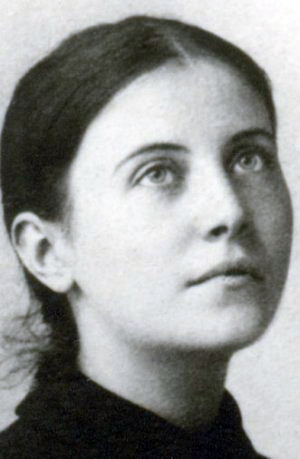
Saint Gemma Galgani
On this April 11th, in 1903 – the same year that the Italian Guiseppe Sarto was elected Pope later that summer as Pius X – a lovely, young Italian woman died, by the name of Gemma Galgani. She lived a brief life of 24 years, as did a number of other young saints, including Pier[…]Continue reading→
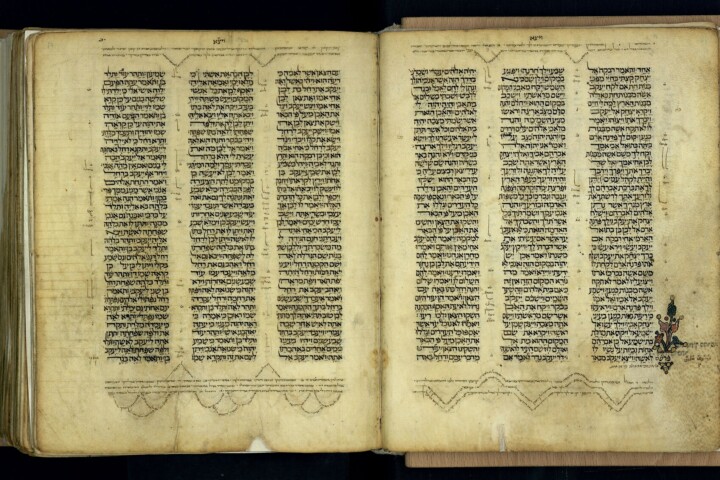
An Ideological and Improper Translation
I noticed something odd with the psalm reading at Mass the other day. Our bishops’ conference here in Canada has decreed that the Mass in English – Novus Ordo – use the ‘NRSV’, the ‘New Revised Standard Version’, an ‘updated’ translation of the original RSV, first published in 1952. This ‘new translation’ has the tendency[…]Continue reading→