
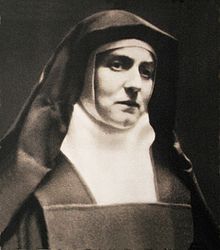
Spes Aedificandi: Saint Edith Stein, Martyr and Co-Patroness of Europe
On this August 9th, we commemorate Saint Edith Stein, whose name in religion was Teresa Benedicta of the Cross. Just over a quarter of a century ago, on the eve of the new millennium, Pope Saint John Paul II, on October 1st, 1999, the feast of Saint Therese of Lisieux, proclaimed Saints Bridget of Sweden, Catherine of Siena and Teresa Benedicta of the Cross co-patronesses of Europe, in his Apostolic Letter Spes Aedificandi (‘building up hope, or hope must be built up). The beleaguered continent could use their intercession, more than now than when that prescient proclamation was made. Here is an excerpt with the Holy Father’s words on Edith Stein, whose own entrance into eternity, we just celebrated, to whom, as a fellow philosopher, and who suffered under the Nazis as he had done, Karol Wojtyla had a great devotion:
8. With Edith Stein—Saint Teresa Benedicta of the Cross—we enter a very different historical and cultural context. For she brings us to the heart of this tormented century, pointing to the hopes which it has stirred, but also the contradictions and failures which have disfigured it. Unlike Bridget and Catherine, Edith was not from a Christian family. What we see in her is the anguish of the search and the struggle of an existential “pilgrimage”. Even after she found the truth in the peace of the contemplative life, she was to live to the full the mystery of the Cross.
Edith was born in 1891 to a Jewish family of Breslau, which was then in German territory. Her interest in philosophy, and her abandonment of the religious practice which she had been taught by her mother, might have presaged not a journey of holiness but a life lived by the principles of pure “rationalism”. Yet it was precisely along the byways of philosophical investigation that grace awaited her: having chosen to undertake the study of phenomenology, she became sensitive to an objective reality which, far from ultimately dissolving in the subject, both precedes the subject and becomes the measure of subjective knowledge, and thus needs to be examined with rigorous objectivity. This reality must be heeded and grasped above all in the human being, by virtue of that capacity for “empathy”—a word dear to her—which enables one in some way to appropriate the lived experience of the other (cf. Edith Stein, The Problem of Empathy).
It was with this listening attitude that she came face to face, on the one hand, with the testimony of Christian spiritual experience given by Teresa of Avila and the other great mystics of whom she became a disciple and an imitator, and, on the other hand, with the ancient tradition of Christian thought as consolidated in Thomistic philosophy. This path brought her first to Baptism and then to the choice of a contemplative life in the Carmelite Order. All this came about in the context of a rather turbulent personal journey, marked not only by inner searching but also by commitment to study and teaching, in which she engaged with admirable dedication. Particularly significant for her time was her struggle to promote the social status of women; and especially profound are the pages in which she explores the values of womanhood and woman’s mission from the human and religious standpoint (cf. E. Stein, Woman. Her Role According to Nature and Grace).
9. Edith’s encounter with Christianity did not lead her to reject her Jewish roots; rather it enabled her fully to rediscover them. But this did not mean that she was spared misunderstanding on the part of her family. It was especially her mother’s disapproval which caused her profound pain. Her entire journey towards Christian perfection was marked not only by human solidarity with her native people but also by a true spiritual sharing in the vocation of the children of Abraham, marked by the mystery of God’s call and his “irrevocable gifts” (cf. Rom 11:29).
In particular, Edith made her own the suffering of the Jewish people, even as this reached its apex in the barbarous Nazi persecution which remains, together with other terrible instances of totalitarianism, one of the darkest and most shameful stains on the Europe of our century. At the time, she felt that in the systematic extermination of the Jews the Cross of Christ was being laid on her people, and she herself took personal part in it by her deportation and execution in the infamous camp of Auschwitz-Birkenau. Her voice merged with the cry of all the victims of that appalling tragedy, but at the same time was joined to the cry of Christ on the Cross which gives to human suffering a mysterious and enduring fruitfulness. The image of her holiness remains for ever linked to the tragedy of her violent death, alongside all those who with her suffered the same fate. And it remains as a proclamation of the Gospel of the Cross, with which she identified herself by the very choice of her name in religion.
Today we look upon Teresa Benedicta of the Cross and, in her witness as an innocent victim, we recognize an imitation of the Sacrificial Lamb and a protest against every violation of the fundamental rights of the person. We also recognize in it the pledge of a renewed encounter between Jews and Christians which, following the desire expressed by the Second Vatican Council, is now entering upon a time of promise marked by openness on both sides. Today’s proclamation of Edith Stein as a Co-Patroness of Europe is intended to raise on this Continent a banner of respect, tolerance and acceptance which invites all men and women to understand and appreciate each other, transcending their ethnic, cultural and religious differences in order to form a truly fraternal society.

Saint Kateri , Canada’s Protectress
This was the title given to Saint Kateri Tekakwitha, by Pope Benedict XVI, when he canonized her on October 28th, 2012, along with six others, in Saint Peter’ Square (she had been beatified by Pope John Paul II back in 1980). With Saint Joseph as our protector, along with the Canadian martyrs, we seem to[…]Continue reading→

Remembering Father Alphonse de Valk
(Today marks the sixth anniversary of the death of Father Alphonse de Valk, C.S.B., a faithful, courageous and indefatigable Basilian priest, pro-life-and-family apostle, and the founder of Catholic Insight magazine. Here is what we wrote those on his entering into eternity five years ago, as we continue to remember him in our prayers and thoughts)[…]Continue reading→

A Tale of Two Benedicts
A grace-filled Holy Week to all our readers! As we await and prepare for the Resurrection about to dawn upon us, we might keep in mind two Benedicts: Pope Emeritus Benedict XVI, requiescat in pace, elected on this day in 2005; and today’s commemoration of the mystic pilgrim, Benedict Joseph Labre, who died on this[…]Continue reading→

My Name is Bernadette
April 16th is a propitious day, for besides the anniversary of Father de Valk’s death, who founded Catholic Insight in its print form decades ago, and the commemoration of the ‘two Benedicts’, mentioned in accompanying posts, today we also recall Saint Bernadette Soubirous, the young visionary to whom the Virgin Mary appeared numerous times at[…]Continue reading→

Saint Lydwina of Schiedam and Suffering Joyfully
Saint Lydwina of Schiedam (1380 – 1433) was one of the countless and glorious ‘victim souls’ in the history of the Church, those whose lives are filled with suffering, often of an unimaginable intensity, but who suffer joyfully. She was a fifteen-year old Dutch girl, out skating one day, when she fell and broke one[…]Continue reading→

The Glorious Martyrdoms of Martin and Maximus
As we enter into Eastertide, we recall on this 13th of April Pope Saint Martin I (+655), one of the noblest, if most tragic, of the successors of Saint Peter. Born in Umbria, Italy, he was of noble lineage, with great intelligence combined with charity and love of the poor and the Church. While still[…]Continue reading→

Canonizing Sister Faustina and Divine Mercy
HOMILY OF THE HOLY FATHER MASS IN ST PETER’S SQUARE FOR THE CANONIZATION OF SR MARY FAUSTINA KOWALSKA Sunday, 30 April 2000 1. “Confitemini Domino quoniam bonus, quoniam in saeculum misericordia eius”; “Give thanks to the Lord for he is good; his steadfast love endures for ever” (Ps 118: 1). So the Church sings on the Octave of[…]Continue reading→

Divine Mercy Sunday – An Echo of Every Mass
Reach out your hand and put it in my side. Do not doubt but believe’… ‘My Lord and my God!’ (Jn. 20:18)). Today is Divine Mercy Sunday, and as we celebrate the end of the Easter Octave, we contemplate the wounded side of our Saviour, the Church’s source of life. On Good Friday in the[…]Continue reading→
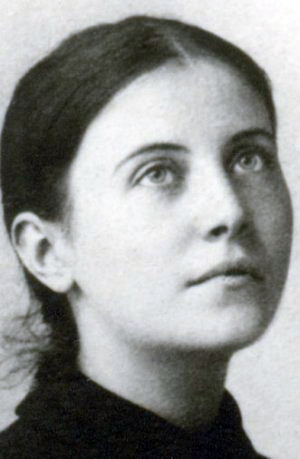
Saint Gemma Galgani
On this April 11th, in 1903 – the same year that the Italian Guiseppe Sarto was elected Pope later that summer as Pius X – a lovely, young Italian woman died, by the name of Gemma Galgani. She lived a brief life of 24 years, as did a number of other young saints, including Pier[…]Continue reading→
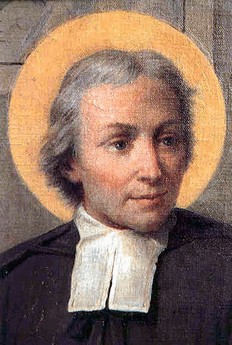
Saint Jean-Baptiste de la Salle: A Teacher for Teachers
Jean-Baptiste de la Salle (1651 – 1719), a French nobleman, ordained a priest, founded the first order in the Church’s history entirely without priests, and this came about almost by accident. I say ‘almost’, for, of course, there are no accidents with God. Destined for ordination from an early age, Jean-Baptiste never looked back, even[…]Continue reading→