
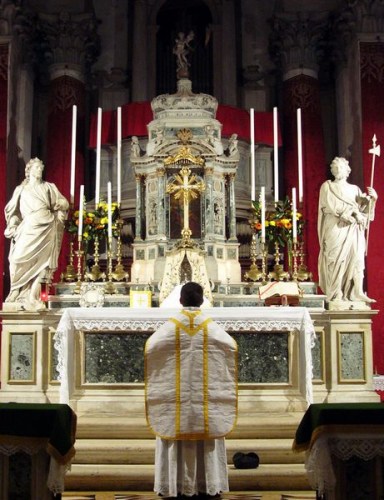
What Vatican II Actually Said on the Mass
IN the wake of the blessed Solemnity of Corpus Christi – whether you celebrated on the proper Thursday, or the following Sunday – with liturgical battles still raging in dioceses across the land, perhaps these few words might help, if not ‘fix’ your liturgical woes, at least to find modicum of peace within your own soul, that somehow, in some way, things may soon improve.
I will simply offer, without imposing my own opinions, what Vatican II actually said, as contrasted to how Mass is actually celebrated in almost every parish, with a few notable exceptions. The reader may soon see that we don’t so much live in a post-conciliar Church, but in a Church that is many ways inconsistent with the last ecumenical Council.
The Fathers of the Council certainly desired some reform of the liturgy, no doubt, but most of them – again, with a few notable exceptions – foresaw a rather minor revision, with a light touch. As Josef Ratzinger put it, like a gardener tending a bush, a trim here and there, and so be it.
The liturgical commission set up by Paul VI after the Council, led by Annibale Bugnini, went farther than the Council Fathers had intended.
And the myriad of bishops and priests in the wake of Council went farther still, from the seventies unto our own time.
These three aspects of the liturgical development should be kept distinct, even if they are related.
Anon, let us take stock, and make a list of what the Council actually said and didn’t say. Here we turn to the Constitution on the Divine Liturgy, Sacrosanctum Concilium, which the reader may peruse:
- Mass was to continue in Latin, with some vernacular added – for the readings, homily and so on. When one of the Fathers warned that if you allow a little vernacular, it will quickly become all vernacular – the inch and mile thing – there was a moment of stunned silence, then they all laughed. Impossibile! An overused word, perhaps. Now, in many dioceses, Latin is verboten, which is odd, given that it is the official language of the Roman Catholic Church and of her Liturgy. The Novus Ordo was promulgated in Latin in 1969. Try finding one of those missals in any parish.
- Gregorian chant – yes, in its original, beautiful and theologically rich Latin – was to be preserved and given ‘pride of place’ in the Liturgy. They comprise an integral part of the Liturgy – the propers, as they’re called. We’re supposed to sing the Mass, not sing at Mass. The chants were revised for the Novus Ordo, with a whole set published in Latin that have rarely ever been used or sung. Pope Paul VI gave a disconcerting address in November of 1969, where he admitted we would all miss the loss of chant. I’m not sure how this squares with the prescription of the Council to preserve this ‘inestimable treasure’.
- The only mention of hymns in Liturgy is in reference to the Divine Office, and the vast treasury of Latin hymnody, rich in its theological depth and beautiful verse and meter. But, again, most of these hymns are rarely ever sung, even by individual priests, monks and nuns. Most Masses are now four-hymn sandwiches, and rather insipid ones at that. This might be more tolerable if there were some of the beautiful hymns, in Latin, English and other languages. Everything’s been composed since the 1970s, in the zeitgeist of the era. See Anthony Esolen today in Crisis, for his own lament on what’s been lost.
- As an aside, although not specifically liturgical, the Council and the current Code of Canon Law require priests to know Latin well enough to read the Church’s teaching and pray in her official language. How many seminaries still teach Latin? And, regardless, it’s pretty much too late when you’re in your mid-twenties or thirties.
- The organ was to be the primary instrument at Mass, primarily to support the human voice, of which most, if not all, liturgical music should be comprised. Liturgy is meant ideally to be sung. Other instruments are only permitted insofar as they may be made ‘apt’ for sacred use, which is to say, to support the voice.
- The posture of ad orientem for the priest in praying Mass is presumed. There is no mention of his turning to face the people, nor of a detached altar resembling, especially one resembling a Lutheran ‘communion table’.
- There is also no mention of Eucharistic ministers nor of lay lectors. Pope Paul VI did promulgate Ministeria Quaedam in 1972, permitting lay acolytes and lectors, but these were to be men, upon whom was officially bestowed the proper ministries. I have never seen this implemented, outside of a seminary.
- You won’t find the practice of Communion in the hand in the Council, and this only became widespread after the Council. Paul VI initially forbade the new practice (cf., Memoriale Domini, May 29th, 1969). With mounting pressure, he eventually offered an indult, first to Belgium, then to countries across the world. And an indult it remains – which is to say, an exception. The ‘norm’, insofar as it is still permitted, being reception on the tongue, while kneeling. Why this is forbidden is something of a mystery – or, perhaps not.
- As such, it was presumed that altar rails would stay. There was never any law to remove them, and there still is not.
- Devotions were to be kept – novenas, litanies, adoration.
- The Council itself did not consider new Eucharistic prayers, and gave no mandate for such. The Pope has the authority to prescribe them, but we should be clear that this was not conciliar in origin.
- Neither was praying the canon out loud. The reform after the Council instituted that practice, which in turn required microphones and amplification – but that’s another story. Also, the priest is meant to say and pray the words that are written, and not ad-lib the Mass, changing words according to whim or ideology, if that even need be said.
That all said – and there’s more that might be – we must admit that there are some phrases in the conciliar texts, that could be, and were, misinterpreted, leading to many of these aforementioned practices: The striving for ‘noble simplicity’, ‘inculturation’ and ‘active participation’ (participatio actuosa). But these terms were applied in ways that was not in accord with other more clear and authoritative texts, nor with the mind of the Council Fathers. For one, the participation of the people was meant to be primarily interior, through prayer, meditation and entering into the sacrifice, as per Pius XII’s 1947 Mediator Dei, (cf., par. 21, ff.).
The tide, however, is turning, with many of the newer cohort of seminarians and priests reading and wanting at least to put into practice what the Council and the reform afterwards actually said, which is within Tradition. Whether the Novus Ordo can be salvaged and brought into line with the Council’s directives, time and circumstances will tell. If it were so, the Mass today would look and sound a lot like the Mass of 1962, which is to say, the TLM.
Whether reform of the reform, or just plain reform and back to the drawing board, or just “stick with what we had,” – as Dan Millette’s review of Peter Kwasniewski’s most recent book advocates – we can hope that the up-and-coming priests will be the future bishops, who, we may hope, preserve our Tradition, one way or the other.
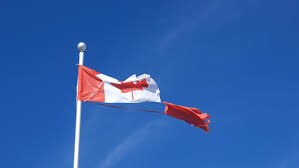
Carney’s Amoral Majority
After five defections – euphemistically described as ‘crossing the floor’ – and three by-elections, Mark Carney and his Liberals how have their coveted majority. One wonders what bowls of pottage were offered in back-room deals. In the archaic monarchical system that is the Dominion of Canada, this majority allows the newly-minted Prime Minister to rule[…]Continue reading→

Saint Kateri , Canada’s Protectress
This was the title given to Saint Kateri Tekakwitha, by Pope Benedict XVI, when he canonized her on October 28th, 2012, along with six others, in Saint Peter’ Square (she had been beatified by Pope John Paul II back in 1980). With Saint Joseph as our protector, along with the Canadian martyrs, we seem to[…]Continue reading→
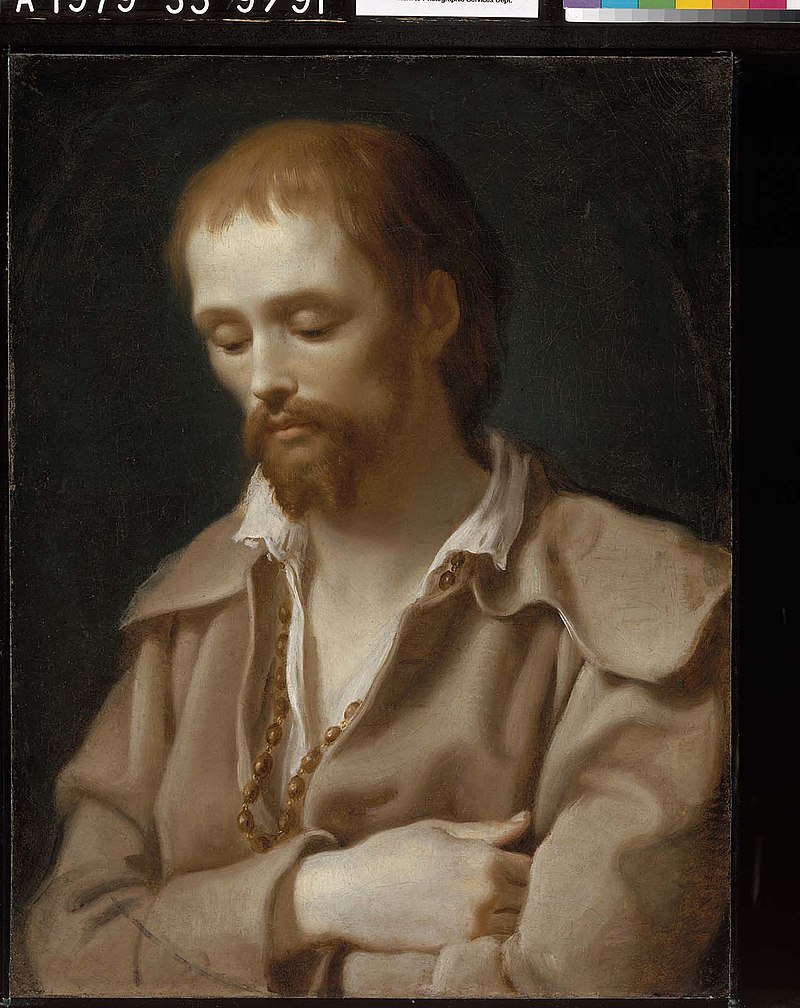
A Tale of Two Benedicts
A grace-filled Holy Week to all our readers! As we await and prepare for the Resurrection about to dawn upon us, we might keep in mind two Benedicts: Pope Emeritus Benedict XVI, requiescat in pace, elected on this day in 2005; and today’s commemoration of the mystic pilgrim, Benedict Joseph Labre, who died on this[…]Continue reading→

My Name is Bernadette
April 16th is a propitious day, for besides the anniversary of Father de Valk’s death, who founded Catholic Insight in its print form decades ago, and the commemoration of the ‘two Benedicts’, mentioned in accompanying posts, today we also recall Saint Bernadette Soubirous, the young visionary to whom the Virgin Mary appeared numerous times at[…]Continue reading→
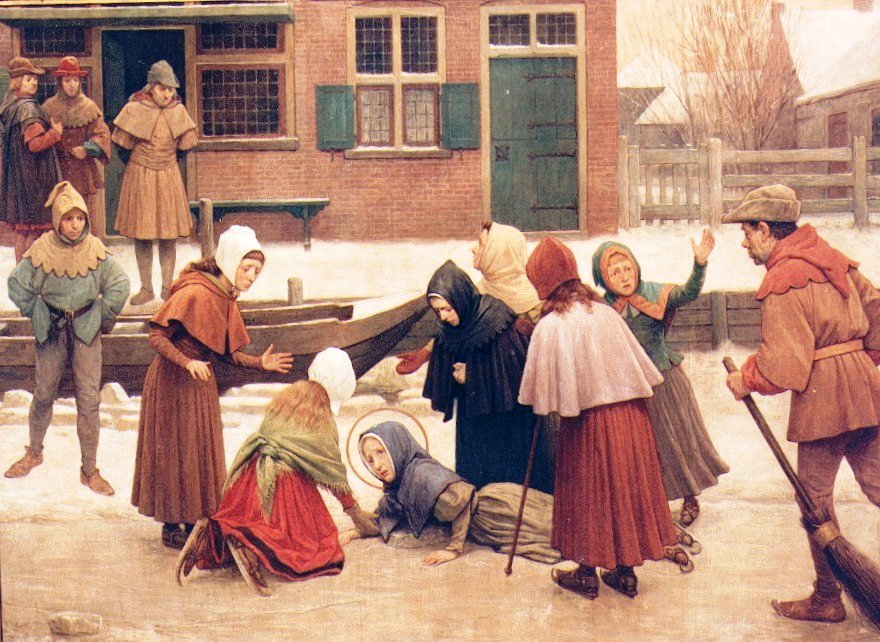
Saint Lydwina of Schiedam and Suffering Joyfully
Saint Lydwina of Schiedam (1380 – 1433) was one of the countless and glorious ‘victim souls’ in the history of the Church, those whose lives are filled with suffering, often of an unimaginable intensity, but who suffer joyfully. She was a fifteen-year old Dutch girl, out skating one day, when she fell and broke one[…]Continue reading→
The Glorious Martyrdoms of Martin and Maximus
As we enter into Eastertide, we recall on this 13th of April Pope Saint Martin I (+655), one of the noblest, if most tragic, of the successors of Saint Peter. Born in Umbria, Italy, he was of noble lineage, with great intelligence combined with charity and love of the poor and the Church. While still[…]Continue reading→

Saint Stanislaus of Szczepanów
We celebrate Saint Stanislaus today (+ April 11, 1079), in light of this Easter Octave, a bishop and martyr who accepted the episcopacy only at the direct order of Pope Alexander II. He proved a wise and courageous leader of his flock, put to death by his own king, Boleslaus, for rebuking the monarch’s ‘immoral[…]Continue reading→
Saint Gemma Galgani
On this April 11th, in 1903 – the same year that the Italian Guiseppe Sarto was elected Pope later that summer as Pius X – a lovely, young Italian woman died, by the name of Gemma Galgani. She lived a brief life of 24 years, as did a number of other young saints, including Pier[…]Continue reading→
An Ideological and Improper Translation
I noticed something odd with the psalm reading at Mass the other day. Our bishops’ conference here in Canada has decreed that the Mass in English – Novus Ordo – use the ‘NRSV’, the ‘New Revised Standard Version’, an ‘updated’ translation of the original RSV, first published in 1952. This ‘new translation’ has the tendency[…]Continue reading→
Saint Jean-Baptiste de la Salle: A Teacher for Teachers
Jean-Baptiste de la Salle (1651 – 1719), a French nobleman, ordained a priest, founded the first order in the Church’s history entirely without priests, and this came about almost by accident. I say ‘almost’, for, of course, there are no accidents with God. Destined for ordination from an early age, Jean-Baptiste never looked back, even[…]Continue reading→