
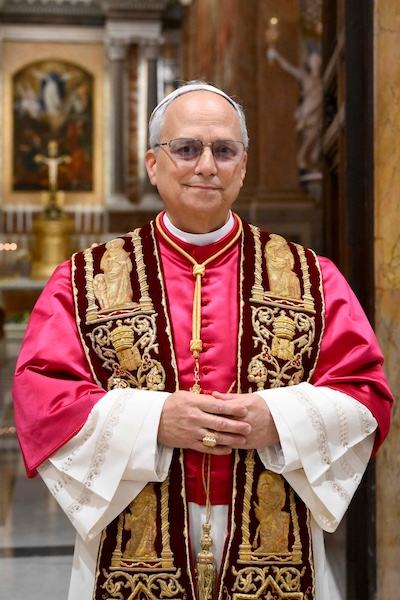
Habemus Papam! Gaudeamus in Domino!
I heard of the white smoke while walking with some students and alumni in Ottawa towards Canada’s annual March for Life. We had just attended a morning TLM together, and the election must have taken place at the 11:30 am vote (EST), just as the priest intoned the Regina Coeli at the end of Mass.
I heard the following words while huddled around a mobile phone with some priests on Parliament Hill. From the Vatican webpage:
Eminentissimum ac Reverendissimum Dominum,
Dominum Robertum Franciscum
Sanctae Romanae Ecclesiae Cardinalem Prevost
qui sibi nomen imposuit LEONEM XIV.
I had only vaguely heard of Robert Cardinal Prevost, and what I have read thus far present a complex picture. As someone put it, doctrinally orthodox, but pastorally more on the liberal or centrist side, if such a distinction can be made. And as someone else said, it is too soon to tell what will ensue, how he will act, what he might do, whether he has an agenda or mission. An Augustinian, he was a missionary in Peru for much of his life, speaks five or so languages, holds a doctorate in canon law, studied at the Angelicum, demurs from Trump’s immigration policies and JD Vance’s notion of ordo amoris, supported the mRNA jab, is against the LGBTQ agenda, is not enthusiastic about Fiducia Supplicans, but has purportedly spent time with Cardinal Burke, said the Latin Mass in private and uphold the Church’s moral doctrine.
Certainly, his initial Urbi et Orbi blessing was very touching and devout, with the invocation of Our Lady and Saint Augustine. His chosen name is a good sign – Leo XIV, with the implication that he will follow in the steps of last Pope of that name, Leo XIII, writer of Rerum Novarum and at least 87 other encyclicals and untold number of other works of the highest quality, combining erudition and tradition. More to stay on that. And it was a very good sign that Leo XIV wore the papal mozzetta, which Pope Francis had eschewed. We need more of the external dignity of the papacy reinstated – not for the man, but for the office.
We don’t know whether he was God’s primary choice; perhaps he is the man we need to bridge the divide within the Church. Yes, there are caveats and cavils but we can hope in the Thomas a Becket option I mentioned the other day: That the grace of the munus he now holds floods into the man, to which he corresponds, and that he becomes the custos et defensor Fidei, even the saint, that every Pope ideally should be.
We will see, and we will pray. For now, we rejoice that we do have a new Pope, a Holy Father, Vicar of Christ, the Rock on which Christ may continue to build His Church. As He promised to the first Pope, I have prayed for you, Peter, that your faith may not fail. May our Lord also intercede for his 267th successor. (*)
In spe gaudentes! Santce Leo Magnus, ora pro nobis! +
(*) The original version of this article had a typo stating that Leo is the 277th successor, an error pointed out by one of my students – of all people – who was just baptized into the Catholic Church this Easter. He also reminded me that I recently half-joked in class that my errors prove that a Chat-bot did not write my articles; that is, at least, until they can figure out a way to mimic even my mistakes. But I will always outwit them by making even more!
Carney’s Amoral Majority
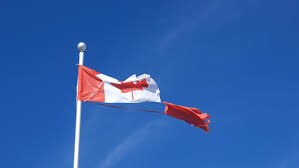
After five defections – euphemistically described as ‘crossing the floor’ – and three by-elections, Mark Carney and his Liberals how have their coveted majority. One wonders what bowls of pottage were offered in back-room deals. In the archaic monarchical system that is the Dominion of Canada, this majority allows the newly-minted Prime Minister to rule[…]Continue reading→

Saint Kateri , Canada’s Protectress
This was the title given to Saint Kateri Tekakwitha, by Pope Benedict XVI, when he canonized her on October 28th, 2012, along with six others, in Saint Peter’ Square (she had been beatified by Pope John Paul II back in 1980). With Saint Joseph as our protector, along with the Canadian martyrs, we seem to[…]Continue reading→
A Tale of Two Benedicts
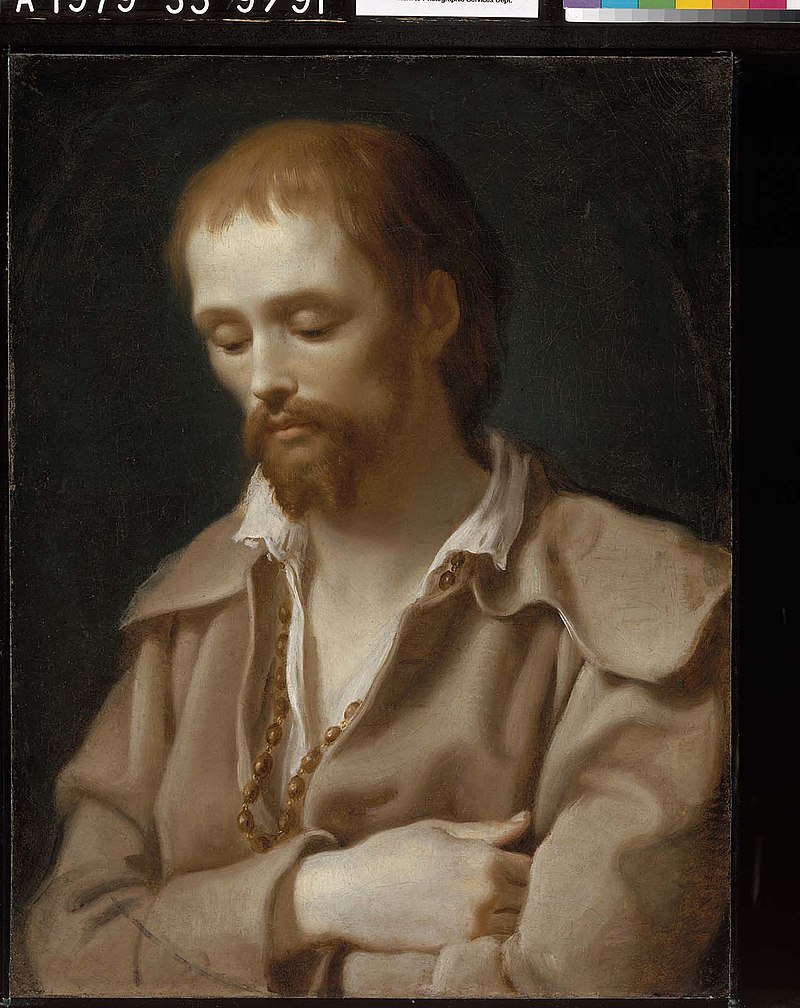
A grace-filled Holy Week to all our readers! As we await and prepare for the Resurrection about to dawn upon us, we might keep in mind two Benedicts: Pope Emeritus Benedict XVI, requiescat in pace, elected on this day in 2005; and today’s commemoration of the mystic pilgrim, Benedict Joseph Labre, who died on this[…]Continue reading→

My Name is Bernadette
April 16th is a propitious day, for besides the anniversary of Father de Valk’s death, who founded Catholic Insight in its print form decades ago, and the commemoration of the ‘two Benedicts’, mentioned in accompanying posts, today we also recall Saint Bernadette Soubirous, the young visionary to whom the Virgin Mary appeared numerous times at[…]Continue reading→
Saint Lydwina of Schiedam and Suffering Joyfully
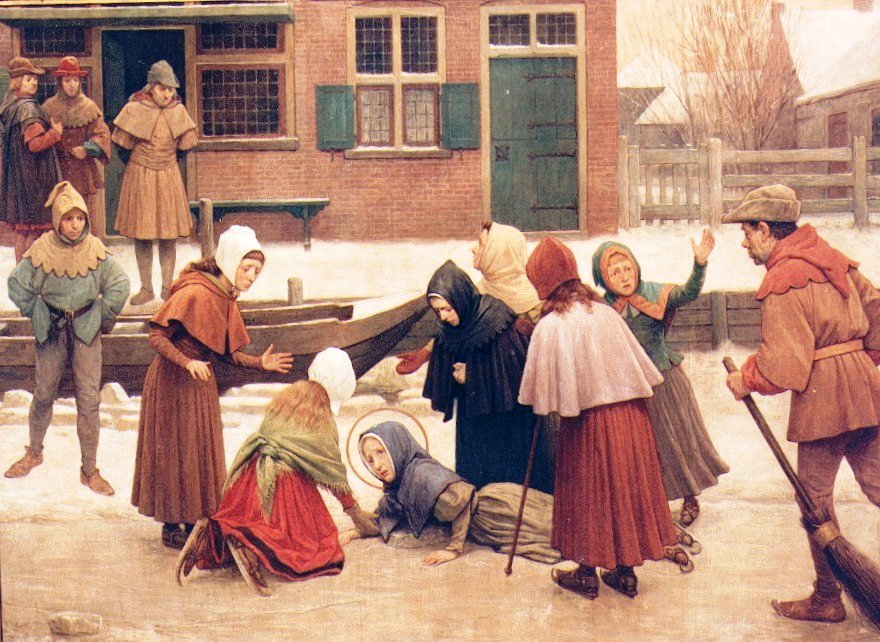
Saint Lydwina of Schiedam (1380 – 1433) was one of the countless and glorious ‘victim souls’ in the history of the Church, those whose lives are filled with suffering, often of an unimaginable intensity, but who suffer joyfully. She was a fifteen-year old Dutch girl, out skating one day, when she fell and broke one[…]Continue reading→
The Glorious Martyrdoms of Martin and Maximus
As we enter into Eastertide, we recall on this 13th of April Pope Saint Martin I (+655), one of the noblest, if most tragic, of the successors of Saint Peter. Born in Umbria, Italy, he was of noble lineage, with great intelligence combined with charity and love of the poor and the Church. While still[…]Continue reading→

Saint Stanislaus of Szczepanów
We celebrate Saint Stanislaus today (+ April 11, 1079), in light of this Easter Octave, a bishop and martyr who accepted the episcopacy only at the direct order of Pope Alexander II. He proved a wise and courageous leader of his flock, put to death by his own king, Boleslaus, for rebuking the monarch’s ‘immoral[…]Continue reading→
Saint Gemma Galgani
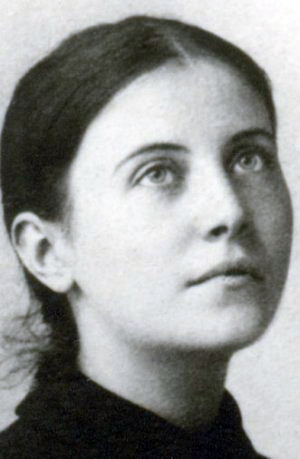
On this April 11th, in 1903 – the same year that the Italian Guiseppe Sarto was elected Pope later that summer as Pius X – a lovely, young Italian woman died, by the name of Gemma Galgani. She lived a brief life of 24 years, as did a number of other young saints, including Pier[…]Continue reading→
An Ideological and Improper Translation
I noticed something odd with the psalm reading at Mass the other day. Our bishops’ conference here in Canada has decreed that the Mass in English – Novus Ordo – use the ‘NRSV’, the ‘New Revised Standard Version’, an ‘updated’ translation of the original RSV, first published in 1952. This ‘new translation’ has the tendency[…]Continue reading→
Saint Jean-Baptiste de la Salle: A Teacher for Teachers
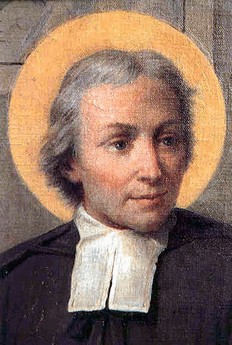
Jean-Baptiste de la Salle (1651 – 1719), a French nobleman, ordained a priest, founded the first order in the Church’s history entirely without priests, and this came about almost by accident. I say ‘almost’, for, of course, there are no accidents with God. Destined for ordination from an early age, Jean-Baptiste never looked back, even[…]Continue reading→