
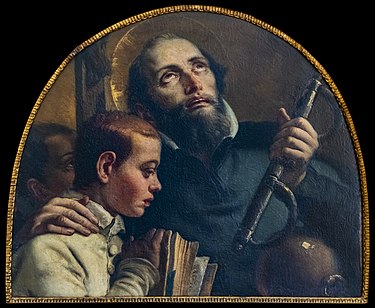
Saint Jerome Emiliani’s Pilgrimage to Heaven
Today, with Saint Josephine Bakhita, we also celebrate Saint Gerolamo – or Jerome – Emiliani (+1537), who ran away from his home in Venice at the age of 15 after his father’s death, becoming a soldier in the religious and political wars then raging in Europe, taken prisoner in a dungeon, which provided him the opportunity either to despair, or to turn his life around. Responding to the grace of God, he chose the latter, and attributed his miraculous escape to the intercession of Our Lady.
He underwent a deep conversion from his youthful indifference to religion, and devoted his time to meditation, the study of theology, and to works of charity. He began by helping to teach his nephews, but soon broadened his ministry to the care of the sick and orphans, of whom he is the patron. During the plague and famine of 1528, he seemed to be everywhere, as is the wont of saints. Others joined him, and an Order was established in 1540 under Pope Paul III, the Congregation of Regular Clerics, whose mission was the care of all those abandoned and bereft, especially orphans, of whom there were untold numbers in that age of disease, war and societal chaos.
This was the same year the Jesuits were founded, who soon had their own mission across the globe, as well the year that the astronomer-priest Copernicus dedicated his 1543 De Revolutionibus Orbium Coelestium on his own deathbed, to the same Paul III, positing the astronomical theory that the Sun, not the Earth, was at the centre of the cosmos, causing quite a revolution, pun intended. Contrary to the many myths surrounding the Galileo legend, the Church welcomed the theory, even if, as the contemporary Oratorian, Cardinal Baronius was to quip, Scripture tells us not how the heavens go, but how to go to heaven.
And to heaven Jerome Emiliani did go, full of good works for the poor and bereft. Whether out of humility, or that he simply did not feel called, Jerome remained a layman throughout his life. Pope Saint John Paul II described him as a a lay person who inspires lay people. He lived not in fear, but in love, mercy and service to others. It was so that he contracted the plague from someone to whom he was ministering, and died on this day, February 8th, in 1537. He was beatified by Pope Benedict XIV in 1747, and canonized by Clement XIII twenty years later, in 1767.
Saint Jerome Emiliani, ora pro nobis! +

Carney’s Amoral Majority
After five defections – euphemistically described as ‘crossing the floor’ – and three by-elections, Mark Carney and his Liberals how have their coveted majority. One wonders what bowls of pottage were offered in back-room deals. In the archaic monarchical system that is the Dominion of Canada, this majority allows the newly-minted Prime Minister to rule[…]Continue reading→

Saint Kateri , Canada’s Protectress
This was the title given to Saint Kateri Tekakwitha, by Pope Benedict XVI, when he canonized her on October 28th, 2012, along with six others, in Saint Peter’ Square (she had been beatified by Pope John Paul II back in 1980). With Saint Joseph as our protector, along with the Canadian martyrs, we seem to[…]Continue reading→
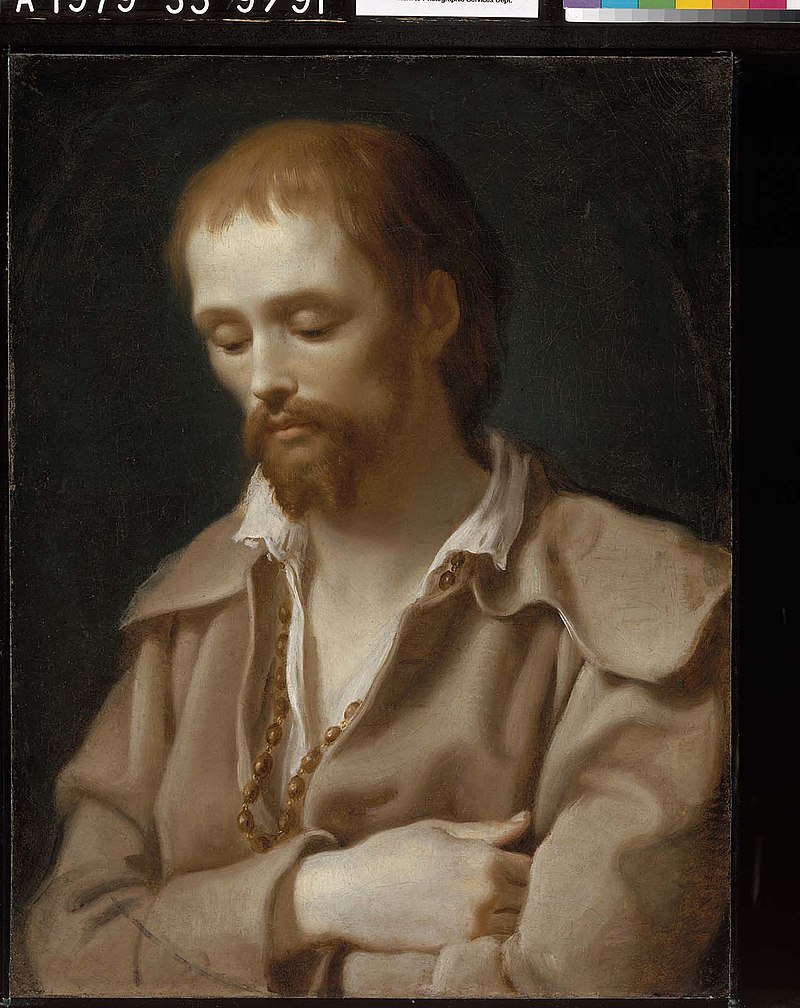
A Tale of Two Benedicts
A grace-filled Holy Week to all our readers! As we await and prepare for the Resurrection about to dawn upon us, we might keep in mind two Benedicts: Pope Emeritus Benedict XVI, requiescat in pace, elected on this day in 2005; and today’s commemoration of the mystic pilgrim, Benedict Joseph Labre, who died on this[…]Continue reading→

My Name is Bernadette
April 16th is a propitious day, for besides the anniversary of Father de Valk’s death, who founded Catholic Insight in its print form decades ago, and the commemoration of the ‘two Benedicts’, mentioned in accompanying posts, today we also recall Saint Bernadette Soubirous, the young visionary to whom the Virgin Mary appeared numerous times at[…]Continue reading→
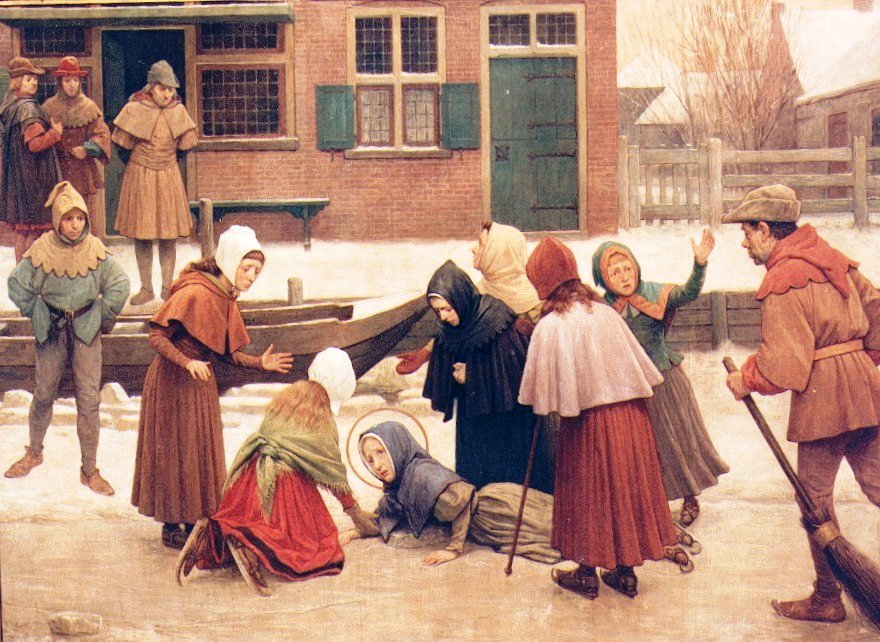
Saint Lydwina of Schiedam and Suffering Joyfully
Saint Lydwina of Schiedam (1380 – 1433) was one of the countless and glorious ‘victim souls’ in the history of the Church, those whose lives are filled with suffering, often of an unimaginable intensity, but who suffer joyfully. She was a fifteen-year old Dutch girl, out skating one day, when she fell and broke one[…]Continue reading→
The Glorious Martyrdoms of Martin and Maximus
As we enter into Eastertide, we recall on this 13th of April Pope Saint Martin I (+655), one of the noblest, if most tragic, of the successors of Saint Peter. Born in Umbria, Italy, he was of noble lineage, with great intelligence combined with charity and love of the poor and the Church. While still[…]Continue reading→

Canonizing Sister Faustina and Divine Mercy
HOMILY OF THE HOLY FATHER MASS IN ST PETER’S SQUARE FOR THE CANONIZATION OF SR MARY FAUSTINA KOWALSKA Sunday, 30 April 2000 1. “Confitemini Domino quoniam bonus, quoniam in saeculum misericordia eius”; “Give thanks to the Lord for he is good; his steadfast love endures for ever” (Ps 118: 1). So the Church sings on the Octave of[…]Continue reading→

Saint Stanislaus of Szczepanów
We celebrate Saint Stanislaus today (+ April 11, 1079), in light of this Easter Octave, a bishop and martyr who accepted the episcopacy only at the direct order of Pope Alexander II. He proved a wise and courageous leader of his flock, put to death by his own king, Boleslaus, for rebuking the monarch’s ‘immoral[…]Continue reading→
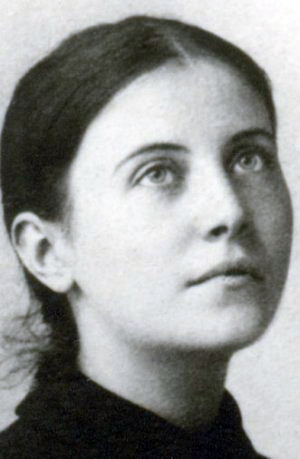
Saint Gemma Galgani
On this April 11th, in 1903 – the same year that the Italian Guiseppe Sarto was elected Pope later that summer as Pius X – a lovely, young Italian woman died, by the name of Gemma Galgani. She lived a brief life of 24 years, as did a number of other young saints, including Pier[…]Continue reading→
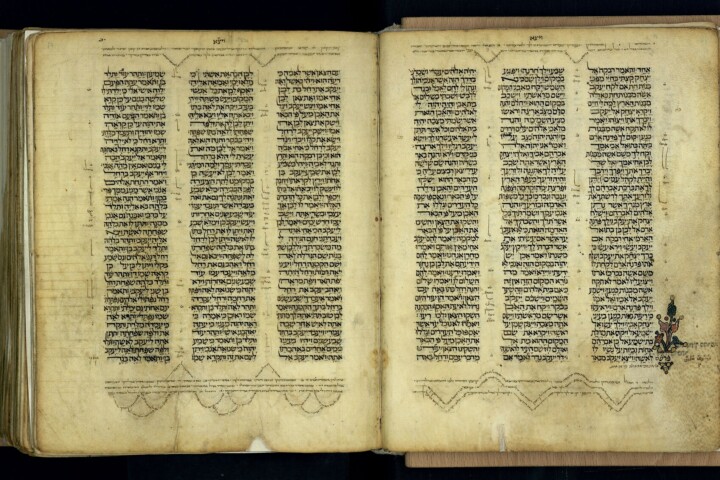
An Ideological and Improper Translation
I noticed something odd with the psalm reading at Mass the other day. Our bishops’ conference here in Canada has decreed that the Mass in English – Novus Ordo – use the ‘NRSV’, the ‘New Revised Standard Version’, an ‘updated’ translation of the original RSV, first published in 1952. This ‘new translation’ has the tendency[…]Continue reading→