
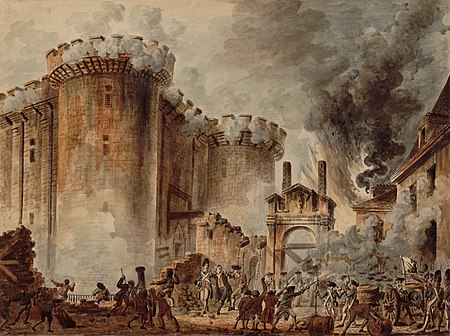
The Storm of a True Revolution
Today marks the anniversary of the official beginning of the French Revolution, back in 1789 with the storming of the Bastille prison. Much ado is made of this ‘storming’, even though there were only seven inmates still imprisoned in the vast, stone edifice. The Marquis de Sade (from whom we derive the term ‘sadism’) had been there but had been transferred ten days earlier, which likely spared his life. His crime was the publication of licentious books advocating all sorts of the worst sexual deviance, which are now on the curriculum at many of our universities, and which provide the basis for such Hollywood drivel as Fifty Shades of Grey (or is that Gray?).
Thousands of others were sent to the Bastille for any number of reasons, from fraud and insurrection, to simply insulting the king or one of his noblemen. During the long reign of Louis XIV (1643-1715), the notorious lettres de cachet were invented – letters accusing persons of secret crimes. You would be walking blithely down the street, when tapped on the back with a white baton, and presented with your ‘letter’, before being whisked off unceremoniously to your cell in the Bastille. One of the most notorious was Voltaire himself, sent there in May of 1717 for his satirical and withering criticism of the government, nobility, the king and religion, especially his La Henriade. He wrote of his year-long sojourn in the bowels of the Bastille. There was also the mysterious long-term prisoner known as the Man in the Iron Mask, which, to say the least, caught the popular imagination, always a precarious thing.
All in all, the Bastille became a symbol of all that was tyrannical, totalitarian and just plain bad in the ancien regime, with too much power, influence, money, privilege centred in the king and his court, with the ‘people’ crushed under poverty, debt and misery – at the whim of their political overlords and their henchmen. Sounds sort of modern.
Hence, the Bastille was the first thing stormed when those same people had had enough. As Saint Thomas warned five centuries earlier, unjust and oppressive laws are like someone blowing their nose too violently, and bring forth blood.
Like most revolutions, even if the initial cause was in many ways just, things went too far, passions got out of control, and the devil had his due. Untold thousands were slaughtered, often brutally, not just the representatives of the old regime – the nobility, bishops and priests, most of them innocent – but also, eventually, anyone remotely suspected of being against the ‘revolution’, which began to devour itself. It all came to an end with the guillotining of the Carmelite nuns in July of 1794, soon after which the revolutionary’s revolutionary, Robespierre, was himself beheaded by the machine with which he had killed so many others.
A sermon I once heard on this day a few years ago mentioned the Revolution, reflecting upon this historical event, when destructive forces razed the old world, and formed not only modern France, but the modern world. What is old, is new again, as we face similar anarchic winds blowing – but the neo-pagans of our era seem to lack even the residual virtues of those of 1789 who, for all their at times demonic rage, still held some Catholic echo, if you will of liberté, égalité et fraternité. Now, everything is being cancelled, annulled and obliterated, with almost no awareness – in face, a deep hatred – of whatever and whomever came before.
As the priest of that homily reminded us, however, the best revolution, really the only one that can fulfill justice, is the one motivated by charity, a revolution within the soul, a metanoia, a conversion of heart and mind, to love, to will the true good, of the other.
In other words, a revolution of the saints, when they come marchin’ on through history.
On that note, peruse today’s very a propos saint, Camillus de Lellis, who inspired such a revolution of charity and service. The only thing he obliterated was his own deviant self-will. After all, it is only he who loses himself, shall find not only himself, but everything else.

Carney’s Amoral Majority
After five defections – euphemistically described as ‘crossing the floor’ – and three by-elections, Mark Carney and his Liberals how have their coveted majority. One wonders what bowls of pottage were offered in back-room deals. In the archaic monarchical system that is the Dominion of Canada, this majority allows the newly-minted Prime Minister to rule[…]Continue reading→

Saint Kateri , Canada’s Protectress
This was the title given to Saint Kateri Tekakwitha, by Pope Benedict XVI, when he canonized her on October 28th, 2012, along with six others, in Saint Peter’ Square (she had been beatified by Pope John Paul II back in 1980). With Saint Joseph as our protector, along with the Canadian martyrs, we seem to[…]Continue reading→

A Tale of Two Benedicts
A grace-filled Holy Week to all our readers! As we await and prepare for the Resurrection about to dawn upon us, we might keep in mind two Benedicts: Pope Emeritus Benedict XVI, requiescat in pace, elected on this day in 2005; and today’s commemoration of the mystic pilgrim, Benedict Joseph Labre, who died on this[…]Continue reading→

My Name is Bernadette
April 16th is a propitious day, for besides the anniversary of Father de Valk’s death, who founded Catholic Insight in its print form decades ago, and the commemoration of the ‘two Benedicts’, mentioned in accompanying posts, today we also recall Saint Bernadette Soubirous, the young visionary to whom the Virgin Mary appeared numerous times at[…]Continue reading→

Saint Lydwina of Schiedam and Suffering Joyfully
Saint Lydwina of Schiedam (1380 – 1433) was one of the countless and glorious ‘victim souls’ in the history of the Church, those whose lives are filled with suffering, often of an unimaginable intensity, but who suffer joyfully. She was a fifteen-year old Dutch girl, out skating one day, when she fell and broke one[…]Continue reading→

The Glorious Martyrdoms of Martin and Maximus
As we enter into Eastertide, we recall on this 13th of April Pope Saint Martin I (+655), one of the noblest, if most tragic, of the successors of Saint Peter. Born in Umbria, Italy, he was of noble lineage, with great intelligence combined with charity and love of the poor and the Church. While still[…]Continue reading→

Saint Stanislaus of Szczepanów
We celebrate Saint Stanislaus today (+ April 11, 1079), in light of this Easter Octave, a bishop and martyr who accepted the episcopacy only at the direct order of Pope Alexander II. He proved a wise and courageous leader of his flock, put to death by his own king, Boleslaus, for rebuking the monarch’s ‘immoral[…]Continue reading→

Saint Gemma Galgani
On this April 11th, in 1903 – the same year that the Italian Guiseppe Sarto was elected Pope later that summer as Pius X – a lovely, young Italian woman died, by the name of Gemma Galgani. She lived a brief life of 24 years, as did a number of other young saints, including Pier[…]Continue reading→
An Ideological and Improper Translation
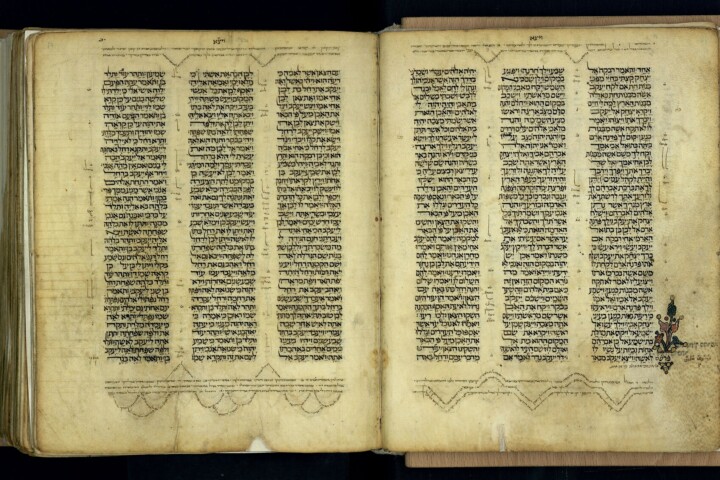
I noticed something odd with the psalm reading at Mass the other day. Our bishops’ conference here in Canada has decreed that the Mass in English – Novus Ordo – use the ‘NRSV’, the ‘New Revised Standard Version’, an ‘updated’ translation of the original RSV, first published in 1952. This ‘new translation’ has the tendency[…]Continue reading→
Saint Jean-Baptiste de la Salle: A Teacher for Teachers
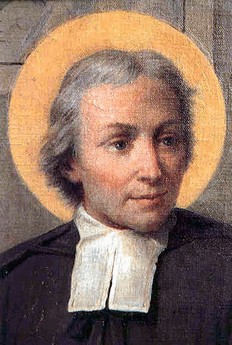
Jean-Baptiste de la Salle (1651 – 1719), a French nobleman, ordained a priest, founded the first order in the Church’s history entirely without priests, and this came about almost by accident. I say ‘almost’, for, of course, there are no accidents with God. Destined for ordination from an early age, Jean-Baptiste never looked back, even[…]Continue reading→