
6000 Thoughts A Day: What to Do with Them All?
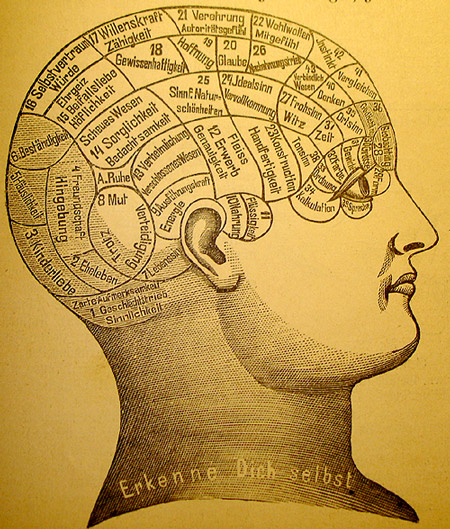
Did you know that the average human has around 6,000 thoughts per day? A recent study used brain imaging scans to track when new ideas appear; the study distinguished a ‘thought’ by identifying detectable patterns of brain activity. They found a median rate of about 6.5 thought transitions per minute, concluding that the average young adult would have more than 6,000 thoughts throughout the day. While there is little importance in accurately calculating our thoughts, this study awakens us to the reality that we think a lot; thoughts are an integral part of our daily mental processes and contribute to our overall cognitive experiences.
Each thought is powerful, impacting our perception, conscience, emotional state, actions, and, most significantly, our soul. How often do you pause and reflect without judgment on a few of your thousands of daily thoughts? Going deeper, how often do you invite God into the conversation? Not all the thoughts we tell ourselves are true. Therefore, we need guidance from God to navigate through our 6,000 daily thoughts successfully. He is the source of all truth; only He can reveal what is real, guiding us to align our thoughts and develop a well-informed, healthy mind.
God made us for relational thinking; we were not created to think alone in our heads but to think together with God. In the beginning, we were in a perfect relationship with our Creator, and He created humanity eternally to be in union with Him. However, due to the disobedience of Adam and Eve, the first human beings, they lost this state of original justice and harmony. This event, known as the Fall, introduced original sin into human nature. Original sin affected the relationship between Man and God, causing separation and a disordered state of existence. The Fall had various consequences, including a deprivation of God’s immediate presence in the human mind.
Sin ruptured the relationship between God and Man, so after the Fall, Adam and Eve “hid themselves from the LORD God among the trees of the garden.” (Genesis 3:8). It is important to note Adam and Eve not only hid their physical bodies; they also hid their minds. The original harmony and communion with God became lost- For the first time, in their thoughts, Adam and Eve experienced a sense of separation, alienation, and a weakened ability to resist temptation. The Fall created a need for redemption, for Man to be reconciled with God. Through Jesus’ sacrifice and resurrection, a restored union with God is available to each person. Individuals can be put on the mind of Christ and invite the Holy Spirit into our thinking.
While we are saved through God’s grace, human beings still have an ongoing struggle with sin. The wounds of our human nature inherited from the Fall can be heard in untrue thoughts that are intrusive or negative. Again, not everything we tell ourselves is true; doubtful and despairing ideas can seep into our intellect. We depend on Christ, the “way and the truth, and the life.” (John 14:6) to navigate what is true and untrue in our thinking because we ultimately have two options when approaching our thoughts: receiving or rejecting them. The notion of consent given to a thought relates to the role of the human will, the faculty of the soul that enables individuals to make choices and exercise their freedom. The will plays a vital role in determining how one responds to those thoughts. Ideas, desires, and temptations arise within individuals, often spontaneously or involuntarily. Still, the will can determine the moral value of thoughts and desires and choose whether to receive or reject them.
A helpful exercise is imagining a courtroom in your head, taking one thought you are telling yourself and putting it on trial, with God as the judge, and evaluating if it is a true thought. For example, maybe the thought is, “If everyone knew the things I have done, no one would love me.” Let’s put that thought on trial with God as the judge. Is the statement true? In the eyes of God, your worth and lovability are not determined by your past actions- God’s love for us is unconditional and unfailing. We can trust Him and hope others can be understanding and compassionate about the past. Therefore, that thought is untrue, and it is safe to reject it. Ultimately, this exercise aims to help us slow down and reflect on our thoughts in the eyes of God, aligning our thoughts with God’s truth. By identifying and challenging false or negative thoughts, we can replace them with ideas rooted in God’s love, grace, and wisdom.
Relational thinking with God brings authentic peace of mind because God provides us with the perfect secure attachment style. In virtue and righteousness, He reveals the truth about ourselves and our thoughts- He will never beat you with the truth; instead, He will tell you the truth with love, goodness, and kindness. Beware not to beat yourself up with the truth, a common tactic of the devil. For example, maybe the truth is you made a mistake. Do not beat yourself with that truth calling yourself bad names or thinking negative things. Instead, discern what is true, beneficial, and aligned with His will. This approach allows us to self-reflect with humility, seek God’s guidance and embrace His love and mercy. Instead of being discouraged or overwhelmed by our flaws or negative thoughts, we can approach them as areas where God’s grace can work within us, leading us toward greater holiness and virtue. We are called to trust God, the eternal source of truth, and rely on the teachings of Scripture, the Church, and the guidance of the Holy Spirit to discern and embrace the absolute truth.
Having an open and honest relationship with God regarding our thoughts is crucial. While there may be a tendency to hide our thoughts from Him and try to navigate life independently, without God, we cannot fully discover what is true in our thinking. Human beings are inclined to make sense of the thousands of daily thoughts on their own. However, recognizing our dependence on God and inviting Him into our thought processes provides authentic freedom and healing. He is the ultimate source of truth and wisdom, and by engaging in a relationship with Him, seeking His guidance, and aligning our thoughts with His revealed truths, we have a greater chance of discovering what is genuinely true in this world, an invaluable gift.

Saint Kateri , Canada’s Protectress
This was the title given to Saint Kateri Tekakwitha, by Pope Benedict XVI, when he canonized her on October 28th, 2012, along with six others, in Saint Peter’ Square (she had been beatified by Pope John Paul II back in 1980). With Saint Joseph as our protector, along with the Canadian martyrs, we seem to[…]Continue reading→

Remembering Father Alphonse de Valk
(Today marks the sixth anniversary of the death of Father Alphonse de Valk, C.S.B., a faithful, courageous and indefatigable Basilian priest, pro-life-and-family apostle, and the founder of Catholic Insight magazine. Here is what we wrote those on his entering into eternity five years ago, as we continue to remember him in our prayers and thoughts)[…]Continue reading→

My Name is Bernadette
April 16th is a propitious day, for besides the anniversary of Father de Valk’s death, who founded Catholic Insight in its print form decades ago, and the commemoration of the ‘two Benedicts’, mentioned in accompanying posts, today we also recall Saint Bernadette Soubirous, the young visionary to whom the Virgin Mary appeared numerous times at[…]Continue reading→

Canonizing Sister Faustina and Divine Mercy
HOMILY OF THE HOLY FATHER MASS IN ST PETER’S SQUARE FOR THE CANONIZATION OF SR MARY FAUSTINA KOWALSKA Sunday, 30 April 2000 1. “Confitemini Domino quoniam bonus, quoniam in saeculum misericordia eius”; “Give thanks to the Lord for he is good; his steadfast love endures for ever” (Ps 118: 1). So the Church sings on the Octave of[…]Continue reading→

Divine Mercy Sunday – An Echo of Every Mass
Reach out your hand and put it in my side. Do not doubt but believe’… ‘My Lord and my God!’ (Jn. 20:18)). Today is Divine Mercy Sunday, and as we celebrate the end of the Easter Octave, we contemplate the wounded side of our Saviour, the Church’s source of life. On Good Friday in the[…]Continue reading→

Saint Stanislaus of Szczepanów
We celebrate Saint Stanislaus today (+ April 11, 1079), in light of this Easter Octave, a bishop and martyr who accepted the episcopacy only at the direct order of Pope Alexander II. He proved a wise and courageous leader of his flock, put to death by his own king, Boleslaus, for rebuking the monarch’s ‘immoral[…]Continue reading→

First Holy Communion: Sermon from May 16, 1943
Here is a sermon from the good old days by +Rev. Msgr. Vincent Nicholas Foy (August 14, 1915 – March 13, 2017), from 1943. Readers may recall that Pope Saint Pius X, by the decree Quam Singulari in 1910, lowered the customary age of reception of Holy Communion – after the rigours of the plague[…]Continue reading→

In the Glorious Light of Easter, Alleluia!
Set your minds on things that are above, not on things that are on earth, for you have died, and your life is hidden with Christ in God. When Christ who is your life is revealed, then you also will be revealed with him in glory (Col. 3:3-4). The Resurrection of Our Lord and Saviour[…]Continue reading→

An Ancient Homily for Holy Saturday
The time between Good Friday and Easter Sunday is one of waiting, in silence, as the world wonders – anticipates – what will happen, after the death of Christ. We re-live this time each year in the anamnesis of our liturgy, and in turn look forward to the glorious re-creation of all things at the[…]Continue reading→

Europe’s Long Descent
(As we meditate on this day on Christ’s burial, and His descent into hell, it is fitting to ponder here with contributor Peter Marcus how the world seems to be heading there as well. The difference is that, although God cannot ‘redeem’ hell, nor those therein, He can and did redeem the world. There is[…]Continue reading→