
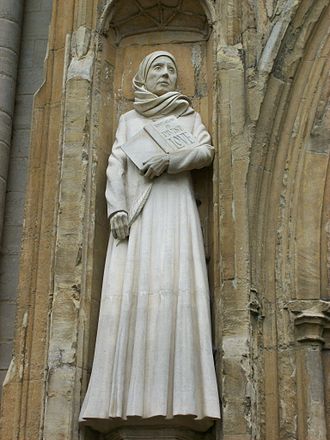
Dame Julian of Norwich
(As mentioned in our post on Our Lady of Fatima, this is also the day that Blessed Julian of Norwich began to receive her own visions, in 1343, from Christ Himself. Here is Pope Benedict’s reflection on the English mystic and anchoress, who has much to say to our own times)
BENEDICT XVI
GENERAL AUDIENCE
Paul VI Hall
Wednesday, 1st December 2010
Julian of Norwich
Dear Brothers and Sisters,
I still remember with great joy the Apostolic Journey I made in the United Kingdom last September. England is a land that has given birth to a great many distinguished figures who enhanced Church history with their testimony and their teaching. One of them, venerated both in the Catholic Church and in the Anglican Communion, is the mystic Julian of Norwich, of whom I wish to speak this morning.
The — very scant — information on her life in our possession comes mainly from her Revelations of Divine Love in Sixteen Showings, the book in which this kindly and devout woman set down the content of her visions.
It is known that she lived from 1342 until about 1430, turbulent years both for the Church, torn by the schism that followed the Pope’s return to Rome from Avignon, and for the life of the people who were suffering the consequences of a long drawn-out war between the Kingdoms of England and of France. God, however, even in periods of tribulation, does not cease to inspire figures such as Julian of Norwich, to recall people to peace, love and joy.
As Julian herself recounts, in May 1373, most likely on the 13th of that month, she was suddenly stricken with a very serious illness that in three days seemed to be carrying her to the grave. After the priest, who hastened to her bedside, had shown her the Crucified One not only did Julian rapidly recover her health but she received the 16 revelations that she subsequently wrote down and commented on in her book, Revelations of Divine Love.
And it was the Lord himself, 15 years after these extraordinary events, who revealed to her the meaning of those visions.
“‘Would you learn to see clearly your Lord’s meaning in this thing? Learn it well: Love was his meaning. Who showed it to you? Love…. Why did he show it to you? For Love’…. Thus I was taught that Love was our Lord’s meaning” (Julian of Norwich, Revelations of Divine Love, Chapter 86).
(To continue reading, please see here).

Saint Kateri , Canada’s Protectress
This was the title given to Saint Kateri Tekakwitha, by Pope Benedict XVI, when he canonized her on October 28th, 2012, along with six others, in Saint Peter’ Square (she had been beatified by Pope John Paul II back in 1980). With Saint Joseph as our protector, along with the Canadian martyrs, we seem to[…]Continue reading→

Remembering Father Alphonse de Valk
(Today marks the sixth anniversary of the death of Father Alphonse de Valk, C.S.B., a faithful, courageous and indefatigable Basilian priest, pro-life-and-family apostle, and the founder of Catholic Insight magazine. Here is what we wrote those on his entering into eternity five years ago, as we continue to remember him in our prayers and thoughts)[…]Continue reading→
A Tale of Two Benedicts
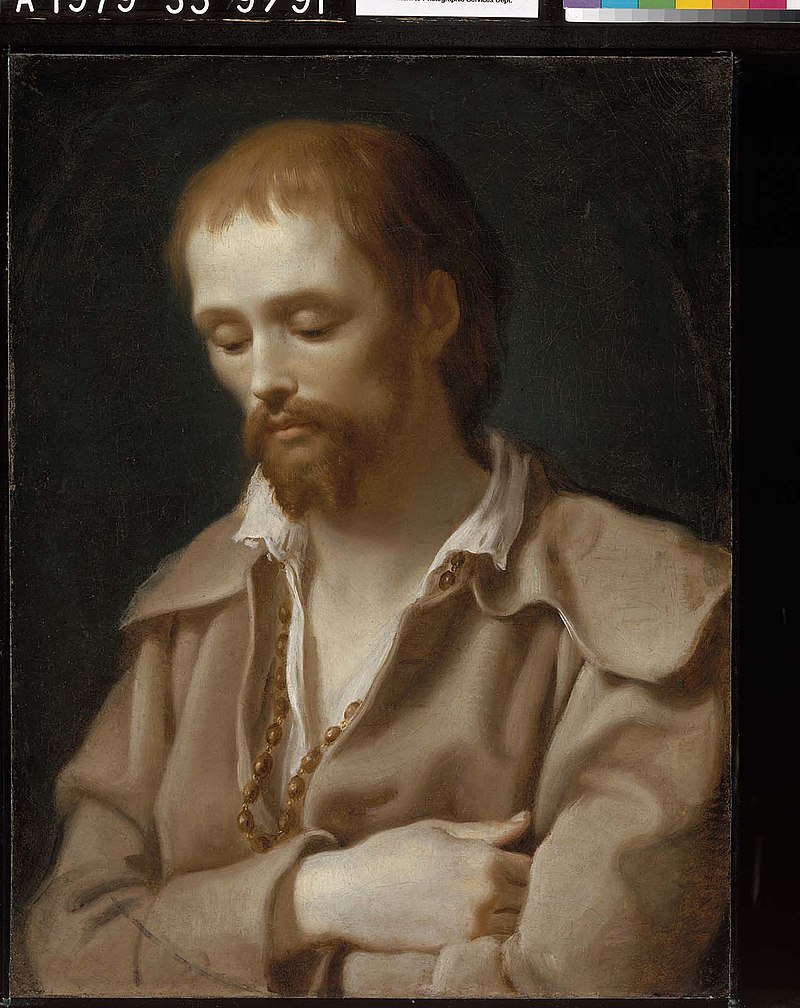
A grace-filled Holy Week to all our readers! As we await and prepare for the Resurrection about to dawn upon us, we might keep in mind two Benedicts: Pope Emeritus Benedict XVI, requiescat in pace, elected on this day in 2005; and today’s commemoration of the mystic pilgrim, Benedict Joseph Labre, who died on this[…]Continue reading→

My Name is Bernadette
April 16th is a propitious day, for besides the anniversary of Father de Valk’s death, who founded Catholic Insight in its print form decades ago, and the commemoration of the ‘two Benedicts’, mentioned in accompanying posts, today we also recall Saint Bernadette Soubirous, the young visionary to whom the Virgin Mary appeared numerous times at[…]Continue reading→
Saint Lydwina of Schiedam and Suffering Joyfully
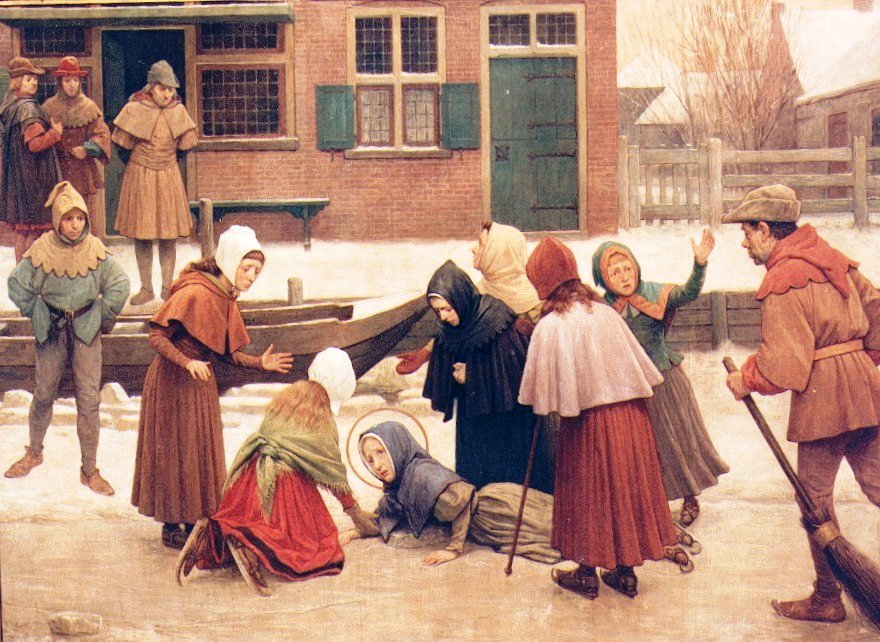
Saint Lydwina of Schiedam (1380 – 1433) was one of the countless and glorious ‘victim souls’ in the history of the Church, those whose lives are filled with suffering, often of an unimaginable intensity, but who suffer joyfully. She was a fifteen-year old Dutch girl, out skating one day, when she fell and broke one[…]Continue reading→
The Glorious Martyrdoms of Martin and Maximus
As we enter into Eastertide, we recall on this 13th of April Pope Saint Martin I (+655), one of the noblest, if most tragic, of the successors of Saint Peter. Born in Umbria, Italy, he was of noble lineage, with great intelligence combined with charity and love of the poor and the Church. While still[…]Continue reading→
Canonizing Sister Faustina and Divine Mercy
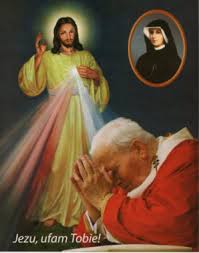
HOMILY OF THE HOLY FATHER MASS IN ST PETER’S SQUARE FOR THE CANONIZATION OF SR MARY FAUSTINA KOWALSKA Sunday, 30 April 2000 1. “Confitemini Domino quoniam bonus, quoniam in saeculum misericordia eius”; “Give thanks to the Lord for he is good; his steadfast love endures for ever” (Ps 118: 1). So the Church sings on the Octave of[…]Continue reading→
Divine Mercy Sunday – An Echo of Every Mass
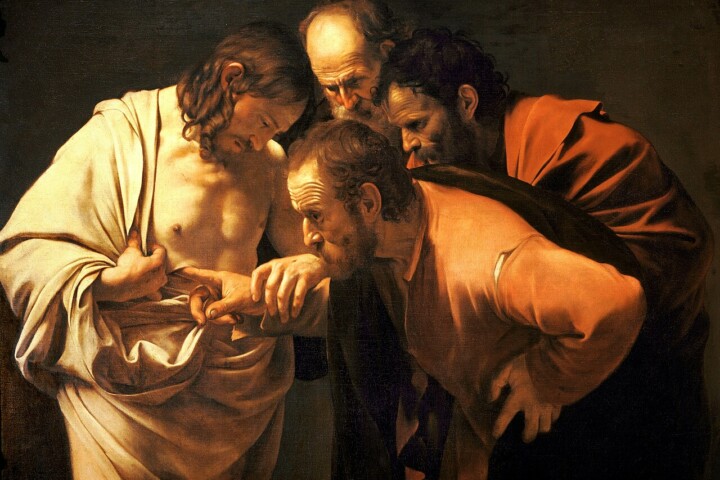
Reach out your hand and put it in my side. Do not doubt but believe’… ‘My Lord and my God!’ (Jn. 20:18)). Today is Divine Mercy Sunday, and as we celebrate the end of the Easter Octave, we contemplate the wounded side of our Saviour, the Church’s source of life. On Good Friday in the[…]Continue reading→
Saint Gemma Galgani
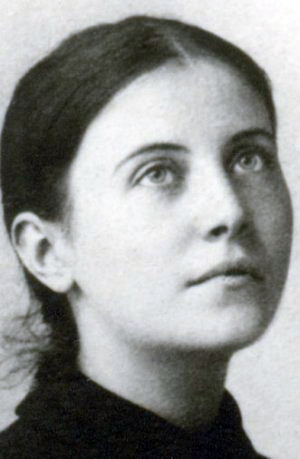
On this April 11th, in 1903 – the same year that the Italian Guiseppe Sarto was elected Pope later that summer as Pius X – a lovely, young Italian woman died, by the name of Gemma Galgani. She lived a brief life of 24 years, as did a number of other young saints, including Pier[…]Continue reading→
First Holy Communion: Sermon from May 16, 1943
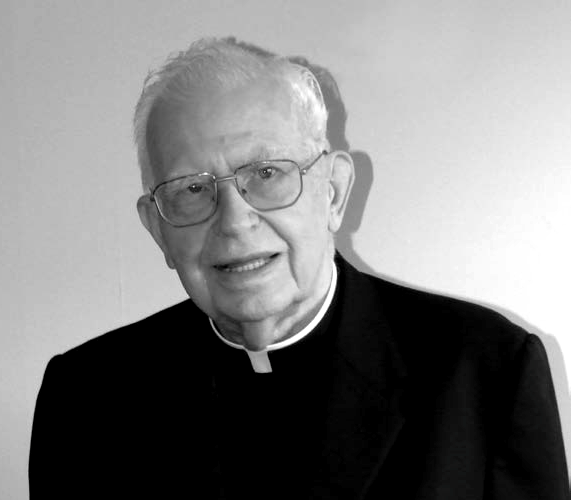
Here is a sermon from the good old days by +Rev. Msgr. Vincent Nicholas Foy (August 14, 1915 – March 13, 2017), from 1943. Readers may recall that Pope Saint Pius X, by the decree Quam Singulari in 1910, lowered the customary age of reception of Holy Communion – after the rigours of the plague[…]Continue reading→