
The Rise – and Fall? – of the Nones
He who is not with me is against me, and he who does not gather with me scatters.
“When the unclean spirit has gone out of a man, he passes through waterless places seeking rest; and finding none he says, `I will return to my house from which I came.’
And when he comes he finds it swept and put in order. Then he goes and brings seven other spirits more evil than himself, and they enter and dwell there; and the last state of that man becomes worse than the first.” (Luke 11: 23-26)
One of the largest growing religious demographics in the western word are the ‘nones’, those who claim they have no religion – that is, none, either agnostic about the whole thing, or outright atheist. (Unfortunate, that the term is a homophone with nuns, who, one would assume, hold precisely the opposite. Hence, I pronounce them, maybe confusingly, as n-oe-ns, with a long ‘o’, but perhaps we could settle for nons, or naughts).
Whatever we call them, their position is non-sensical. For Saint Thomas, in his treatise on the final end in the first few questions of the Prima Secundae, teaches that it’s impossible – contra naturam – to have no religion . Man by his very nature is a religious being. We ‘bind ourselves’ – re-ligere – to something, more that just ‘religiously’ devoted to fitness or practising violin. Religion, rather, is that which binds us to a final end, the thing to which we direct all of our moral actions, our very life, what we love the most. That which, as he puts it, is master of our affections.
There is only one true religion, God, as revealed in and by the Catholic and Apostolic Church, through which He reveals the means through which we bind ourselves to Him – sacramental, liturgical, doctrinal. Some adopt an approximation of this true religion. Many others drift far away, with the ‘nones’ at the end of that spectrum – those who reject any notion of a revelatory God, and choose to live by their own proclivities, whether these be the pleasures, prestige and baubles of this passing life, or some more philosophical pagan principles. They think the apartments of their souls are ‘swept and put in order’, rid of the ‘superstition’ of religion, but in reality they are empty vessels ripe for the picking. The further one is from the Church, the easier prey one is to the devil, who is prowling around looking for souls to devour.
This is an inexorable consequence of the lex orandi, lex credendi, lex vivendi: The law of praying, is the law of believing, is the law of living. Or we think and act as we believe. And if our belief has no fixed moral or ontological anchor, then what is guiding our conduct? We may ponder how many nones are believe in and support the inviolability of life from conception to natural death? Or the indissolubility of marriage? Or sex only within marriage? The answer, ironically, is likely close to none.
This is not to say that the nones are all in deep sin. Many may be in invincible ignorance, and God can provide what is lacking – He himself is not bound by His sacraments. We should also not presume that those living a full religious life are saints, or even on the way thereto. There are hypocrites, and we need not look far for glaring examples, desecrating their own souls and those of others. We might even say such white-washed sepulchers – and we all have a whiff of such within us – becomes one of the seven devils, and invites the other six in.
What we do know from revelation is that there are, in the end, only two options: For Christ, or against Him – pro-Christ, or anti-Christ. And just as in worshiping Christ, the Son, we worship God the Father, so too those who worship in the spirit of the anti-Christ, have given themselves to his own father, the devil. As Christ warns those who reject His word:
You are of your father the devil, and your will is to do your father’s desires. He was a murderer from the beginning, and has nothing to do with the truth, because there is no truth in him. When he lies, he speaks according to his own nature, for he is a liar and the father of lies.
Unlike Christ, we know not what is in the heart of man, so we cannot see – far less judge – what fundamental choice any person has made, and what they have chosen as their final end. We can scarcely even know our own. The self is more distant than any star, wrote Chesterton. But we can have some level of moral certainty that we are in a state of grace, if we avoid grave sin, strive for virtue, and make a good regular confession. We may also have similar certainty that we are in mortal sin, if we have not.
We can even glean to some extent the state of others, and this without ‘judging’ them. When I ask students if they want to marry someone in a state of grace, they reply ‘of course!’. But how to know? Well, as per above, their religious and moral lives are significant, if not infallible, clues.
Which brings us back to the nones. As this author questions how much blame can be put on the nones – most of them in the younger demographic, for they often reject, or never accept, what they have never really known. Not only are there innumerable overt scandals in the Church, but so many have grown up with a dearth of true beauty, denied anything much resembling a Catholic culture – families, stories, art, music, literature, which support and constitutes a well-lived life. They have also endured broken families, divorce, indoctrination, sexploitation, hopelessness, degrading poverty and any number of other evils of this culture of death.
At the same time, God never leaves a soul bereft, and we should not underestimate the power of grace. God gives to each soul sufficient help – gratia agens – to choose Him in some way, to make an act of Faith, what Saint Thomas describes as the assent of the intellect to the divine truth by command of the will moved by grace. Everything else flows from this, and, as Scripture attests, God often asks us to make this choice in deep trust, even spiritual darkness and in the midst of great evil. Only by making such an act – in some way – can we have moral certainty that we are with Christ – in a state of grace and charity – or against Him – in a state of mortal sin and enmity with God. It’s a healthy exercise in Lent to re-examine the state of our souls, how empty they may be, and how far we may have drifted. Take stock, and re-stock. Far better to fill our souls than our larders.
As the Letter to the Hebrews points out, ‘without faith, it is impossible to please God’.
We all must make that deep-down choice of whom we will worship – someone, or something. The danger for those who refuse to admit any religion is that they become like the ‘swept’ and empty rooms, into which seven worse devils take up residence. Just as nature abhors a vacuum, so do does the spirit.
A final thought: If everyone is either for or against Christ, which means for or against the devil, why aren’t things worse than they are?
They already are, but so far mostly hidden. The devil prefers to act in disguise, but his bitter fruits are evident: Ponder the horror of abortion, and now the murder-suicide of euthanasia, along with mutilation under the rubric of dysphoria. Or the disintegrating effects of lust, adultery, divorce, usury, greed, ambition, fraud, lies, deceit, wars and rumours of wars.
As a wise man once said to me, ‘things could always be worse’. So far, whatever choice each of us has made has been covered beneath a veneer of camaraderie, bonhomie and niceness. Go along and get along. As things heat up, however, and the pressure builds to choose sides, it’s going to get more explicit. Virtue and vice are both tested – and exposed – in adversity. Such has happened in history before: Nazism and Communism. Almost overnight, neighbour turning against neighbour, even parent, brothers, children, in-laws, against each other, denouncing, betraying, lying, even murdering, just as Christ prophesied. Chesterton quipped that unless a man becomes the enemy of an evil, he will not even become its slave but rather its champion. And a saint once said – it may have been Sainte Therese, but my memory is dim on that – it’s not what souls in mortal sin do that surprises her, it’s what they don’t do. And what gauge of that do the nones have? Where be their line in the sand, thus far, and no farther?
That really is the question, isn’t it? What won’t we do, even at the cost of great suffering, even death? Who – or what – is the master of our affections? Christ, or Satan? It was the question faced by martyrs at the very dawn of the Church, and it is a question that has been put to us through the ages, and may well be presented to us again, in a very vivid way. Pray that we, and all, make the right choice when the time of decision arrives. +

Carney’s Amoral Majority
After five defections – euphemistically described as ‘crossing the floor’ – and three by-elections, Mark Carney and his Liberals how have their coveted majority. One wonders what bowls of pottage were offered in back-room deals. In the archaic monarchical system that is the Dominion of Canada, this majority allows the newly-minted Prime Minister to rule[…]Continue reading→

Saint Kateri , Canada’s Protectress
This was the title given to Saint Kateri Tekakwitha, by Pope Benedict XVI, when he canonized her on October 28th, 2012, along with six others, in Saint Peter’ Square (she had been beatified by Pope John Paul II back in 1980). With Saint Joseph as our protector, along with the Canadian martyrs, we seem to[…]Continue reading→

A Tale of Two Benedicts
A grace-filled Holy Week to all our readers! As we await and prepare for the Resurrection about to dawn upon us, we might keep in mind two Benedicts: Pope Emeritus Benedict XVI, requiescat in pace, elected on this day in 2005; and today’s commemoration of the mystic pilgrim, Benedict Joseph Labre, who died on this[…]Continue reading→

My Name is Bernadette
April 16th is a propitious day, for besides the anniversary of Father de Valk’s death, who founded Catholic Insight in its print form decades ago, and the commemoration of the ‘two Benedicts’, mentioned in accompanying posts, today we also recall Saint Bernadette Soubirous, the young visionary to whom the Virgin Mary appeared numerous times at[…]Continue reading→

Saint Lydwina of Schiedam and Suffering Joyfully
Saint Lydwina of Schiedam (1380 – 1433) was one of the countless and glorious ‘victim souls’ in the history of the Church, those whose lives are filled with suffering, often of an unimaginable intensity, but who suffer joyfully. She was a fifteen-year old Dutch girl, out skating one day, when she fell and broke one[…]Continue reading→

The Glorious Martyrdoms of Martin and Maximus
As we enter into Eastertide, we recall on this 13th of April Pope Saint Martin I (+655), one of the noblest, if most tragic, of the successors of Saint Peter. Born in Umbria, Italy, he was of noble lineage, with great intelligence combined with charity and love of the poor and the Church. While still[…]Continue reading→

Saint Stanislaus of Szczepanów
We celebrate Saint Stanislaus today (+ April 11, 1079), in light of this Easter Octave, a bishop and martyr who accepted the episcopacy only at the direct order of Pope Alexander II. He proved a wise and courageous leader of his flock, put to death by his own king, Boleslaus, for rebuking the monarch’s ‘immoral[…]Continue reading→

Saint Gemma Galgani
On this April 11th, in 1903 – the same year that the Italian Guiseppe Sarto was elected Pope later that summer as Pius X – a lovely, young Italian woman died, by the name of Gemma Galgani. She lived a brief life of 24 years, as did a number of other young saints, including Pier[…]Continue reading→
An Ideological and Improper Translation
I noticed something odd with the psalm reading at Mass the other day. Our bishops’ conference here in Canada has decreed that the Mass in English – Novus Ordo – use the ‘NRSV’, the ‘New Revised Standard Version’, an ‘updated’ translation of the original RSV, first published in 1952. This ‘new translation’ has the tendency[…]Continue reading→
Saint Jean-Baptiste de la Salle: A Teacher for Teachers
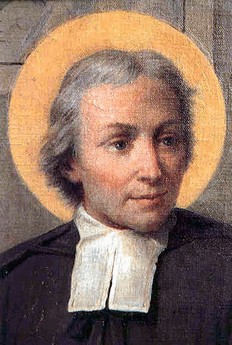
Jean-Baptiste de la Salle (1651 – 1719), a French nobleman, ordained a priest, founded the first order in the Church’s history entirely without priests, and this came about almost by accident. I say ‘almost’, for, of course, there are no accidents with God. Destined for ordination from an early age, Jean-Baptiste never looked back, even[…]Continue reading→