
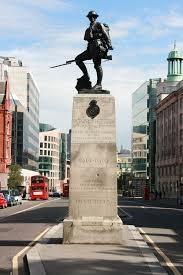
Just War, in Theory and Praxis
The Holy Father recently brought into question the notion of a ‘just war’, which brings to mind a comment from a Catholic in a question-and-answer period after a talk years ago, who declared quite vociferously, ‘Just war is an oxymoron!’.
There is a kernel of truth there, for as soon as the dogs of war are unleashed, even in the most defensive of wars, ’tis difficult to maintain pure justice in the passions and the fog of what is often brutal conflict.
But it is a constant and traditional doctrine of the Church that there is such a thing as a ‘just war’, at least in approximated sense, and we should remind ourselves of its principles, drawn from Saints Augustine and Thomas, and summarized in the Catechism of the Catholic Church: (par. 2309)
The strict conditions for legitimate defense by military force require rigorous consideration. The gravity of such a decision makes it subject to rigorous conditions of moral legitimacy. At one and the same time:
– the damage inflicted by the aggressor on the nation or community of nations must be lasting, grave, and certain;
– all other means of putting an end to it must have been shown to be impractical or ineffective;
– there must be serious prospects of success;
– the use of arms must not produce evils and disorders graver than the evil to be eliminated. The power of modem means of destruction weighs very heavily in evaluating this condition.
These are the traditional elements enumerated in what is called the “just war” doctrine.
The evaluation of these conditions for moral legitimacy belongs to the prudential judgment of those who have responsibility for the common good.
As the Catechism says, there are ‘strict conditions’ for a just war, which are difficult to fully instantiate. But the moral life is about doing the best we can, while holding on to universal moral principles, often for dear life.
Two are most pertinent for what faces us now:
The first is proportionality, the last of those aforementioned requirements. Even in the most just of wars, we cannot bring about evils that dwarf the evil of what began the war itself. A nation may want to preserve its autonomy, but at what cost? And what does ‘success’ mean? National ruin, even suicide would be but a pyrrhic victory.
Such balancing of good and evil would also apply to the ‘annihilation of whole nations’ by the threat of nuclear war. Escalating any conflict to this level would be, in a word, insane. If the reader thought Hiroshima and Nagasaki were bad (and the destruction of these cities with all their inhabitants was truly evil, regardless of what commentators, even in the Catholic camp, claim), at least nine nations are now nuclear, with many thousands of thermonuclear devices, each of them hundreds or even thousands of times more powerful than those early primitive atomic ones, ready, armed and aimed.
Would that we could go back to bows, arrows and swords, in a mediaeval fighting match, and let a winner be declared after a limited skirmish, not involving civilians, women and children. But total war is the modus belli of our modern era, with little connection left to an objective moral order.
Mutually assured destruction may be morally fraught and fragile, but it’s what we’ve got at present. Of course, we should work towards a deeper and more lasting peace, which is not the absence of war, nor even the absence of arms, but, as Augustine says, the work of justice.
But we should keep in mind that perfect justice is impossible this side of eternity. We never get everything we want, nor even what we deserve. As the economist Thomas Sowell put it, we don’t have solutions, but only trade-offs, seeking the best deal we can with the cards we’re given, and the circumstances in which we find ourselves, some of them more difficult and constraining than others. At the end of the day, we must not only face reality, but submit to it, which is the foundation for truth.
War is always, in a mysterious and complex way, a scourge for our sins. As Our Lady of Fatima emphasized, repentance, conversion and prayer are the most effective means of minimizing its evil effects, and achieving what peace we might.
May the grace of the Holy Spirit enlighten and inform, even unwittingly, the minds and souls who have to make those difficult decisions which will determine the world’s future. Only so shall good counsel, humility and wisdom prevail over the force of arms. +

Carney’s Amoral Majority
After five defections – euphemistically described as ‘crossing the floor’ – and three by-elections, Mark Carney and his Liberals how have their coveted majority. One wonders what bowls of pottage were offered in back-room deals. In the archaic monarchical system that is the Dominion of Canada, this majority allows the newly-minted Prime Minister to rule[…]Continue reading→

Saint Kateri , Canada’s Protectress
This was the title given to Saint Kateri Tekakwitha, by Pope Benedict XVI, when he canonized her on October 28th, 2012, along with six others, in Saint Peter’ Square (she had been beatified by Pope John Paul II back in 1980). With Saint Joseph as our protector, along with the Canadian martyrs, we seem to[…]Continue reading→

A Tale of Two Benedicts
A grace-filled Holy Week to all our readers! As we await and prepare for the Resurrection about to dawn upon us, we might keep in mind two Benedicts: Pope Emeritus Benedict XVI, requiescat in pace, elected on this day in 2005; and today’s commemoration of the mystic pilgrim, Benedict Joseph Labre, who died on this[…]Continue reading→

My Name is Bernadette
April 16th is a propitious day, for besides the anniversary of Father de Valk’s death, who founded Catholic Insight in its print form decades ago, and the commemoration of the ‘two Benedicts’, mentioned in accompanying posts, today we also recall Saint Bernadette Soubirous, the young visionary to whom the Virgin Mary appeared numerous times at[…]Continue reading→

Saint Lydwina of Schiedam and Suffering Joyfully
Saint Lydwina of Schiedam (1380 – 1433) was one of the countless and glorious ‘victim souls’ in the history of the Church, those whose lives are filled with suffering, often of an unimaginable intensity, but who suffer joyfully. She was a fifteen-year old Dutch girl, out skating one day, when she fell and broke one[…]Continue reading→

The Glorious Martyrdoms of Martin and Maximus
As we enter into Eastertide, we recall on this 13th of April Pope Saint Martin I (+655), one of the noblest, if most tragic, of the successors of Saint Peter. Born in Umbria, Italy, he was of noble lineage, with great intelligence combined with charity and love of the poor and the Church. While still[…]Continue reading→

Saint Stanislaus of Szczepanów
We celebrate Saint Stanislaus today (+ April 11, 1079), in light of this Easter Octave, a bishop and martyr who accepted the episcopacy only at the direct order of Pope Alexander II. He proved a wise and courageous leader of his flock, put to death by his own king, Boleslaus, for rebuking the monarch’s ‘immoral[…]Continue reading→
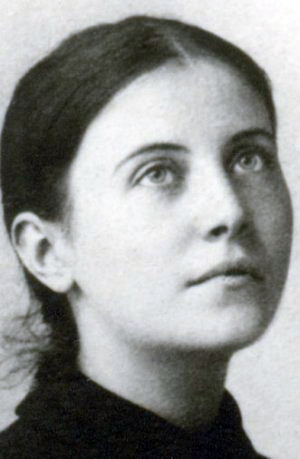
Saint Gemma Galgani
On this April 11th, in 1903 – the same year that the Italian Guiseppe Sarto was elected Pope later that summer as Pius X – a lovely, young Italian woman died, by the name of Gemma Galgani. She lived a brief life of 24 years, as did a number of other young saints, including Pier[…]Continue reading→
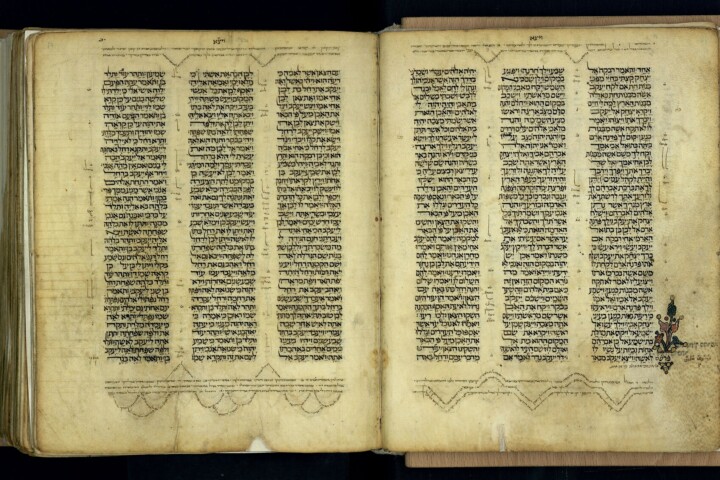
An Ideological and Improper Translation
I noticed something odd with the psalm reading at Mass the other day. Our bishops’ conference here in Canada has decreed that the Mass in English – Novus Ordo – use the ‘NRSV’, the ‘New Revised Standard Version’, an ‘updated’ translation of the original RSV, first published in 1952. This ‘new translation’ has the tendency[…]Continue reading→
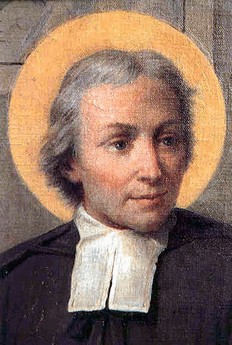
Saint Jean-Baptiste de la Salle: A Teacher for Teachers
Jean-Baptiste de la Salle (1651 – 1719), a French nobleman, ordained a priest, founded the first order in the Church’s history entirely without priests, and this came about almost by accident. I say ‘almost’, for, of course, there are no accidents with God. Destined for ordination from an early age, Jean-Baptiste never looked back, even[…]Continue reading→