
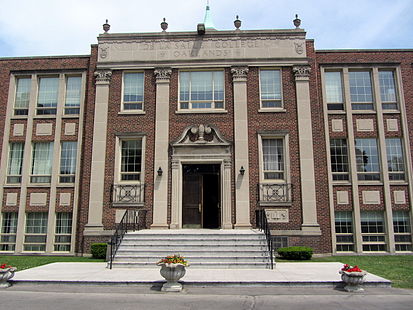
Jean-Baptiste de la Salle Chooses the Less Comfortable Path
Today, Thursday 7 April 2022, is the commemoration of St John Baptist de La Salle. Who was this great saint within the field of education?
It needs to be remembered that John Baptist de La Salle was born into a context that was decisively different from the current one we live in. To begin with, John was the elder son of wealthy parents who dwelt in France in the sixteenth and seventeenth century. His life story tells that he was born at Reims on April 30 1651. His devout parents named him for John the Baptist, Jesus’ herald. Later on, as his life continued to progress in the virtue of the love of God, especially in those in need, this providential name fitted exactly the mission God gave him to fulfil in the world.
God works in surprising ways. Many thought that the young John Baptist was to follow the law career of his father, who was a magistrate of the court. Contrary to what the others expected, John Baptist chose the priestly life. So adamant was to enter the priestly life that, at the age of just ten years old, he underwent an official ceremony which channeled him in this path.
At 16 years of age, after his uncle resigned from his position as Canon of the Cathedral Chapter of Reims, John Baptist took this responsibility which also brought him benefits. Each single day he would sing the Divine Offices with his brothers canons as well as advising the archbishop. Before him stood a bright future ahead.
When he was 19 years old he went to Paris and started his studies at the Sorbonne University. He dwelt at the famous and prestigious Seminary of Saint Sulpice, built some 25 years earlier in the wake of great clerical renewal advocated by the Council of Trent just a century before, and reputed for its strict lifestyle. Its intention was to produce priests capable of self-sacrifice and self-discipline. Its graduates were oriented to hold high positions in the French Church of the time. The seminarians were sent to teach catechism lessons to the poor. De La Salle did this task as the other seminarians did as part of their apostolic duties.
On April 9, 1678, John Baptist was ordained a priest. He pursued his studies until he obtained a doctorate in theology. At the same time he became tentatively associated with a group of rough and hardly literate young men to found schools for poor boys.
In those days few had the luxury of living a comfortable life. The majority were poor, country peasants whereas others lived in slums in the towns. Very few people could afford sending their children to school to learn. Thus, many children had practically no hope for a better future. Such a situation hurt Fr John Baptist’s heart so much that, in front of the poor condition of these children he felt he had to do something to help them. Later on he confessed:
I had imagined that the care which I assumed of the schools and the masters would amount only to a marginal involvement committing me to no more than providing for the subsistence of the masters and assuring that they acquitted themselves of their tasks with piety and devotion … Indeed, if I had ever thought that the care I was taking of the schoolmasters out of pure charity would ever have made it my duty to live with them, I would have dropped the whole project. … God, who guides all things with wisdom and serenity, whose way it is not to force the inclinations of persons, willed to commit me entirely to the development of the schools. He did this in an imperceptible way and over a long period of time so that one commitment led to another in a way that I did not foresee in the beginning.
God’s Spirit built him the determination to lay down his many talents and advanced education for the benefit of these poor children who seemed so far from salvation, and often left to themselves and badly brought up. In order to be more of service to these children, Fr John Baptist left his family home, moved in with the teachers, left his privileged position as Canon together with its concomitant wealth, and hencefoth formed the community which later bore the name of the Brothers of the Christian Schools.
At first his holy initiative was met with great resistance by the ecclesiastical authorities. They just could not take in the formation of a new way of religious life, a community of consecrated laymen to lead gratuitous schools together and by association. Fr John Baptist greatly insisted on gratuity for every child, irrespective if the could pay or not. As Pope Francis rightly said, during his address to the community of the Brothers of the Christian Schools (De La Salle Brothers), on Thursday 16 May 2019, at the Clementine Hall, together with his Brothers De La Salle managed to bring great innovation within the education system of his time.
His vision of schools led him to become ever more clearly persuaded that education is the right of everyone, including the poor. For this reason he did not hesitate to renounce the Canonry and his wealthy family inheritance, in order to dedicate himself entirely to the lowest social class. He gave life to a community of exclusively lay people in order to advance his ideal, convinced that the Church cannot remain extraneous to the social contradictions of the times which she is called to confront. It was this conviction that led him to institute an original experience of consecrated life: the presence of religious educators who, without being priests, would interpret in a new way the role of “lay monks”, by immersing themselves completely in the reality of their time and thus contributing to the progress of civil society.
Daily contact with the educational world ripened his awareness of identifying a new concept of teachers. Indeed, he was convinced that education is a serious reality, for which people need to be adequately prepared; but he had before his eyes all the structural and functional flaws of a precarious institution that required order and form. He then sensed that teaching cannot be merely a trade, but is a mission. Therefore he surrounded himself with people suited to popular education, inspired by Christianity, with attitudinal and natural talents for education. He devoted all his energy to their formation. He himself became an example for they who had to provide both ecclesial and social service, and work promptly in order to promote what he defined as the “dignity of the teacher”.
With the intention of providing concrete responses to the requests of his time in the educational field, John Baptist de La Salle undertook bold forms of teaching methods. In this respect he was moved by an extraordinary pedagogical realism. He substituted the French language for Latin, which had normally been used in teaching; he separated the students into homogenous learning groups in view of more effective work; he established Seminaries for countryside teachers, that is for young people who wanted to become teachers without becoming part of any religious institution; he founded Sunday Schools for adults and two hostels, one for juvenile delinquents and another for the rehabilitation of the incarcerated. He dreamt of a school open to everyone; for this reason he did not hesitate to address even extreme educational necessities, by introducing a method of rehabilitation through school and work. In these formative realities he initiated a corrective pedagogy which, in contrast to the custom of the times, brought study and work to young people under sentence — with arts and crafts rather than just a cell or lashes.
This great educational reformer, flanked by his Brothers, managed in creating a network of quality schools throughout France, grouping the students according to ability and achievement, integrating religious instruction with secular subjects, well-prepared teachers animated by a sense of vocation and mission, with the involvement of parents.
Worn out by austerities hard labours within the educational field, Fr John Baptist De La Salle died at Saint Yon near Rouen early on Good Friday of April 7, 1719 just weeks before his sixty-eighth birthday.
This great pioneer in founding training colleges for teachers, reforming schools for delinquents, founding technical schools, and secondary schools for modern languages, arts, and sciences, was beatified by Pope Leo XIII on February 19, 1888 and canonized by the same Pontiff on May 24, 1900.
While speaking to the community of the Brothers of the Christian Schools (De La Salle Brothers), Pope Francis exhorted them to keep being faithful to the calling and mission entrusted by God to St John Baptist de La Salle.
Dear spiritual children of John Baptist de La Salle, I exhort you to study and imitate his passion for the least and the discarded. In the furrow of his apostolic testimony, may you be protagonists of a “culture of resurrection”, especially in those existential contexts where the culture of death is prevalent. Never tire of going in search of those who find themselves in modern-day “sepulchres” of dismay, degradation, distress and poverty, in order to offer hope of new life. May a passion for the educational mission — which made your Founder a teacher and witness for many of his contemporaries — and his teaching still nourish your projects and your actions today.
His ever timely figure is a gift for the Church and a precious stimulus for your Congregation, called to a renewed and enthusiastic adherence to Christ. Looking to the Divine Teacher, you can work with greater generosity in service to the new evangelization to which the entire Church is committed today. The forms of the Gospel message demand to be adapted to the concrete situations of different contexts, but this also entails an effort of fidelity to the origins, so that the apostolic style that is proper to your religious Family may continue to respond to people’s expectations. I know that this is the task that animates you and I exhort you to walk with courage in this direction.
May you fulfil with renewed vigour your mission among the young generations, with that bold reforming spirit that characterized John Baptist de La Salle: he proclaimed the Gospel of hope and charity to everyone. May the Blessed Virgin always sustain you and obtain for you abundant apostolic fruits.
St John Baptist De La Salle, pray for us!

Saint Kateri , Canada’s Protectress
This was the title given to Saint Kateri Tekakwitha, by Pope Benedict XVI, when he canonized her on October 28th, 2012, along with six others, in Saint Peter’ Square (she had been beatified by Pope John Paul II back in 1980). With Saint Joseph as our protector, along with the Canadian martyrs, we seem to[…]Continue reading→

Remembering Father Alphonse de Valk
(Today marks the sixth anniversary of the death of Father Alphonse de Valk, C.S.B., a faithful, courageous and indefatigable Basilian priest, pro-life-and-family apostle, and the founder of Catholic Insight magazine. Here is what we wrote those on his entering into eternity five years ago, as we continue to remember him in our prayers and thoughts)[…]Continue reading→
A Tale of Two Benedicts
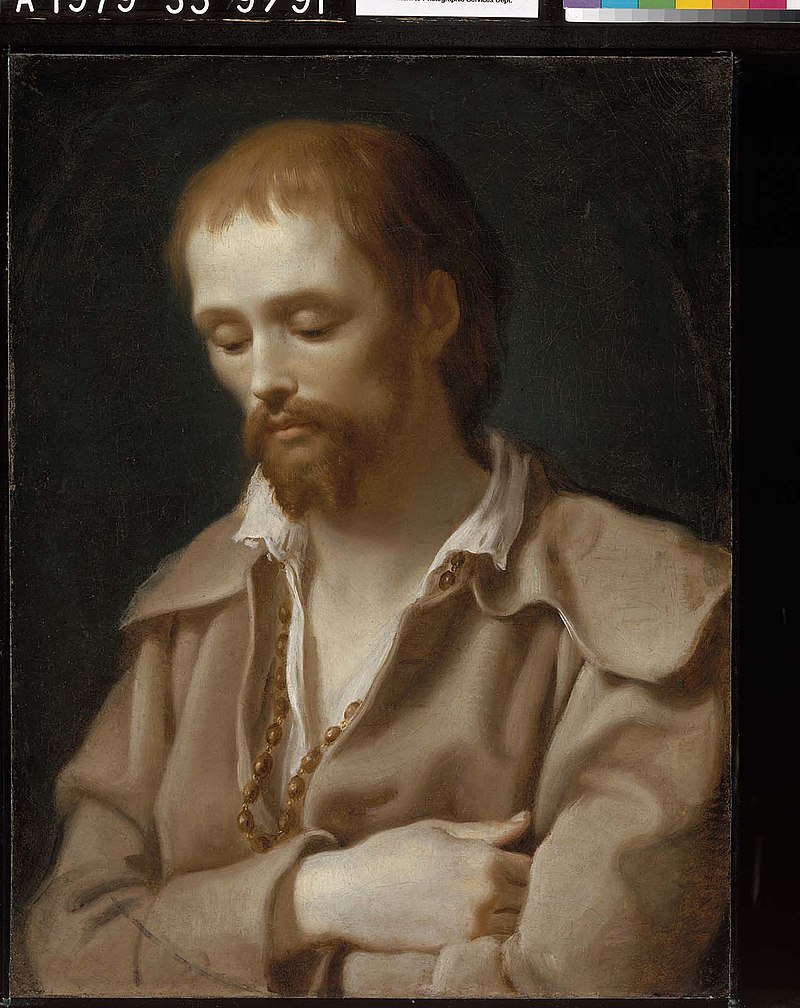
A grace-filled Holy Week to all our readers! As we await and prepare for the Resurrection about to dawn upon us, we might keep in mind two Benedicts: Pope Emeritus Benedict XVI, requiescat in pace, elected on this day in 2005; and today’s commemoration of the mystic pilgrim, Benedict Joseph Labre, who died on this[…]Continue reading→

My Name is Bernadette
April 16th is a propitious day, for besides the anniversary of Father de Valk’s death, who founded Catholic Insight in its print form decades ago, and the commemoration of the ‘two Benedicts’, mentioned in accompanying posts, today we also recall Saint Bernadette Soubirous, the young visionary to whom the Virgin Mary appeared numerous times at[…]Continue reading→
Saint Lydwina of Schiedam and Suffering Joyfully
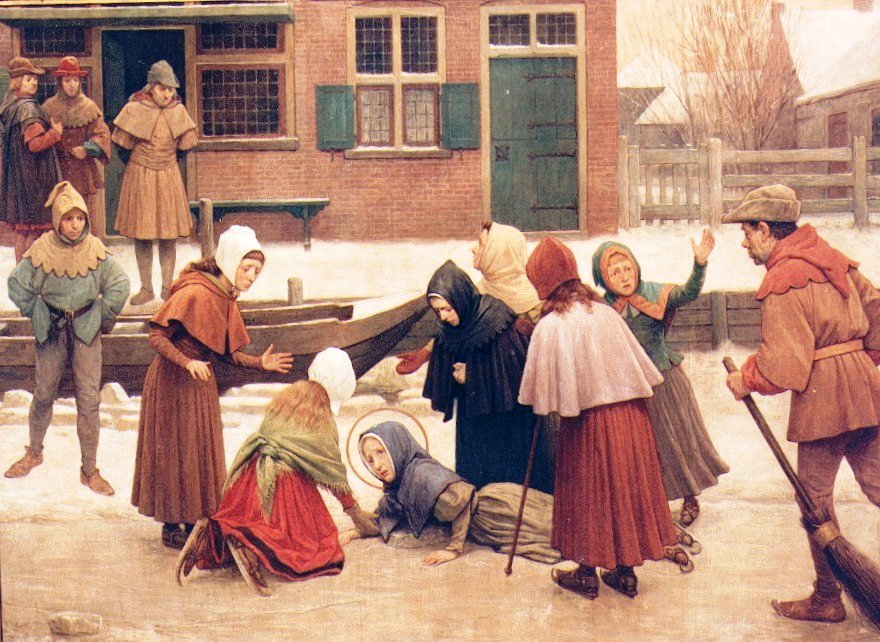
Saint Lydwina of Schiedam (1380 – 1433) was one of the countless and glorious ‘victim souls’ in the history of the Church, those whose lives are filled with suffering, often of an unimaginable intensity, but who suffer joyfully. She was a fifteen-year old Dutch girl, out skating one day, when she fell and broke one[…]Continue reading→
The Glorious Martyrdoms of Martin and Maximus
As we enter into Eastertide, we recall on this 13th of April Pope Saint Martin I (+655), one of the noblest, if most tragic, of the successors of Saint Peter. Born in Umbria, Italy, he was of noble lineage, with great intelligence combined with charity and love of the poor and the Church. While still[…]Continue reading→
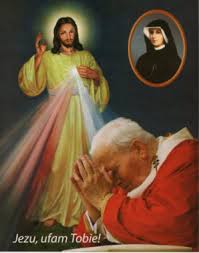
Canonizing Sister Faustina and Divine Mercy
HOMILY OF THE HOLY FATHER MASS IN ST PETER’S SQUARE FOR THE CANONIZATION OF SR MARY FAUSTINA KOWALSKA Sunday, 30 April 2000 1. “Confitemini Domino quoniam bonus, quoniam in saeculum misericordia eius”; “Give thanks to the Lord for he is good; his steadfast love endures for ever” (Ps 118: 1). So the Church sings on the Octave of[…]Continue reading→

Divine Mercy Sunday – An Echo of Every Mass
Reach out your hand and put it in my side. Do not doubt but believe’… ‘My Lord and my God!’ (Jn. 20:18)). Today is Divine Mercy Sunday, and as we celebrate the end of the Easter Octave, we contemplate the wounded side of our Saviour, the Church’s source of life. On Good Friday in the[…]Continue reading→
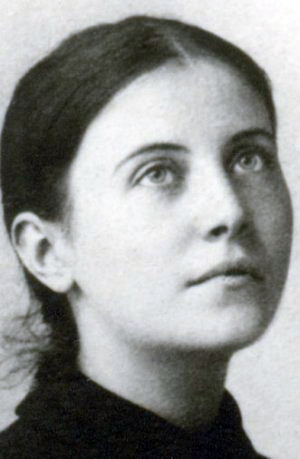
Saint Gemma Galgani
On this April 11th, in 1903 – the same year that the Italian Guiseppe Sarto was elected Pope later that summer as Pius X – a lovely, young Italian woman died, by the name of Gemma Galgani. She lived a brief life of 24 years, as did a number of other young saints, including Pier[…]Continue reading→
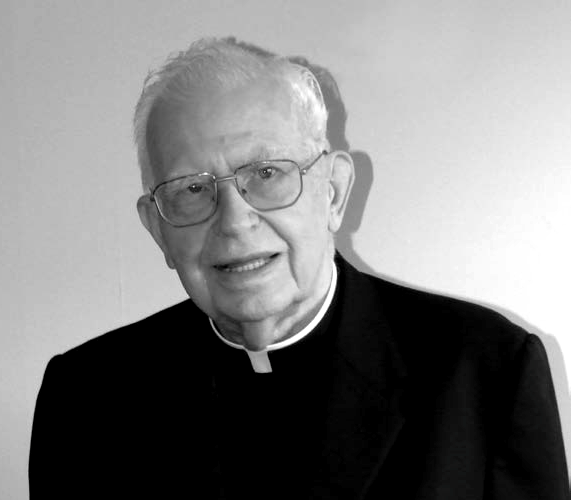
First Holy Communion: Sermon from May 16, 1943
Here is a sermon from the good old days by +Rev. Msgr. Vincent Nicholas Foy (August 14, 1915 – March 13, 2017), from 1943. Readers may recall that Pope Saint Pius X, by the decree Quam Singulari in 1910, lowered the customary age of reception of Holy Communion – after the rigours of the plague[…]Continue reading→