
Solomon and the Hidden Glory of God
In the Old Testament, a cloud indicated the presence of the Lord God. It was a cloud, for example, that led the people out of Egypt and guided them in their long journey through the wilderness to the promised land. Dramatically, too, it was a cloud that Moses entered at Mount Sinai when he received from God the tablets of the Law that were still in the Ark of the Covenant when King Solomon had it carried into the newly constructed temple. It is not surprising, then that a cloud filled the temple on that occasion. The cloud is an apt symbol of the presence of God, for it conceals as well as reveals, corresponding to the fact that God is present and yet is unknowable. One entered darkness when one encountered God, for he is transcendent, beyond anything we can say or imagine.
In the New Testament, as well, we find a cloud when God was present during the Transfiguration, when a voice was heard saying, “This is my Beloved Son; listen to him! But now there is a difference, for when the disciples entered that cloud they were met, not with darkness but with the vision of the transfigured Jesus, whose face shone like the sun and whose garments were as white as snow. With him were Moses—who now witnessed the glory that had been denied him on Sinai—and Elijah—who had been taken to heaven on a fiery chariot to encounter there the splendour of the Godhead that was now revealed in the humanity of Jesus. We too, by our faith, have penetrated that cloud for Saint John assures us that “we have beheld his glory, glory of the only Son from the Father,” a statement confirmed by Saint Paul: “God has shone in our hearts, to give the light of the knowledge of the glory of God in the face of Christ.” The mystery of the unknowability God of the Old Testament has given way to what is in fact a far more mysterious revelation of God in the man Jesus, as testified to by Saint Paul in an unforgettable phrase, “For I decided to know nothing among you except Jesus Christ and him crucified.”
A Closed, Unsustainable, Descending Loop
As a follow-up to my thoughts on Payette’s payout, here be a stark image of where are here in Canada. As the graph shows in, well, graphic terms, since 2025, the public sector has contributed to 95.5% of economic growth. The private sector – which funds the public sector, or is supposed to – has[…]Continue reading→
Presidential Pardon of Weronika Krawczyk
As a good news, follow-up to our story from Poland, of the persecution of Weronika Krawczyk for her pro-life views, we heard that she has been granted a presidential pardon. One might still wonder why one needs a presidential pardon for simply holding the long-held belief that the child within the womb is a child,[…]Continue reading→
Pope Leo and a Rosary for Peace
Pope Leo XIV has asked Catholics across the world to join him in a Rosary for peace today, at 18:00 Rome time (6 pm), which would be noon from where I write (EST). If you are able, whether at that time or another, and in whatever way you pray, to join in intercession with the[…]Continue reading→
Payette’s Payout
I was glancing through some headlines, and noticed a mention of Julie Payette – engineer and astronaut and sometime the Queen’s representative in Canada – which brought back vague memories. She was appointed Governor-General by Justin Trudeau in 2017. Ms. Payette resigned in 2021, amidst claims that she created a ‘toxic work environment’, with allegations[…]Continue reading→
Weronika Krawczyk and Injustice in Poland
Catholic Action in Poland has issued a formal statement appealing to the President of the Republic of Poland to pardon Weronika Krawczyk—convicted for warning other women against an abortion-performing gynaecologist. Catholic Action (AK) emphasizes that no apology is owed to a doctor who has performed numerous abortions and proposed others; furthermore, the organization considers the[…]Continue reading→
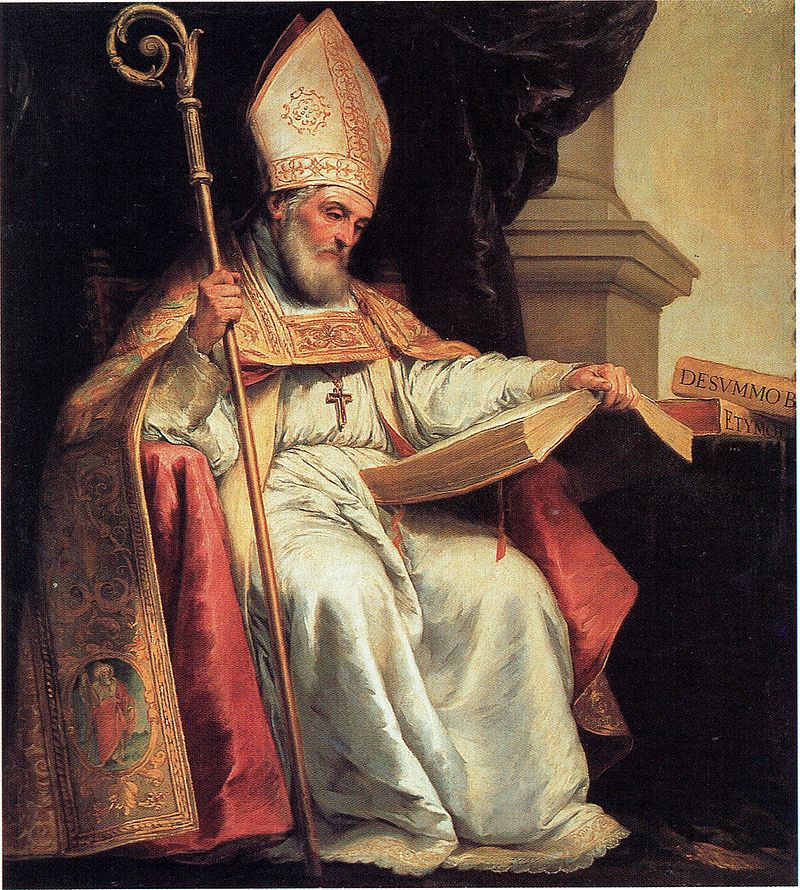
Saint Isidore of Seville, the Internet and Industriousness
Today, April 4th, muted this year by Holy Saturday, is the commemoration of Saint Isidore of Seville (560-636) a bishop and doctor of the Church during a tumultuous age, when civilization was crumbling, coming apart at its very seams, which may sound sort of au courant. Then again, the form of this world has always[…]Continue reading→
Bishop Fulton Sheen’s 58th Good Friday Reflection
Incredible, at the beginning of this reflection, that the Venerable Bishop Sheen declares that he has given nearly 58 Good Friday reflections – this, as far as I can gather, was his final one, and he seems in full vigour in mind and body. The good bishop and evangelist died in his 84th year on[…]Continue reading→
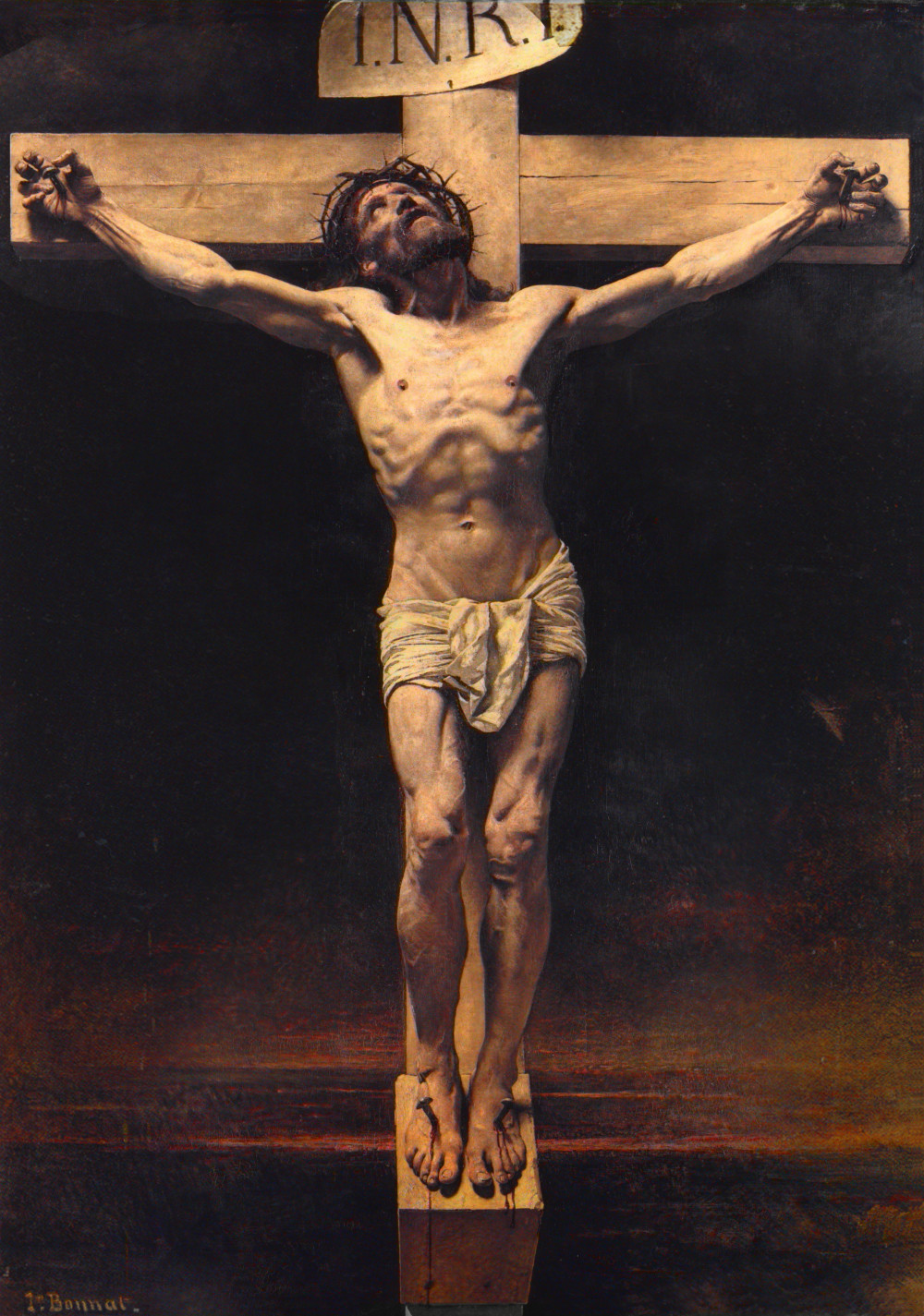
A Meditation for Good Friday: How To Undo the Effects of Sin?
Cardinal Newman, now Saint John Henry Newman, was a towering figure of nineteenth-century Catholicism who is almost universally admired. I say “almost” because not everyone likes him. I knew a priest once, Arthur Caulkins, who has become disenchanted with Newman. As an undergraduate Arthur had been enamoured of Newman, and this interest continued when he[…]Continue reading→
A Minimal Friar and the Death of a Great Pope
This April the second- overshadowed by Holy Thursday this year – marks the memorial of Saint Francis of Paola (1417-1507), founder of the ‘Minim’ friars, so called for their humility and poverty, who interpreted the rule of Saint Francis of Assisi in quite a literal sense: extreme poverty, trust in God, foregoing all animal and[…]Continue reading→
Woven versus Seamless Garments
The reflection on the worthy project by Magie Dominic was intriguing, and I thought I would offer a brief follow-up commentary. The garment woven out of many pieces is a poignant symbol, even a ‘sacramental’, inspired by prayer and grace. We are all united in some way, and should strive for such unity, wherever we[…]Continue reading→