
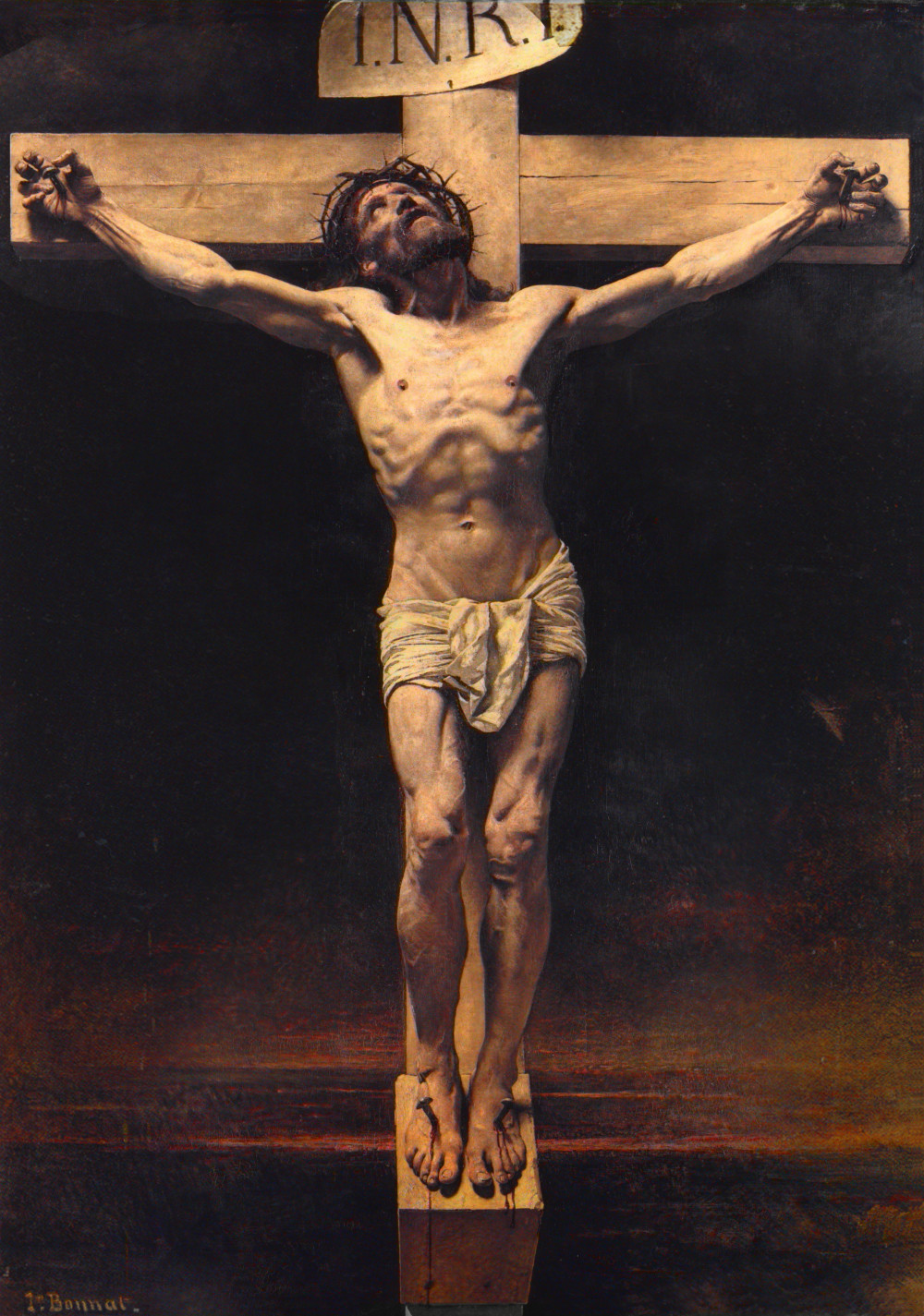
A Meditation for Good Friday: How To Undo the Effects of Sin?
Cardinal Newman, now Saint John Henry Newman, was a towering figure of nineteenth-century Catholicism who is almost universally admired. I say “almost” because not everyone likes him. I knew a priest once, Arthur Caulkins, who has become disenchanted with Newman. As an undergraduate Arthur had been enamoured of Newman, and this interest continued when he did his master’s. But by the time he was working on a doctorate, his esteem for the great man had soured: “There’s no good news in the Gospel of Newman,” he used to say. His PhD thesis became an exposé, and, although his supervisor tried to discourage him, he insisted on taking his oral examination. Not surprisingly, he failed, another instance, he would say, of Newman’s pernicious influence. Any of you who have read Newman will have to admit that Father Caulkins had a point; it’s grim stuff. Like Saint Augustine, Newman had a dark view of human nature:
The disappointments of life, the defeat of good, the success of evil, physical pain, mental anguish, the prevalence and intensity of sin, the dreary hopeless irreligion, that condition of the whole race, so fearfully yet exactly described in the Apostle’s words, “having no hope and without God in the world,”—all this is a vision to dizzy and appal; and inflicts upon the mind the sense of a profound mystery, which is absolutely beyond human solution.[1]
In particular, Newman was acutely aware of the fact that sin has consequences that can spread far and wide, like ripples moving out from the centre of a splash or, better, like a tsunami springing from an earthquake in the ocean bed. His example, typical of his time, is the power of the printed word, but we can easily extrapolate his comments to cover television, the internet, blogs, Facebook and other electronic perversities. Here’s a powerful, alarming and frightening passage from one of his sermons:
A man publishes an irreligious or immoral book; afterwards he repents. What does Reason, arguing from the visible course of things, suggest concerning the efficacy of that repentance? [How can mere repentance halt the pernicious influence of the book? No,] [t]he sin of the penitent lives; it continues to disseminate evil; it corrupts multitudes. They die, many of them without repenting. . . . Surely, no evidence is here, in the course of Divine Government, of the efficacy of repentance. Shall he be now dwelling in Abraham’s bosom, who hears on the other side of the great gulf the voices of those who curse his memory as being the victims of his sins?[2]
Each of us can, I believe, with fear and trembling, adapt this passage to his own history. And the more sincere our repentance, the greater will be our desire to overcome the effects of our wrongdoing. If only it could be done! No expense would be too great, no suffering too intense—even death itself—if only we could by such means expiate the evil effects of our actions. Civil law itself honours this principle by, e.g., assigning so many hours of community service as compensation for even relatively minor offences. But no such actions can restore a lost reputation or bring a victim back to life. “What,” Newman asks, “shall be said to this heart-piercing, reason-bewildering fact?”[3]
What shall be said, indeed? Only God can erase the past; only an infinite being can cancel an infinite debt. Our faith tells us that Christ has, in his own person, human and divine, accomplished the miracle of our redemption. But how? As I have noted above, an awareness of sin and its consequences instinctively convinces us of the necessity of suffering, freely embraced, in overcoming the evil effects of sinful actions. If expiation be possible at all, it will be accomplished only by some such means. That is why God the Father, in Saint Paul’s words, “for our sake made [Jesus] to be sin who knew no sin,”[4] and as such he bore the full brunt of the consequences of mankind’s sins. We have here an aspect of the doctrine of the mystical body. We’re used to thinking of grace and redemption flowing from Christ, the head, to us, his members, like branches, receiving life-giving sustenance from the vine. But the influence moves in both directions, and our weaknesses, our sins, our misery, affect Christ, the head of the body. Furthermore, the joint action of Jews and gentiles in bringing Jesus to agony and death points to the fact that both will be saved by the very action that they perpetrated: the entire human race is complicit; the entire human race is saved. The sufferings of Jesus are like rays of light being focused by a lens to a single point. All the pain, all the effects of sin in human history are brought to bear on this single sacred action. As borne by him they lose their power to harm, washed away in the torrent of blood and water the flowed from Christ’s open side.
One knows that the story cannot end on Good Friday. Such a dramatic event, the summation of human history, before and after, has to have been recognized and its effect propagated. The Letter to the Romans tells us how: “We were buried with him by baptism into death, so that, as Christ was raised from the dead by the glory of God the Father, we too might walk in newness of life.”[5] Sacramentally, and therefore truly, we re-enact Christ’s death and resurrection by our baptism. Saint Peter expresses its effects even more vividly: “Through [Christ] we may escape from the corruption that is in this world . . . and become partakers of the divine nature.”[6] Empowered by the Spirit of Jesus, let us henceforth “lead a life worth of the Gospel of Christ.”[7]a
[1] Apologia, chapter 5.
[2] University Sermons, no. 6, para. 19.
[3] Apologia, chapter 5.
[4] 2 Cor 5.21.
[5] Rom 6.4.
[6] 2 Pet 1.4.
[7] Phil 1.27.

Saint Kateri , Canada’s Protectress
This was the title given to Saint Kateri Tekakwitha, by Pope Benedict XVI, when he canonized her on October 28th, 2012, along with six others, in Saint Peter’ Square (she had been beatified by Pope John Paul II back in 1980). With Saint Joseph as our protector, along with the Canadian martyrs, we seem to[…]Continue reading→

Remembering Father Alphonse de Valk
(Today marks the sixth anniversary of the death of Father Alphonse de Valk, C.S.B., a faithful, courageous and indefatigable Basilian priest, pro-life-and-family apostle, and the founder of Catholic Insight magazine. Here is what we wrote those on his entering into eternity five years ago, as we continue to remember him in our prayers and thoughts)[…]Continue reading→

My Name is Bernadette
April 16th is a propitious day, for besides the anniversary of Father de Valk’s death, who founded Catholic Insight in its print form decades ago, and the commemoration of the ‘two Benedicts’, mentioned in accompanying posts, today we also recall Saint Bernadette Soubirous, the young visionary to whom the Virgin Mary appeared numerous times at[…]Continue reading→
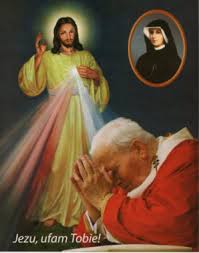
Canonizing Sister Faustina and Divine Mercy
HOMILY OF THE HOLY FATHER MASS IN ST PETER’S SQUARE FOR THE CANONIZATION OF SR MARY FAUSTINA KOWALSKA Sunday, 30 April 2000 1. “Confitemini Domino quoniam bonus, quoniam in saeculum misericordia eius”; “Give thanks to the Lord for he is good; his steadfast love endures for ever” (Ps 118: 1). So the Church sings on the Octave of[…]Continue reading→

Divine Mercy Sunday – An Echo of Every Mass
Reach out your hand and put it in my side. Do not doubt but believe’… ‘My Lord and my God!’ (Jn. 20:18)). Today is Divine Mercy Sunday, and as we celebrate the end of the Easter Octave, we contemplate the wounded side of our Saviour, the Church’s source of life. On Good Friday in the[…]Continue reading→

Saint Stanislaus of Szczepanów
We celebrate Saint Stanislaus today (+ April 11, 1079), in light of this Easter Octave, a bishop and martyr who accepted the episcopacy only at the direct order of Pope Alexander II. He proved a wise and courageous leader of his flock, put to death by his own king, Boleslaus, for rebuking the monarch’s ‘immoral[…]Continue reading→
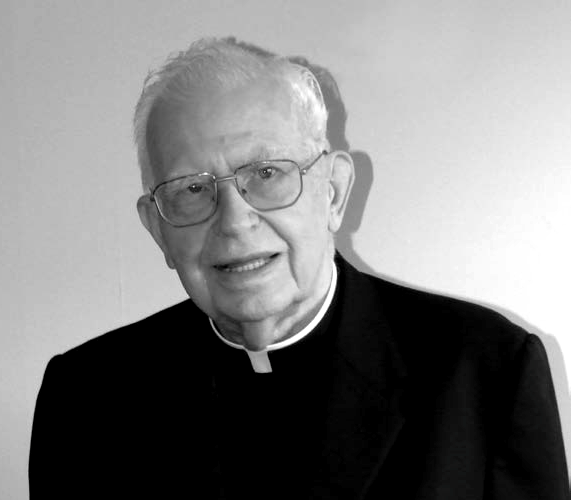
First Holy Communion: Sermon from May 16, 1943
Here is a sermon from the good old days by +Rev. Msgr. Vincent Nicholas Foy (August 14, 1915 – March 13, 2017), from 1943. Readers may recall that Pope Saint Pius X, by the decree Quam Singulari in 1910, lowered the customary age of reception of Holy Communion – after the rigours of the plague[…]Continue reading→
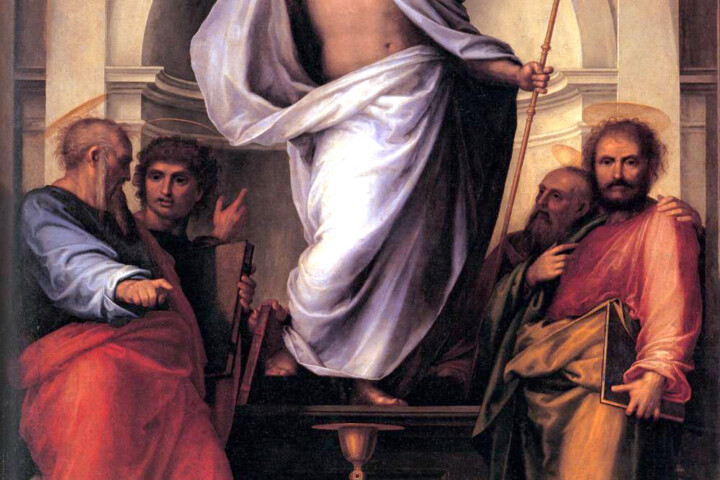
In the Glorious Light of Easter, Alleluia!
Set your minds on things that are above, not on things that are on earth, for you have died, and your life is hidden with Christ in God. When Christ who is your life is revealed, then you also will be revealed with him in glory (Col. 3:3-4). The Resurrection of Our Lord and Saviour[…]Continue reading→
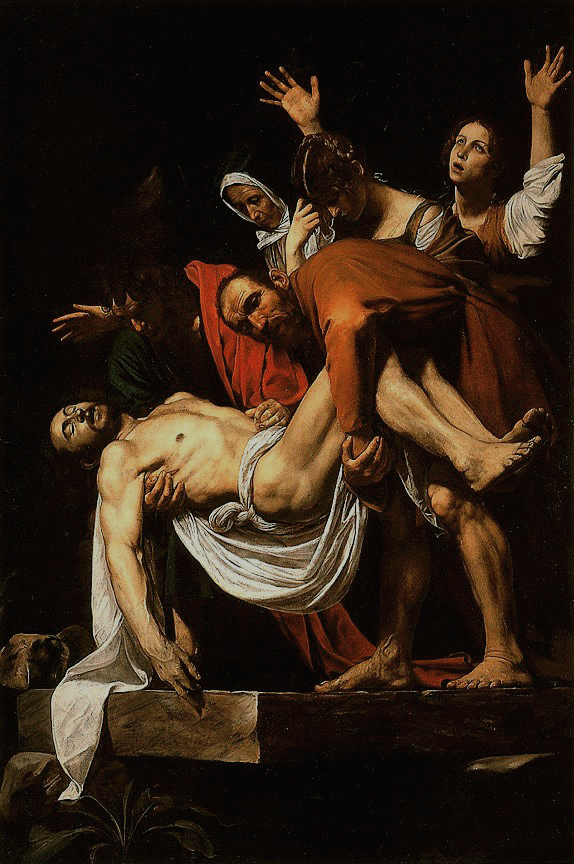
An Ancient Homily for Holy Saturday
The time between Good Friday and Easter Sunday is one of waiting, in silence, as the world wonders – anticipates – what will happen, after the death of Christ. We re-live this time each year in the anamnesis of our liturgy, and in turn look forward to the glorious re-creation of all things at the[…]Continue reading→
Europe’s Long Descent
(As we meditate on this day on Christ’s burial, and His descent into hell, it is fitting to ponder here with contributor Peter Marcus how the world seems to be heading there as well. The difference is that, although God cannot ‘redeem’ hell, nor those therein, He can and did redeem the world. There is[…]Continue reading→