
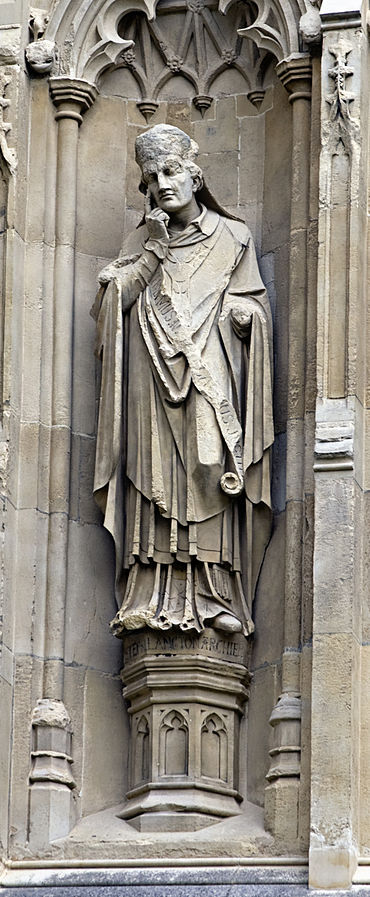
Cardinal Stephen Langton and the Magna Carta
(A very a propos and providential piece by Carl Sundell, as we all have our own truculent and tyrannical ‘King Johns’ sitting on our various thrones. Can they be kept in check by a new Magna Carta? Or will be unable to prevent some sort of civil war? Read on, and ponder.)
Cardinal Stephen Langton (1150-1228 A.D.) Archbishop of Canterbury, was not just the man who divided the Scriptures into the chapters and verses we know them by today in the Catholic and Protestant bibles. Nor was he just the supposed author of the immortal verse, Veni Sancte Spiritus. What he will be remembered most for is his role in persuading King John to sign the Magna Carta (Great Charter). John, a tyrant of England if ever there was one, was famous for lording it over the barons by enacting any laws he wished to enact at any time he wished and without the consent of the barons. Langton, at the urging of Pope Innocent III, talked John into recognizing and respecting a formal and fixed declaration of the rights of the barons. Langton’s role was pivotal, siding with and leading the barons until the King, realizing that all the world was against him, caved in and signed the Charter. Langton later became such a loathsome presence to John that the king prevailed upon the pope to remove him from his episcopal office. After the deaths of the Pope and the King, Langton was reinstated as Primate of England.
Langton was educated at Paris and early in his career acquired a reputation as a professor of theology. His credentials brought him to the notice of Pope Innocent III. When the See of Canterbury fell vacant, there was a power struggle with two rivals claiming the right to be Primate of England, one of them being the king’s own candidate, Bishop John de Gray. The rival claimants presented themselves in Rome to the pope, who was not pleased with either candidate and delegated Stephen Langton as his choice. King John was enraged and would not accept the legitimacy of the pope’s appointment for eight more years. Meanwhile, Langton, who waited in Rome, was made a cardinal in 1206. John eventually was threatened with excommunication by the pope when he grudgingly agreed that Langton should return to England as the Primate. Upon arriving in England, Langton might have wondered whether the fate of the murdered Archbishop Thomas Becket might be his too if he dared to cross John, who was well known for his fierce temper and lack of religious scruples (after his childhood John never received the Eucharist and was regarded by some as an atheist).
But John’s troubles were just starting. The barons had assembled to move against the tyrant, and only one person was in a position to impede that open warfare … Stephen Langton. In 1212 there was discovered a plot by the barons to betray the king and possibly even kill him, but Langton persuaded John to conduct a fair trial of those accused. Subsequently, Langton gathered the barons for a sermon in Saint Paul’s Cathedral where he told them that he had learned of a document signed by King Henry I in 1031 granting the barons certain rights. Then the archbishop assembled the barons again a year later and persuaded them to set aside their differences with John if the king would agree to certain terms. Seeing the wisdom of Langton’s plea, the barons took an oath in the Primate’s presence to follow through with that plan. Two more years passed before John would likewise agree. At Runnymede on June 15, 1215, after the barons had shown the king the military force at their command and declared their willingness to sign an oath of fealty to him, the Magna Carta was signed by the king and the barons, with Langton’s name heading the list of witnesses. Conceivably Langton’s influence averted a full scale civil war and gave to future generations a momentous document by which to mark the start of the long trail of history that would lead from tyrannical monarchies to constitutional republics in Europe and North America.
The sixty-three clauses in the Magna Carta contained, to be sure, much that would be outdated and irrelevant in later centuries. But one supremely important thing the Charter did contain was a provision, Clause 61, that the laws of the land would be binding upon all, including the king; and if the king did not obey the laws, the barons would be justified in using force against him.
Almost six centuries later another King of England, George III, would abuse his sovereignty over the North American colonies. Then Thomas Jefferson was called upon to write the Declaration of Independence. There was, of course, no more imperative need in that declaration than to justify the American revolution that was about to erupt. Nowhere more convenient was to be found a rationale for that revolution than Clause 61 of the Magna Carta which provided for revolting against a king who had violated the rights of his people.
Sir Edward Coke of England, a century before Jefferson, had already invoked that clause of the Magna Carta against the harshness of the Stuart kings. Coke’s writings were widely known in the colonies and were probably studied book, chapter, and verse by the likes of Jefferson, Adams, Madison and Hamilton as they struggled to craft a new system of laws for the nation about to be born.
The great Jefferson himself was not without fault in his knowledge of history. On one occasion he said: “In every country and every age, the priest had been hostile to Liberty.” Surely he knew (being among the most highly educated of the Founders) that Cardinal Langton had led the parade of barons against King John and had thereby helped to make real and memorable the single most important clause of the Magna Carta that Jefferson could invoke to justify the Declaration of Independence?
There is no accounting for this huge oversight by Jefferson. We have to conclude that apparently, even in his day, it was not politically correct to allow that some heroic and greatly influential Catholics, like Stephen Langton, should be recognized as they deserve to be. That their achievements are begrudged them, or sometimes even denied them altogether, is a topic which in our time needs to be probed and resolved by fair-minded scholars both in academia and in the publishing world. Is it too cynical to suggest that, given the fanatical enforcers of the “woke” generation, we should not hold our collective breath for something like that to happen?

Remembering Father Alphonse de Valk
(Today marks the sixth anniversary of the death of Father Alphonse de Valk, C.S.B., a faithful, courageous and indefatigable Basilian priest, pro-life-and-family apostle, and the founder of Catholic Insight magazine. Here is what we wrote those on his entering into eternity five years ago, as we continue to remember him in our prayers and thoughts)[…]Continue reading→

Divine Mercy Sunday – An Echo of Every Mass
Reach out your hand and put it in my side. Do not doubt but believe’… ‘My Lord and my God!’ (Jn. 20:18)). Today is Divine Mercy Sunday, and as we celebrate the end of the Easter Octave, we contemplate the wounded side of our Saviour, the Church’s source of life. On Good Friday in the[…]Continue reading→

Saint Stanislaus of Szczepanów
We celebrate Saint Stanislaus today (+ April 11, 1079), in light of this Easter Octave, a bishop and martyr who accepted the episcopacy only at the direct order of Pope Alexander II. He proved a wise and courageous leader of his flock, put to death by his own king, Boleslaus, for rebuking the monarch’s ‘immoral[…]Continue reading→
First Holy Communion: Sermon from May 16, 1943
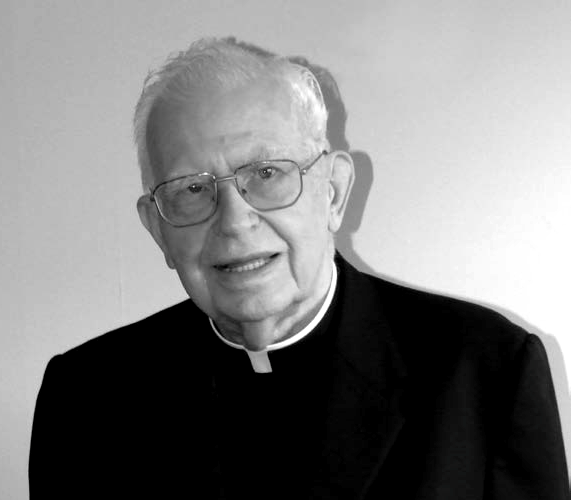
Here is a sermon from the good old days by +Rev. Msgr. Vincent Nicholas Foy (August 14, 1915 – March 13, 2017), from 1943. Readers may recall that Pope Saint Pius X, by the decree Quam Singulari in 1910, lowered the customary age of reception of Holy Communion – after the rigours of the plague[…]Continue reading→
In the Glorious Light of Easter, Alleluia!
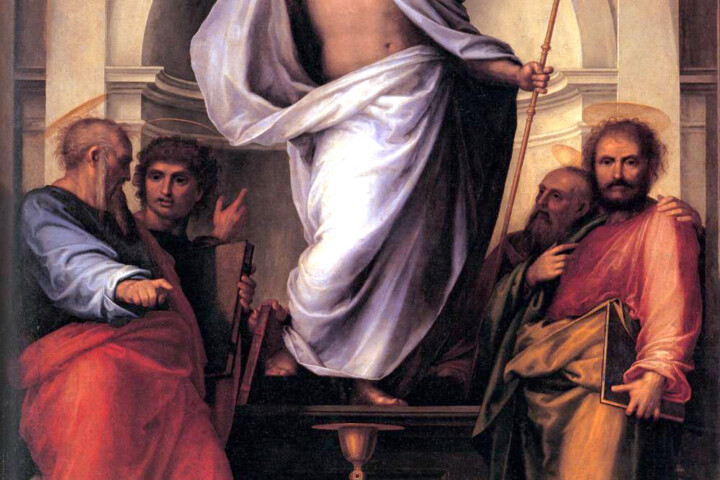
Set your minds on things that are above, not on things that are on earth, for you have died, and your life is hidden with Christ in God. When Christ who is your life is revealed, then you also will be revealed with him in glory (Col. 3:3-4). The Resurrection of Our Lord and Saviour[…]Continue reading→
An Ancient Homily for Holy Saturday
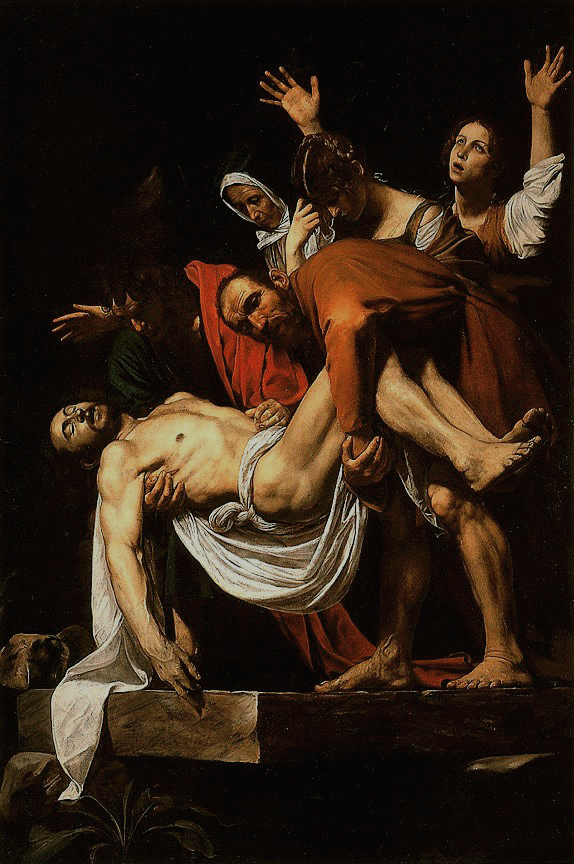
The time between Good Friday and Easter Sunday is one of waiting, in silence, as the world wonders – anticipates – what will happen, after the death of Christ. We re-live this time each year in the anamnesis of our liturgy, and in turn look forward to the glorious re-creation of all things at the[…]Continue reading→
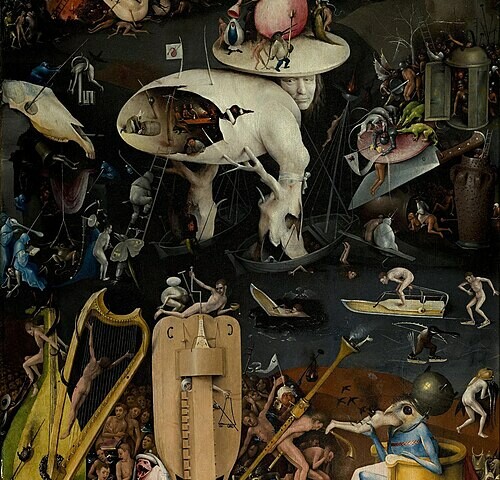
Europe’s Long Descent
(As we meditate on this day on Christ’s burial, and His descent into hell, it is fitting to ponder here with contributor Peter Marcus how the world seems to be heading there as well. The difference is that, although God cannot ‘redeem’ hell, nor those therein, He can and did redeem the world. There is[…]Continue reading→
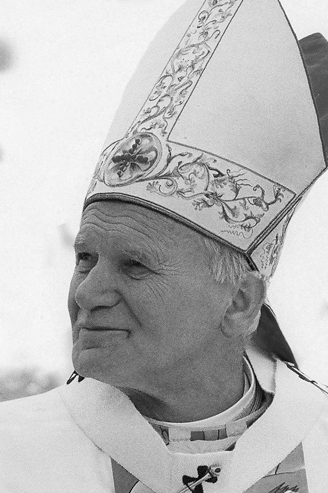
Pope Saint John Paul II’s First Good Friday Homily
ADDRESS OF HIS HOLINESS JOHN PAUL II AT THE CONCLUSION OF THE STATIONS OF THE CROSS AT THE COLOSSEUM Good Friday, 13 April 1979 When we make the Way of the Cross from one station to the next, in spirit we are always at the spot wherethis journey had its “historical” place: where it[…]Continue reading→
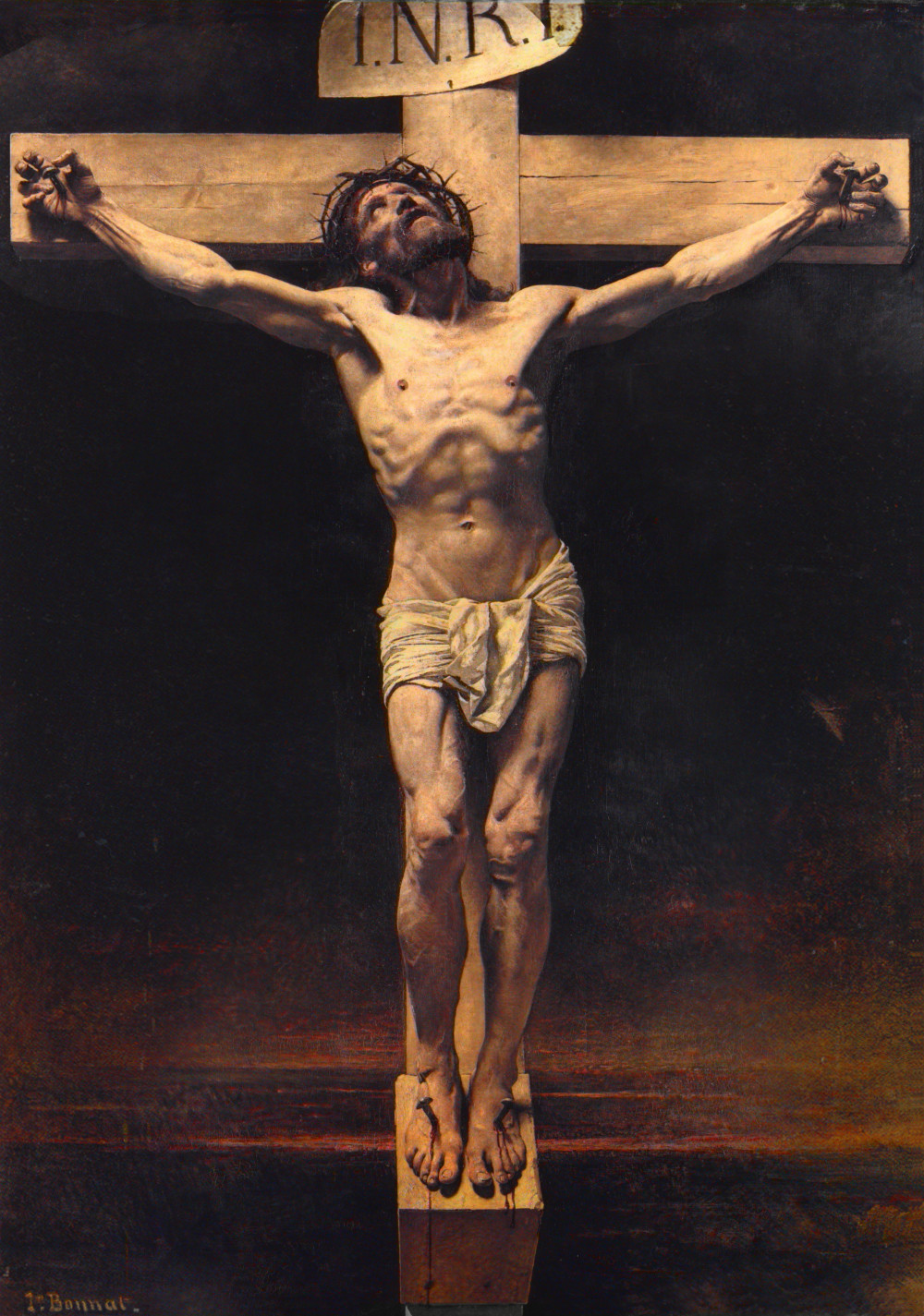
A Meditation for Good Friday: How To Undo the Effects of Sin?
Cardinal Newman, now Saint John Henry Newman, was a towering figure of nineteenth-century Catholicism who is almost universally admired. I say “almost” because not everyone likes him. I knew a priest once, Arthur Caulkins, who has become disenchanted with Newman. As an undergraduate Arthur had been enamoured of Newman, and this interest continued when he[…]Continue reading→
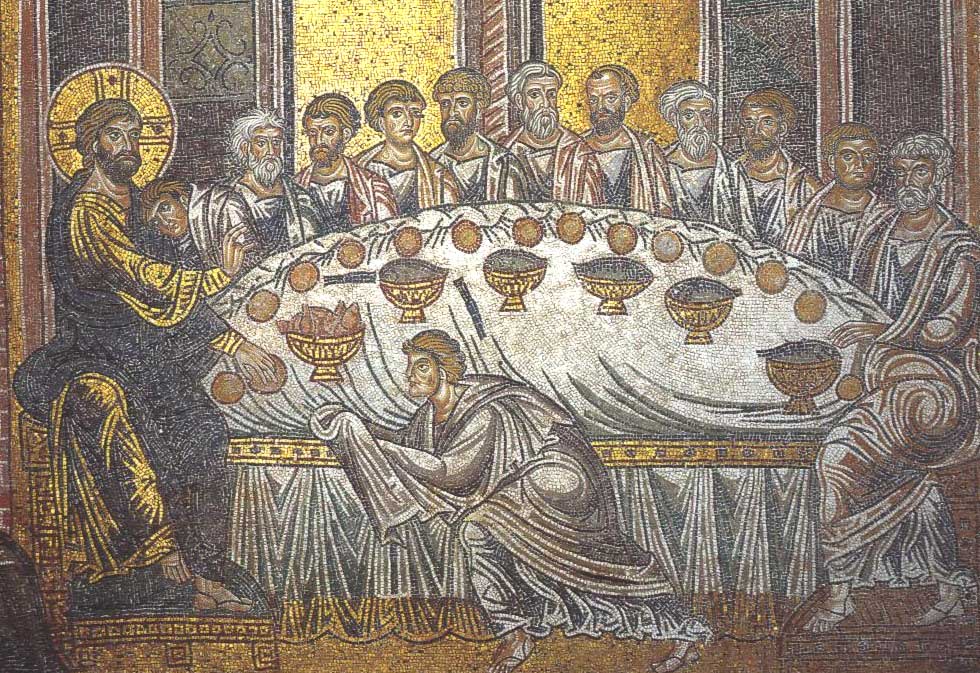
Pope Benedict’s Last Holy Thursday Homily
MASS OF THE LORD’S SUPPER HOMILY OF HIS HOLINESS BENEDICT XVI Basilica of St John Lateran Holy Thursday, 5 April 2012 Photo Gallery (Video) Dear Brothers and Sisters! Holy Thursday is not only the day of the institution of the Most Holy Eucharist, whose splendour bathes all else and in some ways draws it to[…]Continue reading→