
The Commemoration of All Saints of the Seraphic order
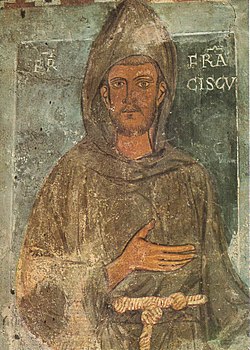
The 29th of November is the liturgical memorial of Franciscan saints. Countless is the number of those who followed Jesus in the footsteps of St Francis of Assisi by living the gospel in poverty and fraternity.
This feast is one of great joy and hope, as a panoply of worldly unknowns convey to us the message that holiness is a practical. not a theoretical endeavour. Even if it is full of risks, challenges, and, at times, one is liable to fall off the track, holiness offers to us myriad of opportunities to grow closer with our Lord in lovingly serving him till the end.
Holiness is not a solitary effort or aloof from others. God, who is the perfect Trinitarian Communion of Father, Son and Holy Spirit, the fount of all holiness, as we rightly and personally address Him in the second Eucharistic prayer, wants to sanctify us as one united people. And, these saints, some of who are beatified and canonized by Mother Church, what they did was to let God save them in communion with others. He pruned them in direct relationship to Him through other brothers and sisters so that they learn how to love and serve till the end.
In his apostolic exhortation on the call to holiness in today’s word, Gaudete Et Exsultate, Pope Francis tells us: Nor need we think only of those already beatified and canonized. The Holy Spirit bestows holiness in abundance among God’s holy and faithful people, for “it has pleased God to make men and women holy and to save them, not as individuals without any bond between them, but rather as a people who might acknowledge him in truth and serve him in holiness”. In salvation history, the Lord saved one people. We are never completely ourselves unless we belong to a people. That is why no one is saved alone, as an isolated individual. Rather, God draws us to himself, taking into account the complex fabric of interpersonal relationships present in a human community. God wanted to enter into the life and history of a people (no.6).
All Franciscan saints lived the greatest and indispensable virtue of humility. Already in his Testament, St Francis gives us a very powerful sip of what true humility is all about. He writes: While I was in sin, it seemed very bitter to me to see lepers. And the Lord himself led me among them, and I had mercy upon them. And when I left them, that which seemed bitter to me was changed into sweetness of soul and body.
Seen from St Francis’ perspective, humility is that God-given capacity or virtue, that makes one loses himself for God. I like the way Pope Benedict expresses humility in conjunction with service to others. In his encyclical letter on Christian love, named Deus Caritas Est, Pope Benedict writes:
Love is indeed “ecstasy”, not in the sense of a moment of intoxication, but rather as a journey, an ongoing exodus out of the closed inward-looking self towards its liberation through self-giving, and thus towards authentic self-discovery and indeed the discovery of God: “Whoever seeks to gain his life will lose it, but whoever loses his life will preserve it” (Lk 17:33), as Jesus says throughout the Gospels (cf. Mt 10:39; 16:25; Mk 8:35; Lk 9:24; Jn 12:25). In these words, Jesus portrays his own path, which leads through the Cross to the Resurrection: the path of the grain of wheat that falls to the ground and dies, and in this way bears much fruit. Starting from the depths of his own sacrifice and of the love that reaches fulfilment therein, he also portrays in these words the essence of love and indeed of human life itself (no.6).
Was this not the experience of the Franciscan saints who, each according to his vocation, led a life of continual and ongoing exodus out of himself, to meet Christ in those most in need? Each one of them realized that if they really wanted to live they had no other choice other than to die for themselves, so to be resurrected with Christ. Only in such an experience of spiritual resurrection with Jesus could they bear much fruit, thus reaching their true human and spiritual calling.
The more these saints discovered their own brokenness and misery, the more they reached to others who were themselves hurting and broken. Their heart ached for these people, since in them they saw the Christ they genuinely loved. The Franciscan saints were courageous enough to let Christ draw them close to those whom they felt repugnant to them and, by serving them, they embraced them as Francis did to the leper.
Such a great act demands a great force. The Franciscan saints knew that by their own they could not arrive at such lofty missions. Hence, they needed the great help that only the infinite love of the Body and Blood of Christ could give them. Their fruitful reception of the Eucharist made them completely transformed in the Eucharistic Christ. It also taught them to cling only to Christ. Their inspiring ardent love for the Eucharist made us recall Francis’ famous admonition on the Body and Blood of Christ.
And so it is really the Spirit of the Lord, who lives in his faithful, who receives the most holy body and blood of the Lord. All others who do not share in this same Spirit and who presume to receive him eat and drink judgment to themselves (cf. 1 Cor 11:29). Therefore, O sons of men, how long will you be hard of heart? (Ps 4:3) Why do you not recognize the truth and believe in the Son of God? (Jn 9:35) See, daily he humbles himself (Phil 2:8) as when he came from the royal throne (Wis 18:15) into the womb of the Virgin; daily, he comes to us in a humble form.
Since all the Franciscan saints had great devotion to Mary Immaculate because they all knew perfectly well she was their teacher in holiness. Towards the end of his apostolic exhortation Gaudete Et Exsultate, Pope Francis tells us:
I would like these reflections to be crowned by Mary, because she lived the Beatitudes of Jesus as none other. She is that woman who rejoiced in the presence of God, who treasured everything in her heart, and who let herself be pierced by the sword. Mary is the saint among the saints, blessed above all others. She teaches us the way of holiness and she walks ever at our side. She does not let us remain fallen and at times she takes us into her arms without judging us. Our converse with her consoles, frees and sanctifies us. Mary our Mother does not need a flood of words. She does not need us to tell her what is happening in our lives. All we need do is whisper, time and time again: “Hail Mary…” (no.176).
In this liturgical memorial so dear to us Franciscans, let us turn to Mary Immaculate, the patroness and queen of our order and ardently pray to her: Mary Immaculate, you who have entered in this world free from sin intercede for us to leave this world free from every sin. Amen.

Saint Kateri , Canada’s Protectress
This was the title given to Saint Kateri Tekakwitha, by Pope Benedict XVI, when he canonized her on October 28th, 2012, along with six others, in Saint Peter’ Square (she had been beatified by Pope John Paul II back in 1980). With Saint Joseph as our protector, along with the Canadian martyrs, we seem to[…]Continue reading→

Remembering Father Alphonse de Valk
(Today marks the sixth anniversary of the death of Father Alphonse de Valk, C.S.B., a faithful, courageous and indefatigable Basilian priest, pro-life-and-family apostle, and the founder of Catholic Insight magazine. Here is what we wrote those on his entering into eternity five years ago, as we continue to remember him in our prayers and thoughts)[…]Continue reading→

A Tale of Two Benedicts
A grace-filled Holy Week to all our readers! As we await and prepare for the Resurrection about to dawn upon us, we might keep in mind two Benedicts: Pope Emeritus Benedict XVI, requiescat in pace, elected on this day in 2005; and today’s commemoration of the mystic pilgrim, Benedict Joseph Labre, who died on this[…]Continue reading→

My Name is Bernadette
April 16th is a propitious day, for besides the anniversary of Father de Valk’s death, who founded Catholic Insight in its print form decades ago, and the commemoration of the ‘two Benedicts’, mentioned in accompanying posts, today we also recall Saint Bernadette Soubirous, the young visionary to whom the Virgin Mary appeared numerous times at[…]Continue reading→

Saint Lydwina of Schiedam and Suffering Joyfully
Saint Lydwina of Schiedam (1380 – 1433) was one of the countless and glorious ‘victim souls’ in the history of the Church, those whose lives are filled with suffering, often of an unimaginable intensity, but who suffer joyfully. She was a fifteen-year old Dutch girl, out skating one day, when she fell and broke one[…]Continue reading→

The Glorious Martyrdoms of Martin and Maximus
As we enter into Eastertide, we recall on this 13th of April Pope Saint Martin I (+655), one of the noblest, if most tragic, of the successors of Saint Peter. Born in Umbria, Italy, he was of noble lineage, with great intelligence combined with charity and love of the poor and the Church. While still[…]Continue reading→

Canonizing Sister Faustina and Divine Mercy
HOMILY OF THE HOLY FATHER MASS IN ST PETER’S SQUARE FOR THE CANONIZATION OF SR MARY FAUSTINA KOWALSKA Sunday, 30 April 2000 1. “Confitemini Domino quoniam bonus, quoniam in saeculum misericordia eius”; “Give thanks to the Lord for he is good; his steadfast love endures for ever” (Ps 118: 1). So the Church sings on the Octave of[…]Continue reading→

Divine Mercy Sunday – An Echo of Every Mass
Reach out your hand and put it in my side. Do not doubt but believe’… ‘My Lord and my God!’ (Jn. 20:18)). Today is Divine Mercy Sunday, and as we celebrate the end of the Easter Octave, we contemplate the wounded side of our Saviour, the Church’s source of life. On Good Friday in the[…]Continue reading→

Saint Gemma Galgani
On this April 11th, in 1903 – the same year that the Italian Guiseppe Sarto was elected Pope later that summer as Pius X – a lovely, young Italian woman died, by the name of Gemma Galgani. She lived a brief life of 24 years, as did a number of other young saints, including Pier[…]Continue reading→

First Holy Communion: Sermon from May 16, 1943
Here is a sermon from the good old days by +Rev. Msgr. Vincent Nicholas Foy (August 14, 1915 – March 13, 2017), from 1943. Readers may recall that Pope Saint Pius X, by the decree Quam Singulari in 1910, lowered the customary age of reception of Holy Communion – after the rigours of the plague[…]Continue reading→