
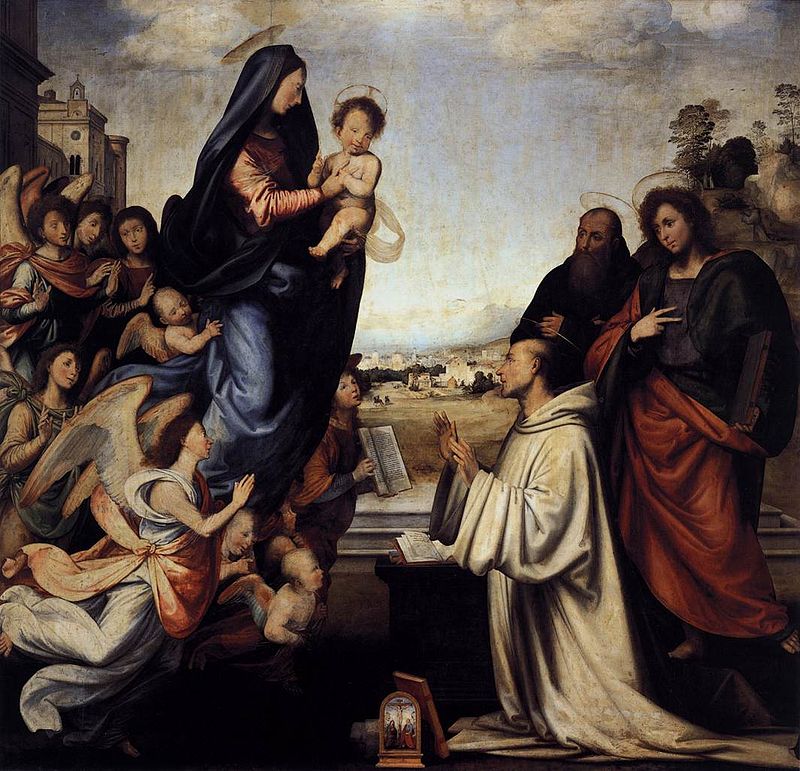
Saint Bernard, Contemplatio in Actio
Today, the 20th of August, the universal Church celebrates “the man of the twelfth century”, St Bernard of Clairvaux.
Born in 1090 in Fontaines, France, he was raised in a large family. After being educated in the liberal arts of grammar, rhetoric and dialectics at the school of the canons of the Church of Saint-Vorles at Châtillon-sur-Seine, Bernard discerned the vocation of entering monastic life. At age of twenty he entered the monastery of Cîteaux, a new monastic institution which, on one hand was more flexible than others, such as the great Cluny, but also adopted a stricter approach concerning the living of the evangelical counsels.
Five years after his entrance in the monastic life Stephen Harding, the third Abbot of Cîteaux, sent Bernard to establish the new monastery of Clairvaux. What Bernard did was to accentuate a sober and temperate life in food, clothing as well as monastic buildings. He also suggested help and care of the poor. Such a new lifestyle attracted huge numbers of vocations so much so that other monasteries were founded.
Bernard’s holiness and sanctity were soon widespread, and he became the adviser of Popes, the preacher of the Second Crusade, defender of the faith, healer of a schism, reformer of a monastic Order, Scripture scholar, eminent theologian and famous teacher. Without lessening the importance of these great achievements Bernard’s contribution to the Church of his time was his evangelical lifestyle of contemplation into action. The more one delves into his mystical theology and Mariology, the more one realizes how much of his life based on his intimate relationship with the Lord. For Bernard Jesus was the centre of everything he was and did. All Bernard’s raison d’être was none other than the Name of Jesus!
In Sermon 15 on the Book of The Song of Songs, which centres on the Name of Jesus, St Bernard writes:
How shall we explain the world-wide light of faith, swift and flaming in its progress, except by the preaching of Jesus’ name? Is it not by the light of this name that God has called us into his wonderful light, that irradiates our darkness and empowers us to see the light? To such as we Paul says: “You were darkness once, but now you are light in the Lord.” This is the name that Paul was commanded to present before kings and pagans and the people of Israel; a name that illumined his native land as he carried it with him like a torch, preaching on all his journeys that the night is almost over, it will be daylight soon — let us give up all the things we prefer to do under cover of the dark; let us arm ourselves and appear in the light. Let us live decently as people do in the day-time. To every eye he was a lamp on its lamp-stand; to every place he brought the good news of Jesus, and him crucified. What a splendor radiated from that light, dazzling the eyes of the crowd, when Peter uttered the name that strengthened the feet and ankles of the cripple, and gave light to many eyes that were spiritually blind! Did not the words shoot like a flame when he said: “In the name of Jesus Christ of Nazareth, arise and walk”? But the name of Jesus is more than light, it is also food. Do you not feel increase of strength as often as you remember it? What other name can so enrich the man who meditates? What can equal its power to refresh the harassed senses, to buttress the virtues, to add vigor to good and upright habits, to foster chaste affections? Every food of the mind is dry if it is not dipped in that oil; it is tasteless if not seasoned by that salt. Write what you will, I shall not relish it unless it tells of Jesus. Talk or argue about what you will, I shall not relish it if you exclude the name of Jesus. Jesus to me is honey in the mouth, music in the ear, a song in the heart.
That same “honey in the mouth, music in the ear and song in the mouth” can also be found in his praises to Mary, the Mother of Jesus, the Mother of God, and Our dear Mother. With how much love, faith and filial trust Bernard sings God’s most wondrous deeds in Mary. In his sermon on the Assumption of the Blessed Virgin Mary, the Abbot of Clairvaux says:
There is nothing that pleases me more, and nothing that terrifies me more than to preach on the glory of the Virgin Mary. For, see, if I praise her virginity, I see that there are many who have offered themselves as virgins after her. If I preach on her humility, we will find, perhaps, even a few who, taught by her Son, have become meek and humble of heart. If I want to proclaim the greatness of her mercy, there are some also some very merciful men and women. There is, however, one thing in which she does not have someone like her, before or after, and that is her joining the joy of motherhood with the honor of virginity. This is Mary’s privilege, and it is not given to another: it is unique, and it is also something that words cannot perfectly describe.
Nevertheless, if you pay attention closely, you will find not only this one virtue, but even other singular virtues in Mary, which she only seems to share with others. For can one even compare the purity of the angels to that spotless virginity which was found worthy to become the tabernacle of the Holy Spirit and dwelling place of the Son of God? How great and how precious was her humility, together with such perfect innocence, such wisdom without fault, and such a fullness of grace? How did you obtain such meekness, O Blessed Woman, such great humility? You are indeed worthy, whom the Lord considered carefully, whose beauty the King desired, on whose lap with its sweetest fragrance the eternal Father was brought to rest.
Behold, with these acts of devotion we have meditated on your ascension to your Son, and we have followed you as though from a distance, O Blessed Virgin. Let the grace of your mercy, the favor that you found with God, be made known to the world: may your prayers obtain mercy for the condemned, remedy for the sick, strength of heart for the lowly, consolation for the afflicted, aid for those in peril, and freedom for your holy ones. And on this day of celebration and gladness, may Jesus Christ, your Son, our Lord, through thee, O merciful Queen, pour out the gifts of His grace upon all those who invoke the sweetest name of Mary with praise, for He is the God of all things. blessed unto all ages. Amen.
For the great Bernard, nourished as he was by the Bible and the Fathers of the Church, he came to the conclusion that we can see God better not in sheer arguments but in prayer. Animated by his unshakeable conviction that prayer is the strong pillar of real spiritual life St Bernard said: Wherever…thou shalt be, pray secretly within thyself. If thou shalt be far from a house of prayer, give not thyself trouble to seek for one, for thou thyself art a sanctuary designed for prayer. If thou shalt be in bed, or in any other place, pray there; thy temple is there.
It is more than just that Mother Church gave the title Doctor Mellifluus to Bernard. His praise of Jesus Christ, Mary and the spiritual union with the Triune God simply “flowed like honey”. Furthermore, and guided by the Holy Spirit, Bernard was able to be a great contemplative into action.
St Bernard of Clairvaux, pray for us!

Saint Kateri , Canada’s Protectress
This was the title given to Saint Kateri Tekakwitha, by Pope Benedict XVI, when he canonized her on October 28th, 2012, along with six others, in Saint Peter’ Square (she had been beatified by Pope John Paul II back in 1980). With Saint Joseph as our protector, along with the Canadian martyrs, we seem to[…]Continue reading→

Remembering Father Alphonse de Valk
(Today marks the sixth anniversary of the death of Father Alphonse de Valk, C.S.B., a faithful, courageous and indefatigable Basilian priest, pro-life-and-family apostle, and the founder of Catholic Insight magazine. Here is what we wrote those on his entering into eternity five years ago, as we continue to remember him in our prayers and thoughts)[…]Continue reading→
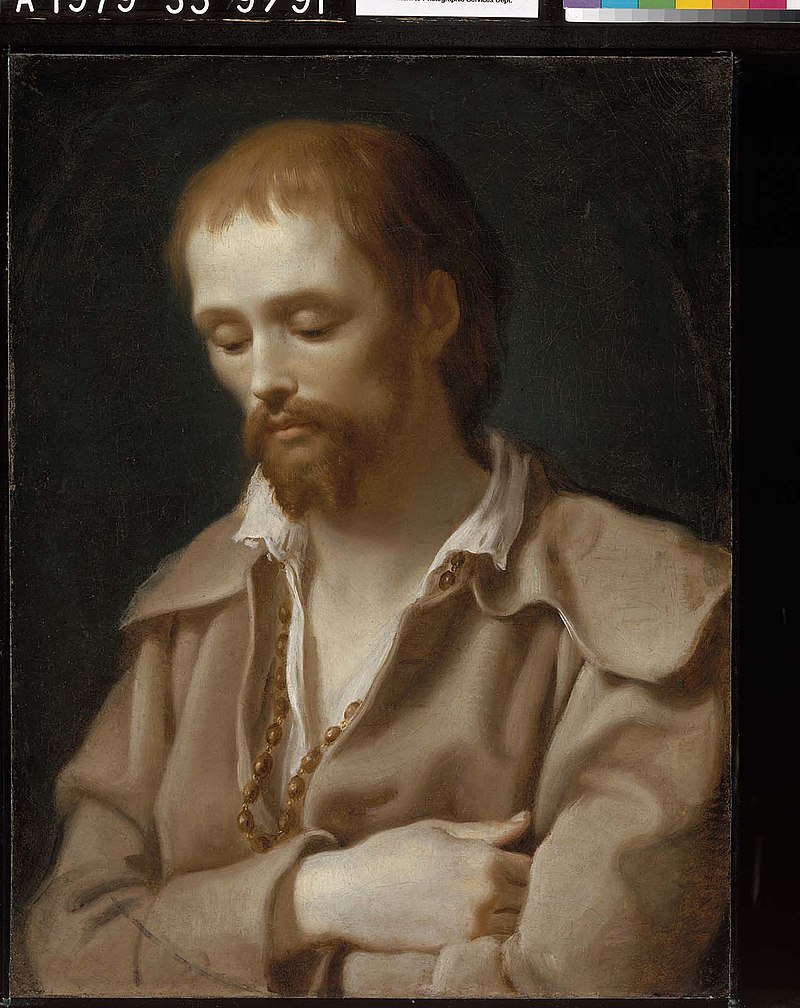
A Tale of Two Benedicts
A grace-filled Holy Week to all our readers! As we await and prepare for the Resurrection about to dawn upon us, we might keep in mind two Benedicts: Pope Emeritus Benedict XVI, requiescat in pace, elected on this day in 2005; and today’s commemoration of the mystic pilgrim, Benedict Joseph Labre, who died on this[…]Continue reading→

My Name is Bernadette
April 16th is a propitious day, for besides the anniversary of Father de Valk’s death, who founded Catholic Insight in its print form decades ago, and the commemoration of the ‘two Benedicts’, mentioned in accompanying posts, today we also recall Saint Bernadette Soubirous, the young visionary to whom the Virgin Mary appeared numerous times at[…]Continue reading→
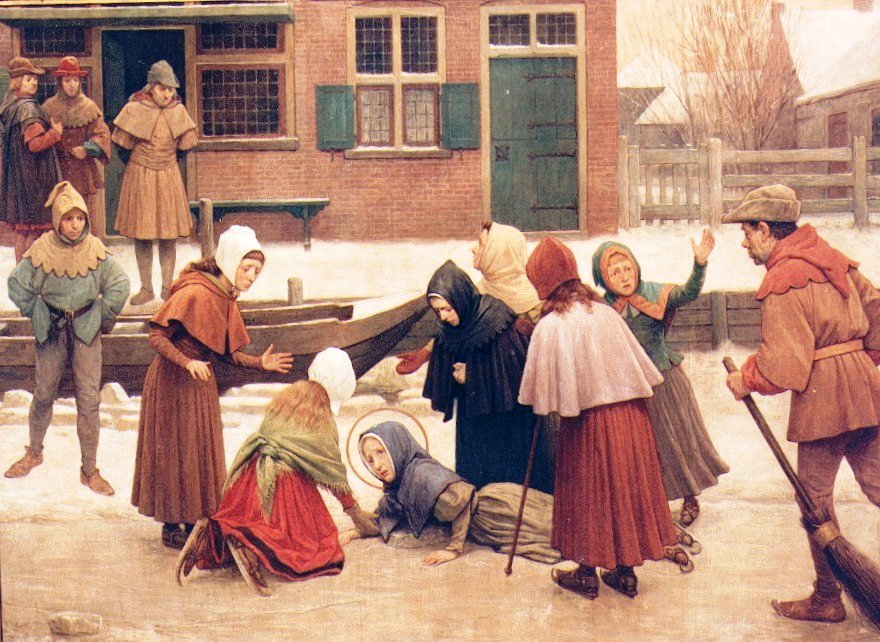
Saint Lydwina of Schiedam and Suffering Joyfully
Saint Lydwina of Schiedam (1380 – 1433) was one of the countless and glorious ‘victim souls’ in the history of the Church, those whose lives are filled with suffering, often of an unimaginable intensity, but who suffer joyfully. She was a fifteen-year old Dutch girl, out skating one day, when she fell and broke one[…]Continue reading→
The Glorious Martyrdoms of Martin and Maximus
As we enter into Eastertide, we recall on this 13th of April Pope Saint Martin I (+655), one of the noblest, if most tragic, of the successors of Saint Peter. Born in Umbria, Italy, he was of noble lineage, with great intelligence combined with charity and love of the poor and the Church. While still[…]Continue reading→
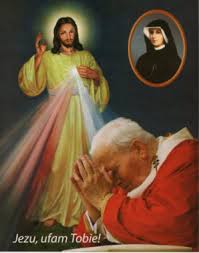
Canonizing Sister Faustina and Divine Mercy
HOMILY OF THE HOLY FATHER MASS IN ST PETER’S SQUARE FOR THE CANONIZATION OF SR MARY FAUSTINA KOWALSKA Sunday, 30 April 2000 1. “Confitemini Domino quoniam bonus, quoniam in saeculum misericordia eius”; “Give thanks to the Lord for he is good; his steadfast love endures for ever” (Ps 118: 1). So the Church sings on the Octave of[…]Continue reading→
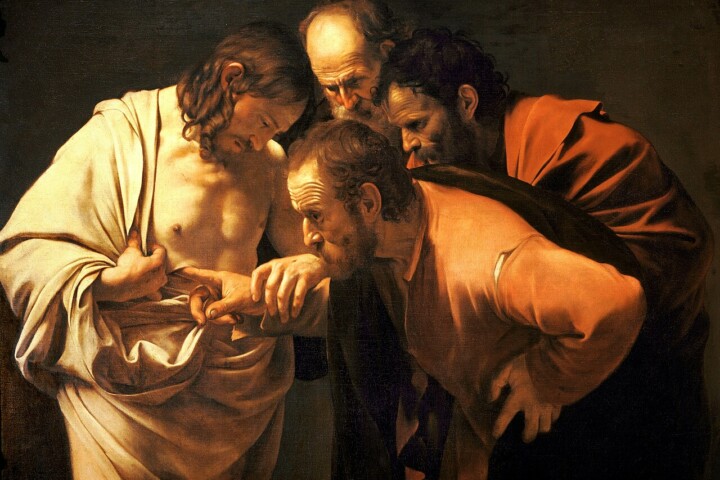
Divine Mercy Sunday – An Echo of Every Mass
Reach out your hand and put it in my side. Do not doubt but believe’… ‘My Lord and my God!’ (Jn. 20:18)). Today is Divine Mercy Sunday, and as we celebrate the end of the Easter Octave, we contemplate the wounded side of our Saviour, the Church’s source of life. On Good Friday in the[…]Continue reading→

Saint Stanislaus of Szczepanów
We celebrate Saint Stanislaus today (+ April 11, 1079), in light of this Easter Octave, a bishop and martyr who accepted the episcopacy only at the direct order of Pope Alexander II. He proved a wise and courageous leader of his flock, put to death by his own king, Boleslaus, for rebuking the monarch’s ‘immoral[…]Continue reading→
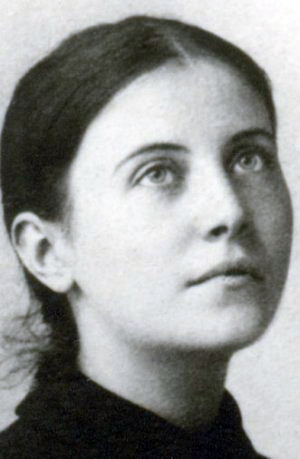
Saint Gemma Galgani
On this April 11th, in 1903 – the same year that the Italian Guiseppe Sarto was elected Pope later that summer as Pius X – a lovely, young Italian woman died, by the name of Gemma Galgani. She lived a brief life of 24 years, as did a number of other young saints, including Pier[…]Continue reading→