
Dr. Lozano Responds to a Question
Apologies in advance for the length of my response. A simple answer will not suffice.
The phenomenon described is chimerism. Most simply defined, chimeras are animals or humans whose cells are derived from two or more zygotes. Their bodies contain two different sets of DNA. This is important! We will come back to it!
Chimeras are derived from two or more zygotes. The vast majority of human chimeras are single persons, not twins. Their chimerism is usually something like having two different blood types or other genetically different tissues.
In fact, human chimeras are exceedingly rare and most go undiscovered. The abnormality would generally only be found by genetic blood or tissue testing. Also rare, but more dramatic, are sex chromosome chimeras which give rise to an individual who is a true hermaphrodite or has ambiguous genitalia.
In answer to the specific question: When a zygote splits into two zygotes that would then go on to form identical twins, those two zygotes are identical in all respects including their DNA (chromosomes). They are two identical individuals and, according to current Church teaching, each would be ensouled.
In the scenario where a zygote splits into two and then fuses together, one can reasonably assume that, when in the split stage, each could have some differences in their DNA. It’s a reasonable assumption in that we know the subsequent chimera will have at least two different sets of DNA in the now fused single zygote. By definition the DNA would be different as that is the definition of a chimera. These differences in the DNA would be most commonly due to fusion with a fertilized polar body. (A polar body is the byproduct of an oocyte meiotic division.)
Because of this, it may not be unreasonable to speculate that there is an abnormality which led to the fusion. In the two-cell state there may have been a “normal cell” and an “abnormal “cell”. The normal one being complete in its genetic complement would fit the criteria of personhood and be ensouled. The abnormal cell would not.
In an article as recent as 2020, true twin human chimeras have not been found. So, for the moment, the question as posed by the reader may be moot. However, if we are to be open to the idea that true human twin chimeras may exist, then the current Church teaching that an ensouled individual person exists from the moment of conception will certainly generate renewed debate on the subject.
It is worthwhile mentioning that in 2007, Pope Benedict XVI asked for an update to the 1987 Instruction Donum Vitae. It was apparently his view that within that 20-year time span, new medical techniques had raised ethical issues that were to re-addressed by the Magisterium.
A Closed, Unsustainable, Descending Loop
As a follow-up to my thoughts on Payette’s payout, here be a stark image of where are here in Canada. As the graph shows in, well, graphic terms, since 2025, the public sector has contributed to 95.5% of economic growth. The private sector – which funds the public sector, or is supposed to – has[…]Continue reading→

Remembering Father Alphonse de Valk
(Today marks the sixth anniversary of the death of Father Alphonse de Valk, C.S.B., a faithful, courageous and indefatigable Basilian priest, pro-life-and-family apostle, and the founder of Catholic Insight magazine. Here is what we wrote those on his entering into eternity five years ago, as we continue to remember him in our prayers and thoughts)[…]Continue reading→
Presidential Pardon of Weronika Krawczyk
As a good news, follow-up to our story from Poland, of the persecution of Weronika Krawczyk for her pro-life views, we heard that she has been granted a presidential pardon. One might still wonder why one needs a presidential pardon for simply holding the long-held belief that the child within the womb is a child,[…]Continue reading→
Pope Leo and a Rosary for Peace
Pope Leo XIV has asked Catholics across the world to join him in a Rosary for peace today, at 18:00 Rome time (6 pm), which would be noon from where I write (EST). If you are able, whether at that time or another, and in whatever way you pray, to join in intercession with the[…]Continue reading→
Payette’s Payout
I was glancing through some headlines, and noticed a mention of Julie Payette – engineer and astronaut and sometime the Queen’s representative in Canada – which brought back vague memories. She was appointed Governor-General by Justin Trudeau in 2017. Ms. Payette resigned in 2021, amidst claims that she created a ‘toxic work environment’, with allegations[…]Continue reading→

Saint Stanislaus of Szczepanów
We celebrate Saint Stanislaus today (+ April 11, 1079), in light of this Easter Octave, a bishop and martyr who accepted the episcopacy only at the direct order of Pope Alexander II. He proved a wise and courageous leader of his flock, put to death by his own king, Boleslaus, for rebuking the monarch’s ‘immoral[…]Continue reading→
Weronika Krawczyk and Injustice in Poland
Catholic Action in Poland has issued a formal statement appealing to the President of the Republic of Poland to pardon Weronika Krawczyk—convicted for warning other women against an abortion-performing gynaecologist. Catholic Action (AK) emphasizes that no apology is owed to a doctor who has performed numerous abortions and proposed others; furthermore, the organization considers the[…]Continue reading→
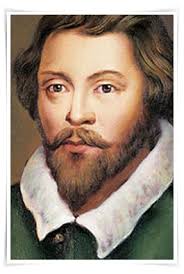
Three Easter Musical Gems: Bach, Palestrina and Byrd
A very blessed and glorious Easter! Christus surrexit vere, alleluia! As we begin this Easter Octave with the great Solemnity of Easter, music to lift the soul would be one of Bach’s Easter cantatas, composed during his time at Leipzig in the early 1700’s, for the six Sundays of this festive season, leading up to[…]Continue reading→
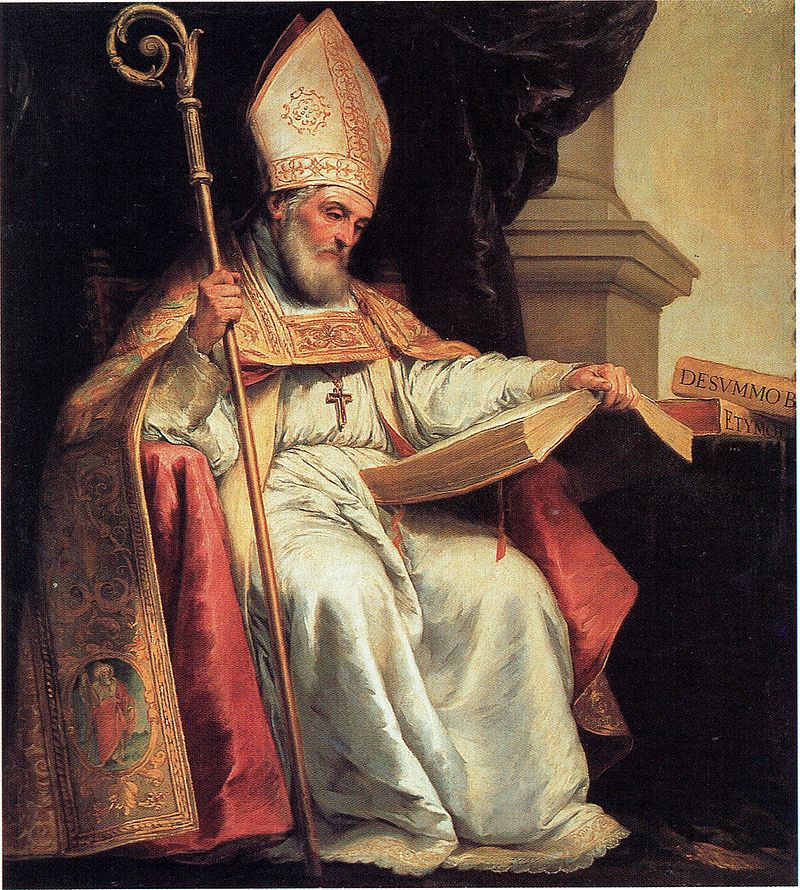
Saint Isidore of Seville, the Internet and Industriousness
Today, April 4th, muted this year by Holy Saturday, is the commemoration of Saint Isidore of Seville (560-636) a bishop and doctor of the Church during a tumultuous age, when civilization was crumbling, coming apart at its very seams, which may sound sort of au courant. Then again, the form of this world has always[…]Continue reading→

An Ancient Homily for Holy Saturday
The time between Good Friday and Easter Sunday is one of waiting, in silence, as the world wonders – anticipates – what will happen, after the death of Christ. We re-live this time each year in the anamnesis of our liturgy, and in turn look forward to the glorious re-creation of all things at the[…]Continue reading→