
Adoration and Philosophy
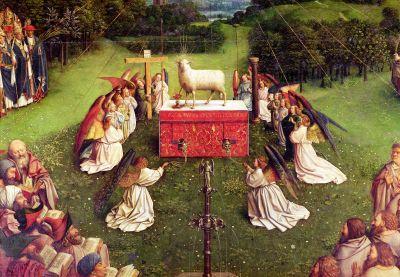
All Catholics should go to Eucharistic Adoration. Most Catholics, myself included, should go to Adoration more than they do, whether they go regularly, occasionally, or not at all. My theological reasoning here is simple and utterly unsophisticated: why wouldn’t you want to be in the presence of our Lord?
Of course, the exigencies of everyday life, to say nothing of the public health restrictions we presently endure, limit the amount of time we have for it, but that amount is usually not zero. As long as we can get into a church, we can kneel and pray before the Blessed Sacrament. Anyone who believes they have no time at all for Adoration probably has their priorities mixed up.
I concede that those Catholics who reject the Real Presence will be unconvinced. If relatively recent Pew data about American Catholics is at all applicable to Catholics in other countries, like Canada, Catholics unconvinced by my claim will far outnumber those who don’t need convincing. I don’t want to be harsh with them, understanding that we, sinners all, are stumbling and falling short all the time, but, to quote one of their own, come on, man! Transubstantiation is kind of a Catholic deal-breaker. Like Fr. Altman, who infamously affirmed, with much “tone” last summer, that 0% of American Catholics vote Democrat, I’m inclined to say 0% of Catholics deny the Real Presence. Thus 100% of Catholics should be convinced that they would do well to go to Adoration, at least a little more often than they do now. If any of the 0% happen to go, I suspect they might be convinced, too – and converted.
For those who need no convincing, the benefits of Eucharistic Adoration are obvious: “For this is the will of my Father, that everyone who sees the Son and believes in him should have eternal life; and I will raise him up at the last day” (John 6: 40). That’s pretty decisive. But there is a benefit that most people will find surprising: Eucharistic Adoration is, also, philosophical. It is not itself philosophy, at least not philosophy simpliciter, but it can prepare one for philosophy, and will do so better than most other preparatory activities, like learning about logical fallacies or filling out truth tables (both fine and noble preludes to philosophy, no doubt). I’m not saying one should go to Adoration to improve one’s philosophical chops or earn a higher mark in philosophy class. One should go because it’s Adoration. I am, rather, saying that Adoration sharpens the mind by focusing the mind’s eye, the same eye that genuine philosophers need to use.
Even those who have never studied philosophy will likely know that it is the love of wisdom. What they might not know is that loving wisdom is not possessing it. The philosopher aspires to wisdom, aims at it, gains it in dribs and drabs, but he never gets the whole of it once and for all. Indeed, the wisdom of the philosopher lies in understanding that the pursuit of wisdom is never completed in a lifetime, and if it is completed, it will only be in the hereafter, as a gift. We can hope for wisdom, but must never expect it; indeed, such expectation precludes attaining it. Like Socrates, we begin with philosophy when we recognize our own ignorance, and, like all good philosophers of the past, we continue with it when we understand that wisdom is not possible for humans even though its pursuit is worthwhile.
Many people love and pursue wisdom, but the philosopher does it in a distinct way: he does it rationally. The philosopher spends his days studying, to use Russell Kirk’s turn of phrase, the permanent things, and does so by reasoning. Philosophy is dialectical; it uses arguments to get to the bottom of perennial questions. It uses what Plato referred to as dianoia and what medieval philosophers called ratio. Josef Pieper describes ratio, in Leisure: the Basis of Culture, as “the power of discursive, logical thought, of searching and of examination, of abstraction, of definition and drawing conclusions.” Ratio is active; it requires effort. Frankly, doing it can be quite difficult, requiring, as I know only too well, many years of training. Indeed, the training seems to never end.
But philosophy is not only rational in this sense – contrary to common views about philosophy propounded since the Enlightenment and propagated widely in conventional university philosophy departments everywhere. Above dianoia, Plato places noesis, not rational analysis, but intellectual seeing, insight, the mind’s apprehension of the truth of things themselves. The medievals called this intellectus. Pieper again puts it well: “intellectus … is the name for the understanding in so far as it is the capacity of simplex intuitus, of that simple vision to which truth offers itself like a landscape to the eye.”
Intellectus is receptive, and is in that sense passive. Contrasted with ratio, intellectus is easy, not because the direct apprehension of truth can be grabbed with ease, but because it cannot be grabbed at all. It can only be received, like wisdom, as a gift. Put differently, the philosopher only becomes a tiny bit wise by seeing true things intellectually, not by arguing his way to clever conclusions.
Human understanding is both, but intellectus is higher, and ought to be treated as such. Logical analysis is all well and good. Philosophy understood as argument is, too. It truly is worth doing, preferably well. But knowledge derived from pure analysis is incomplete without the corresponding apprehension of the truth itself. Plato also called the philosopher the lover of the sight of truth. Playing with words, even if masterfully, is not seeing truth. It is best to have both logic and insight, but if you can only manage one, the latter is incomparably superior.
It is true that relatively few people can argue well. Most of them also can’t tell if the arguments they hear or read in books, in the news, on social media, or in actual inter-personal conversation are good ones. They would all benefit from studying some logic. But too many people who can argue well also cannot see. They can cut up words and arguments, reasoning their way to conclusions that follow logically, but are false. Such reasoning lacks insight. Logical experts don’t see the truth unless they bother to look.
We need to start looking more often and more carefully. I mean that literally as well as figuratively. Looking closely at the world around us, seeing its beauty and goodness, is good in itself, and it serves as an excellent preparation for seeing with the mind’s eye. In Adoration we rest in the presence of the Truth. In it the object of our deepest and most fitting love is received, not grabbed; it is beheld, not parsed out with clever and incisive words. To repeat: we should all go to Adoration more often than we do presently; philosophers, Catholic or not, too.

Remembering Father Alphonse de Valk
(Today marks the sixth anniversary of the death of Father Alphonse de Valk, C.S.B., a faithful, courageous and indefatigable Basilian priest, pro-life-and-family apostle, and the founder of Catholic Insight magazine. Here is what we wrote those on his entering into eternity five years ago, as we continue to remember him in our prayers and thoughts)[…]Continue reading→

Divine Mercy Sunday – An Echo of Every Mass
Reach out your hand and put it in my side. Do not doubt but believe’… ‘My Lord and my God!’ (Jn. 20:18)). Today is Divine Mercy Sunday, and as we celebrate the end of the Easter Octave, we contemplate the wounded side of our Saviour, the Church’s source of life. On Good Friday in the[…]Continue reading→

Saint Stanislaus of Szczepanów
We celebrate Saint Stanislaus today (+ April 11, 1079), in light of this Easter Octave, a bishop and martyr who accepted the episcopacy only at the direct order of Pope Alexander II. He proved a wise and courageous leader of his flock, put to death by his own king, Boleslaus, for rebuking the monarch’s ‘immoral[…]Continue reading→

First Holy Communion: Sermon from May 16, 1943
Here is a sermon from the good old days by +Rev. Msgr. Vincent Nicholas Foy (August 14, 1915 – March 13, 2017), from 1943. Readers may recall that Pope Saint Pius X, by the decree Quam Singulari in 1910, lowered the customary age of reception of Holy Communion – after the rigours of the plague[…]Continue reading→

In the Glorious Light of Easter, Alleluia!
Set your minds on things that are above, not on things that are on earth, for you have died, and your life is hidden with Christ in God. When Christ who is your life is revealed, then you also will be revealed with him in glory (Col. 3:3-4). The Resurrection of Our Lord and Saviour[…]Continue reading→

An Ancient Homily for Holy Saturday
The time between Good Friday and Easter Sunday is one of waiting, in silence, as the world wonders – anticipates – what will happen, after the death of Christ. We re-live this time each year in the anamnesis of our liturgy, and in turn look forward to the glorious re-creation of all things at the[…]Continue reading→

Europe’s Long Descent
(As we meditate on this day on Christ’s burial, and His descent into hell, it is fitting to ponder here with contributor Peter Marcus how the world seems to be heading there as well. The difference is that, although God cannot ‘redeem’ hell, nor those therein, He can and did redeem the world. There is[…]Continue reading→
Pope Saint John Paul II’s First Good Friday Homily
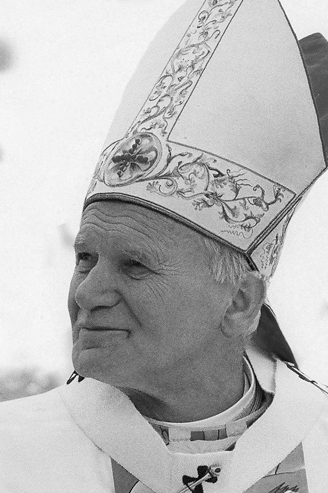
ADDRESS OF HIS HOLINESS JOHN PAUL II AT THE CONCLUSION OF THE STATIONS OF THE CROSS AT THE COLOSSEUM Good Friday, 13 April 1979 When we make the Way of the Cross from one station to the next, in spirit we are always at the spot wherethis journey had its “historical” place: where it[…]Continue reading→
A Meditation for Good Friday: How To Undo the Effects of Sin?
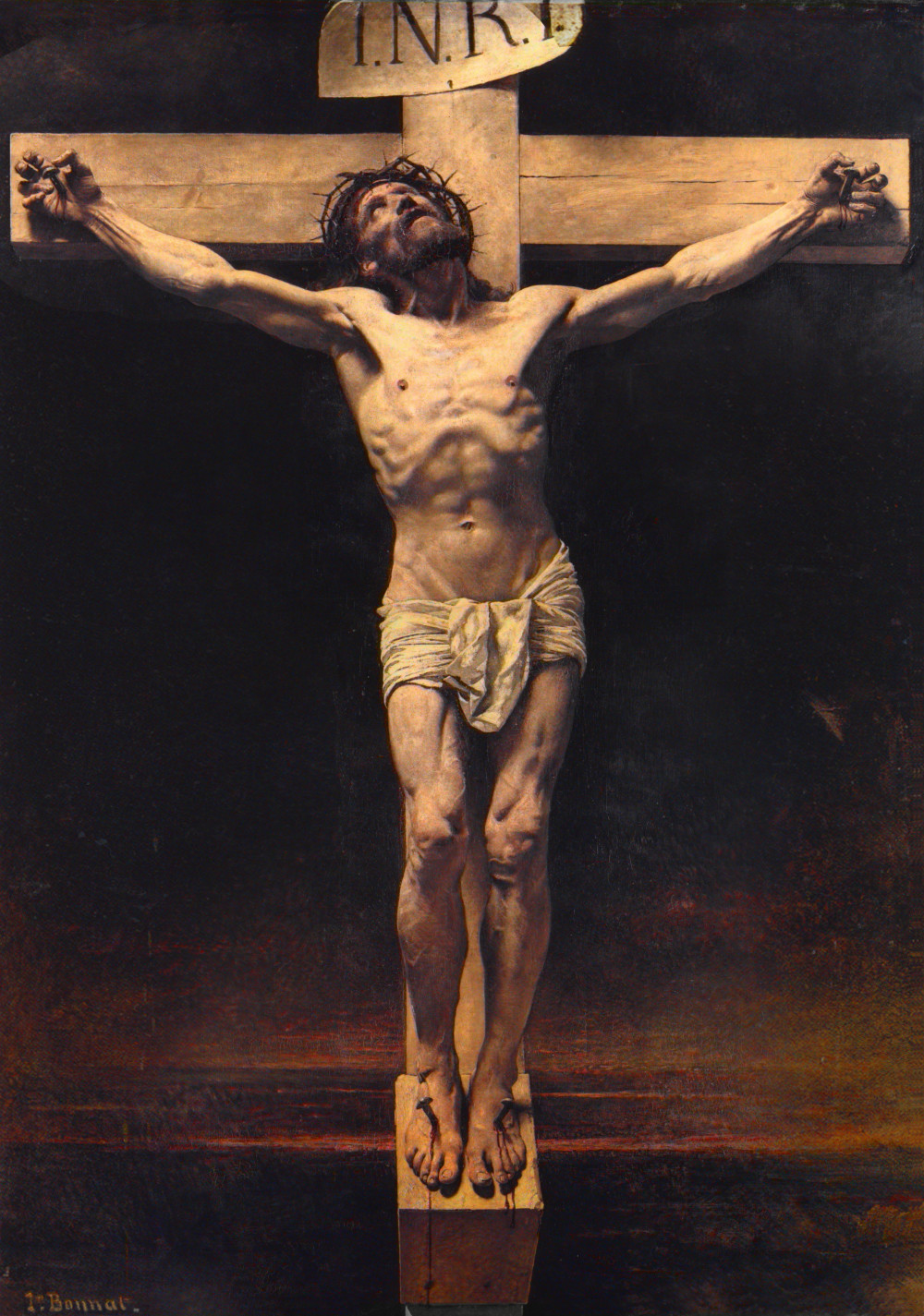
Cardinal Newman, now Saint John Henry Newman, was a towering figure of nineteenth-century Catholicism who is almost universally admired. I say “almost” because not everyone likes him. I knew a priest once, Arthur Caulkins, who has become disenchanted with Newman. As an undergraduate Arthur had been enamoured of Newman, and this interest continued when he[…]Continue reading→
Pope Benedict’s Last Holy Thursday Homily
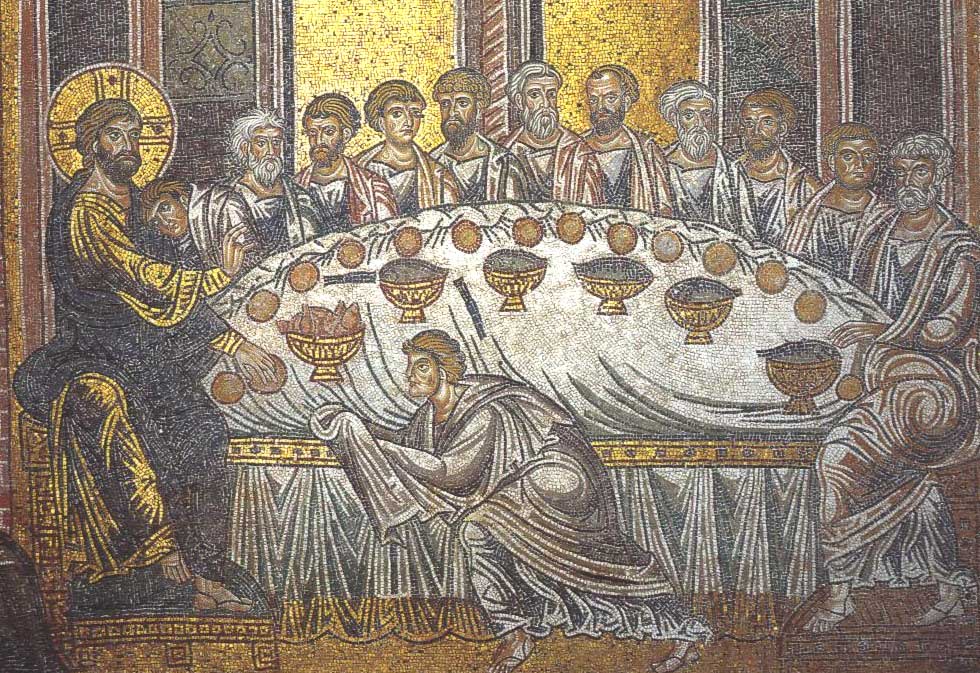
MASS OF THE LORD’S SUPPER HOMILY OF HIS HOLINESS BENEDICT XVI Basilica of St John Lateran Holy Thursday, 5 April 2012 Photo Gallery (Video) Dear Brothers and Sisters! Holy Thursday is not only the day of the institution of the Most Holy Eucharist, whose splendour bathes all else and in some ways draws it to[…]Continue reading→