
Quinquagesima Sunday
When I was a child, I spoke as child; I understood as a child, I thought as a child. But when I became a man, I put away the things of a child (1 Cor. 13:11).
As we mark today the Sunday before Ash Wednesday, Quinquagesima Sunday, the Apostle’s words give direction to what our thoughts and intentions ought to be as we prepare to undertake the discipline of Lent – a desire to grow in Christian maturity, to understand with greater meaning what it means to belong to Christ, to be in Christ. In his second epistle to the Corinthians, St. Paul declares: If anyone is in Christ, he is a new creation. The old has passed away; behold, the new has come (2 Cor. 5:17). This is an ontological assertion because it concerns our very nature or substance. Through grace, it can be rightly asserted that our substance or human nature becomes super substantial. For those who have been baptized, there is more to us than the merely natural. This truth is beautifully expressed in the rite of commingling at the Offertory of the Mass. O God, who in creating human nature, didst wonderfully dignify it, and hast still more wonderfully restored it, grant that by the Mystery of this water and wine, we may become partakers of His divine nature, who deigned to become partaker of our human nature.
The cycle of the liturgical year revolves around the two great mysteries of our faith: the Mystery of the Incarnation which have celebrated in the Advent and Christmas seasons, and the Mystery of the Redemption which will engage us throughout the holy season of Lent that begins this week, and the Easter Mystery that follows it. It is all of course, a unified whole but in its different elements we never tire of these commemorations because Christ Our Saviour is our very life. As we hear in the last Gospel at the end of Mass, in Him was life, and the life was the Light of men; and the Light shines in the darkness, and the darkness did not comprehend it. These familiar words express great truths and they are no less words of great consolation for us who still see only through a glass in a dark manner (1 Cor. 13:12).
Our Lenten discipline of prayer, fasting, penance and almsgiving, privileged practices hallowed through the ages, are an invitation to purification of our lives most certainly, but more importantly, are also an incentive to greater conformity to Christ Our Saviour, a more faithful adhesion to His law and the renewal of our being in Christ. Though most of us received our Baptism as infants, like the blind man of Jericho that our Gospel text speaks of, we also experienced a moment of illumination, of awakening when we came to understand who Christ Our Saviour truly is and who we are in Him; that is, in Christ. Then everything changed for us and we saw everything in the light of God’s truth. This is a grace that we must implore whenever we pray for the conversion of poor sinners.
If anyone is in Christ, he is a new creation. The old has passed away; behold, the new has come (2 Cor. 5:17). Baptism effects an ontological change in our very nature. The very substance of who we are is indelibly changed. The repentance that Lent calls us to is in fact an invitation to transformation in Christ. In his second epistle, St Peter reminds us: His divine power has granted to us all things that pertain to life and godliness, through the knowledge of him who called us to his own glory and excellence, by which he has granted to us his precious and very great promises, so that through them you may become partakers of the divine nature, having escaped from the corruption that is in the world because of sinful desire. For this very reason, make every effort to supplement your faith with virtue, and virtue with knowledge, and knowledge with self-control, and self-control with steadfastness, and steadfastness with godliness, and godliness with brotherly affection, and brotherly affection with love. For if these qualities are yours and are increasing, they keep you from being ineffective or unfruitful in the knowledge of our Lord Jesus Christ. For whoever lacks these qualities is so nearsighted that he is blind, having forgotten that he was cleansed from his former sins. Therefore, brothers, be all the more diligent to confirm your calling and election, for if you practice these qualities you will never fall. For in this way there will be richly provided for you an entrance into the eternal kingdom of our Lord and Savior Jesus Christ (2 Pt. 1:3-11).
We are given in these words a unified vision of Lenten discipline which has as its goal our growth and maturity in the Christian life and a conscious awareness of our participation in the divine nature or theosis, to use an ancient Christian term. The reception of ashes is a public proclamation of our willingness to undertake the discipline of Lent. Though there is no difference between the imposition of ashes either through their sprinkling or through a mark received on our foreheads, the North American custom of signing the Cross on our foreheads is in my opinion, more effective in providing the world with a corporate witness of repentance. This year, our world which is so greatly in need of both repentance and of Christian hope will be deprived of such a witness for the most part. Nevertheless, we must through the sobriety of our lives provide a constant witness not only for the world but also for so many in the Church who are now content to practise their faith virtually and who have little or no appreciation for penance.
In the end, what matters most is faith working through love (Gal. 5:6). If we truly believe what our faith teaches us about God (theology) and ourselves in relation to Him (theological anthropology), then we will understand that this yearly call to conversion and penance must above all things be characterised by an increase in prayer and a deeper devotional life for we cannot presume to know anything of God or God Himself unless we make a serious attempt at prayer. The penance and almsgiving of this season are corollaries of prayer for unless they are born of prayer they can easily devolve either into feats of physical endurance or endeavours in so-called social justice.
As we give some serious and sober thought to our Lenten discipline, let us desire most a renewal of our nature in the grace of God, the confirmation of our call to election in a lively faith, generous charity and joyful hope. Let us generously undertake Lenten discipline but let us also be generous with the sacrifices and penance that our times demand of us. These are perhaps of a greater value for they are given to us by the Providence of God. Therefore, we take to heart these ever-relevant words of the Apostle: Do not be conformed to this world, but be transformed by the renewal of your mind, that by testing you may discern what is the will of God, what is good and acceptable and perfect (Rom. 12:2).

Remembering Father Alphonse de Valk
(Today marks the sixth anniversary of the death of Father Alphonse de Valk, C.S.B., a faithful, courageous and indefatigable Basilian priest, pro-life-and-family apostle, and the founder of Catholic Insight magazine. Here is what we wrote those on his entering into eternity five years ago, as we continue to remember him in our prayers and thoughts)[…]Continue reading→

Divine Mercy Sunday – An Echo of Every Mass
Reach out your hand and put it in my side. Do not doubt but believe’… ‘My Lord and my God!’ (Jn. 20:18)). Today is Divine Mercy Sunday, and as we celebrate the end of the Easter Octave, we contemplate the wounded side of our Saviour, the Church’s source of life. On Good Friday in the[…]Continue reading→

Saint Stanislaus of Szczepanów
We celebrate Saint Stanislaus today (+ April 11, 1079), in light of this Easter Octave, a bishop and martyr who accepted the episcopacy only at the direct order of Pope Alexander II. He proved a wise and courageous leader of his flock, put to death by his own king, Boleslaus, for rebuking the monarch’s ‘immoral[…]Continue reading→
First Holy Communion: Sermon from May 16, 1943
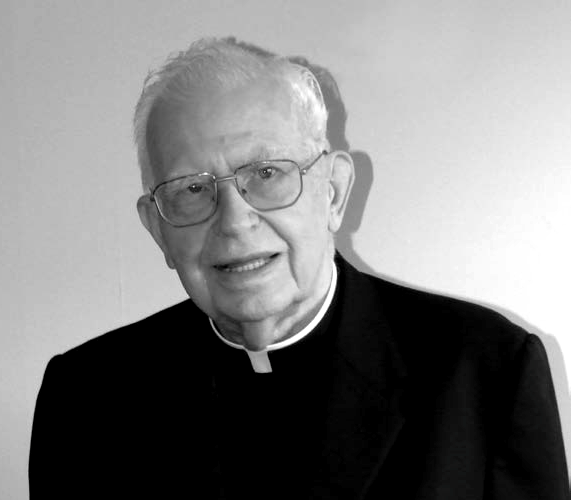
Here is a sermon from the good old days by +Rev. Msgr. Vincent Nicholas Foy (August 14, 1915 – March 13, 2017), from 1943. Readers may recall that Pope Saint Pius X, by the decree Quam Singulari in 1910, lowered the customary age of reception of Holy Communion – after the rigours of the plague[…]Continue reading→
In the Glorious Light of Easter, Alleluia!
Set your minds on things that are above, not on things that are on earth, for you have died, and your life is hidden with Christ in God. When Christ who is your life is revealed, then you also will be revealed with him in glory (Col. 3:3-4). The Resurrection of Our Lord and Saviour[…]Continue reading→
An Ancient Homily for Holy Saturday
The time between Good Friday and Easter Sunday is one of waiting, in silence, as the world wonders – anticipates – what will happen, after the death of Christ. We re-live this time each year in the anamnesis of our liturgy, and in turn look forward to the glorious re-creation of all things at the[…]Continue reading→
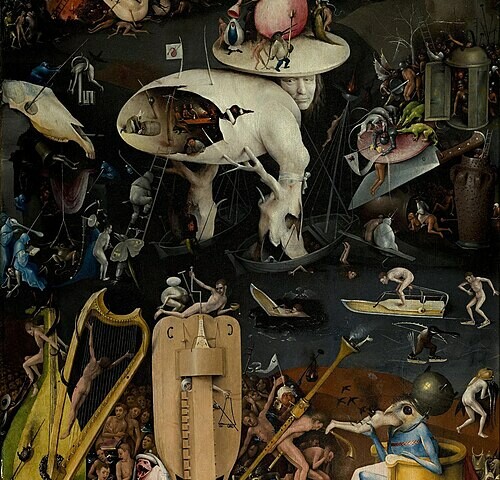
Europe’s Long Descent
(As we meditate on this day on Christ’s burial, and His descent into hell, it is fitting to ponder here with contributor Peter Marcus how the world seems to be heading there as well. The difference is that, although God cannot ‘redeem’ hell, nor those therein, He can and did redeem the world. There is[…]Continue reading→
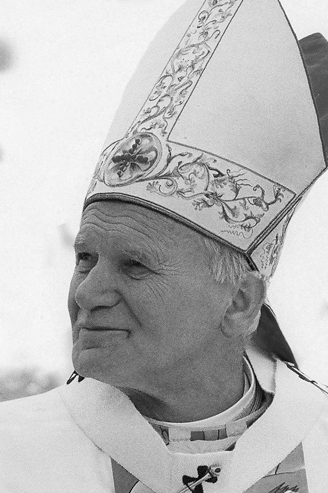
Pope Saint John Paul II’s First Good Friday Homily
ADDRESS OF HIS HOLINESS JOHN PAUL II AT THE CONCLUSION OF THE STATIONS OF THE CROSS AT THE COLOSSEUM Good Friday, 13 April 1979 When we make the Way of the Cross from one station to the next, in spirit we are always at the spot wherethis journey had its “historical” place: where it[…]Continue reading→
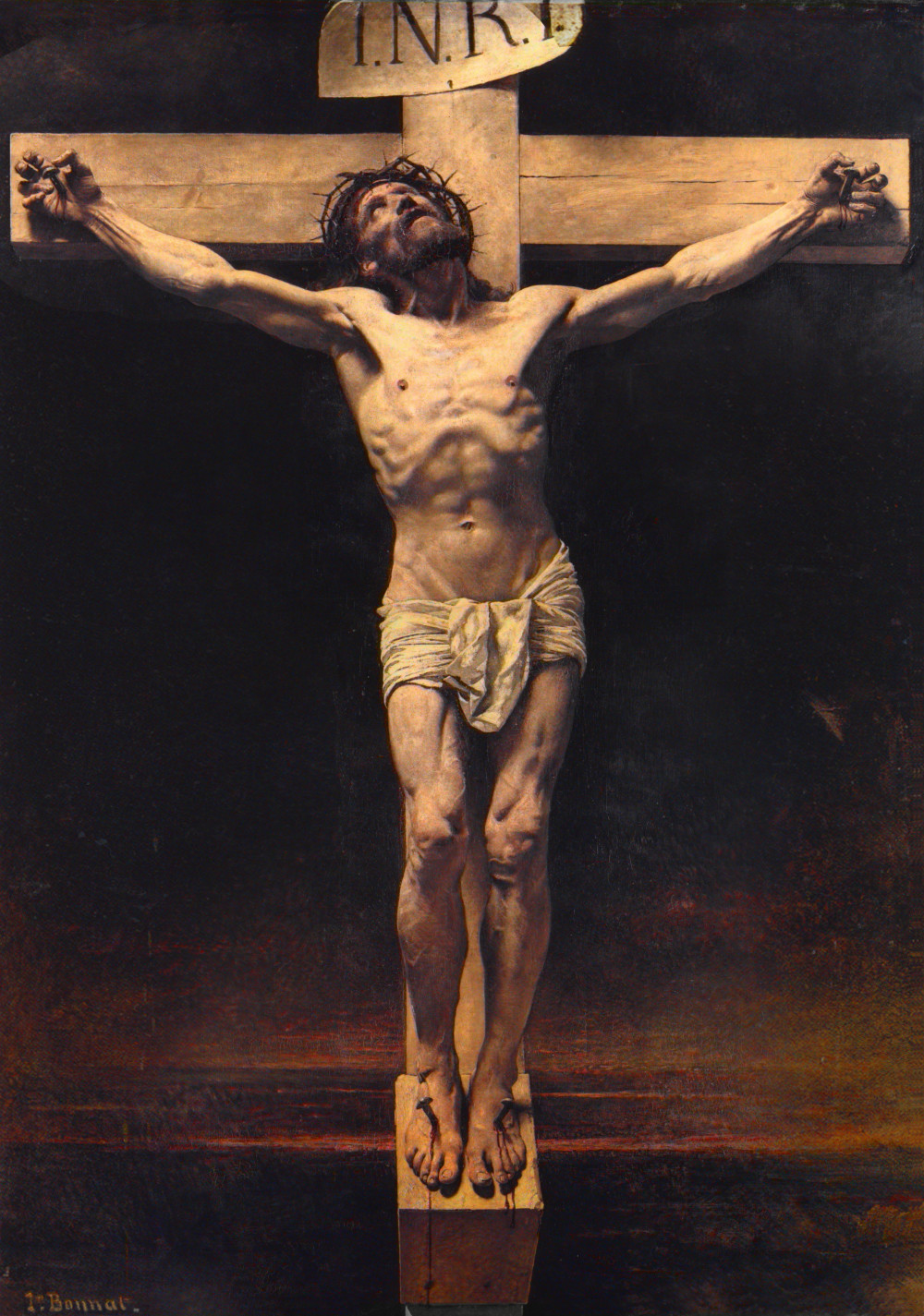
A Meditation for Good Friday: How To Undo the Effects of Sin?
Cardinal Newman, now Saint John Henry Newman, was a towering figure of nineteenth-century Catholicism who is almost universally admired. I say “almost” because not everyone likes him. I knew a priest once, Arthur Caulkins, who has become disenchanted with Newman. As an undergraduate Arthur had been enamoured of Newman, and this interest continued when he[…]Continue reading→
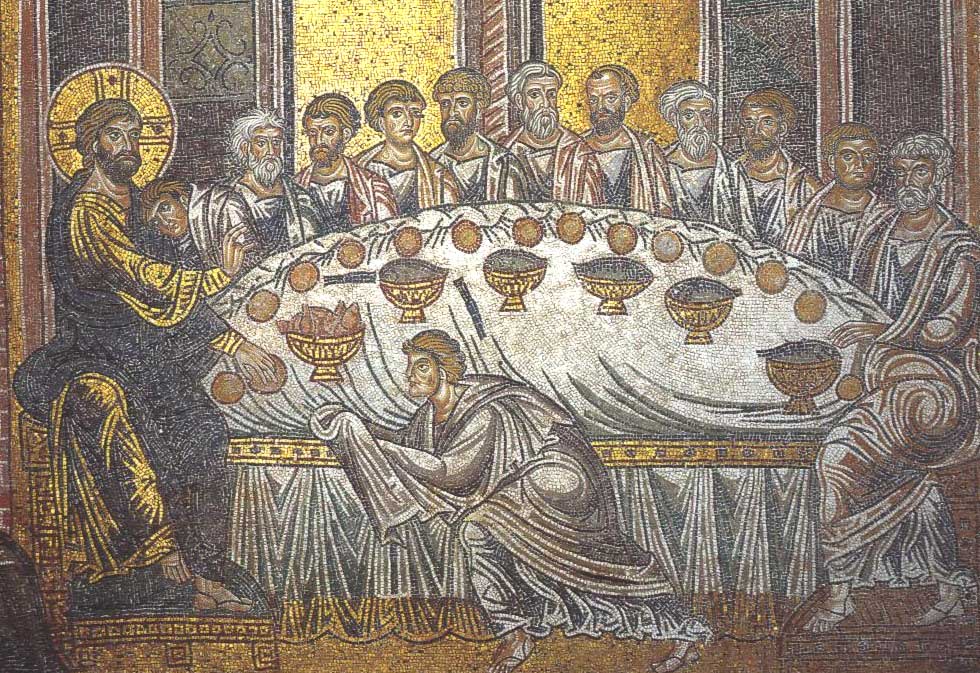
Pope Benedict’s Last Holy Thursday Homily
MASS OF THE LORD’S SUPPER HOMILY OF HIS HOLINESS BENEDICT XVI Basilica of St John Lateran Holy Thursday, 5 April 2012 Photo Gallery (Video) Dear Brothers and Sisters! Holy Thursday is not only the day of the institution of the Most Holy Eucharist, whose splendour bathes all else and in some ways draws it to[…]Continue reading→