
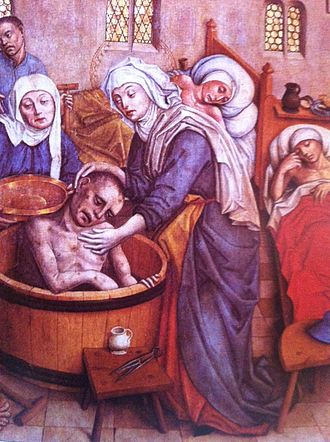
Fraternal Trust and Care of the Sick
As has been the custom for the last thirty-eight years, on Thursday 11 February, precisely on the liturgical memorial of Our Lady of Lourdes, the Pope publishes a message for the World Day of the Sick.
It was St Pope John Paul II who, under the inspiration of the Holy Spirit, who started this holy initiative. In his first message for the First annual World Day of the Sick, which took place on the memorial of Our Lady of Lourdes, Patroness of the Sick, 11th of February 1993, the Polish Pope wrote:
“The Christian community has always paid particular attention to the sick and the world of suffering in its multiple manifestations. In the wake of such a long tradition, the universal Church, with a renewed spirit of service, is preparing to celebrate the first World Day of the Sick as a special occasion for growth, with an attitude of listening, reflection, and effective commitment in the face of the great mystery of pain and illness. This day, which, beginning in February 1993, will be celebrated every year on the commemoration of Our Lady of Lourdes, for all believers seeks to be ‘a special time of prayer and sharing, of offering one’s suffering for the good of the Church and of reminding everyone to see in his sick brother or sister the face of Christ who, by suffering, dying and rising, achieved the salvation of mankind’ (Letter Instituting the World Day of the Sick, 13 May 1992, n. 3)” (nro.1).
The three crucial verbs which underline every message for the World Day of the Sick, including the present one of 2021, are listening, reflection and effective commitment. For instance, in the message of this year, which is entitled “You have but one teacher and you are all brothers” (Mt 23:8). A trust-based relationship to guide care for the sick, Pope Francis is highlighting the issue of trust which is pivotal in order that appropriate care is provided to the sick and to those who are, indeed, suffering. Without trust no care can really be given.
Obviously trust has to be earned. Hence, the fundamental attitude that those who are called to care and accompany the sick should have is that they always keep before their eyes that the ones who are asking for their committed care are, none other than their very brothers and sisters! Both the caregivers and those who receive care have one common humanity which, first and foremost, defines them personally but, at the same time, connects them together as a family. If they are brother and sisters to one another it is the word fraternity which underpins their reciprocal relationship. In point number 4 of his message Pope Francis writes the following:
“If a therapy is to be effective, it must have a relational aspect, for this enables a holistic approach to the patient. Emphasizing this aspect can help doctors, nurses, professionals and volunteers to feel responsible for accompanying patients on a path of healing grounded in a trusting interpersonal relationship (cf. New Charter for Health Care Workers [2016]. This creates a covenant between those in need of care and those who provide that care, a covenant based on mutual trust and respect, openness and availability. This will help to overcome defensive attitudes, respect the dignity of the sick, safeguard the professionalism of healthcare workers and foster a good relationship with the families of patients”.
When one reads carefully into this year’s message for the World Day of the Sick one clearly notices that this covenant-relationship between the caregivers and care recipients, based on the mutual trust and respect, openness and availability do not occur into a vacuum. Here we are not simply talking about philanthropy but charity. In other words, giving one’s life literally for others. According to the Christian point of view, charity has a precise name: Jesus Christ. In the Gospel of John Jesus says to Nicodemus: For God so loved the world that he gave his only Son, that whoever believes in him should not perish but have eternal life. For God sent the Son into the world, not to condemn the world, but that the world might be saved through him (John 3:16-17).
In his message Pope Francis openly denounces those who preach but do not live up what they preach. He said: “When our faith is reduced to empty words, unconcerned with the lives and needs of others, the creed we profess proves inconsistent with the life we lead. The danger is real. That is why Jesus uses strong language about the peril of falling into self-idolatry. He tells us: ‘You have but one teacher and you are all brothers’ (v. 8).”
What a striking contrast are these words with those who are puffed by their ambition and pride, thus alluring themselves that they are the teachers, the moralists and the holy ones others should follow. Who can blame Jesus who said of these people: The scribes and the Pharisees sit on Moses’ seat; so practice and observe whatever they tell you, but not what they do; for they preach, but do not practice. They bind heavy burdens, hard to bear, and lay them on men’s shoulders; but they themselves will not move them with their finger. They do all their deeds to be seen by men; for they make their phylacteries broad and their fringes long, and they love the place of honor at feasts and the best seats in the synagogues, and salutations in the market places, and being called rabbi by men (Matt. 23:2-7)? In this case there is a pyramid model wherein the most powerful are the ones who rule the uneducated majority. Such a model is a splendid fertile ground for hypocrisy. The Pope’s comment is spot on when he said: “Jesus’ criticism of those who “preach but do not practise’ (v. 3) is helpful always and everywhere, since none of us is immune to the grave evil of hypocrisy, which prevents us from flourishing as children of the one Father, called to live universal fraternity” (nro. 1).
In his Letter to the Faithful, St Francis of Assisi writes: “We be servants and subject to every human creature for God’s sake. And the Spirit of the Lord will rest upon all those men and women who have done and persevered in these things and it will make a home and dwelling place in them. And they will be the children of the heavenly Father, Whose works they do. And they are spouses, brothers and mothers of our Lord Jesus Christ. We are spouses when the faithful soul is united by the Holy Spirit to our Lord Jesus Christ. We are brothers, moreover, when we do the will of His Father Who is in heaven; mothers when we carry Him in our heart and body through love and a pure and sincere conscience; and give Him birth through a holy activity, which must shine before others by example”.
Following closely this Franciscan perspective Pope Francis said: “Before the needs of our brothers and sisters, Jesus asks us to respond in a way completely contrary to such hypocrisy. He asks us to stop and listen, to establish a direct and personal relationship with others, to feel empathy and compassion, and to let their suffering become our own as we seek to serve them (cf. Lk 10:30-35)”.
Experience, particularly that of the covid-19 pandemic, has been continually showing how many are drawing closer to Christ who is suffering in the sick people. The Holy Father said: “Yet the pandemic has also highlighted the dedication and generosity of healthcare personnel, volunteers, support staff, priests, men and women religious, all of whom have helped, treated, comforted and served so many of the sick and their families with professionalism, self-giving, responsibility and love of neighbour. A silent multitude of men and women, they chose not to look the other way but to share the suffering of patients, whom they saw as neighbours and members of our one human family.”
Deeply encouraged by such a convincing witness of these fully-fledged Good Samaritans, let us keep showing “fraternal love in Christ” (no.3) by giving our utmost “support and consolation to the sick in their suffering” (no.3). What a great fraternal solidarity is this from fraternal trust to fraternal care!

Remembering Father Alphonse de Valk
(Today marks the sixth anniversary of the death of Father Alphonse de Valk, C.S.B., a faithful, courageous and indefatigable Basilian priest, pro-life-and-family apostle, and the founder of Catholic Insight magazine. Here is what we wrote those on his entering into eternity five years ago, as we continue to remember him in our prayers and thoughts)[…]Continue reading→

Divine Mercy Sunday – An Echo of Every Mass
Reach out your hand and put it in my side. Do not doubt but believe’… ‘My Lord and my God!’ (Jn. 20:18)). Today is Divine Mercy Sunday, and as we celebrate the end of the Easter Octave, we contemplate the wounded side of our Saviour, the Church’s source of life. On Good Friday in the[…]Continue reading→

Saint Stanislaus of Szczepanów
We celebrate Saint Stanislaus today (+ April 11, 1079), in light of this Easter Octave, a bishop and martyr who accepted the episcopacy only at the direct order of Pope Alexander II. He proved a wise and courageous leader of his flock, put to death by his own king, Boleslaus, for rebuking the monarch’s ‘immoral[…]Continue reading→

First Holy Communion: Sermon from May 16, 1943
Here is a sermon from the good old days by +Rev. Msgr. Vincent Nicholas Foy (August 14, 1915 – March 13, 2017), from 1943. Readers may recall that Pope Saint Pius X, by the decree Quam Singulari in 1910, lowered the customary age of reception of Holy Communion – after the rigours of the plague[…]Continue reading→

In the Glorious Light of Easter, Alleluia!
Set your minds on things that are above, not on things that are on earth, for you have died, and your life is hidden with Christ in God. When Christ who is your life is revealed, then you also will be revealed with him in glory (Col. 3:3-4). The Resurrection of Our Lord and Saviour[…]Continue reading→

An Ancient Homily for Holy Saturday
The time between Good Friday and Easter Sunday is one of waiting, in silence, as the world wonders – anticipates – what will happen, after the death of Christ. We re-live this time each year in the anamnesis of our liturgy, and in turn look forward to the glorious re-creation of all things at the[…]Continue reading→

Europe’s Long Descent
(As we meditate on this day on Christ’s burial, and His descent into hell, it is fitting to ponder here with contributor Peter Marcus how the world seems to be heading there as well. The difference is that, although God cannot ‘redeem’ hell, nor those therein, He can and did redeem the world. There is[…]Continue reading→
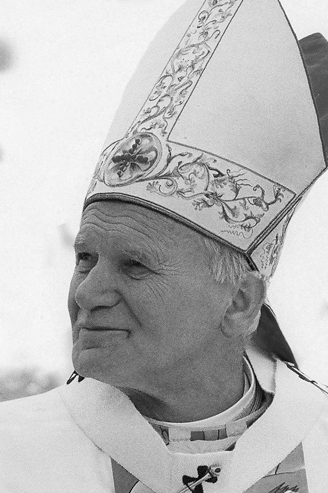
Pope Saint John Paul II’s First Good Friday Homily
ADDRESS OF HIS HOLINESS JOHN PAUL II AT THE CONCLUSION OF THE STATIONS OF THE CROSS AT THE COLOSSEUM Good Friday, 13 April 1979 When we make the Way of the Cross from one station to the next, in spirit we are always at the spot wherethis journey had its “historical” place: where it[…]Continue reading→
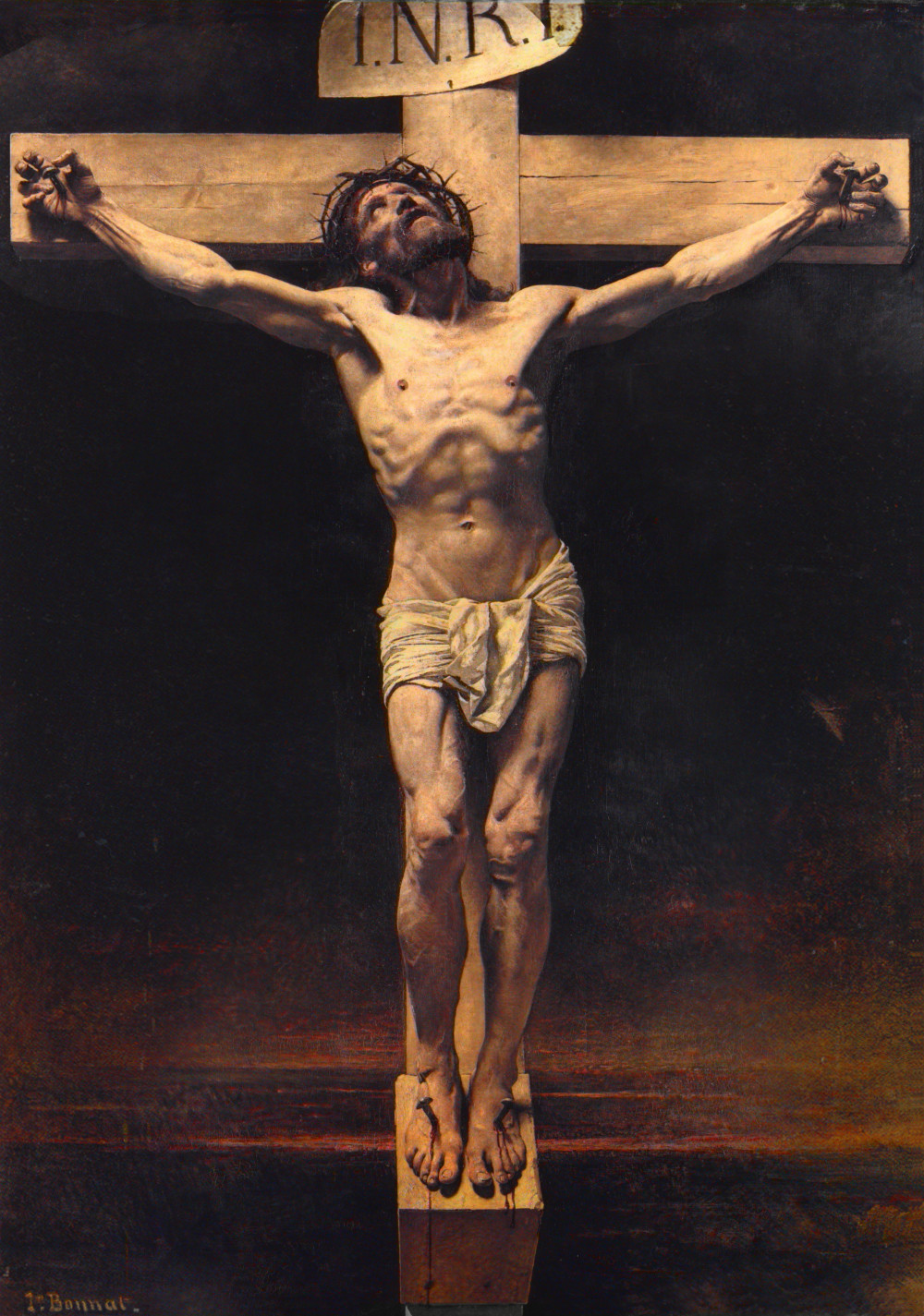
A Meditation for Good Friday: How To Undo the Effects of Sin?
Cardinal Newman, now Saint John Henry Newman, was a towering figure of nineteenth-century Catholicism who is almost universally admired. I say “almost” because not everyone likes him. I knew a priest once, Arthur Caulkins, who has become disenchanted with Newman. As an undergraduate Arthur had been enamoured of Newman, and this interest continued when he[…]Continue reading→
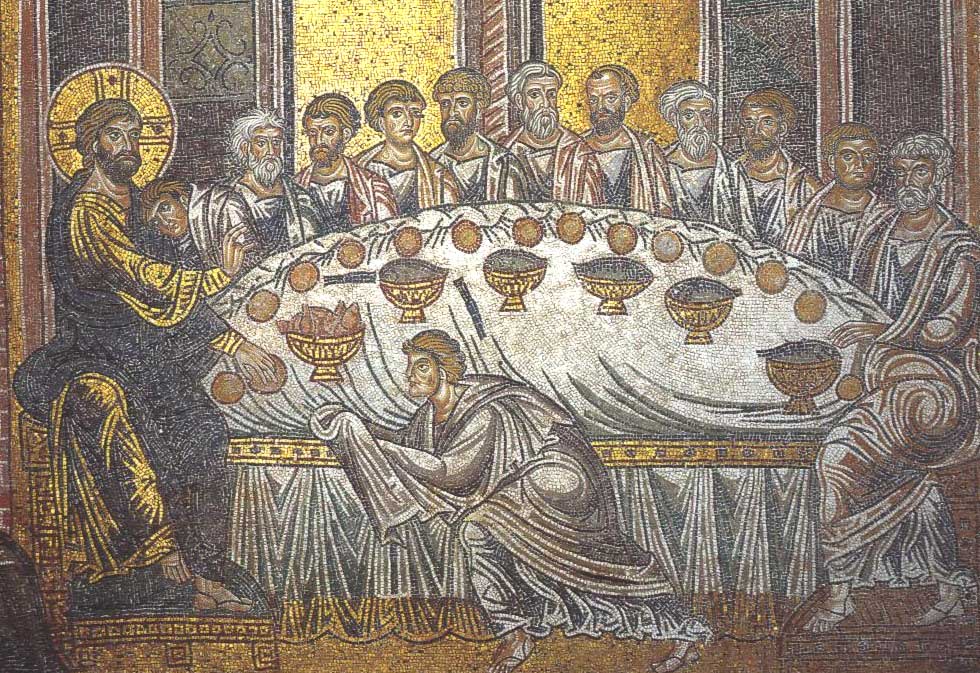
Pope Benedict’s Last Holy Thursday Homily
MASS OF THE LORD’S SUPPER HOMILY OF HIS HOLINESS BENEDICT XVI Basilica of St John Lateran Holy Thursday, 5 April 2012 Photo Gallery (Video) Dear Brothers and Sisters! Holy Thursday is not only the day of the institution of the Most Holy Eucharist, whose splendour bathes all else and in some ways draws it to[…]Continue reading→