
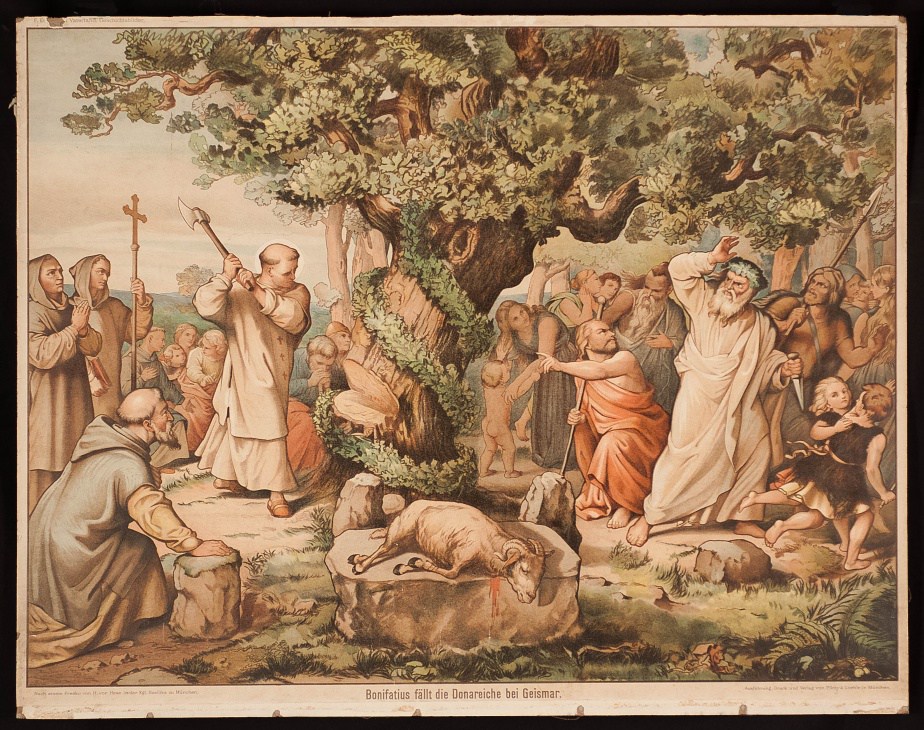
Boniface’s Good Work
Saint Boniface, bishop and martyr, was hacked to death by a band of Frisian idol-worshippers on this day, June 5, 754, along with 52 of his companions. His life was one of tireless struggle to convert the pagans of Germania, steeped in dark, superstitious practices. The famous story of his boldly chopping down the ‘Donar Oak’, which the Frisians held so sacred that any man who harmed the tree would himself die, has become a symbol of the freedom of Christianity, contrasted to the slavery to false gods, which are little more than a mask for deeper, demonic forces, which seem, of late, again to be coming to the fore. .
Winfrid, or Wynryth, was a monk, sent on his missionary journey to the north of Germany by Pope Gregory VII, who renamed him ‘Boniface’, the ‘one who does good’. The Pope’s choice, like Christ’s of Peter’s, was prophetic, for Boniface indeed did much good, more or less converting what we now know as ‘Europe’ (he is one of her primary patrons), dedicating his life to the cause of Truth, and leading others thereto, regardless of the difficulties and labours.
Boniface’s first mission to the pagans was unsuccessful, and it was only after he had received this specific mandate from the Holy Father, that his efforts turned the tide of incipient Germania towards Christianity, culminating in shedding his blood. Our work for God must always bears the most fruit when done under obedience of some sort, manifesting the voluntas Dei through properly constituted authority.
Mediated as it is by fallible human creatures, who as any honest introspection will reveal, are quite imperfect, authority is not often wielded well – I need not belabour the point in our Covidian context. But in the end God brings great good from the submission of our intellect and will, what the Dogmatic Constitution on the Church, Lumen Gentium, terms the obsequio animi, the assent of our minds. It is only so that we can in the end fulfill the true ‘good’ that God desires for us and for all.
Without the Faith, as Belloc never tired of pointing out, Europe is simply a geographical expression, dotted with some valuable monuments of past glory, and even these relics are in proximate danger of being lost, torn down by the neo-pagans, or like Hagia Sophia, turned into mosque. I put my own money on the Muslims, but one never knows the future – otherwise, it wouldn’t be the future. Boniface would not be much impressed by what has become of his Germany – he may well have wielded a club at the recent synods.
And before we settle into our own complacence, we should keep in our daily minds that preserving that civilization and culture – all that Christ through His Catholic Church given us – is hard work, requiring that we ourselves read, pray, study, learn, and immerse ourselves in all that is true and good, and ensure our children have the same. Inertia and a laissez-faire complacence will only allow the school system, the state, the media, to re-paganize ourselves and our children, a whole generation bereft of the classics and the catechism. We neo-Catholics immersed in a vague, coddled, environmentalistic syncretism, would have left the Donar Oak standing, and the pagans wallowing in their misery and ignorance.
Without the courage and constancy of Boniface and all who came after him, we would still be mired in meaningless myths, sacrificing our children to false and bloodthirsty gods…to whom to which practices we are now lurching in return, like that rough beast of Yeats’, slouching towards…well, towards what?.
But ’tis never too late to wield our metaphorical axes, and lay them to the root.

Carney’s Amoral Majority
After five defections – euphemistically described as ‘crossing the floor’ – and three by-elections, Mark Carney and his Liberals how have their coveted majority. One wonders what bowls of pottage were offered in back-room deals. In the archaic monarchical system that is the Dominion of Canada, this majority allows the newly-minted Prime Minister to rule[…]Continue reading→

Saint Kateri , Canada’s Protectress
This was the title given to Saint Kateri Tekakwitha, by Pope Benedict XVI, when he canonized her on October 28th, 2012, along with six others, in Saint Peter’ Square (she had been beatified by Pope John Paul II back in 1980). With Saint Joseph as our protector, along with the Canadian martyrs, we seem to[…]Continue reading→

A Tale of Two Benedicts
A grace-filled Holy Week to all our readers! As we await and prepare for the Resurrection about to dawn upon us, we might keep in mind two Benedicts: Pope Emeritus Benedict XVI, requiescat in pace, elected on this day in 2005; and today’s commemoration of the mystic pilgrim, Benedict Joseph Labre, who died on this[…]Continue reading→

My Name is Bernadette
April 16th is a propitious day, for besides the anniversary of Father de Valk’s death, who founded Catholic Insight in its print form decades ago, and the commemoration of the ‘two Benedicts’, mentioned in accompanying posts, today we also recall Saint Bernadette Soubirous, the young visionary to whom the Virgin Mary appeared numerous times at[…]Continue reading→

Saint Lydwina of Schiedam and Suffering Joyfully
Saint Lydwina of Schiedam (1380 – 1433) was one of the countless and glorious ‘victim souls’ in the history of the Church, those whose lives are filled with suffering, often of an unimaginable intensity, but who suffer joyfully. She was a fifteen-year old Dutch girl, out skating one day, when she fell and broke one[…]Continue reading→

The Glorious Martyrdoms of Martin and Maximus
As we enter into Eastertide, we recall on this 13th of April Pope Saint Martin I (+655), one of the noblest, if most tragic, of the successors of Saint Peter. Born in Umbria, Italy, he was of noble lineage, with great intelligence combined with charity and love of the poor and the Church. While still[…]Continue reading→

Saint Stanislaus of Szczepanów
We celebrate Saint Stanislaus today (+ April 11, 1079), in light of this Easter Octave, a bishop and martyr who accepted the episcopacy only at the direct order of Pope Alexander II. He proved a wise and courageous leader of his flock, put to death by his own king, Boleslaus, for rebuking the monarch’s ‘immoral[…]Continue reading→
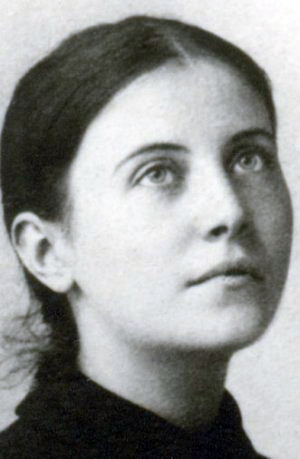
Saint Gemma Galgani
On this April 11th, in 1903 – the same year that the Italian Guiseppe Sarto was elected Pope later that summer as Pius X – a lovely, young Italian woman died, by the name of Gemma Galgani. She lived a brief life of 24 years, as did a number of other young saints, including Pier[…]Continue reading→
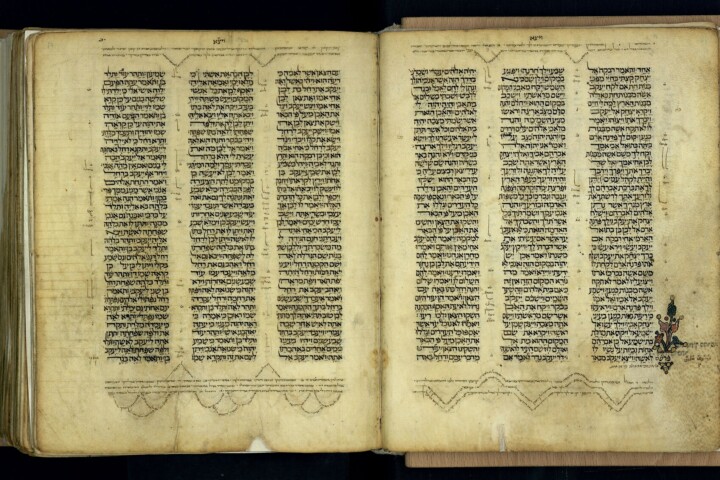
An Ideological and Improper Translation
I noticed something odd with the psalm reading at Mass the other day. Our bishops’ conference here in Canada has decreed that the Mass in English – Novus Ordo – use the ‘NRSV’, the ‘New Revised Standard Version’, an ‘updated’ translation of the original RSV, first published in 1952. This ‘new translation’ has the tendency[…]Continue reading→
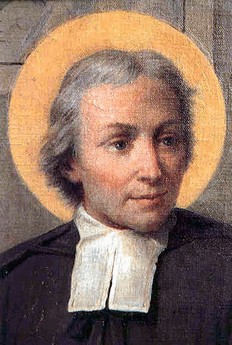
Saint Jean-Baptiste de la Salle: A Teacher for Teachers
Jean-Baptiste de la Salle (1651 – 1719), a French nobleman, ordained a priest, founded the first order in the Church’s history entirely without priests, and this came about almost by accident. I say ‘almost’, for, of course, there are no accidents with God. Destined for ordination from an early age, Jean-Baptiste never looked back, even[…]Continue reading→