
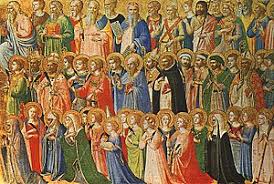
The Patronage of Saints
When the Church canonizes some of her faithful as ‘saints’, she is declaring that they lived a Christian life more perfectly, practising charity in an ‘heroic’ way, and this is done for two reasons: First, so that they may act as exemplars for the rest of us on how to live a Christian life more perfectly, above and beyond the minimum. Second, the saints also act as intercessors, so that we may pray to – or more properly through – them to the Triune God, so that ‘Christ may be glorified in His saints’.
Every canonized saint may also act as a ‘patron’ of some aspect of the Christian life, whether this be for particular places, dioceses, parishes, needs, purposes, vocations or anything else that may be required for salvation.
For more official purposes, such as for the patron of a diocese, these patrons are chosen through the Holy See, specifically the Congregation for Divine worship and the Discipline of the Sacraments, in dialogue with the diocese and the local church. The saint decided upon is usually in accord with its people and history. For example, my own diocese of Pembroke was first populated by Irish immigrants; hence, the choice of Saint Columbkille, the great missionary who brought the Faith from Ireland to the isle of Iona, and into Scotland.
The Holy Father may himself also choose patrons, such as Our Lady of Guadalupe as patroness of the Americas, as well as the unborn; Blessed Pier Giorgio Frassati as the patron of youth; Saint Thomas Aquinas of Catholic schools and education, and so on.
Then there are also patrons adopted by custom and tradition, not really formally approved, such as Saint Veronica, as the patron of photographers, for the perfect ‘icon’ left on her veil. There is also Joseph of Cupertino, patron of test-takers, a struggling seminarian, who knew only one Scriptural passage for his final exam before ordination; and wouldn’t you know, it was just the very one the bishop providentially chose.
Parents choose a patron for their children, in the name they bestow at Baptism, which should laudably be the name of a saint, or at least not ‘foreign to Christian sentiment’, and, years later, the same young people choose their own Confirmation sponsor to help guide them through life. I would add the custom of adopting the saint on one’s baptismal day – our spiritual birthday, along with our natural one – as fitting intercessors and exemplars. Of course, we should add our guardian angel, whose names, as Samson’s parents were told, are ‘mysterious’, for powerful they are indeed.
Then we may choose our own patrons saints for all that life entails, for our houses, our schools, our sports teams. Quebec, the most historically Catholic of our provinces, is filled with towns, cities, villages, streets named after saints. These are now often, ironically, decided by secular municipal councils across Canada; hence, the lack of saints’ names of late, although there is a back road I know of not far from here, embedded within a rural area filled with Protestants, which, by vote, was not long ago named after the Sacred Heart.
We may even choose patron saints for a particular occasion, such as a journey, a marriage, expectant mothers (Saint Gerard!), a funeral, a hike, a get-together, a pilgrimage. There are the popular go-to saints, such as Anthony for lost objects, Jude for desperate causes, Joseph for the universal Church and a happy death, Our Lady, well, for just about everything. We here in this fair Dominion should also develop a devotion to Saint Joseph as the patron of Canada, as well as the eight Jesuit Martyrs, Jean de Brebeuf and companions, as our nation’s secondary patrons. Then there is, of course, the mighty Saint Michael looking over the diocese of Toronto, its cathedral, and all of its apostolic work.
In this time of grace, we should adopt patron saints for all our needs, for the whole panoply of saints are waiting to hear from and intercede for us. For the kingdom of God is not far off, but all around us, in our very midst.
(This article first appeared on the Archdiocese of Toronto website).
Carney’s Amoral Majority
After five defections – euphemistically described as ‘crossing the floor’ – and three by-elections, Mark Carney and his Liberals how have their coveted majority. One wonders what bowls of pottage were offered in back-room deals. In the archaic monarchical system that is the Dominion of Canada, this majority allows the newly-minted Prime Minister to rule[…]Continue reading→

Saint Kateri , Canada’s Protectress
This was the title given to Saint Kateri Tekakwitha, by Pope Benedict XVI, when he canonized her on October 28th, 2012, along with six others, in Saint Peter’ Square (she had been beatified by Pope John Paul II back in 1980). With Saint Joseph as our protector, along with the Canadian martyrs, we seem to[…]Continue reading→

A Tale of Two Benedicts
A grace-filled Holy Week to all our readers! As we await and prepare for the Resurrection about to dawn upon us, we might keep in mind two Benedicts: Pope Emeritus Benedict XVI, requiescat in pace, elected on this day in 2005; and today’s commemoration of the mystic pilgrim, Benedict Joseph Labre, who died on this[…]Continue reading→

My Name is Bernadette
April 16th is a propitious day, for besides the anniversary of Father de Valk’s death, who founded Catholic Insight in its print form decades ago, and the commemoration of the ‘two Benedicts’, mentioned in accompanying posts, today we also recall Saint Bernadette Soubirous, the young visionary to whom the Virgin Mary appeared numerous times at[…]Continue reading→

Saint Lydwina of Schiedam and Suffering Joyfully
Saint Lydwina of Schiedam (1380 – 1433) was one of the countless and glorious ‘victim souls’ in the history of the Church, those whose lives are filled with suffering, often of an unimaginable intensity, but who suffer joyfully. She was a fifteen-year old Dutch girl, out skating one day, when she fell and broke one[…]Continue reading→

The Glorious Martyrdoms of Martin and Maximus
As we enter into Eastertide, we recall on this 13th of April Pope Saint Martin I (+655), one of the noblest, if most tragic, of the successors of Saint Peter. Born in Umbria, Italy, he was of noble lineage, with great intelligence combined with charity and love of the poor and the Church. While still[…]Continue reading→

Saint Stanislaus of Szczepanów
We celebrate Saint Stanislaus today (+ April 11, 1079), in light of this Easter Octave, a bishop and martyr who accepted the episcopacy only at the direct order of Pope Alexander II. He proved a wise and courageous leader of his flock, put to death by his own king, Boleslaus, for rebuking the monarch’s ‘immoral[…]Continue reading→
Saint Gemma Galgani
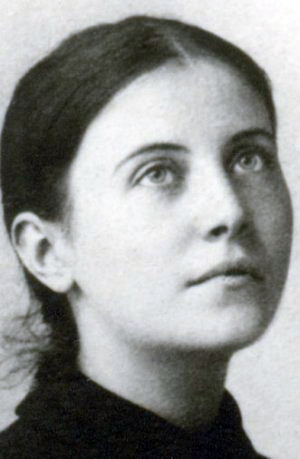
On this April 11th, in 1903 – the same year that the Italian Guiseppe Sarto was elected Pope later that summer as Pius X – a lovely, young Italian woman died, by the name of Gemma Galgani. She lived a brief life of 24 years, as did a number of other young saints, including Pier[…]Continue reading→
An Ideological and Improper Translation
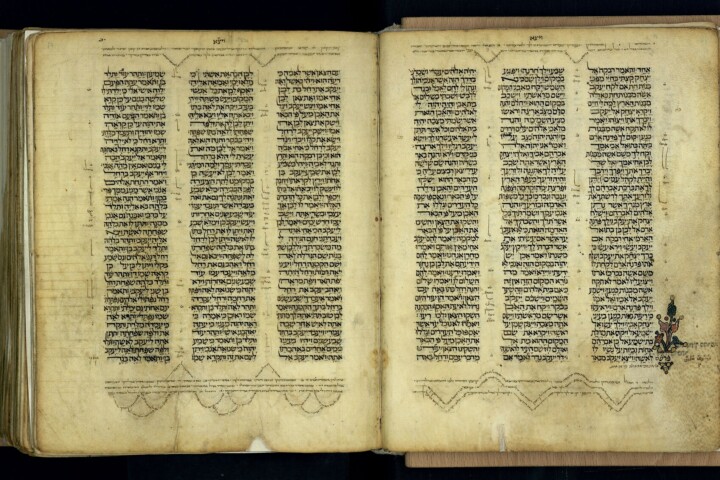
I noticed something odd with the psalm reading at Mass the other day. Our bishops’ conference here in Canada has decreed that the Mass in English – Novus Ordo – use the ‘NRSV’, the ‘New Revised Standard Version’, an ‘updated’ translation of the original RSV, first published in 1952. This ‘new translation’ has the tendency[…]Continue reading→
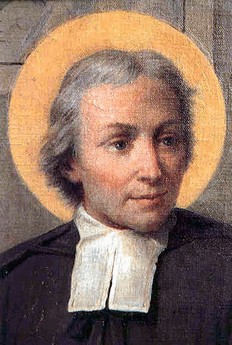
Saint Jean-Baptiste de la Salle: A Teacher for Teachers
Jean-Baptiste de la Salle (1651 – 1719), a French nobleman, ordained a priest, founded the first order in the Church’s history entirely without priests, and this came about almost by accident. I say ‘almost’, for, of course, there are no accidents with God. Destined for ordination from an early age, Jean-Baptiste never looked back, even[…]Continue reading→