
Modifying the Our Father: Tempting Indeed
As we approach the end of this calendar year, we should give thanks to God for all the blessings He has sent, for the multitude of gifts and graces, often hidden beneath what seems banality or even outright suffering. The primary purpose of this life is a journey to the next, and as Saint Augustine remarks in one of his sermons, it is a foolish man indeed who is so intent on the path and its scenery, that he forgets where he is going.
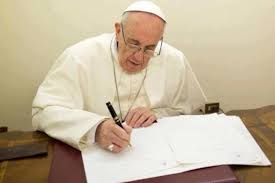
Yes, God does ‘test’ us in this life, a verb which, as a recent article in Crisis points out, is distinct from the notion of ‘tempting’, although their etymology is the same (and in the original Greek, are the same word). The author raises this in the context of Pope Francis’ speculation that the second last petition in the Lord’s prayer, ‘lead us not into temptation’, should be changed to something like ‘may we not fall into temptation’, minimizing God’s agency in our sins.
Fine, but the author of the article claims that it is not so much the verb ‘lead us’ (eisenéngkēs) that needs to be modified, but rather the noun ‘temptation’, for, as Saint James writes, God tempts no man, even though He does test us.
This distinction between ‘tempt’ and ‘test’ was already made in the Catechism in its commentary on the Our Father. As paragraph 2847 tells us, The Holy Spirit makes us discern between trials, which are necessary for the growth of the inner man,152 and temptation, which leads to sin and death.153
A ‘temptation’ is an occasion of sin and vice, while a ‘test’ should lead us to virtue; yet within temptation, as the Catechism continues, we must also discern between being tempted and consenting to temptation. It is only the latter that is a sin; the former is a kind of test.
Confusing? Well, this distinction, in concrete reality, is often not easy to distinguish, and usually depends upon our own choice to the various situations in which we find ourselves: Lead us not into temptation…implies a decision of the heart: “For where your treasure is, there will your heart be also…”
The key here is to rely upon God’s grace, a life immersed in prayer, docile to the promptings of God by the gifts of the Holy Spirit. This final petition of the Our Father is one of hope and confidence, for God truly wills our salvation through all the travails of this transitory life:
“If we live by the Spirit, let us also walk by the Spirit.” In this assent to the Holy Spirit the Father gives us strength. “No testing has overtaken you that is not common to man. God is faithful, and he will not let you be tempted beyond your strength, but with the temptation will also provide the way of escape, so that you may be able to endure it
Should the prayer be changed? Well, I would not be a great fan of adopting the verb ‘fall’, which implies a passivity in the moral life (just as I do not really believe in ‘falling in love’; should we not rather choose to bind ourselves to another by that most affective of bonds?). Added to that, I’m more or less with Father Frederick Faber in theological matters, whose quip that ‘all change is bad, even change for the better‘ contains more than a small degree of wisdom. So long as we understand what the words of the prayer signify, we will do all right, that life is about growing in virtue, which requires being tested, even tempted, for it is only in adversity that we can grow in strength.
This kerfuffle over the Pope’s comments reminds me of a previous story a number of years ago concerning Pope John Paul II, who at one point was rumoured to be ruminating on changing the first words of the ‘Hail Mary’ to be more in line with the original Greek greeting of the angel Gabriel, ‘kaire’, rejoice!’, which neither ‘hail’, nor even ‘ave‘, really capture.
Sure enough, the prayer could be changed, but custom is custom, difficult to modify, especially after centuries of usage. What is important is what is behind the words, the signification, the reality…
So in these final days of the year, we should rejoice, with Christ, Our Lady, all the saints for what has gone before, and that whatever tests and trials lie ahead, we may live in serenity and peace, accepting what we cannot change, with the courage to change the things we can (and, I would add, should), and the wisdom to know the difference.
Only thus may we grow, day by day, year by year, into the persons God intends us to be.
Carney’s Amoral Majority
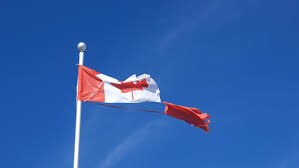
After five defections – euphemistically described as ‘crossing the floor’ – and three by-elections, Mark Carney and his Liberals how have their coveted majority. One wonders what bowls of pottage were offered in back-room deals. In the archaic monarchical system that is the Dominion of Canada, this majority allows the newly-minted Prime Minister to rule[…]Continue reading→

Saint Kateri , Canada’s Protectress
This was the title given to Saint Kateri Tekakwitha, by Pope Benedict XVI, when he canonized her on October 28th, 2012, along with six others, in Saint Peter’ Square (she had been beatified by Pope John Paul II back in 1980). With Saint Joseph as our protector, along with the Canadian martyrs, we seem to[…]Continue reading→
A Tale of Two Benedicts
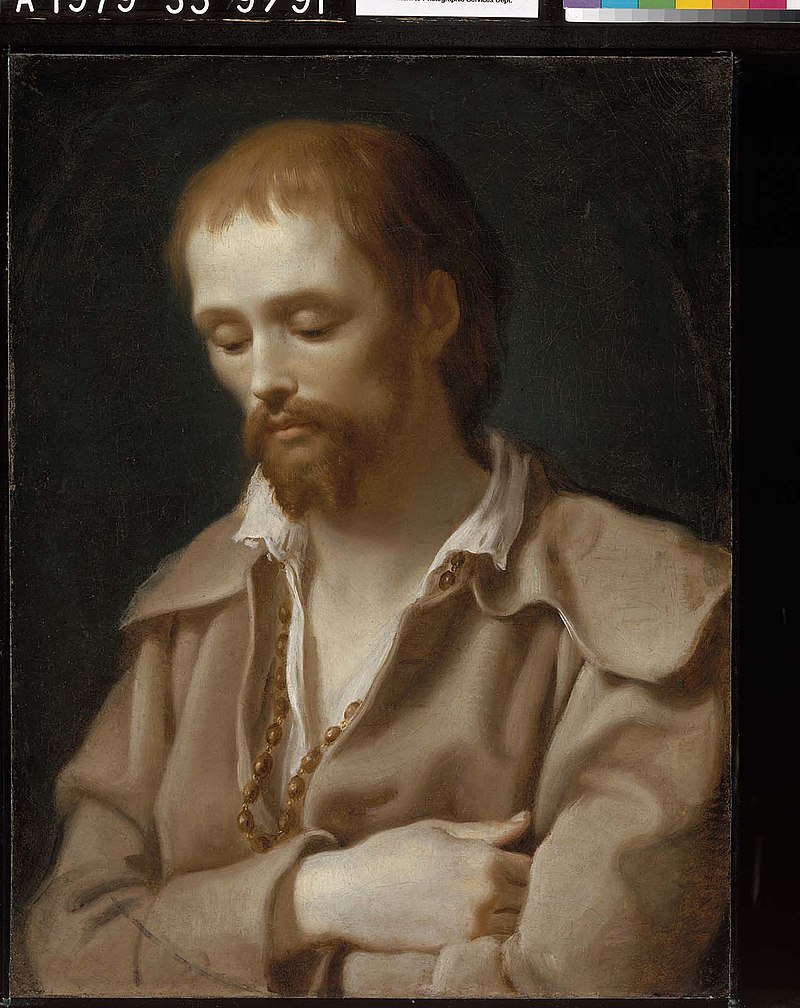
A grace-filled Holy Week to all our readers! As we await and prepare for the Resurrection about to dawn upon us, we might keep in mind two Benedicts: Pope Emeritus Benedict XVI, requiescat in pace, elected on this day in 2005; and today’s commemoration of the mystic pilgrim, Benedict Joseph Labre, who died on this[…]Continue reading→

My Name is Bernadette
April 16th is a propitious day, for besides the anniversary of Father de Valk’s death, who founded Catholic Insight in its print form decades ago, and the commemoration of the ‘two Benedicts’, mentioned in accompanying posts, today we also recall Saint Bernadette Soubirous, the young visionary to whom the Virgin Mary appeared numerous times at[…]Continue reading→
Saint Lydwina of Schiedam and Suffering Joyfully
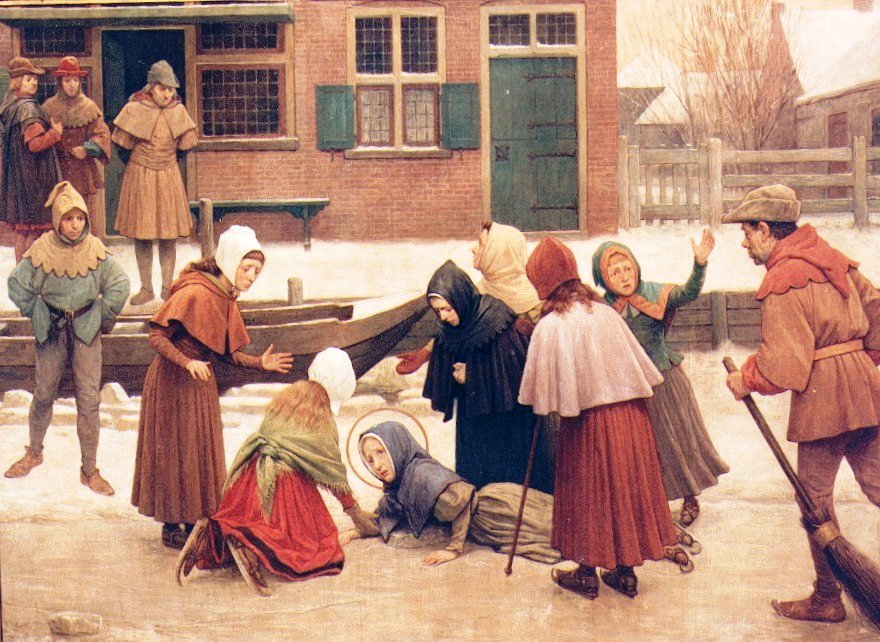
Saint Lydwina of Schiedam (1380 – 1433) was one of the countless and glorious ‘victim souls’ in the history of the Church, those whose lives are filled with suffering, often of an unimaginable intensity, but who suffer joyfully. She was a fifteen-year old Dutch girl, out skating one day, when she fell and broke one[…]Continue reading→
The Glorious Martyrdoms of Martin and Maximus
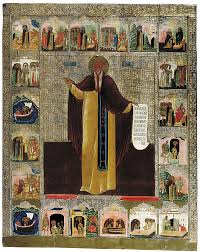
As we enter into Eastertide, we recall on this 13th of April Pope Saint Martin I (+655), one of the noblest, if most tragic, of the successors of Saint Peter. Born in Umbria, Italy, he was of noble lineage, with great intelligence combined with charity and love of the poor and the Church. While still[…]Continue reading→

Saint Stanislaus of Szczepanów
We celebrate Saint Stanislaus today (+ April 11, 1079), in light of this Easter Octave, a bishop and martyr who accepted the episcopacy only at the direct order of Pope Alexander II. He proved a wise and courageous leader of his flock, put to death by his own king, Boleslaus, for rebuking the monarch’s ‘immoral[…]Continue reading→
Saint Gemma Galgani
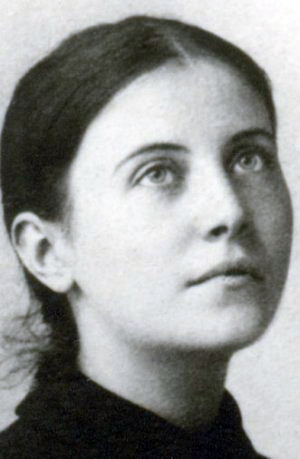
On this April 11th, in 1903 – the same year that the Italian Guiseppe Sarto was elected Pope later that summer as Pius X – a lovely, young Italian woman died, by the name of Gemma Galgani. She lived a brief life of 24 years, as did a number of other young saints, including Pier[…]Continue reading→
An Ideological and Improper Translation
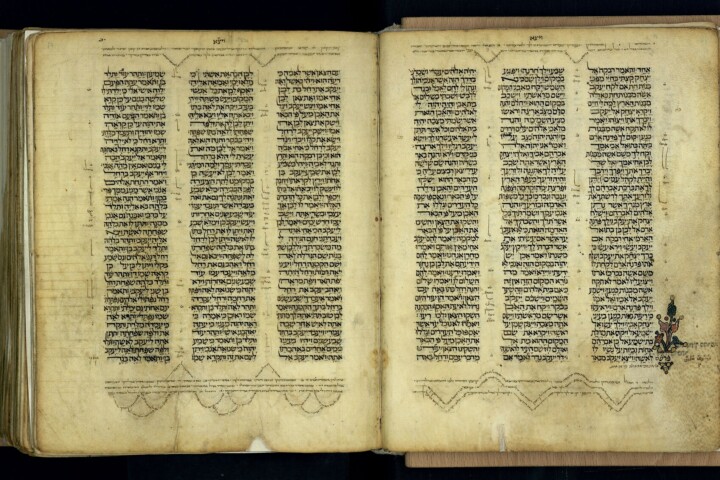
I noticed something odd with the psalm reading at Mass the other day. Our bishops’ conference here in Canada has decreed that the Mass in English – Novus Ordo – use the ‘NRSV’, the ‘New Revised Standard Version’, an ‘updated’ translation of the original RSV, first published in 1952. This ‘new translation’ has the tendency[…]Continue reading→
Saint Jean-Baptiste de la Salle: A Teacher for Teachers
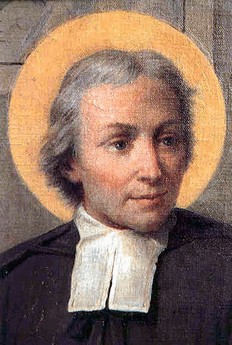
Jean-Baptiste de la Salle (1651 – 1719), a French nobleman, ordained a priest, founded the first order in the Church’s history entirely without priests, and this came about almost by accident. I say ‘almost’, for, of course, there are no accidents with God. Destined for ordination from an early age, Jean-Baptiste never looked back, even[…]Continue reading→