
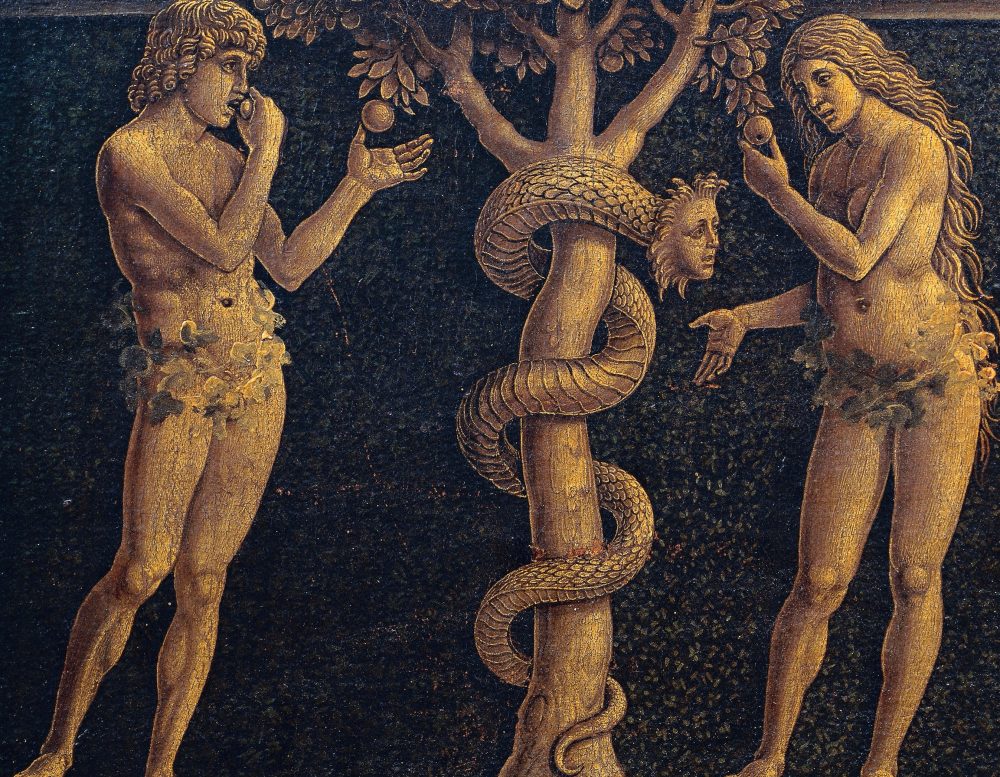
We’re All One in Adam, Eve and Christ
I have to suppress a knowing smile (well, come to think of it, I don’t suppress it at all) when I hear of science ‘discovering’ something that the Church has known all along. Such occurred in 1927 when the Belgian priest-mathematician-cosmologist, Father Georges LeMaitre, using Einstein’s General Theory of Relativity (published in a short treatise in 1915), formulated the theory of what came to be known as the ‘Big Bang’, claiming the universe began about 13.5 billion years ago as a point of near-infinite density and energy (a ‘singularity’), expanding outwards ever since. The good priest knew that the Church has always taught that the universe had a beginning ‘in time’, formulated as a dogma at the Fourth Lateran Council in 1215 (contra the mighty Aristotle, who thought the cosmos eternal, as did most scientists until a couple of decades after LeMaitre’s theory, when the evidence for the Big Ban became incontrovertible).
Well, the other day, the CBC’s Anna Maria Tremonti was interviewing author A.J. Jacobs, whose most recent book claims that science now tells us that we are all related, distant, distant cousins at the very least, descended from an original couple, living in Africa some 100,000 years ago, give or take a millennium or five.
Jacobs claims that this has transformed his view of humanity, even softening his critical view of the abrasive (from his point of view) television personality Judge Judy, whom he has now learned is his eighth cousin. Blood is thicker than airwaves, I suppose. This has also deepened his admiration for President-emeritus Barack Obama, who “is his fifth great aunt’s husband’s brother’s wife’s seventh great nephew”. Who would’ve known? I wonder if Jacobs will get an invitation to the Obama yacht next Christmas.
Of course, there is nothing new about this, for the doctrine of monogenesis, that we are all descended from one set of primordial parents, one man and one woman, like the doctrine creation in time, has been the consistent teaching of the Catholic Church, clearly formulated by Pope Pius XII in his 1950 encyclical Humani Generis, wherein he writes:
When, however, there is question of another conjectural opinion, namely polygenism, the children of the Church by no means enjoy such liberty. For the faithful cannot embrace that opinion which maintains either that after Adam there existed on this earth true men who did not take their origin through natural generation from him as from the first parent of all or that Adam represents a certain number of first parents. (#37)
So we all descend from one man, whom Scripture calls ‘Adam’ (derived from the Hebrew for ‘earth’ or ‘dirt’, from which Adam himself was, well, derived). This dogma, the Pope goes on to teach, is connected with that of original sin (which I discussed in relation to the current fraught-and-getting-fraughter relations between men and the fairer sex):
Now it is in no way apparent how such an opinion (that is, polygenesis, Ed.) can be reconciled with that which the sources of revealed truth and the documents of the Teaching Authority of the Church propose with regard to original sin, which proceeds from a sin actually committed by an individual Adam and which through generation is passed on to all and is in everyone as his own (ibid.)
As Ecclesiastes cried out, there is nothing new under the sun, although it is always good when empirical science corroborates what the faith has always taught, a motiva credibilitatis, a motive of credibility, which may bring some into the faith, or strengthen what faith we have.
And the fact that we are all one big family, even if not always so happy, should be some consolation. For that natural, physical, corporeal community is the basis for the much deeper and more profound spiritual unity, the flip-side of ‘original sin’: Namely, that we are all called to share in the life of grace and charity as the basis for eternal life, and, to paraphrase Thomas More, we hope to rejoice merrily together in heaven someday.
As Adam represented all men, so too does Christ, but in a far more perfect way: As the Vatican II Pastoral Constitution, Gaudium et Spes, put it: For by His incarnation the Son of God has united Himself in some fashion with every man.
We are all one in Adam, and all one in Christ, and the Child born in the manger re-presents humanity to the Father, pristine, without sin, as we were always meant to be, and can be so again, if we but follow Him, the way, the truth and the life.
Carney’s Amoral Majority
After five defections – euphemistically described as ‘crossing the floor’ – and three by-elections, Mark Carney and his Liberals how have their coveted majority. One wonders what bowls of pottage were offered in back-room deals. In the archaic monarchical system that is the Dominion of Canada, this majority allows the newly-minted Prime Minister to rule[…]Continue reading→

Saint Kateri , Canada’s Protectress
This was the title given to Saint Kateri Tekakwitha, by Pope Benedict XVI, when he canonized her on October 28th, 2012, along with six others, in Saint Peter’ Square (she had been beatified by Pope John Paul II back in 1980). With Saint Joseph as our protector, along with the Canadian martyrs, we seem to[…]Continue reading→
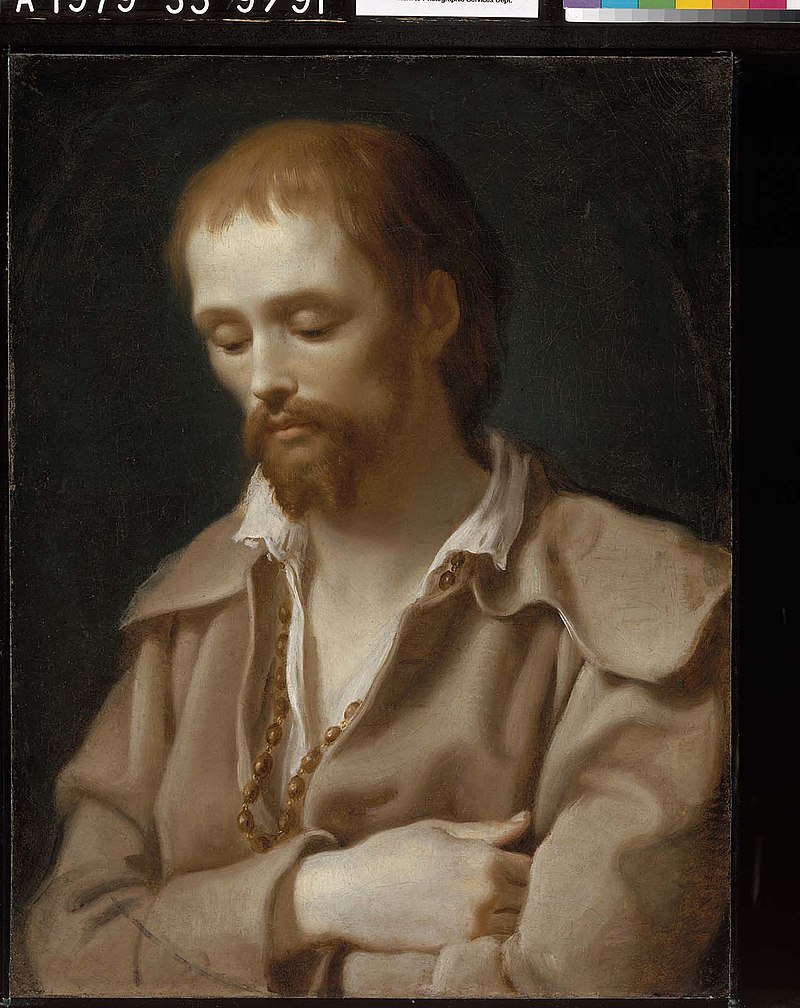
A Tale of Two Benedicts
A grace-filled Holy Week to all our readers! As we await and prepare for the Resurrection about to dawn upon us, we might keep in mind two Benedicts: Pope Emeritus Benedict XVI, requiescat in pace, elected on this day in 2005; and today’s commemoration of the mystic pilgrim, Benedict Joseph Labre, who died on this[…]Continue reading→

My Name is Bernadette
April 16th is a propitious day, for besides the anniversary of Father de Valk’s death, who founded Catholic Insight in its print form decades ago, and the commemoration of the ‘two Benedicts’, mentioned in accompanying posts, today we also recall Saint Bernadette Soubirous, the young visionary to whom the Virgin Mary appeared numerous times at[…]Continue reading→
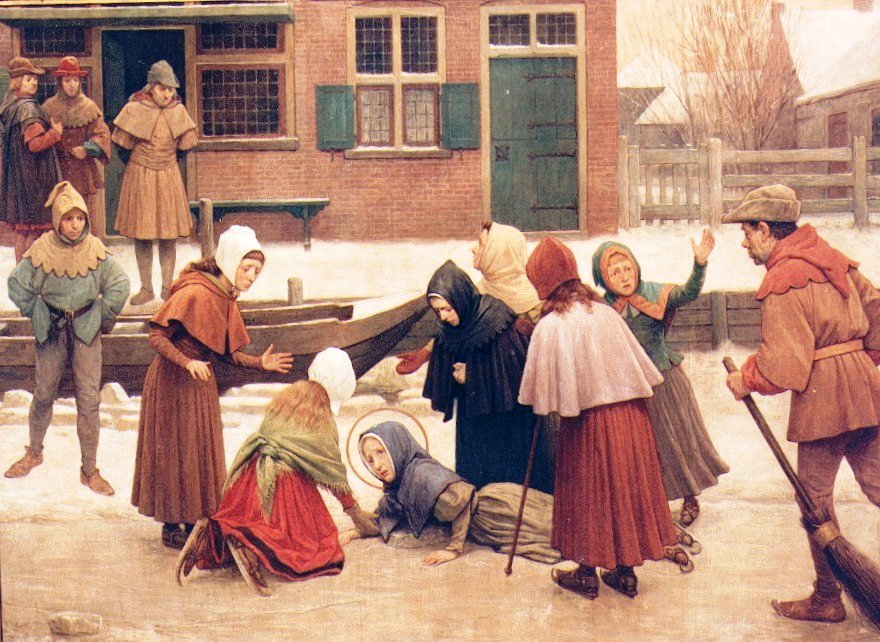
Saint Lydwina of Schiedam and Suffering Joyfully
Saint Lydwina of Schiedam (1380 – 1433) was one of the countless and glorious ‘victim souls’ in the history of the Church, those whose lives are filled with suffering, often of an unimaginable intensity, but who suffer joyfully. She was a fifteen-year old Dutch girl, out skating one day, when she fell and broke one[…]Continue reading→
The Glorious Martyrdoms of Martin and Maximus
As we enter into Eastertide, we recall on this 13th of April Pope Saint Martin I (+655), one of the noblest, if most tragic, of the successors of Saint Peter. Born in Umbria, Italy, he was of noble lineage, with great intelligence combined with charity and love of the poor and the Church. While still[…]Continue reading→

Saint Stanislaus of Szczepanów
We celebrate Saint Stanislaus today (+ April 11, 1079), in light of this Easter Octave, a bishop and martyr who accepted the episcopacy only at the direct order of Pope Alexander II. He proved a wise and courageous leader of his flock, put to death by his own king, Boleslaus, for rebuking the monarch’s ‘immoral[…]Continue reading→
Saint Gemma Galgani
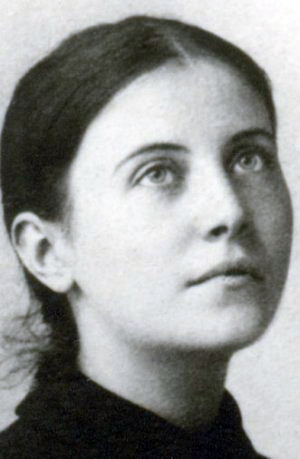
On this April 11th, in 1903 – the same year that the Italian Guiseppe Sarto was elected Pope later that summer as Pius X – a lovely, young Italian woman died, by the name of Gemma Galgani. She lived a brief life of 24 years, as did a number of other young saints, including Pier[…]Continue reading→
An Ideological and Improper Translation
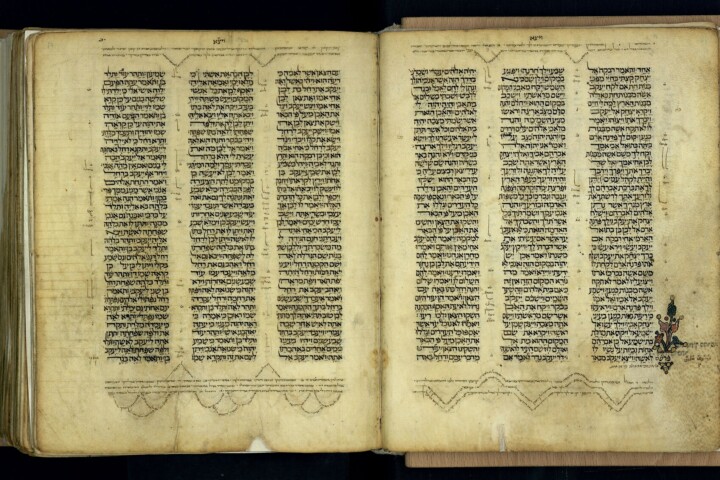
I noticed something odd with the psalm reading at Mass the other day. Our bishops’ conference here in Canada has decreed that the Mass in English – Novus Ordo – use the ‘NRSV’, the ‘New Revised Standard Version’, an ‘updated’ translation of the original RSV, first published in 1952. This ‘new translation’ has the tendency[…]Continue reading→
Saint Jean-Baptiste de la Salle: A Teacher for Teachers
Jean-Baptiste de la Salle (1651 – 1719), a French nobleman, ordained a priest, founded the first order in the Church’s history entirely without priests, and this came about almost by accident. I say ‘almost’, for, of course, there are no accidents with God. Destined for ordination from an early age, Jean-Baptiste never looked back, even[…]Continue reading→