
Fatima’s Century
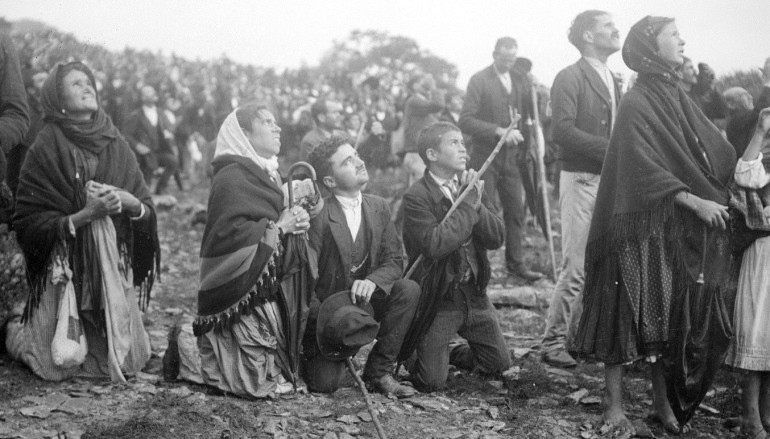
A grace-filled hundredth anniversary of the final apparition at Fatima, as Our Lady appeared for last time to the three seers on this day in October, 1917, during some of the worst days of World War I, and just before the Spanish Influenza would kill millions across the globe. Unlike most flus, this on targeted mainly the young and healthy (for complex physiological reasons) including the two young visionaries, Jacinta and Francesco, who predicted their own deaths.
There are prophecies and revelations at Fatima, none of which we are strictly bound to accept (even the dancing Sun, whose provenance we know not) except, of course, those already in public revelation (such as the existence of judgement, heaven and hell, the need for reparation, that Our Lady intercedes for mankind, and so on). I must confess that, although I strive to maintain what devotion I can to the Virgin Mother, and tell my beads as the mediaevals would have it, however distractedly, I am not much given to the hype over all the apocalyptica surrounding this vision. Yes, there will be wars, calamities, famines, storms, as there have been since Adam and Eve partook of that forbidden fruit, Cain slayed Abel, so that by the sixth chapter of Genesis (signifying only God knows how much ‘real’ time) the Lord saw that the wickedness of man on the earth was great, and that man’s every thought and all the inclinations of his heart were only evil.
Things have not changed all that much since those early days, it seemeth, and this ‘Fatima century’ has seen some of the worst wickedness. In consequence, there have always been cataclysmic destructive forces, and eventually there will be the final one, not with water, as God promised Noah; likely by fire, if the first Pope is any indication and speaking not figuratively: The supervolcano beneath Yellowstone, ominously burping? The asteroids that seem to be flying by a little closer each time? Nuclear war with Korea and China and Russia and who knows who else? A solar flare? A black hole wandering into our solar system? All of the above?
But why worry and fret? Our own private apocalypse will occur at the time and moment when God so wills, whether today, or next year, or at ‘the end’, and the best way to be ready, as Our Lady in her visions has always repeated, is to maintain a healthy devotional life, to participate in Mass, at least on Sundays, more often if one is able; fighting our ‘evil’ passions, with a regular examination of conscience and Confession; to stay united to Christ and His Church, practising daily charity by acts of kindness and self-giving, especially those that are sent to us by providence and that go against our own grain; to be joyful, even with an act of the will if need be, lifting others up; to realize that this passing life is indeed so temporary and fleeting (the pilgrims in the accompanying photograph, even the little children, have by now all gone before their Maker), and that what good we can do here and now will be multiplied a hundredfold, poured into our lap, and brimming over.
So be of good cheer. Christ has indeed already overcome the world.
Carney’s Amoral Majority
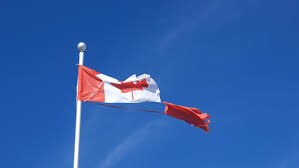
After five defections – euphemistically described as ‘crossing the floor’ – and three by-elections, Mark Carney and his Liberals how have their coveted majority. One wonders what bowls of pottage were offered in back-room deals. In the archaic monarchical system that is the Dominion of Canada, this majority allows the newly-minted Prime Minister to rule[…]Continue reading→

Saint Kateri , Canada’s Protectress
This was the title given to Saint Kateri Tekakwitha, by Pope Benedict XVI, when he canonized her on October 28th, 2012, along with six others, in Saint Peter’ Square (she had been beatified by Pope John Paul II back in 1980). With Saint Joseph as our protector, along with the Canadian martyrs, we seem to[…]Continue reading→

Remembering Father Alphonse de Valk
(Today marks the sixth anniversary of the death of Father Alphonse de Valk, C.S.B., a faithful, courageous and indefatigable Basilian priest, pro-life-and-family apostle, and the founder of Catholic Insight magazine. Here is what we wrote those on his entering into eternity five years ago, as we continue to remember him in our prayers and thoughts)[…]Continue reading→
A Tale of Two Benedicts
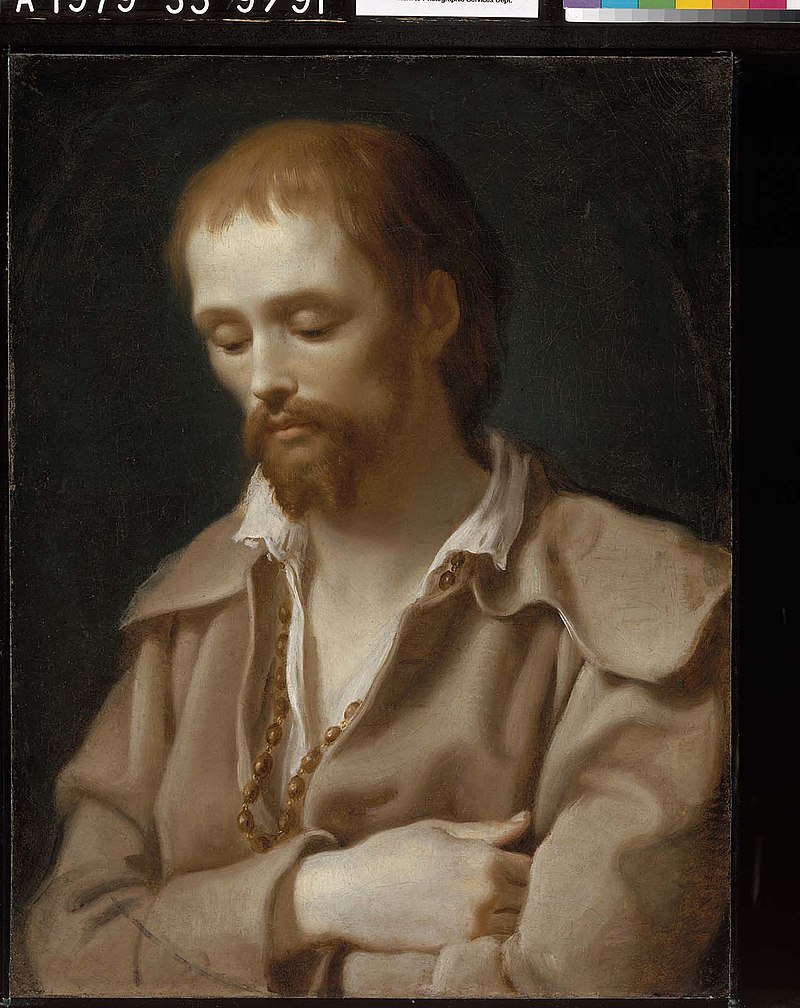
A grace-filled Holy Week to all our readers! As we await and prepare for the Resurrection about to dawn upon us, we might keep in mind two Benedicts: Pope Emeritus Benedict XVI, requiescat in pace, elected on this day in 2005; and today’s commemoration of the mystic pilgrim, Benedict Joseph Labre, who died on this[…]Continue reading→

My Name is Bernadette
April 16th is a propitious day, for besides the anniversary of Father de Valk’s death, who founded Catholic Insight in its print form decades ago, and the commemoration of the ‘two Benedicts’, mentioned in accompanying posts, today we also recall Saint Bernadette Soubirous, the young visionary to whom the Virgin Mary appeared numerous times at[…]Continue reading→
Saint Lydwina of Schiedam and Suffering Joyfully
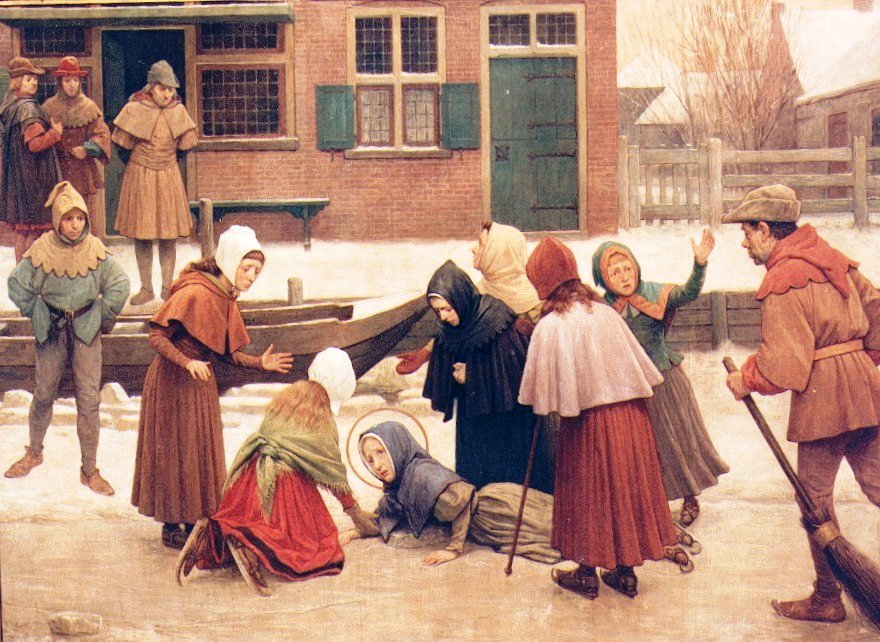
Saint Lydwina of Schiedam (1380 – 1433) was one of the countless and glorious ‘victim souls’ in the history of the Church, those whose lives are filled with suffering, often of an unimaginable intensity, but who suffer joyfully. She was a fifteen-year old Dutch girl, out skating one day, when she fell and broke one[…]Continue reading→
The Glorious Martyrdoms of Martin and Maximus
As we enter into Eastertide, we recall on this 13th of April Pope Saint Martin I (+655), one of the noblest, if most tragic, of the successors of Saint Peter. Born in Umbria, Italy, he was of noble lineage, with great intelligence combined with charity and love of the poor and the Church. While still[…]Continue reading→

Divine Mercy Sunday – An Echo of Every Mass
Reach out your hand and put it in my side. Do not doubt but believe’… ‘My Lord and my God!’ (Jn. 20:18)). Today is Divine Mercy Sunday, and as we celebrate the end of the Easter Octave, we contemplate the wounded side of our Saviour, the Church’s source of life. On Good Friday in the[…]Continue reading→

Saint Stanislaus of Szczepanów
We celebrate Saint Stanislaus today (+ April 11, 1079), in light of this Easter Octave, a bishop and martyr who accepted the episcopacy only at the direct order of Pope Alexander II. He proved a wise and courageous leader of his flock, put to death by his own king, Boleslaus, for rebuking the monarch’s ‘immoral[…]Continue reading→
Saint Gemma Galgani
On this April 11th, in 1903 – the same year that the Italian Guiseppe Sarto was elected Pope later that summer as Pius X – a lovely, young Italian woman died, by the name of Gemma Galgani. She lived a brief life of 24 years, as did a number of other young saints, including Pier[…]Continue reading→
One thought on “Fatima’s Century”
Comments are closed.
“There are prophecies and revelations at Fatima, none of which we are strictly bound to accept […] except, of course, those already in public revelation”
So which ones are in public Revelation?
“Despise not prophecies” (1 Thes. 5:20). And what is the book of Revelations/Apocalypse? Public revelation but also prophecy, without doubt, and therefore often unexpounded revelation. How much do we understand, for example, chapter 12. Is perhaps the woman clothed with the sun not only Mary, but Mary through her apparitions? Does perhaps Church approval of apparitions suggest something more than private revelation (which might make sense if Fatima places an obligation on the pope, say, to consecrate Russia, or on the faithful to participate in first Saturday devotions)? How much is Fatima actually in public revelation and how much do the prophecies and revelations actually bind us? I have a feeling in light of 1 Thessalonians 5:20 (through 23 if you will, to support the article’s main point while I am expounding this small point in depths) Fatima prophecies, etc. should not be looked at indifferently. Any thoughts, comments, criticisms, etc?
I said something about dropping the topic of Fatima through my lack of knowledge, but I came across this (I’ll see if I can find you the article) and thought it would be interesting to explore. I’ll talk to you at homecoming, assuming you don’t reply before than, or probably even if you do. (Cecilia is my confirmation name)
May God bless