
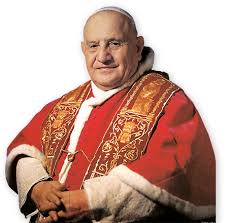
Good Pope John
The Second Vatican Council opened on this day in 1962, and ran until 1965, producing sixteen documents, four of them ‘constitutions’, which have profoundly shaped the Church in the modern world (the title of one of the aforementioned constitutions). This is also the day chosen by the Church to commemorate the pontiff who called and opened the Council, Pope Saint John XXIII, who died on June 3rd of 1963, whose incorrupt body lies in the crypt of the Popes under Saint Peter’s basilica.
Good Pope John, as he was affectionately known, did not therefore live to see most of the Council, in which he held such hopes,. As he put it in his opening address at the Council all those years ago:
Illuminated by the light of this Council, the Church — we confidently trust — will become greater in spiritual riches and gaining the strength of new energies therefrom, she will look to the future without fear. In fact, by bringing herself up to date where required, and by the wise organization of mutual co-operation, the Church will make men, families, and peoples really turn their minds to heavenly things.
Hmm. One wonders. Pope John, of course, only saw the post-conciliar years from his abode in heavenly beatitude, perhaps somewhat quizzically and with some surprise, one might suppose, if such is possible as one sees God face-to-face. There have been many good fruits of the Council; as one priest mentioned recently, the numbers of Catholics has doubled. And, I would posit, many of the problems we have had are in good part a result of people not reading, or at least not following through, on what the Council itself asked (and I mean in the original and official Latin; the translations are in some rather significant ways, shall we say, tendentious and insufficient).
And problems there have been, too many to count:: widespread and entrenched ignorance, disobediences, rebellions, factions, divisions, liturgical abuses, scandals galore, and now we have widespread confusion and ambiguity about the very nature of the marital bond and sexuality itself.
Yet, the truth stands clear for those ‘with eyes to see, and ears to hear’. Even in the midst of what seems a quagmire, we should have the optimism of Pope John, in the sense that God always wills what is ‘best’ for us, for the Church, for the world. The Holy Father confessed that he had little trouble sleeping, saying to God as he dozed off, and I paraphrase from memory: “It’s your Church; keep care of her while I rest”.
Well, God is always ‘taking care’ of His Church, even if at times the winnowing and disciplining seem unpleasant. In the end, as Bd. Julian of Norwich would say, ‘all manner of things shall be well’, following Saint Paul, that ‘all things work for the good for those who love God’.
And it is that love of God that kept Pope John unperturbed in life, and, we might assume, as a special gift and motiva credibilitatis from that same God, incorrupt in death.
Pope Saint John, ora pro nobis!
Carney’s Amoral Majority
After five defections – euphemistically described as ‘crossing the floor’ – and three by-elections, Mark Carney and his Liberals how have their coveted majority. One wonders what bowls of pottage were offered in back-room deals. In the archaic monarchical system that is the Dominion of Canada, this majority allows the newly-minted Prime Minister to rule[…]Continue reading→

Saint Kateri , Canada’s Protectress
This was the title given to Saint Kateri Tekakwitha, by Pope Benedict XVI, when he canonized her on October 28th, 2012, along with six others, in Saint Peter’ Square (she had been beatified by Pope John Paul II back in 1980). With Saint Joseph as our protector, along with the Canadian martyrs, we seem to[…]Continue reading→

Remembering Father Alphonse de Valk
(Today marks the sixth anniversary of the death of Father Alphonse de Valk, C.S.B., a faithful, courageous and indefatigable Basilian priest, pro-life-and-family apostle, and the founder of Catholic Insight magazine. Here is what we wrote those on his entering into eternity five years ago, as we continue to remember him in our prayers and thoughts)[…]Continue reading→
A Tale of Two Benedicts
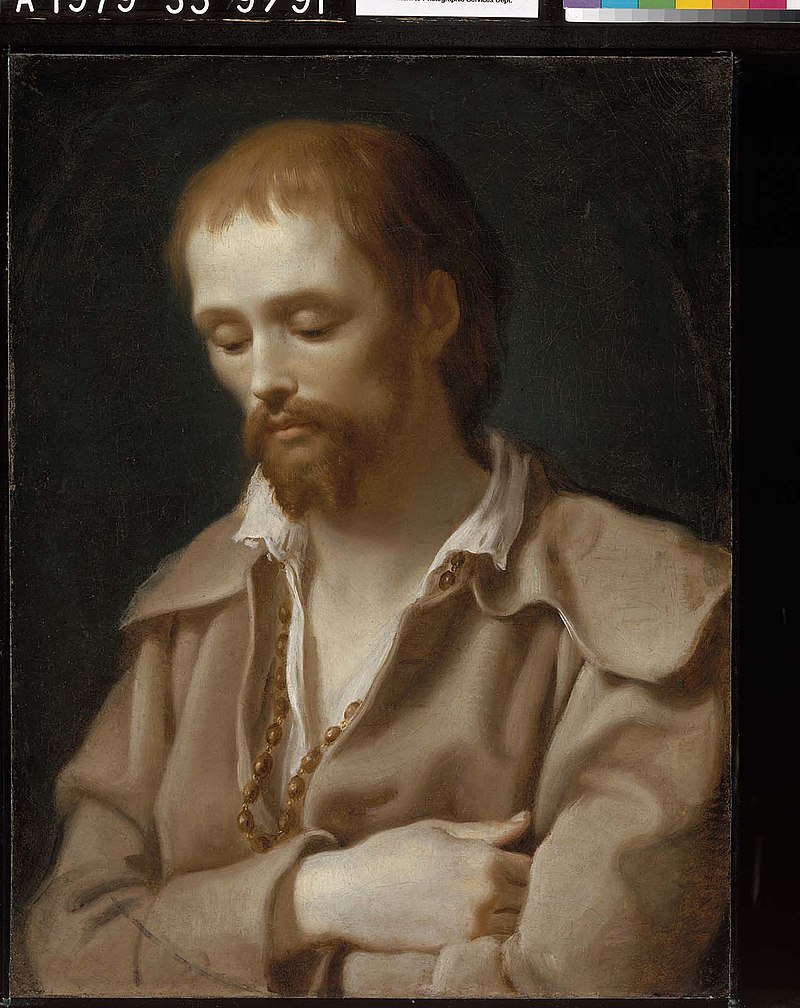
A grace-filled Holy Week to all our readers! As we await and prepare for the Resurrection about to dawn upon us, we might keep in mind two Benedicts: Pope Emeritus Benedict XVI, requiescat in pace, elected on this day in 2005; and today’s commemoration of the mystic pilgrim, Benedict Joseph Labre, who died on this[…]Continue reading→

My Name is Bernadette
April 16th is a propitious day, for besides the anniversary of Father de Valk’s death, who founded Catholic Insight in its print form decades ago, and the commemoration of the ‘two Benedicts’, mentioned in accompanying posts, today we also recall Saint Bernadette Soubirous, the young visionary to whom the Virgin Mary appeared numerous times at[…]Continue reading→
Saint Lydwina of Schiedam and Suffering Joyfully
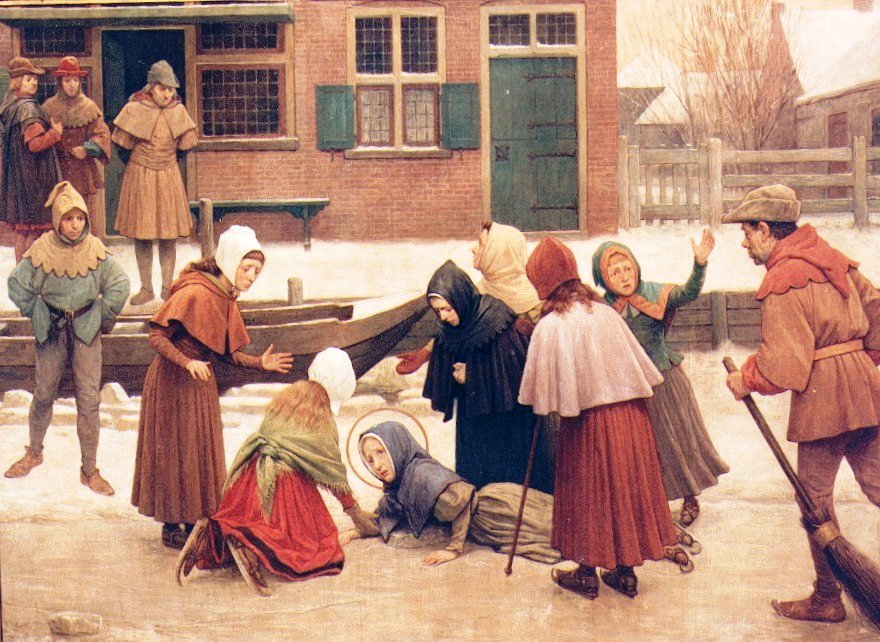
Saint Lydwina of Schiedam (1380 – 1433) was one of the countless and glorious ‘victim souls’ in the history of the Church, those whose lives are filled with suffering, often of an unimaginable intensity, but who suffer joyfully. She was a fifteen-year old Dutch girl, out skating one day, when she fell and broke one[…]Continue reading→
The Glorious Martyrdoms of Martin and Maximus
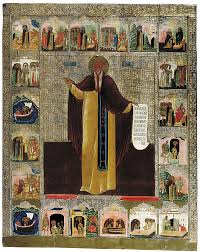
As we enter into Eastertide, we recall on this 13th of April Pope Saint Martin I (+655), one of the noblest, if most tragic, of the successors of Saint Peter. Born in Umbria, Italy, he was of noble lineage, with great intelligence combined with charity and love of the poor and the Church. While still[…]Continue reading→
Canonizing Sister Faustina and Divine Mercy
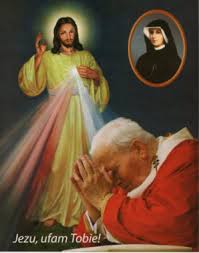
HOMILY OF THE HOLY FATHER MASS IN ST PETER’S SQUARE FOR THE CANONIZATION OF SR MARY FAUSTINA KOWALSKA Sunday, 30 April 2000 1. “Confitemini Domino quoniam bonus, quoniam in saeculum misericordia eius”; “Give thanks to the Lord for he is good; his steadfast love endures for ever” (Ps 118: 1). So the Church sings on the Octave of[…]Continue reading→

Divine Mercy Sunday – An Echo of Every Mass
Reach out your hand and put it in my side. Do not doubt but believe’… ‘My Lord and my God!’ (Jn. 20:18)). Today is Divine Mercy Sunday, and as we celebrate the end of the Easter Octave, we contemplate the wounded side of our Saviour, the Church’s source of life. On Good Friday in the[…]Continue reading→

Saint Stanislaus of Szczepanów
We celebrate Saint Stanislaus today (+ April 11, 1079), in light of this Easter Octave, a bishop and martyr who accepted the episcopacy only at the direct order of Pope Alexander II. He proved a wise and courageous leader of his flock, put to death by his own king, Boleslaus, for rebuking the monarch’s ‘immoral[…]Continue reading→