
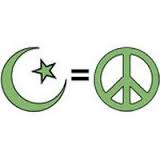
Must We Believe that Islam is Peaceful?
In another well-reasoned article by William Kilpatrick (we may disagree with some of his tone, but his points are good), he alludes to a curious exchange of late between Robert Spencer, who runs Jihad Watch, and Monsignor Robert Swetland, on the apparently peaceful nature of Islam, following upon the Holy Father’s remarks to that effect. There was some debate whether Catholics are ‘bound’ to believe that Islam is, by its nature, irenic. I listened to the end of the debate, and the Monsignor does seem to claim that Catholics must hold to Church teaching on the good intentions of the ‘Prophet’s’ religion, based not just on Pope Francis’ statements, but also the teaching of the Second Vatican Council.
Some distinctions are in order here: To begin, the Church cannot really teach ‘on Islam’, for Islam is not part of revealed doctrine, nor a corollary thereof, which is the only proper sphere for Magisterial authority. As paragraph 25 of the Church’s Dogmatic Constitution (Lumen Gentium) makes clear, the Pope and the bishops may teach definitively only on ‘faith and morals’, which comprise the deposit of divine revelation. God did not reveal Islam, and, hence, the Church cannot define what Islam is, or is not (and the same holds for Buddhism and Hinduism and any other religion, or indeed any topic outside revelation).
We may corroborate this dogma (to which Catholics are bound) with common sense, which tells us that there is no one unitary Islam, nor is there an Islamic ‘Magisterium’. The Qur’an, their own ‘sacred scripture’, is a hodgepodge of suras, many of which are contradictory not only to Catholic dogmas and to reason, but also to each other.
The brief declaration from the Second Vatican Council on non-Christian Religions (Nostra Aetate), which discusses primarily Judaism, but also mentions Islam (and other pagan religions), is a well-intentioned document, following from Christ’s own admonition to strive to think the best of others’ beliefs and to find common ground for peaceful dialogue. Pope Benedict XVI himself lightly criticized the document as being somewhat too optimistic, and we should be aware that Church documents, even those from an ecumenical Council, need not be perfectly formulated, and may be rather imperfect at times; after all, they are not Scripture, nor are those who write them God. They may be free from doctrinal error, but that is a different question.
Thus, I would posit that Catholics are bound in charity to think well of others, including all individual Muslims, but we are also bound to be realistic. Church teaching (and again, the Church cannot ‘teach’ on Islam) can never contradict reason.
And it is reason that tells us that Islam began as a violent religion, that it still has violent strains within its billion adherents (of greatly varying devotion), that even amongst the vast majority of those who do not commit violence, there are many who condone it, and many more, we may presume, who are supporters of Sharia law which, upon even a cursory glance, is ‘violent’ in its letter. Not least, what are we to say of the near-universal teaching of Islam that one must be coerced to remain in the religion once one ‘submits’ to Allah, and that the price of such ‘apostasy’ is death? Is not this ‘violence’, at least to one’s freedom of conscience and religion, also proclaimed at Vatican II?
A final note from the news today in Canada, with the headline that
Extremist literature common in many mosques and Islamic school libraries in Canada, study says
The study was a tad too modest, as one discovers upon reading further:
The study says what worried them was not the presence of extremist literature, but that they found nothing but such writings in several libraries.
Hmm.
And:
Canadian Muslims with humanist and modernist outlooks are being drowned out by those with extreme views, the study says
Humanist and modernist? Is that the ‘other’ Islam, besides the violent and radicalized variety? I’m not sure which I prefer. At least humanist and modernist do not commit terrorism, but their ideas do lead to the culture of death…
At the end of the day, one of the few things we can say definitively about Islam is that it is fissiparous, which is to say, that it splinters into factions by its very nature, something one can read of in its earliest origins (giving rise to the numerous Sunni and Shiite varieties and sub-varieties, and sub-sub-varieties, on and on, and so it goes).
Although the Holy Father is free to offer his opinion about any issue he likes, we are only bound to what he teaches definitively on faith and morals. Outside of that, we are free to use our reason, to take his words to heart, but at the end of the day, at times, to disagree respectfully, or at least withhold assent. To paraphrase the Major-General from Gilbert and Sullivan, we not only may, but must, apply our noggins philosophical and historical, not just on Islam but on any topic we may choose to ponder.

Carney’s Amoral Majority
After five defections – euphemistically described as ‘crossing the floor’ – and three by-elections, Mark Carney and his Liberals how have their coveted majority. One wonders what bowls of pottage were offered in back-room deals. In the archaic monarchical system that is the Dominion of Canada, this majority allows the newly-minted Prime Minister to rule[…]Continue reading→

Saint Kateri , Canada’s Protectress
This was the title given to Saint Kateri Tekakwitha, by Pope Benedict XVI, when he canonized her on October 28th, 2012, along with six others, in Saint Peter’ Square (she had been beatified by Pope John Paul II back in 1980). With Saint Joseph as our protector, along with the Canadian martyrs, we seem to[…]Continue reading→

Remembering Father Alphonse de Valk
(Today marks the sixth anniversary of the death of Father Alphonse de Valk, C.S.B., a faithful, courageous and indefatigable Basilian priest, pro-life-and-family apostle, and the founder of Catholic Insight magazine. Here is what we wrote those on his entering into eternity five years ago, as we continue to remember him in our prayers and thoughts)[…]Continue reading→

A Tale of Two Benedicts
A grace-filled Holy Week to all our readers! As we await and prepare for the Resurrection about to dawn upon us, we might keep in mind two Benedicts: Pope Emeritus Benedict XVI, requiescat in pace, elected on this day in 2005; and today’s commemoration of the mystic pilgrim, Benedict Joseph Labre, who died on this[…]Continue reading→

My Name is Bernadette
April 16th is a propitious day, for besides the anniversary of Father de Valk’s death, who founded Catholic Insight in its print form decades ago, and the commemoration of the ‘two Benedicts’, mentioned in accompanying posts, today we also recall Saint Bernadette Soubirous, the young visionary to whom the Virgin Mary appeared numerous times at[…]Continue reading→

Saint Lydwina of Schiedam and Suffering Joyfully
Saint Lydwina of Schiedam (1380 – 1433) was one of the countless and glorious ‘victim souls’ in the history of the Church, those whose lives are filled with suffering, often of an unimaginable intensity, but who suffer joyfully. She was a fifteen-year old Dutch girl, out skating one day, when she fell and broke one[…]Continue reading→

The Glorious Martyrdoms of Martin and Maximus
As we enter into Eastertide, we recall on this 13th of April Pope Saint Martin I (+655), one of the noblest, if most tragic, of the successors of Saint Peter. Born in Umbria, Italy, he was of noble lineage, with great intelligence combined with charity and love of the poor and the Church. While still[…]Continue reading→

Canonizing Sister Faustina and Divine Mercy
HOMILY OF THE HOLY FATHER MASS IN ST PETER’S SQUARE FOR THE CANONIZATION OF SR MARY FAUSTINA KOWALSKA Sunday, 30 April 2000 1. “Confitemini Domino quoniam bonus, quoniam in saeculum misericordia eius”; “Give thanks to the Lord for he is good; his steadfast love endures for ever” (Ps 118: 1). So the Church sings on the Octave of[…]Continue reading→

Divine Mercy Sunday – An Echo of Every Mass
Reach out your hand and put it in my side. Do not doubt but believe’… ‘My Lord and my God!’ (Jn. 20:18)). Today is Divine Mercy Sunday, and as we celebrate the end of the Easter Octave, we contemplate the wounded side of our Saviour, the Church’s source of life. On Good Friday in the[…]Continue reading→

Saint Stanislaus of Szczepanów
We celebrate Saint Stanislaus today (+ April 11, 1079), in light of this Easter Octave, a bishop and martyr who accepted the episcopacy only at the direct order of Pope Alexander II. He proved a wise and courageous leader of his flock, put to death by his own king, Boleslaus, for rebuking the monarch’s ‘immoral[…]Continue reading→