
Murder, Inc., Canadian Style
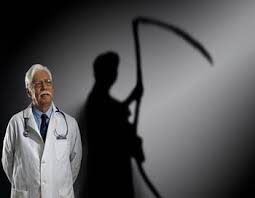
As of midnight tonight, as I write on this June 6th, the murder of adults will be legal in Canada. Of course, we have had the legal killing of the unborn since May 14, 1969, but the striking down of the laws prohibiting murder-suicide opens a new, wide gate to the culture of death for all of us.
We should be clear on our terms: As of midnight, murder-suicide will be decriminalized, by the dubious authority of the Supreme Court’s decision in the February 6th, 2015 Carter decision to strike down the laws prohibiting murder-suicide (suicide itself is already legal). Physician-assisted ‘suicide’, that is murder, will not be legal until Bill C-14, currently in the Senate, becomes law, either amended by the Senators, or not.
For the time being, we will be in legal limbo, with all the inconsistencies and patchwork enforcement that entails. Today on the CBC, their resident medical guru, Dr. Brian Goldman, said he would help someone die (his polite, antiseptic euphemism for killing them) if the conditions were right. So much for primum non nocere. Our physicians will now legally also be our murderers, even if, for the time being at least, we must consent to our own demise. Physicians (and, we may presume, other health-care personnel) are also, for now, free to kill, or not to kill, as the case may be. But that too may change.
As Canada enters this dark phase of her history, ponder the words of John Paul II, which I quoted in my post on the sad complicity of the great Jean Vanier:
laws which legitimize the direct killing of innocent human beings through abortion or euthanasia are in complete opposition to the inviolable right to life proper to every individual; they thus deny the equality of everyone before the law. It might be objected that such is not the case in euthanasia, when it is requested with full awareness by the person involved. But any State which made such a request legitimate and authorized it to be carried out would be legalizing a case of suicide-murder, contrary to the fundamental principles of absolute respect for life and of the protection of every innocent life. In this way the State contributes to lessening respect for life and opens the door to ways of acting which are destructive of trust in relations between people…
Abortion and euthanasia are thus crimes which no human law can claim to legitimize. There is no obligation in conscience to obey such laws; instead there is a grave and clear obligation to oppose them by conscientious objection.
So object away, dear reader, whatever your religious proclivities. For although the bell may toll for others for now, the bell will eventually toll for thee, physicians and politicians included.
Saint Norbert, ora pro nobis!

Carney’s Amoral Majority
After five defections – euphemistically described as ‘crossing the floor’ – and three by-elections, Mark Carney and his Liberals how have their coveted majority. One wonders what bowls of pottage were offered in back-room deals. In the archaic monarchical system that is the Dominion of Canada, this majority allows the newly-minted Prime Minister to rule[…]Continue reading→

Saint Kateri , Canada’s Protectress
This was the title given to Saint Kateri Tekakwitha, by Pope Benedict XVI, when he canonized her on October 28th, 2012, along with six others, in Saint Peter’ Square (she had been beatified by Pope John Paul II back in 1980). With Saint Joseph as our protector, along with the Canadian martyrs, we seem to[…]Continue reading→

Remembering Father Alphonse de Valk
(Today marks the sixth anniversary of the death of Father Alphonse de Valk, C.S.B., a faithful, courageous and indefatigable Basilian priest, pro-life-and-family apostle, and the founder of Catholic Insight magazine. Here is what we wrote those on his entering into eternity five years ago, as we continue to remember him in our prayers and thoughts)[…]Continue reading→
A Tale of Two Benedicts
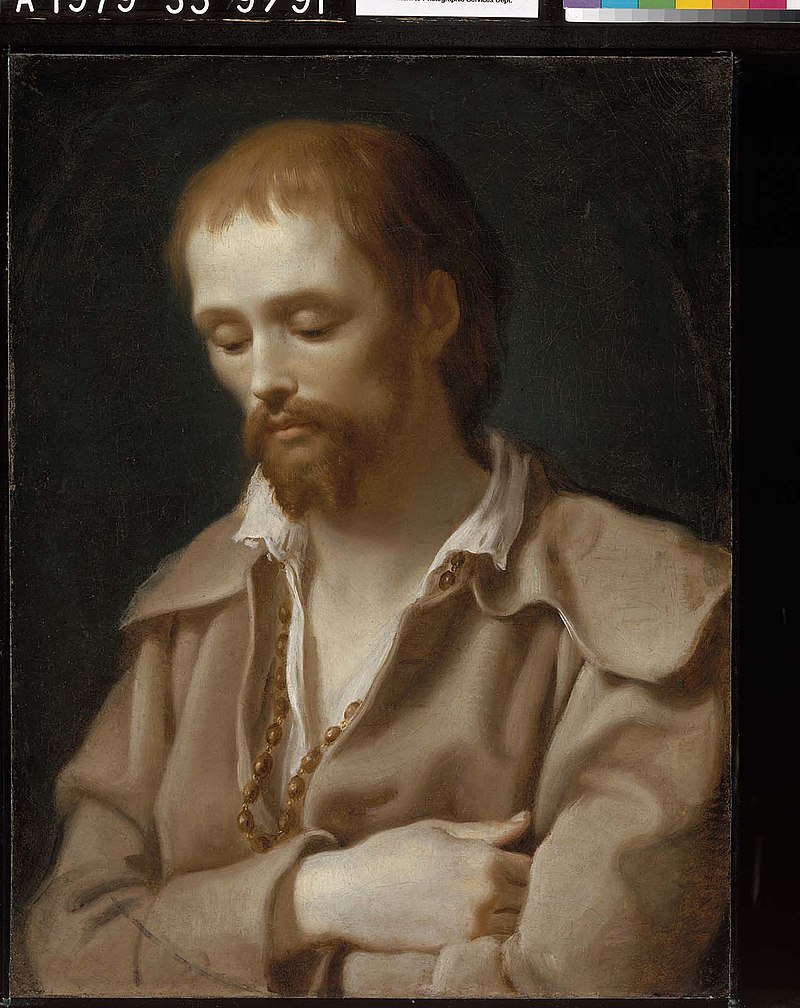
A grace-filled Holy Week to all our readers! As we await and prepare for the Resurrection about to dawn upon us, we might keep in mind two Benedicts: Pope Emeritus Benedict XVI, requiescat in pace, elected on this day in 2005; and today’s commemoration of the mystic pilgrim, Benedict Joseph Labre, who died on this[…]Continue reading→

My Name is Bernadette
April 16th is a propitious day, for besides the anniversary of Father de Valk’s death, who founded Catholic Insight in its print form decades ago, and the commemoration of the ‘two Benedicts’, mentioned in accompanying posts, today we also recall Saint Bernadette Soubirous, the young visionary to whom the Virgin Mary appeared numerous times at[…]Continue reading→
Saint Lydwina of Schiedam and Suffering Joyfully
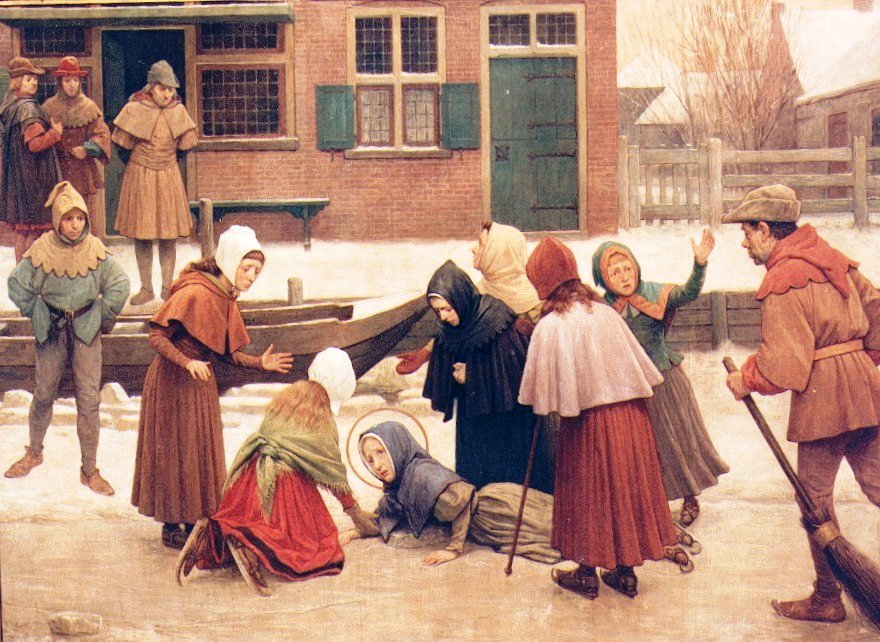
Saint Lydwina of Schiedam (1380 – 1433) was one of the countless and glorious ‘victim souls’ in the history of the Church, those whose lives are filled with suffering, often of an unimaginable intensity, but who suffer joyfully. She was a fifteen-year old Dutch girl, out skating one day, when she fell and broke one[…]Continue reading→
The Glorious Martyrdoms of Martin and Maximus
As we enter into Eastertide, we recall on this 13th of April Pope Saint Martin I (+655), one of the noblest, if most tragic, of the successors of Saint Peter. Born in Umbria, Italy, he was of noble lineage, with great intelligence combined with charity and love of the poor and the Church. While still[…]Continue reading→
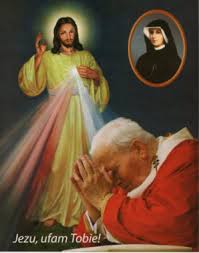
Canonizing Sister Faustina and Divine Mercy
HOMILY OF THE HOLY FATHER MASS IN ST PETER’S SQUARE FOR THE CANONIZATION OF SR MARY FAUSTINA KOWALSKA Sunday, 30 April 2000 1. “Confitemini Domino quoniam bonus, quoniam in saeculum misericordia eius”; “Give thanks to the Lord for he is good; his steadfast love endures for ever” (Ps 118: 1). So the Church sings on the Octave of[…]Continue reading→

Divine Mercy Sunday – An Echo of Every Mass
Reach out your hand and put it in my side. Do not doubt but believe’… ‘My Lord and my God!’ (Jn. 20:18)). Today is Divine Mercy Sunday, and as we celebrate the end of the Easter Octave, we contemplate the wounded side of our Saviour, the Church’s source of life. On Good Friday in the[…]Continue reading→

Saint Stanislaus of Szczepanów
We celebrate Saint Stanislaus today (+ April 11, 1079), in light of this Easter Octave, a bishop and martyr who accepted the episcopacy only at the direct order of Pope Alexander II. He proved a wise and courageous leader of his flock, put to death by his own king, Boleslaus, for rebuking the monarch’s ‘immoral[…]Continue reading→