
The Day of Confraternities and Popular Piety
In the Gospel we heard a passage from the farewell discourses of Jesus, as related by the evangelist John in the context of the Last Supper. Jesus entrusts his last thoughts, as a spiritual testament, to the apostles before he leaves them. Today’s text makes it clear that Christian faith is completely centred on the relationship between the Father, the Son, and the Holy Spirit. … When Benedict XVI spoke to you, he used this expression: evangelical spirit. Dear confraternities, the popular piety of which you are an important sign is a treasure possessed by the Church, which the bishops of Latin America defined, significantly, as a spirituality, a form of mysticism, which is “a place of encounter with Jesus Christ.” Draw always from Christ, the inexhaustible wellspring; strengthen your faith by attending to your spiritual formation, to personal and communitarian prayer, and to the liturgy. Down the centuries confraternities have been crucibles of holiness for countless people who have lived in utter simplicity an intense relationship with the Lord. Advance with determination along the path of holiness; do not rest content with a mediocre Christian life, but let your affiliation serve as a stimulus, above all for you yourselves, to an ever greater love of Jesus Christ.
Dear brothers and sisters, the Church loves you! Be an active presence in the community, as living cells, as living stones. The Latin American Bishops wrote that the popular piety which you reflect is “a legitimate way of living the faith, a way of feeling that we are part of the Church” (Aparecida Document, 264). This is wonderful! A legitimate way of living the faith, a way of feeling that we are part of the Church. Love the Church! Let yourselves be guided by her! In your parishes, in your dioceses, be a true “lung” of faith and Christian life, a breath of fresh air! In this Square I see a great variety: earlier on it was a variety of umbrellas, and now of colours and signs. This is also the case with the Church: a great wealth and variety of expressions in which everything leads back to unity; the variety leads back to unity, and unity is the encounter with Christ.
I would like to add a third expression which must distinguish you: missionary spirit. You have a specific and important mission, that of keeping alive the relationship between the faith and the cultures of the peoples to whom you belong. You do this through popular piety. When, for example, you carry the crucifix in procession with such great veneration and love for the Lord, you are not performing a simple outward act; you are pointing to the centrality of the Lord’s paschal mystery, his passion, death, and resurrection which have redeemed us, and you are reminding yourselves first, as well as the community, that we have to follow Christ along the concrete path of our daily lives so that he can transform us. Likewise, when you express profound devotion for the Virgin Mary, you are pointing to the highest realization of the Christian life, the one who by her faith and obedience to God’s will, and by her meditation on the words and deeds of Jesus, is the Lord’s perfect disciple (cf. Lumen Gentium, 53). You express this faith, born of hearing the word of God, in ways that engage the senses, the emotions and the symbols of the different cultures … In doing so you help to transmit it to others, and especially the simple persons whom, in the Gospels, Jesus calls “the little ones.” In effect, “journeying together towards shrines, and participating in other demonstrations of popular piety, bringing along your children and engaging other people, is itself a work of evangelization” (Aparecida Document, 264). When you visit shrines, when you bring your family, your children, you are engaged in a real work of evangelization. This needs to continue. May you also be true evangelizers! May your initiatives be “bridges,” means of bringing others to Christ, so as to journey together with him. And in this spirit may you always be attentive to charity. Each individual Christian and every community is missionary to the extent that they bring to others and live the Gospel, and testify to God’s love for all, especially those experiencing difficulties. Be missionaries of God’s love and tenderness! Be missionaries of God’s mercy, which always forgives us, always awaits us and loves us dearly.
Evangelical spirit, ecclesial spirit, missionary spirit. Three themes! Do not forget them!
Homily of Pope Francis
on the occasion of the Day of Confraternities and Popular Piety
5 May 2013
© Libreria Editrice Vaticana
© Life Ethics Information Centre 2013

Saint Kateri , Canada’s Protectress
This was the title given to Saint Kateri Tekakwitha, by Pope Benedict XVI, when he canonized her on October 28th, 2012, along with six others, in Saint Peter’ Square (she had been beatified by Pope John Paul II back in 1980). With Saint Joseph as our protector, along with the Canadian martyrs, we seem to[…]Continue reading→

A Tale of Two Benedicts
A grace-filled Holy Week to all our readers! As we await and prepare for the Resurrection about to dawn upon us, we might keep in mind two Benedicts: Pope Emeritus Benedict XVI, requiescat in pace, elected on this day in 2005; and today’s commemoration of the mystic pilgrim, Benedict Joseph Labre, who died on this[…]Continue reading→

My Name is Bernadette
April 16th is a propitious day, for besides the anniversary of Father de Valk’s death, who founded Catholic Insight in its print form decades ago, and the commemoration of the ‘two Benedicts’, mentioned in accompanying posts, today we also recall Saint Bernadette Soubirous, the young visionary to whom the Virgin Mary appeared numerous times at[…]Continue reading→

Saint Lydwina of Schiedam and Suffering Joyfully
Saint Lydwina of Schiedam (1380 – 1433) was one of the countless and glorious ‘victim souls’ in the history of the Church, those whose lives are filled with suffering, often of an unimaginable intensity, but who suffer joyfully. She was a fifteen-year old Dutch girl, out skating one day, when she fell and broke one[…]Continue reading→

The Glorious Martyrdoms of Martin and Maximus
As we enter into Eastertide, we recall on this 13th of April Pope Saint Martin I (+655), one of the noblest, if most tragic, of the successors of Saint Peter. Born in Umbria, Italy, he was of noble lineage, with great intelligence combined with charity and love of the poor and the Church. While still[…]Continue reading→

Canonizing Sister Faustina and Divine Mercy
HOMILY OF THE HOLY FATHER MASS IN ST PETER’S SQUARE FOR THE CANONIZATION OF SR MARY FAUSTINA KOWALSKA Sunday, 30 April 2000 1. “Confitemini Domino quoniam bonus, quoniam in saeculum misericordia eius”; “Give thanks to the Lord for he is good; his steadfast love endures for ever” (Ps 118: 1). So the Church sings on the Octave of[…]Continue reading→
Saint Gemma Galgani
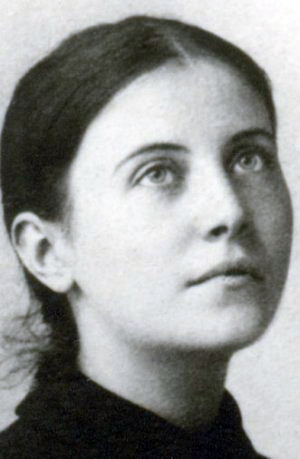
On this April 11th, in 1903 – the same year that the Italian Guiseppe Sarto was elected Pope later that summer as Pius X – a lovely, young Italian woman died, by the name of Gemma Galgani. She lived a brief life of 24 years, as did a number of other young saints, including Pier[…]Continue reading→
Saint Jean-Baptiste de la Salle: A Teacher for Teachers
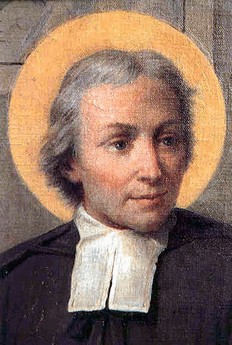
Jean-Baptiste de la Salle (1651 – 1719), a French nobleman, ordained a priest, founded the first order in the Church’s history entirely without priests, and this came about almost by accident. I say ‘almost’, for, of course, there are no accidents with God. Destined for ordination from an early age, Jean-Baptiste never looked back, even[…]Continue reading→
Saint Isidore of Seville, the Internet and Industriousness
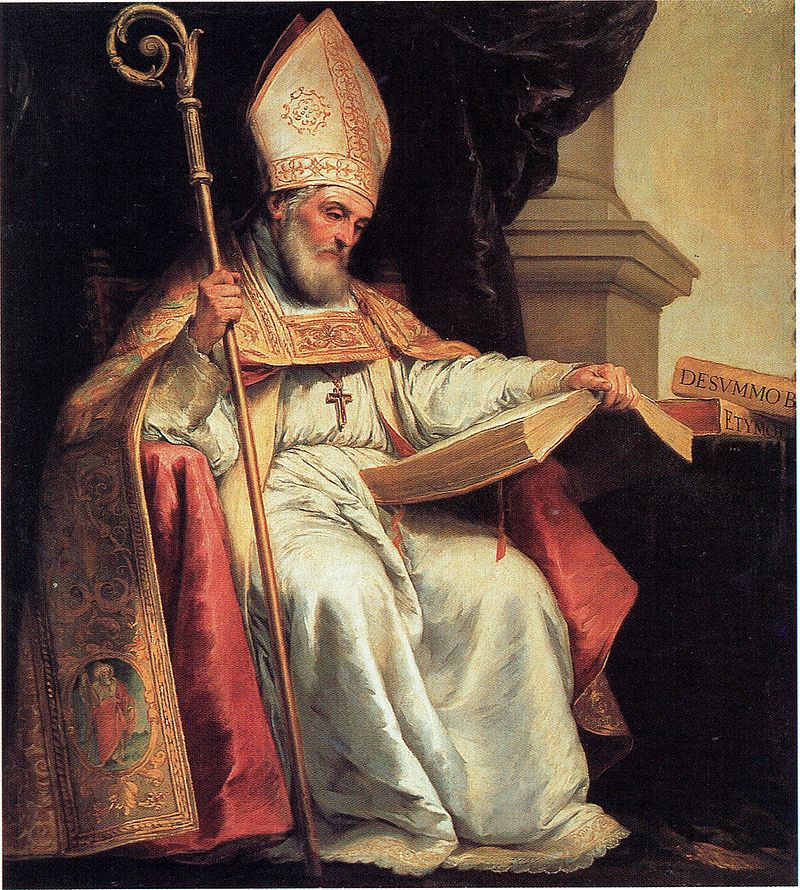
Today, April 4th, muted this year by Holy Saturday, is the commemoration of Saint Isidore of Seville (560-636) a bishop and doctor of the Church during a tumultuous age, when civilization was crumbling, coming apart at its very seams, which may sound sort of au courant. Then again, the form of this world has always[…]Continue reading→
A Minimal Friar and the Death of a Great Pope
This April the second- overshadowed by Holy Thursday this year – marks the memorial of Saint Francis of Paola (1417-1507), founder of the ‘Minim’ friars, so called for their humility and poverty, who interpreted the rule of Saint Francis of Assisi in quite a literal sense: extreme poverty, trust in God, foregoing all animal and[…]Continue reading→